Early petrol retail system in colonial India explained
India’s early petrol retail system began in the early 1920s during the British colonial period when automobiles were still a rare luxury. The petrol retail system in colonial India first appeared in major cities like Bombay (Mumbai) and Calcutta (Kolkata). At that time, there were no modern fuel stations, and petrol was supplied through depots, barrels, and basic manual systems. This early structure marked the foundation of the petrol retail system in colonial India and served only a limited group of users. Dependence on imported fuel sources During this period, India had very limited oil production. Most petrol was imported through the British imperial trade network. The imported oil came mainly from Burma, Persia, and other oil-producing regions under British control. This imported oil system made India heavily dependent on external sources for fuel supply. The oil import system played a key role in shaping how early petrol retail operations functioned across cities. Role of burmah shell in fuel distribution One of the major companies involved was Burmah Shell, which managed fuel storage and distribution across urban centers. Burmah Shell India operated depots and controlled the supply chain in key regions. These early fuel depots were not modern petrol pumps but organized colonial-era storage and distribution points. The company played a central role in shaping early fuel retail operations and expanding access in cities. Manual petrol pumps and basic technology Early petrol stations used manual petrol pump systems instead of modern electric dispensers. Fuel was moved using hand-operated pumps or gravity-fed systems from barrels into containers or vehicles. Workers had to physically operate the system, making the process slow and labor-intensive. This manual petrol pump system represented the early stage of fuel retail evolution in India. Limited access and elite vehicle ownership Vehicle ownership during the colonial period was extremely limited. Cars were mainly owned by British officials, princely rulers, and wealthy Indian elites. Because of this, petrol usage was also restricted to a small section of society. While there were no legal restrictions on petrol access, high costs and limited infrastructure made it inaccessible for the general population. Evolution towards modern petrol stations By the 1930s and 1940s, with increasing automobile usage, the petrol retail system began to evolve. Basic depots gradually transformed into structured petrol stations with better storage systems and improved dispensing technology. This transition marked the beginning of modern fuel retail development in India, leading to today’s automated petrol pump network.
Early petrol retail system in colonial India explained
India’s early petrol retail system began in the early 1920s during the British colonial period when automobiles were still a rare luxury. The petrol retail system in colonial India first appeared in major cities like Bombay (Mumbai) and Calcutta (Kolkata). At that time, there were no modern fuel stations, and petrol was supplied through depots, barrels, and basic manual systems. This early structure marked the foundation of the petrol retail system in colonial India and served only a limited group of users. Dependence on imported fuel sources During this period, India had very limited oil production. Most petrol was imported through the British imperial trade network. The imported oil came mainly from Burma, Persia, and other oil-producing regions under British control. This imported oil system made India heavily dependent on external sources for fuel supply. The oil import system played a key role in shaping how early petrol retail operations functioned across cities. Role of burmah shell in fuel distribution One of the major companies involved was Burmah Shell, which managed fuel storage and distribution across urban centers. Burmah Shell India operated depots and controlled the supply chain in key regions. These early fuel depots were not modern petrol pumps but organized colonial-era storage and distribution points. The company played a central role in shaping early fuel retail operations and expanding access in cities. Manual petrol pumps and basic technology Early petrol stations used manual petrol pump systems instead of modern electric dispensers. Fuel was moved using hand-operated pumps or gravity-fed systems from barrels into containers or vehicles. Workers had to physically operate the system, making the process slow and labor-intensive. This manual petrol pump system represented the early stage of fuel retail evolution in India. Limited access and elite vehicle ownership Vehicle ownership during the colonial period was extremely limited. Cars were mainly owned by British officials, princely rulers, and wealthy Indian elites. Because of this, petrol usage was also restricted to a small section of society. While there were no legal restrictions on petrol access, high costs and limited infrastructure made it inaccessible for the general population. Evolution towards modern petrol stations By the 1930s and 1940s, with increasing automobile usage, the petrol retail system began to evolve. Basic depots gradually transformed into structured petrol stations with better storage systems and improved dispensing technology. This transition marked the beginning of modern fuel retail development in India, leading to today’s automated petrol pump network.
Jagan’s Kapu outreach plan faces tough electoral reality check
Kapu Vote Strategy and the Core Assumption Problem The current political discussion in Andhra Pradesh is increasingly centered around how parties are attempting to realign caste-based voter blocs ahead of the 2029 elections. One of the most debated narratives is whether the YSRCP can rebuild influence among Kapu voters after the shifts seen in recent elections. The as

Jagan’s Kapu outreach plan faces tough electoral reality check
Kapu Vote Strategy and the Core Assumption Problem The current political discussion in Andhra Pradesh is increasingly centered around how parties are attempting to realign caste-based voter blocs ahead of the 2029 elections. One of the most debated narratives is whether the YSRCP can rebuild influence among Kapu voters after the shifts seen in recent elections. The as
Siya Goyal Case: Parents Demand Strict Action If Murder Charges Proven
The shocking death of Ketan Agarwal at Pune's Lohagad Fort has taken an emotional turn after the parents of accused Siya Goyal publicly stated that they would support the harshest punishment if their daughter is found guilty. The case has become one of the most talked-about crime stories in Maharashtra, with investigators alleging that Siya Goyal and her alleged boyfriend, Chetan Chaudhary, conspired to kill Ketan by pushing him into a gor
Siya Goyal Case: Parents Demand Strict Action If Murder Charges Proven
The shocking death of Ketan Agarwal at Pune's Lohagad Fort has taken an emotional turn after the parents of accused Siya Goyal publicly stated that they would support the harshest punishment if their daughter is found guilty. The case has become one of the most talked-about crime stories in Maharashtra, with investigators alleging that Siya Goyal and her alleged boyfriend, Chetan Chaudhary, conspired to kill Ketan by pushing him into a gor
Passport Fees Hiked From July 1: Check New Charges
New Delhi, June 26: Passport applicants in India will have to pay higher fees from July 1, 2026, as the government has revised charges for fresh passports, reissues and replacement of lost or damaged passports. Under the revised rules, a fresh or reissued ordinary 36-page passport will cost Rs 2,500, while the Tatkal fee for the same category has been increased to Rs 5,000.  
Passport Fees Hiked From July 1: Check New Charges
New Delhi, June 26: Passport applicants in India will have to pay higher fees from July 1, 2026, as the government has revised charges for fresh passports, reissues and replacement of lost or damaged passports. Under the revised rules, a fresh or reissued ordinary 36-page passport will cost Rs 2,500, while the Tatkal fee for the same category has been increased to Rs 5,000.  
AR Rahman Receives Golden Plate Award From Peter Jackson
A.R. Rahman has received the Golden Plate Award from the American Academy of Achievement in Washington, with filmmaker Peter Jackson presenting the honour. The recognition marks another proud global moment for the Oscar-winning Indian composer and for Indian music. AR Rahman Receives Golden Plate Award Music maestro A.R. Rahman has been honoured with the Golden Plate Award at an American Academy of Achievement
AR Rahman Receives Golden Plate Award From Peter Jackson
A.R. Rahman has received the Golden Plate Award from the American Academy of Achievement in Washington, with filmmaker Peter Jackson presenting the honour. The recognition marks another proud global moment for the Oscar-winning Indian composer and for Indian music. AR Rahman Receives Golden Plate Award Music maestro A.R. Rahman has been honoured with the Golden Plate Award at an American Academy of Achievement
Russian army dissent claims raise tension over Ukraine war
A video circulating online featuring former Russian volunteer commander Alexander Lunin has triggered discussion about possible internal strain within sections of Russia’s military. In the recording, he suggests that prolonged combat operations in Ukraine have created growing frustration among some soldiers, though no independent verification supports claims of organized unrest. The remarks have drawn attention because public criticism linke
Russian army dissent claims raise tension over Ukraine war
A video circulating online featuring former Russian volunteer commander Alexander Lunin has triggered discussion about possible internal strain within sections of Russia’s military. In the recording, he suggests that prolonged combat operations in Ukraine have created growing frustration among some soldiers, though no independent verification supports claims of organized unrest. The remarks have drawn attention because public criticism linke
Public sentiment shifts as US founders poll shows concern
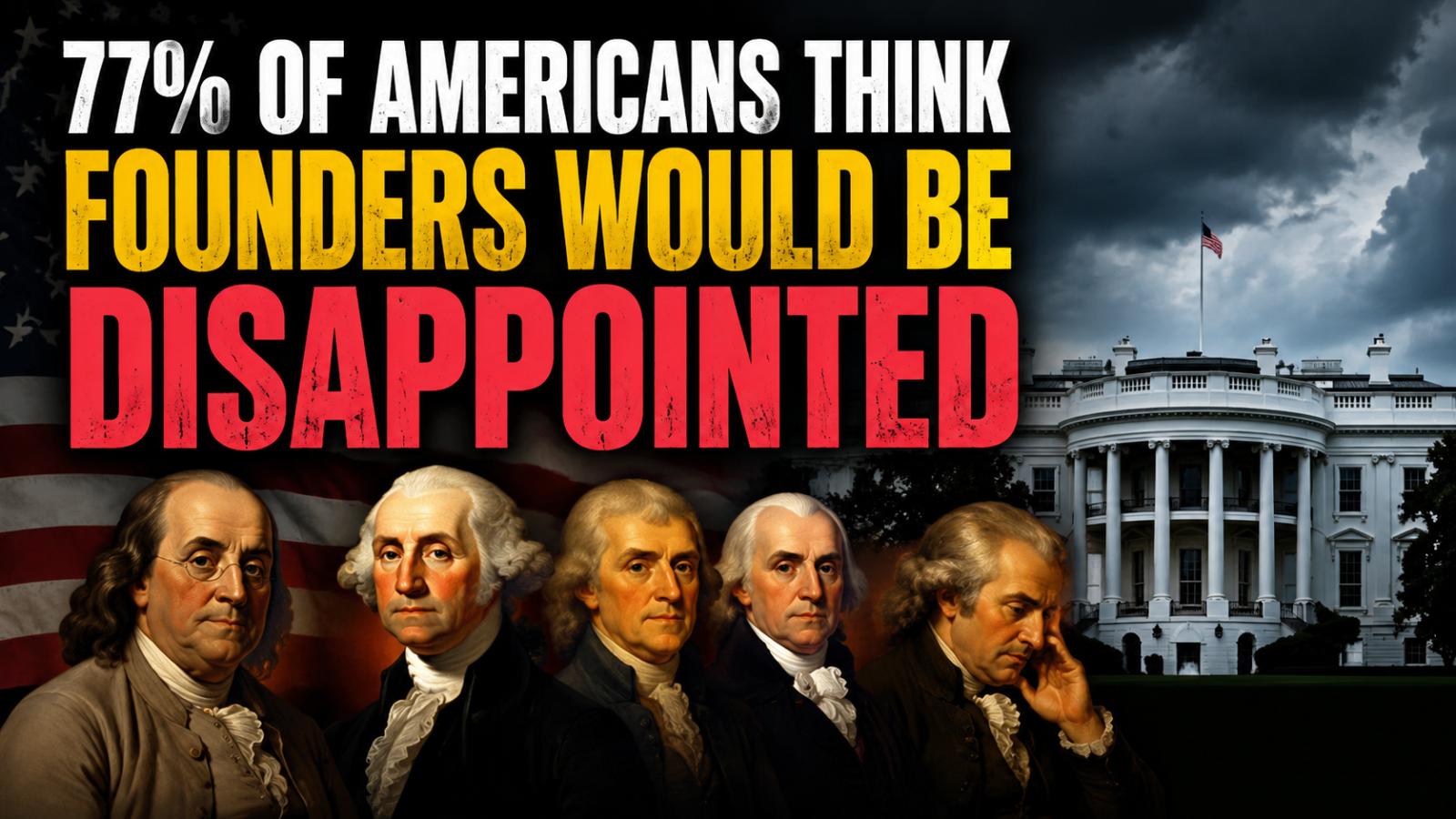
A recent Gallup survey points to a noticeable shift in how Americans view the country’s long-term direction. A large majority of respondents believe the original founders of the United States would not be satisfied with how the nation has developed as it moves closer to 250 years of independence. The findings highlight a broader sense of uncertainty around civic direction and institutional confidence. Strong majority signals dissatisfaction According to the survey results, roughly 77% of adults feel that the nation has drifted away from the principles associated with its founding era. Only a small portion believe the founders would view the country positively today. The imbalance in responses reflects a clear dominance of dissatisfaction rather than divided optimism. Political identity shapes perception The responses vary significantly depending on political affiliation. People aligned with Republican views show relatively higher optimism compared to others, while Democrats are more likely to express disappointment in current national conditions. Independent respondents fall between the two groups, but overall sentiment across all categories leans toward concern rather than approval. This suggests that dissatisfaction is not confined to a single ideological group but is spread across the spectrum. Younger adults show sharper criticism Age plays an equally important role in shaping opinions. Younger adults are more likely to question whether the country has fulfilled its founding ideals, while older groups tend to express slightly more confidence in national progress over time. This generational gap highlights a difference in expectations, with younger respondents showing lower trust in institutional outcomes. Mixed perception of national progress Despite the dominant view of disappointment, a portion of respondents still acknowledge measurable progress over time. Some believe the country has achieved at least a fair level of alignment with its founding principles, even if perfection remains out of reach. However, this recognition does not outweigh the broader concern reflected in the overall numbers. Broader implications of the findings The results point toward a country navigating contrasting perceptions of identity and progress. While historical pride remains present, it is increasingly accompanied by questions about direction, governance, and shared national values. The survey reflects not just political opinion, but a wider conversation about trust, expectations, and the future trajectory of American civic life.
Public sentiment shifts as US founders poll shows concern
A recent Gallup survey points to a noticeable shift in how Americans view the country’s long-term direction. A large majority of respondents believe the original founders of the United States would not be satisfied with how the nation has developed as it moves closer to 250 years of independence. The findings highlight a broader sense of uncertainty around civic direction and institutional confidence. Strong majority signals dissatisfaction According to the survey results, roughly 77% of adults feel that the nation has drifted away from the principles associated with its founding era. Only a small portion believe the founders would view the country positively today. The imbalance in responses reflects a clear dominance of dissatisfaction rather than divided optimism. Political identity shapes perception The responses vary significantly depending on political affiliation. People aligned with Republican views show relatively higher optimism compared to others, while Democrats are more likely to express disappointment in current national conditions. Independent respondents fall between the two groups, but overall sentiment across all categories leans toward concern rather than approval. This suggests that dissatisfaction is not confined to a single ideological group but is spread across the spectrum. Younger adults show sharper criticism Age plays an equally important role in shaping opinions. Younger adults are more likely to question whether the country has fulfilled its founding ideals, while older groups tend to express slightly more confidence in national progress over time. This generational gap highlights a difference in expectations, with younger respondents showing lower trust in institutional outcomes. Mixed perception of national progress Despite the dominant view of disappointment, a portion of respondents still acknowledge measurable progress over time. Some believe the country has achieved at least a fair level of alignment with its founding principles, even if perfection remains out of reach. However, this recognition does not outweigh the broader concern reflected in the overall numbers. Broader implications of the findings The results point toward a country navigating contrasting perceptions of identity and progress. While historical pride remains present, it is increasingly accompanied by questions about direction, governance, and shared national values. The survey reflects not just political opinion, but a wider conversation about trust, expectations, and the future trajectory of American civic life.
Venezuela earthquake 7.5 magnitude leaves 235 dead
A major earthquake struck the northern coastline of Venezuela, causing severe destruction across coastal cities and leaving at least 235 people dead. The tremor, measured at magnitudes 7.2 to 7.5, hit suddenly and was felt across a wide stretch of the Caribbean region. Thousands of residents were forced out of their homes within minutes as buildings swayed and collapsed under the force of the shaking.
Venezuela earthquake 7.5 magnitude leaves 235 dead
A major earthquake struck the northern coastline of Venezuela, causing severe destruction across coastal cities and leaving at least 235 people dead. The tremor, measured at magnitudes 7.2 to 7.5, hit suddenly and was felt across a wide stretch of the Caribbean region. Thousands of residents were forced out of their homes within minutes as buildings swayed and collapsed under the force of the shaking.
Gulf US talks focus Gaza rebuild, Iran risks and Hormuz security
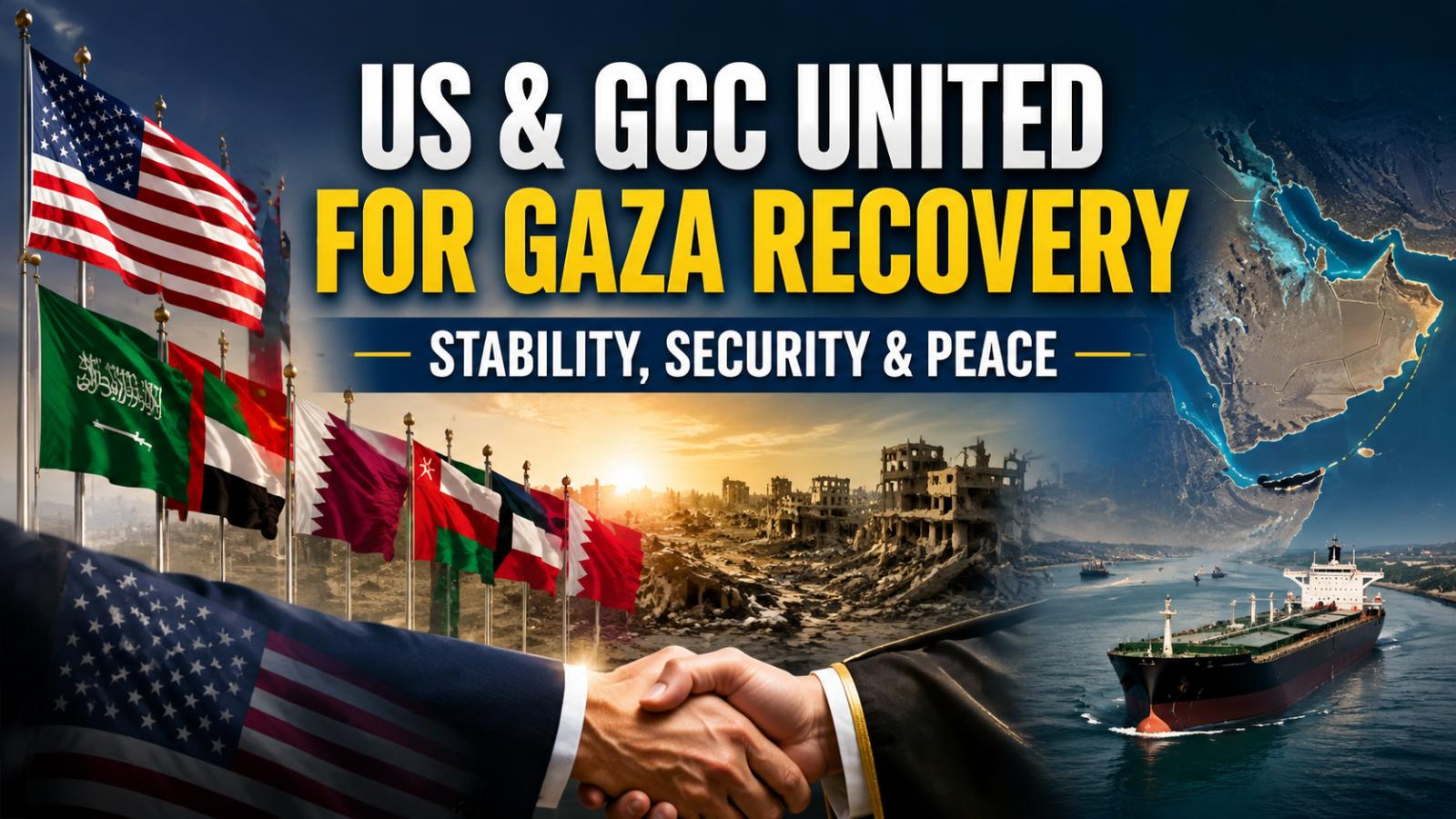
A recent round of discussions between the United States and Gulf Cooperation Council members centered on the future of Gaza, with a strong emphasis on preventing forced displacement and prioritizing civilian safety. The participating sides underscored that any population movement must remain voluntary and reversible, rejecting any framework that would permanently alter the demographic structure of the territory. The talks also reflected growin
Gulf US talks focus Gaza rebuild, Iran risks and Hormuz security
A recent round of discussions between the United States and Gulf Cooperation Council members centered on the future of Gaza, with a strong emphasis on preventing forced displacement and prioritizing civilian safety. The participating sides underscored that any population movement must remain voluntary and reversible, rejecting any framework that would permanently alter the demographic structure of the territory. The talks also reflected growin
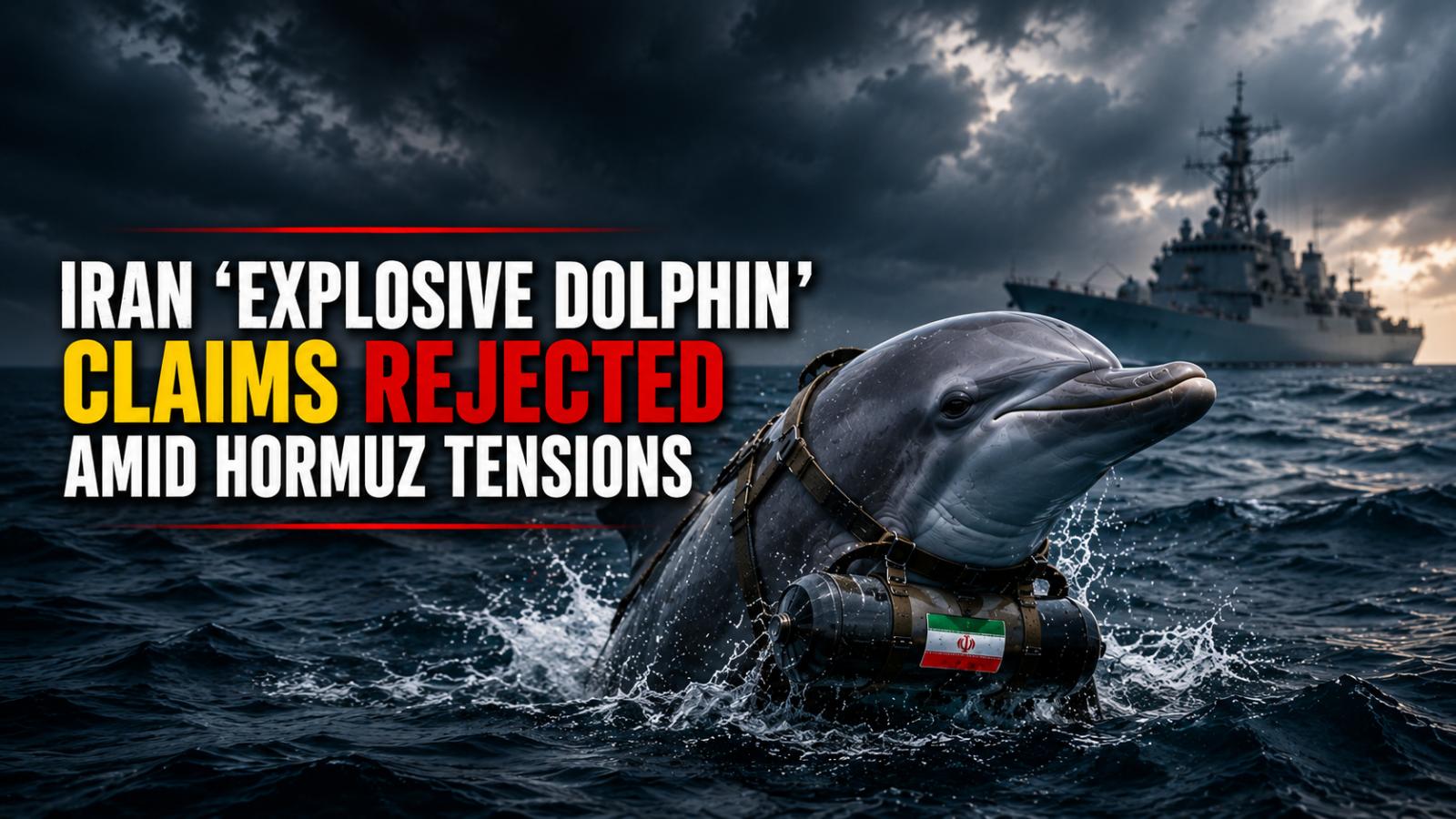
Iran proposal on shipping charges draws US criticism
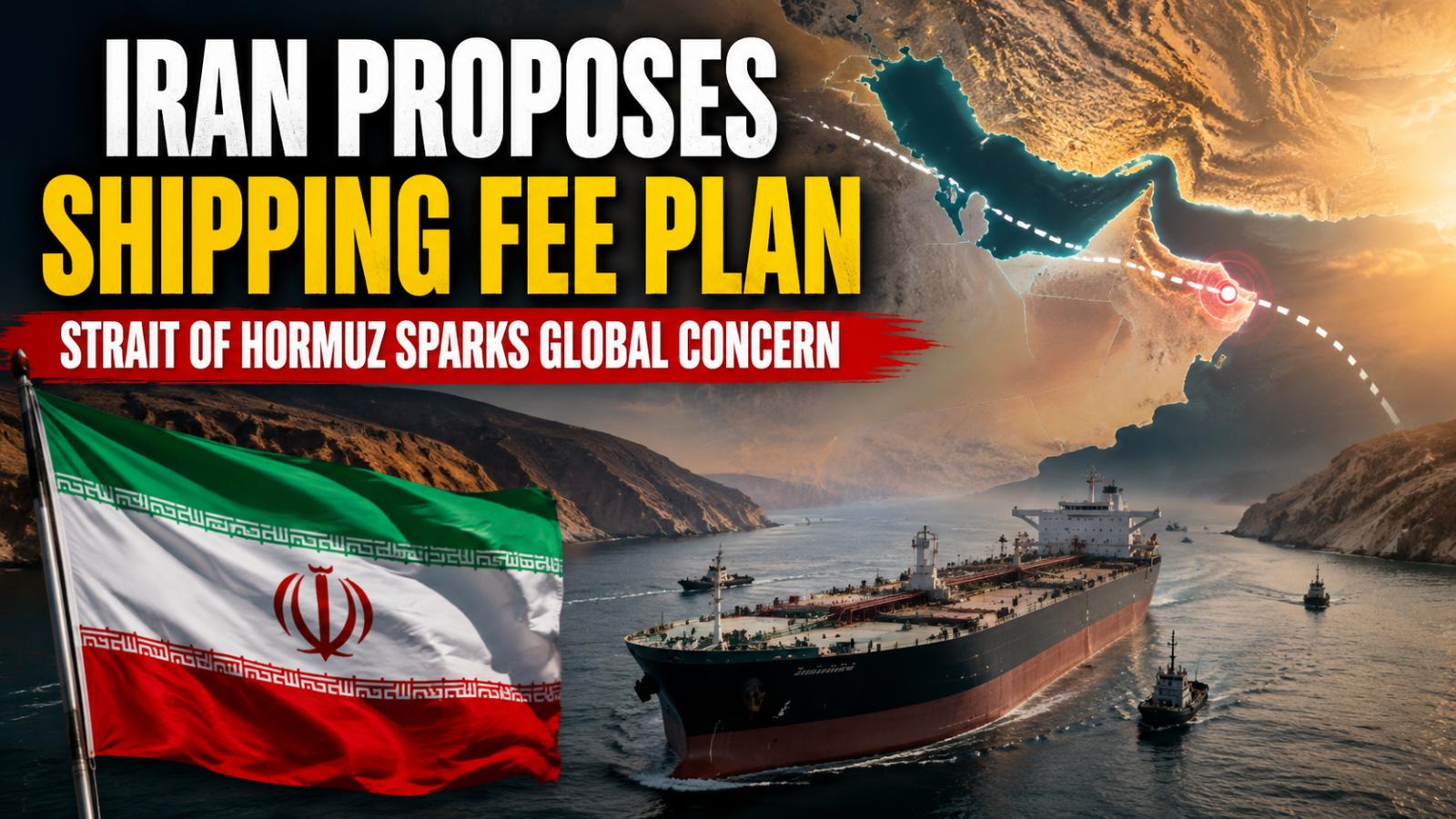
A proposal linked to Iran suggesting charges on vessels passing through the Strait of Hormuz has triggered renewed international attention on one of the world’s most sensitive maritime corridors. The passage connects the Persian Gulf to open oceans and handles a major share of global crude oil shipments, making even minor policy changes capable of influencing energy markets. Proposed fee structure and stated objectives The idea under discussion involves introducing a structured fee system for ships using the route. The proposal frames the charges as payments for services such as navigation safety, maritime monitoring, and environmental management. Early estimates circulating in policy discussions suggest the mechanism could generate substantial annual revenue if implemented at scale. However, the concept also raises immediate legal and operational questions, particularly regarding jurisdiction over international waters and the practicality of enforcing such a system on heavily trafficked global shipping lanes. Regional outreach and diplomatic positioning Reports indicate that discussions around the proposal have included outreach to several regional and global stakeholders, including major energy-importing nations. The objective appears to be building support for a shared governance or cost-sharing model for maritime traffic management in the region. Some interpretations suggest the plan is part of a broader effort to increase regional leverage over strategic trade routes. Others view it as an attempt to formalize compensation mechanisms for security responsibilities in a highly militarized shipping corridor. International reaction and US opposition The proposal has drawn clear resistance from the United States, which maintains that key international waterways must remain free for unrestricted commercial passage. US officials argue that introducing toll-like systems could disrupt global supply chains and increase volatility in energy pricing. Concerns have also been raised by other maritime stakeholders who rely heavily on stable passage through the Strait of Hormuz for crude oil and liquefied natural gas transport. Any change in cost structure or transit policy is seen as having a direct impact on insurance premiums and shipping routes. Wider implications for global energy markets The debate comes at a time when global energy markets remain highly sensitive to geopolitical developments in the Gulf region. Even the perception of restricted access or added transit costs can influence oil price expectations and shipping risk assessments. Analysts note that the discussion highlights ongoing tensions between strategic control of critical chokepoints and the principle of open international navigation. The outcome of such proposals could shape future frameworks governing global energy transport corridors.
Iran proposal on shipping charges draws US criticism
A proposal linked to Iran suggesting charges on vessels passing through the Strait of Hormuz has triggered renewed international attention on one of the world’s most sensitive maritime corridors. The passage connects the Persian Gulf to open oceans and handles a major share of global crude oil shipments, making even minor policy changes capable of influencing energy markets. Proposed fee structure and stated objectives The idea under discussion involves introducing a structured fee system for ships using the route. The proposal frames the charges as payments for services such as navigation safety, maritime monitoring, and environmental management. Early estimates circulating in policy discussions suggest the mechanism could generate substantial annual revenue if implemented at scale. However, the concept also raises immediate legal and operational questions, particularly regarding jurisdiction over international waters and the practicality of enforcing such a system on heavily trafficked global shipping lanes. Regional outreach and diplomatic positioning Reports indicate that discussions around the proposal have included outreach to several regional and global stakeholders, including major energy-importing nations. The objective appears to be building support for a shared governance or cost-sharing model for maritime traffic management in the region. Some interpretations suggest the plan is part of a broader effort to increase regional leverage over strategic trade routes. Others view it as an attempt to formalize compensation mechanisms for security responsibilities in a highly militarized shipping corridor. International reaction and US opposition The proposal has drawn clear resistance from the United States, which maintains that key international waterways must remain free for unrestricted commercial passage. US officials argue that introducing toll-like systems could disrupt global supply chains and increase volatility in energy pricing. Concerns have also been raised by other maritime stakeholders who rely heavily on stable passage through the Strait of Hormuz for crude oil and liquefied natural gas transport. Any change in cost structure or transit policy is seen as having a direct impact on insurance premiums and shipping routes. Wider implications for global energy markets The debate comes at a time when global energy markets remain highly sensitive to geopolitical developments in the Gulf region. Even the perception of restricted access or added transit costs can influence oil price expectations and shipping risk assessments. Analysts note that the discussion highlights ongoing tensions between strategic control of critical chokepoints and the principle of open international navigation. The outcome of such proposals could shape future frameworks governing global energy transport corridors.
Chicago Suburbs Storm Damage Topples Trees, Cuts Power to Thousands
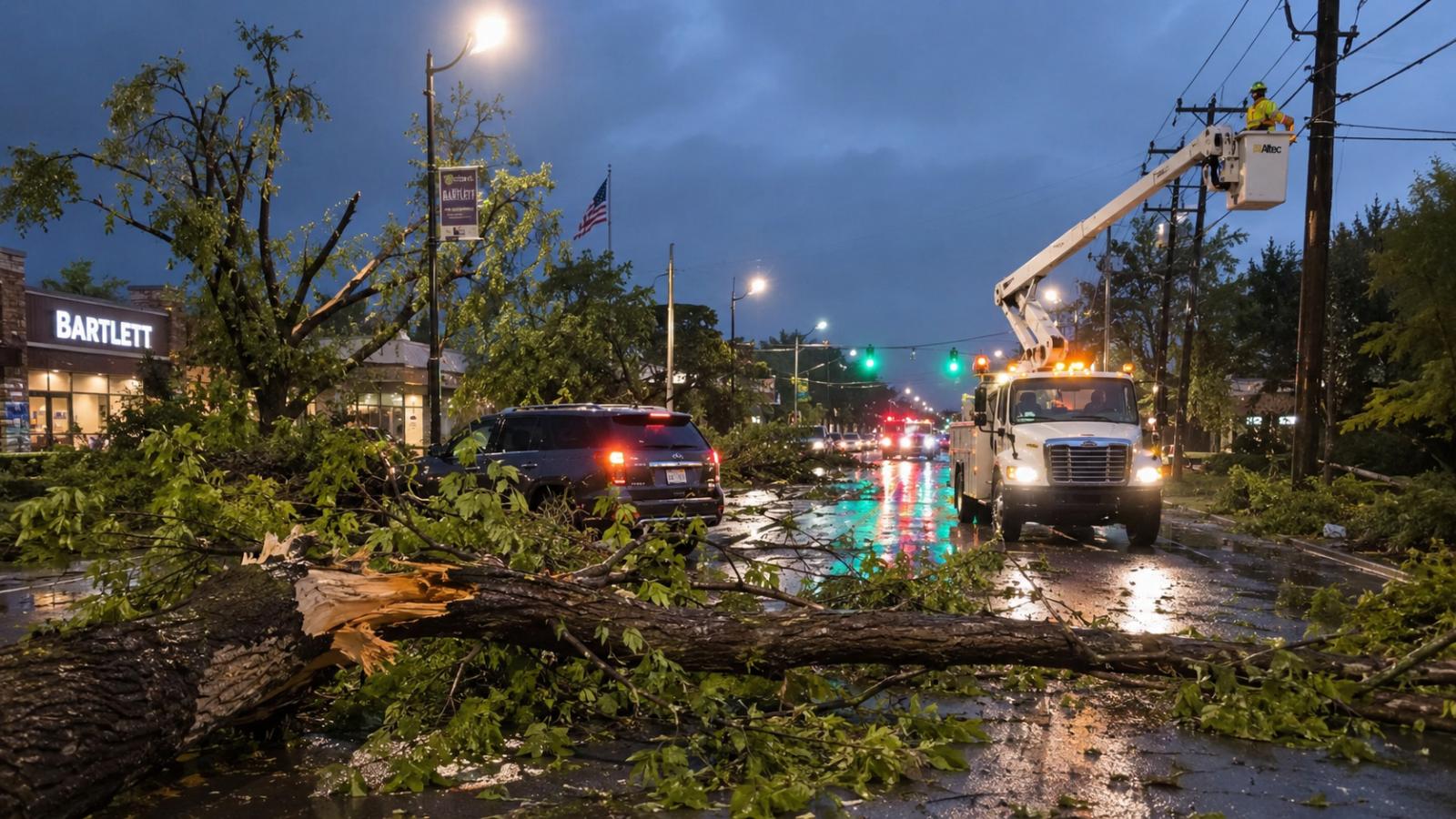
Chicago suburbs storm damage toppled trees and power lines, flooded roads and left nearly 3,000 ComEd customers without electricity after powerful storms crossed northeastern Illinois. Tornado and flash-flood warnings were issued as damaging winds, hail and heavy rain affected communities northwest of Chicago and parts of the city. Chicago Suburbs Storm Damage Hits Bartlett In Ba
Chicago Suburbs Storm Damage Topples Trees, Cuts Power to Thousands
Chicago suburbs storm damage toppled trees and power lines, flooded roads and left nearly 3,000 ComEd customers without electricity after powerful storms crossed northeastern Illinois. Tornado and flash-flood warnings were issued as damaging winds, hail and heavy rain affected communities northwest of Chicago and parts of the city. Chicago Suburbs Storm Damage Hits Bartlett In Ba
Bihar Orders Judicial Probe Into Bharat Tiwari Police Encounter
Bihar has ordered a judicial inquiry into the Bharat Tiwari police encounter after the 28-year-old died following a disputed operation in Bilauti village in Bhojpur district. The case has prompted protests, political criticism and a murder FIR naming police personnel. What Happened in the Bharat Tiwari Police Encounter Police said officers and Special Task Force personnel went to Bilauti village on Wednesday, June 17, 2026, after receiving reports that T
Bihar Orders Judicial Probe Into Bharat Tiwari Police Encounter
Bihar has ordered a judicial inquiry into the Bharat Tiwari police encounter after the 28-year-old died following a disputed operation in Bilauti village in Bhojpur district. The case has prompted protests, political criticism and a murder FIR naming police personnel. What Happened in the Bharat Tiwari Police Encounter Police said officers and Special Task Force personnel went to Bilauti village on Wednesday, June 17, 2026, after receiving reports that T
DeWine Vetoes Ohio Absentee Ballot ID and Submetering Bills
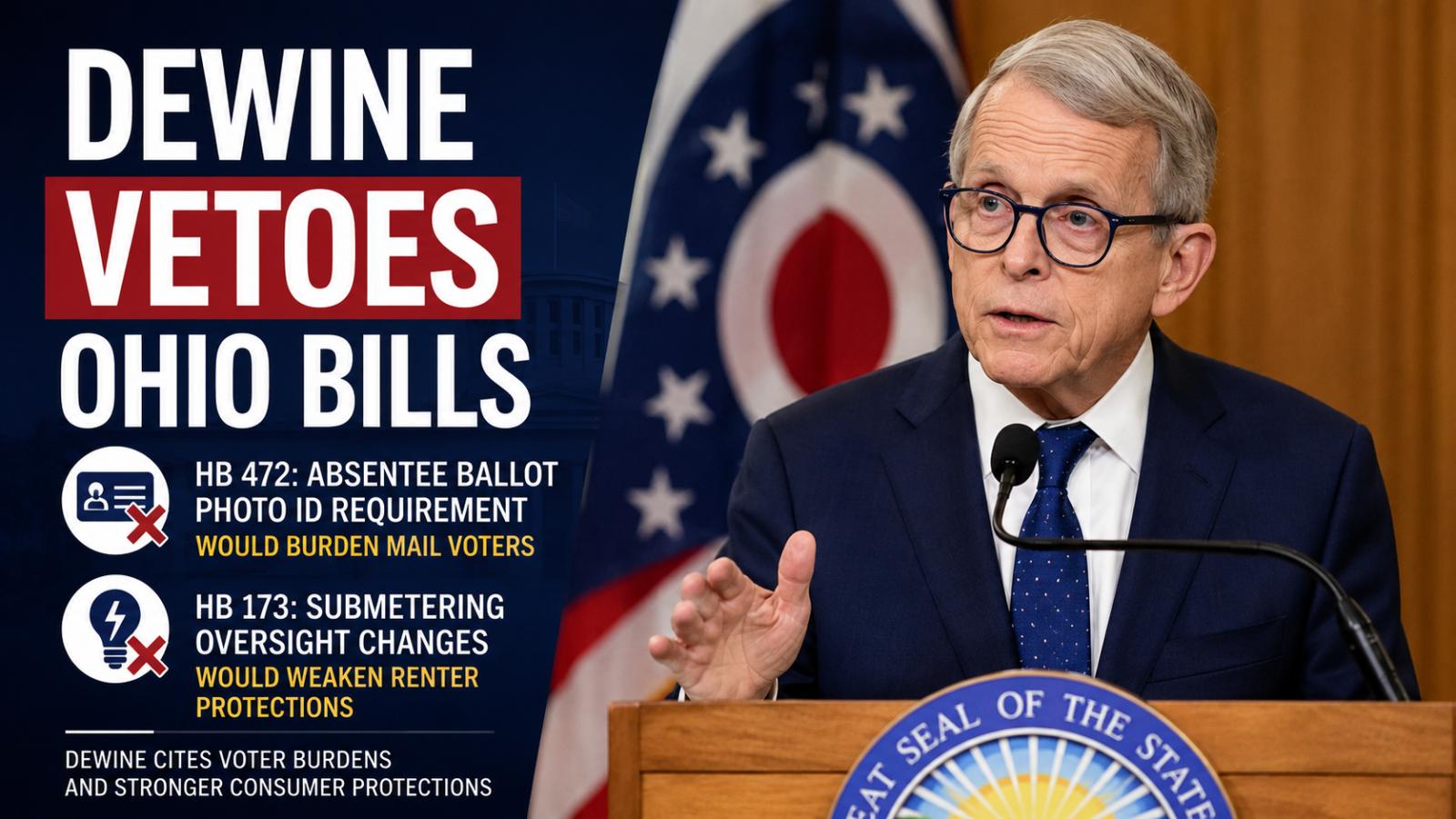
Ohio Gov. Mike DeWine vetoed the Ohio absentee ballot ID bill and a separate electric submetering measure on Wednesday night, June 24, 2026, blocking changes that would have affected mail voters and renters across the state. The Republican governor announced the vetoes in Columbus after the Ohio General Assembly ended its latest work period. No additional legislative sessions were scheduled until after the November election. Why DeWine vetoed the Ohio absentee bal
DeWine Vetoes Ohio Absentee Ballot ID and Submetering Bills
Ohio Gov. Mike DeWine vetoed the Ohio absentee ballot ID bill and a separate electric submetering measure on Wednesday night, June 24, 2026, blocking changes that would have affected mail voters and renters across the state. The Republican governor announced the vetoes in Columbus after the Ohio General Assembly ended its latest work period. No additional legislative sessions were scheduled until after the November election. Why DeWine vetoed the Ohio absentee bal
Telugu NRI Voter Registration: SATA Seeks Online Help in Andhra Pradesh, Telangana
The Saudi Arabia Telugu Association has called for stronger Telugu NRI voter registration support in Andhra Pradesh and Telangana, including online verification services and outreach in the Telugu language. The Hyderabad-based association, known as SATA, said Telugu citizens living overseas may be unsure whether they need to register, update their information or respond to requests connected to electoral-roll revisions. The association’s statement listed
Telugu NRI Voter Registration: SATA Seeks Online Help in Andhra Pradesh, Telangana
The Saudi Arabia Telugu Association has called for stronger Telugu NRI voter registration support in Andhra Pradesh and Telangana, including online verification services and outreach in the Telugu language. The Hyderabad-based association, known as SATA, said Telugu citizens living overseas may be unsure whether they need to register, update their information or respond to requests connected to electoral-roll revisions. The association’s statement listed
South Africa’s Remarkable FIFA World Cup Journey Ends in Historic Knockout Qualification
South Africa have written a new chapter in their football history after securing a place in the FIFA World Cup knockout stage for the very first time. Bafana Bafana defeated South Korea 1-0 in their final Group A match, completing one of the tournament's most inspiring turnaround stories. The achievement is even more remarkable considering the challenges South Africa faced before the competition began. Due to administrative issues and visa
South Africa’s Remarkable FIFA World Cup Journey Ends in Historic Knockout Qualification
South Africa have written a new chapter in their football history after securing a place in the FIFA World Cup knockout stage for the very first time. Bafana Bafana defeated South Korea 1-0 in their final Group A match, completing one of the tournament's most inspiring turnaround stories. The achievement is even more remarkable considering the challenges South Africa faced before the competition began. Due to administrative issues and visa
Karnataka Launches Praja Seva Department For Faster Public Services
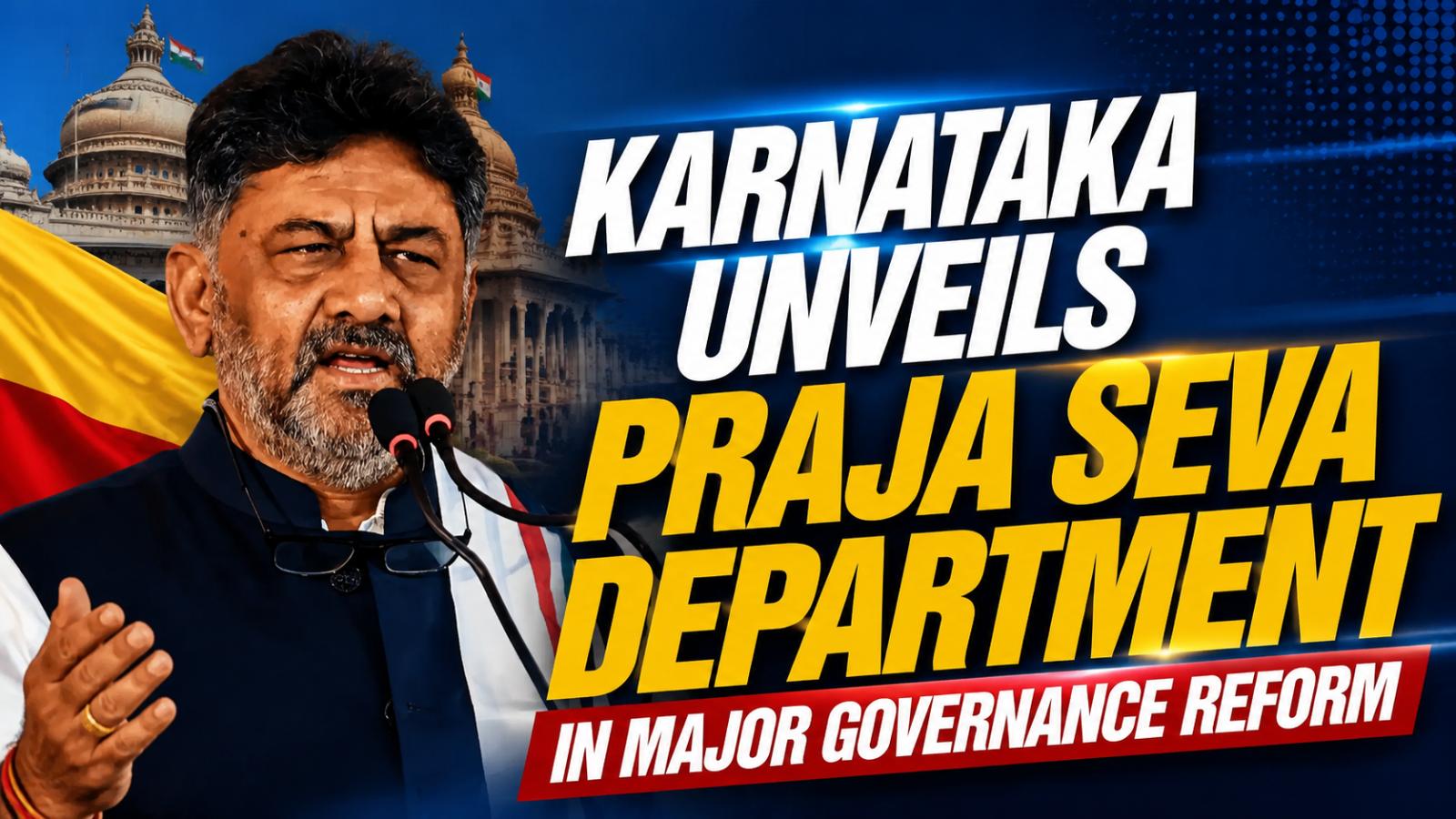
Karnataka Unveils Praja Seva Department In Major Governance Reform In a significant move aimed at transforming public administration and enhancing service delivery, the Karnataka government has established a new Praja Seva Department by bringing together several key governance and citizen-service wings under one umbrella. The decision, approved by the state Cabinet and formalised through a government order issued on June 24, is being viewed as a major step towards b
Karnataka Launches Praja Seva Department For Faster Public Services
Karnataka Unveils Praja Seva Department In Major Governance Reform In a significant move aimed at transforming public administration and enhancing service delivery, the Karnataka government has established a new Praja Seva Department by bringing together several key governance and citizen-service wings under one umbrella. The decision, approved by the state Cabinet and formalised through a government order issued on June 24, is being viewed as a major step towards b
CM Vijay Launches 300 New Buses, Takes Ride Across Chennai
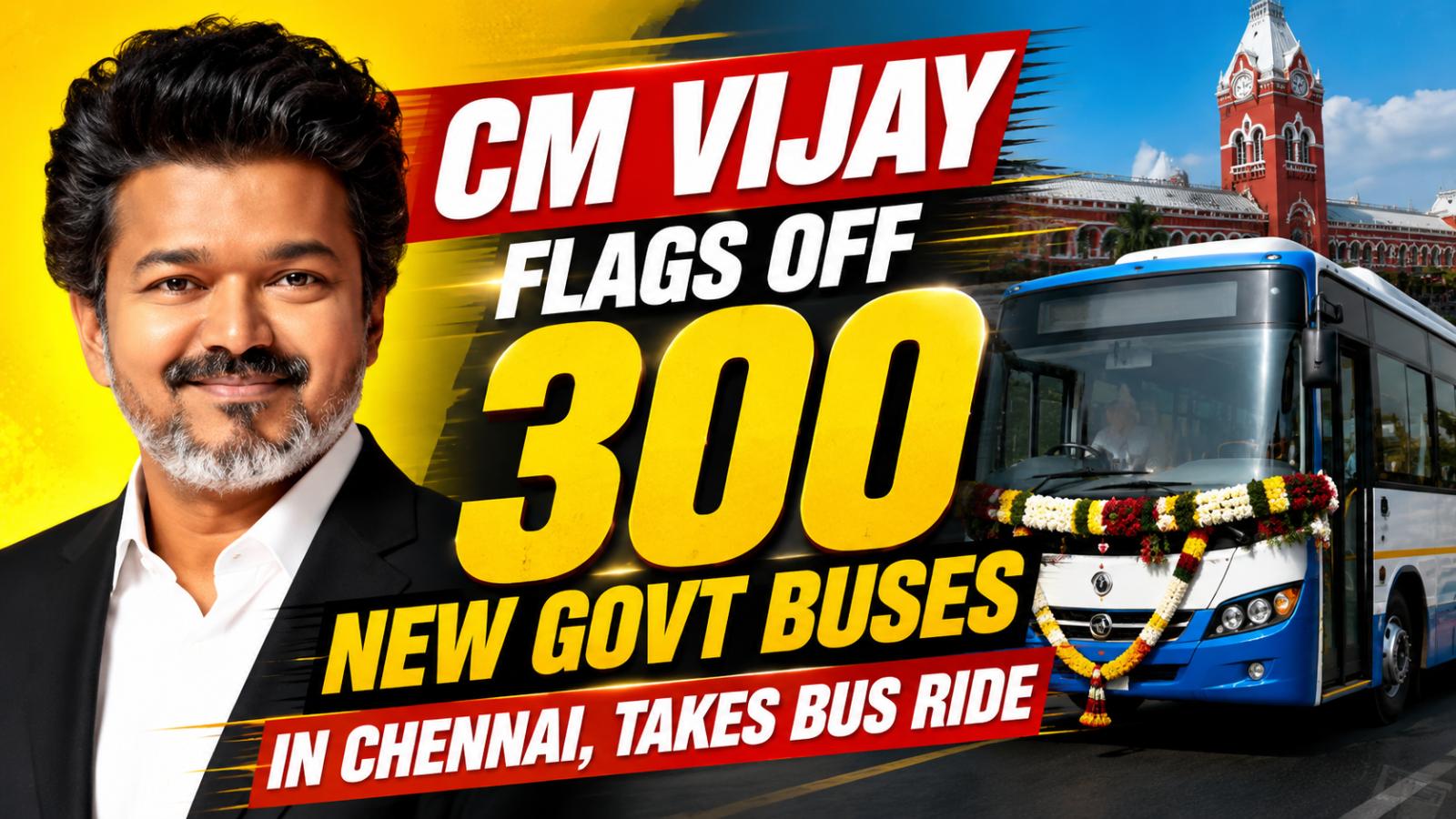
Tamil Nadu Adds 300 New Buses To Public Transport Fleet In a significant move aimed at strengthening public transportation services across Tamil Nadu, Chief Minister C Joseph Vijay on Thursday, June 25, 2026, inaugurated 300 new buses procured by the State Transport Corporation at an estimated cost of Rs 127.21 crore. The buses were flagged off from major transit hubs, including Kilambakkam and Koyambedu bus terminals in Chennai, and began operations immediately aft
CM Vijay Launches 300 New Buses, Takes Ride Across Chennai
Tamil Nadu Adds 300 New Buses To Public Transport Fleet In a significant move aimed at strengthening public transportation services across Tamil Nadu, Chief Minister C Joseph Vijay on Thursday, June 25, 2026, inaugurated 300 new buses procured by the State Transport Corporation at an estimated cost of Rs 127.21 crore. The buses were flagged off from major transit hubs, including Kilambakkam and Koyambedu bus terminals in Chennai, and began operations immediately aft
Cpim-BJP Clash Erupts at Thiruvananthapuram Corporation Over Oath Row
A political confrontation at the Thiruvananthapuram Corporation escalated into a brief scuffle between CPI(M) and BJP councillors on Thursday. The clash was triggered by ongoing disputes over a controversial oath-taking issue and demands for the resignation of a BJP councillor facing legal action. Cpim Protest Intensifies Over Councillor and Oath Controversy Tension gripped the Thiruvananthapuram Corporation premises after CPI(M) councillors staged a prot
Cpim-BJP Clash Erupts at Thiruvananthapuram Corporation Over Oath Row
A political confrontation at the Thiruvananthapuram Corporation escalated into a brief scuffle between CPI(M) and BJP councillors on Thursday. The clash was triggered by ongoing disputes over a controversial oath-taking issue and demands for the resignation of a BJP councillor facing legal action. Cpim Protest Intensifies Over Councillor and Oath Controversy Tension gripped the Thiruvananthapuram Corporation premises after CPI(M) councillors staged a prot
Tungabhadra gates inaugurated in Hosapete by three CMs
According to reports from June 25, 2026, leaders from Andhra Pradesh, Telangana, and Karnataka gathered in Hosapete (Hospet), Karnataka, ahead of the inauguration of the newly installed gates at the Tungabhadra Dam. The event was attended by Union Jal Shakti Minister C. R.
Tungabhadra gates inaugurated in Hosapete by three CMs
According to reports from June 25, 2026, leaders from Andhra Pradesh, Telangana, and Karnataka gathered in Hosapete (Hospet), Karnataka, ahead of the inauguration of the newly installed gates at the Tungabhadra Dam. The event was attended by Union Jal Shakti Minister C. R.
Summer Davos spotlights US China economic friction
The gathering in Dalian under the World Economic Forum’s “Summer Davos” platform brought together policymakers, business leaders and economists at a time when global growth signals are weakening. The discussions reflected a clear shift in tone: confidence in stable trade expansion is fading, replaced by concern over fragmentation and competing economic blocs. US–China
Summer Davos spotlights US China economic friction
The gathering in Dalian under the World Economic Forum’s “Summer Davos” platform brought together policymakers, business leaders and economists at a time when global growth signals are weakening. The discussions reflected a clear shift in tone: confidence in stable trade expansion is fading, replaced by concern over fragmentation and competing economic blocs. US–China