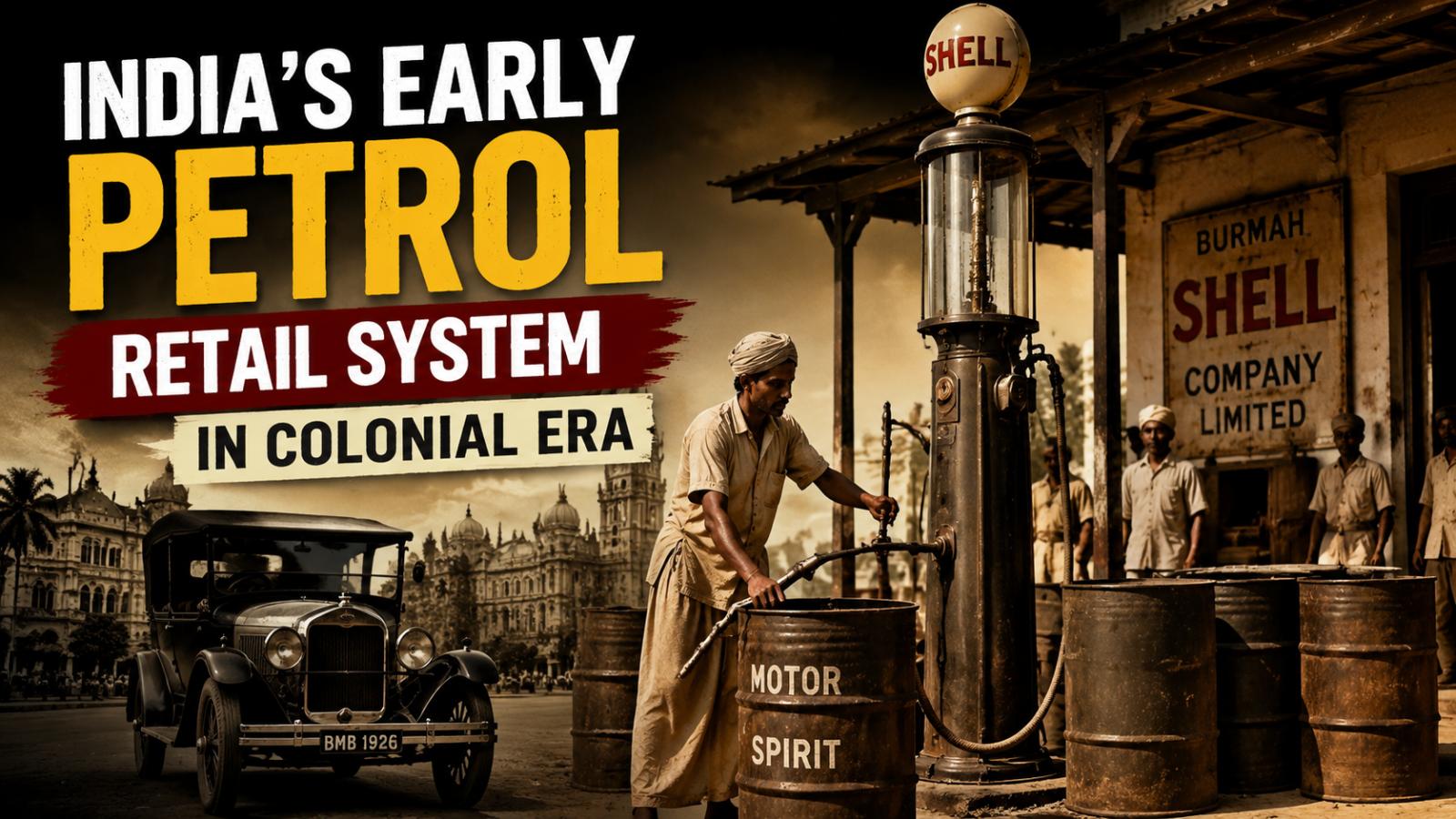
India’s early petrol retail system began in the early 1920s during the British colonial period when automobiles were still a rare luxury. The petrol retail system in colonial India first appeared in major cities like Bombay (Mumbai) and Calcutta (Kolkata). At that time, there were no modern fuel stations, and petrol was supplied through depots, barrels, and basic manual systems. This early structure marked the foundation of the petrol retail system in colonial India and served only a limited group of users.
Dependence on imported fuel sources
During this period, India had very limited oil production. Most petrol was imported through the British imperial trade network. The imported oil came mainly from Burma, Persia, and other oil-producing regions under British control. This imported oil system made India heavily dependent on external sources for fuel supply. The oil import system played a key role in shaping how early petrol retail operations functioned across cities.
Role of burmah shell in fuel distribution
One of the major companies involved was Burmah Shell, which managed fuel storage and distribution across urban centers. Burmah Shell India operated depots and controlled the supply chain in key regions. These early fuel depots were not modern petrol pumps but organized colonial-era storage and distribution points. The company played a central role in shaping early fuel retail operations and expanding access in cities.
Manual petrol pumps and basic technology
Early petrol stations used manual petrol pump systems instead of modern electric dispensers. Fuel was moved using hand-operated pumps or gravity-fed systems from barrels into containers or vehicles. Workers had to physically operate the system, making the process slow and labor-intensive. This manual petrol pump system represented the early stage of fuel retail evolution in India.
Limited access and elite vehicle ownership
Vehicle ownership during the colonial period was extremely limited. Cars were mainly owned by British officials, princely rulers, and wealthy Indian elites. Because of this, petrol usage was also restricted to a small section of society. While there were no legal restrictions on petrol access, high costs and limited infrastructure made it inaccessible for the general population.
Evolution towards modern petrol stations
By the 1930s and 1940s, with increasing automobile usage, the petrol retail system began to evolve. Basic depots gradually transformed into structured petrol stations with better storage systems and improved dispensing technology. This transition marked the beginning of modern fuel retail development in India, leading to today’s automated petrol pump network.


 Joyful
0%
Joyful
0%
 Cool
0%
Cool
0%
 Thrilled
0%
Thrilled
0%
 Upset
0%
Upset
0%
 Unhappy
0%
Unhappy
0%