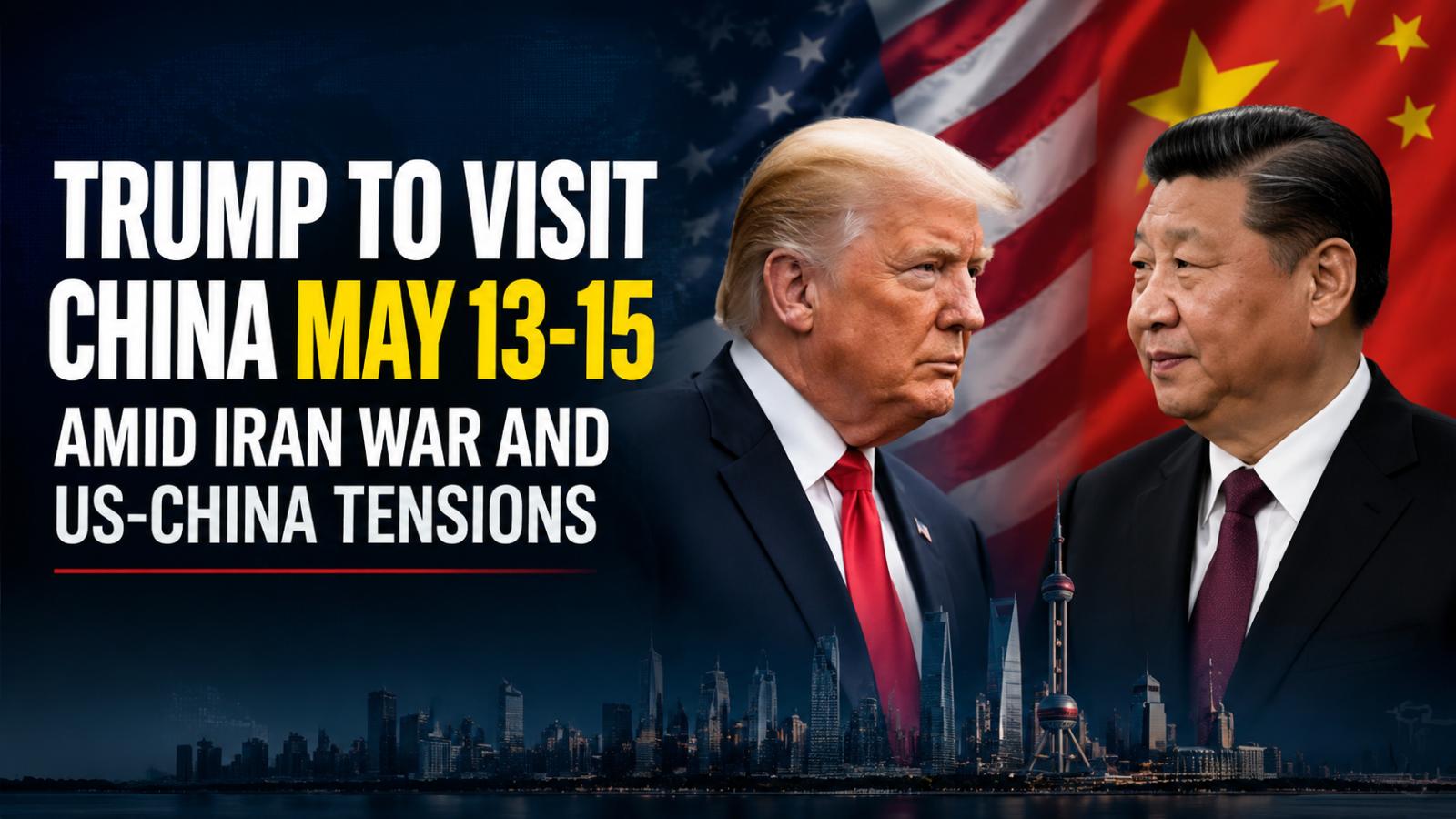
Trump’s Departure for Beijing President Donald Trump left Washington on May 12th for a high-stakes summit with Chinese President Xi Jinping in Beijing. As he boarded Air Force One for the trip, Trump addressed reporters, emphasizing that Iran is "under control" and that the United States either intends to make a deal or "decimate" Iran’s military capabilities. This rhetoric comes amid the ongoing conflict with Iran, with Trump reiterating his u
The sinking of the Russian cargo ship Ursa Major near Spain has triggered new questions over whether the vessel was carrying sensitive nuclear reactor components possibly linked to North Korea. The ship sank in the Mediterranean Sea on Monday, December 23, 2024, after explosions struck the vessel near its engine room. Fourteen crew members were rescued, while two died or were reported missing, according to official accounts. Why Spain Is Investiga
President Donald Trump said the Iran ceasefire is close to collapse after rejecting Tehran’s latest truce proposal, deepening uncertainty over US-Iran tensions and Middle East stability. Speaking on Monday, May 11, 2026, Trump called Iran’s response unacceptable and said the ceasefire was on “massive life support.” His remarks signaled that Washington is not ready to ease pressure unless Tehran accepts stricter terms on security and nuclear activity. Why T
Chinese Foreign Minister Wang Yi has called for an immediate and complete end to the ongoing conflict in West Asia. During a high-level meeting with Iran’s Foreign Minister Seyed Abbas Araghchi in Beijing, Wang stressed the importance of achieving a comprehensive ceasefire without any delay. He also urged both the United States and Iran to reopen the Strait of Hormuz "as soon as possible" to help stabilize global energy markets, which have been severely impacted by the conflict. A
More than two months into military action against Iran, Donald Trump is facing a difficult reality: the conflict is far from over—and there’s no clear way out. What began as a show of strength has turned into a prolonged standoff, with rising global consequences. Military Gains, But No Strategic Victory The United States, alongside Israeli forces, has carried out multiple strikes targeting Iran’s
The United States has fast-tracked more than $8.6 billion in arms sales to key Middle East allies, signaling a sharp escalation in its response to rising tensions with Iran. Approved under emergency powers, the move bypasses Congress and reflects Washington’s urgency to strengthen regional defenses as the conflict enters a critical phase. Emergency Approval Signals Rising Urgency The decision, issued on Friday, invokes a rarely used em
US missile stockpile concerns during Iran war
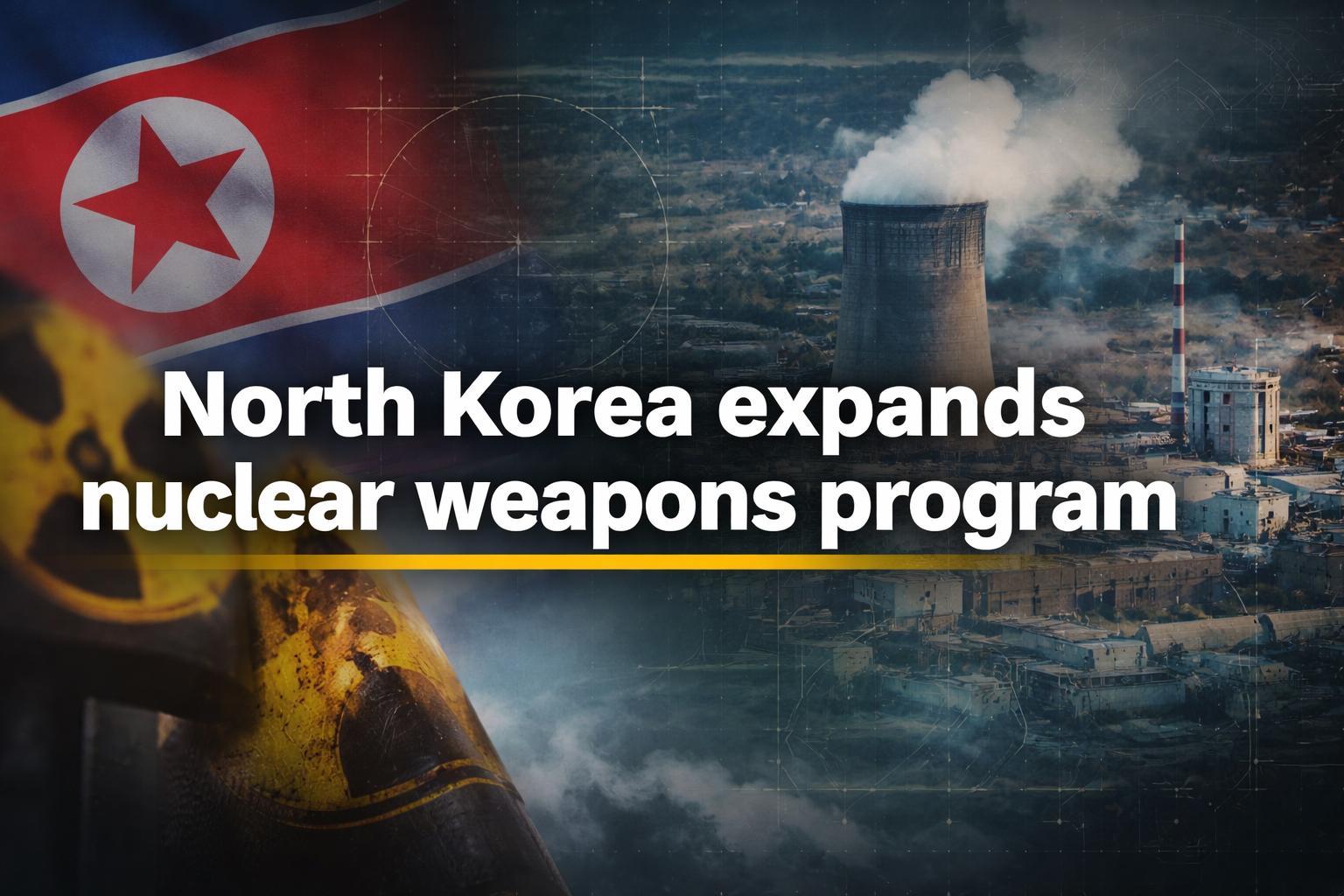
The International Atomic Energy Agency (IAEA) has raised concerns over North Korea’s increasing nuclear capabilities, citing a significant rise in activity at the Yongbyon nuclear complex. Rafael Grossi, the head of the IAEA, confirmed during his visit to Seoul that the agency has observed intensified operations at the five-megawatt reactor and the reprocessing unit at Yongbyon. Grossi noted that these developments signal a troubling expansion of North Korea’s nuclear weapons production c
India's journey into nuclear weapons began in the early 1940s under British colonial rule. Following independence in 1947, the country embarked on a peaceful nuclear program primarily focused on energy production. At the helm of the program was Prime Minister Jawaharlal Nehru, who aimed to harness nuclear energy for civilian use, emphasizing the peaceful applications of atomic power. However, the political landscape began shifting in the 1960s as India faced mounting security concerns, partic
The global system governing nuclear weapons is not anchored in a single treaty but rather a web of agreements, arms-control arrangements, and regional initiatives, each designed to address different facets of nuclear security. While some agreements restrict which nations can possess nuclear weapons, others focus on halting tests, limiting arsenals, or even striving to establish nuclear-weapon-free zones. As of 2025, nine countries—led by the United States and Russia—currently mainta
A nuclear weapon explosion unleashes an overwhelming amount of energy through either nuclear fission or fusion, resulting in devastating consequences that can persist for decades. Upon detonation, a rapid chain reaction occurs, converting a tiny amount of mass into an enormous amount of energy, based on Einstein’s Mass–energy equivalence principle. This energy is released in multiple destructive layers, each contributing to the profound impact on the environment and living organisms
US President Donald Trump has stated that Iran has agreed to never develop nuclear weapons, describing the development as a sign of progress in ongoing diplomatic engagement between the two countries. His remarks come at a time when tensions in the Middle East remain high, with regional conflict continuing to shape the broader geopolitical landscape. Speaking to reporters at the Oval Office, Trump adopted an optimistic tone, indicating that backchannel communicati
Iran has vowed to continue its fight against the United States and Israel following the killing of Ali Larijani, one of Iran's most influential political figures, in an Israeli airstrike. Iranian foreign minister Syed Abbas Araghchi made a bold statement, declaring that Iran’s political and economic structure would remain intact despite the loss of Larijani, the head of the Supreme National Security Council, who was killed alongside his family members and bodyguards near Tehran. I
The United States sharply criticised Russia on Monday, January 12, for its use of a nuclear-capable Oreshnik ballistic missile in Ukraine, describing the launch as a dangerous and unjustified escalation of the ongoing conflict. The condemnation was delivered during an emergency meeting of the United Nations Security Council convened to address the latest developments in the war. Addressing the council, US Deputy Ambassador to the United Nations Tammy Bruce said Russia’s decision t
Newly released diplomatic transcripts have revealed that Russian President Vladimir Putin had expressed serious concerns to the United States as early as 2001 over Pakistan’s nuclear weapons programme, questioning why the West appeared largely unconcerned about a country without democratic governance possessing nuclear arms. The remarks were made during a private meeting with then US President