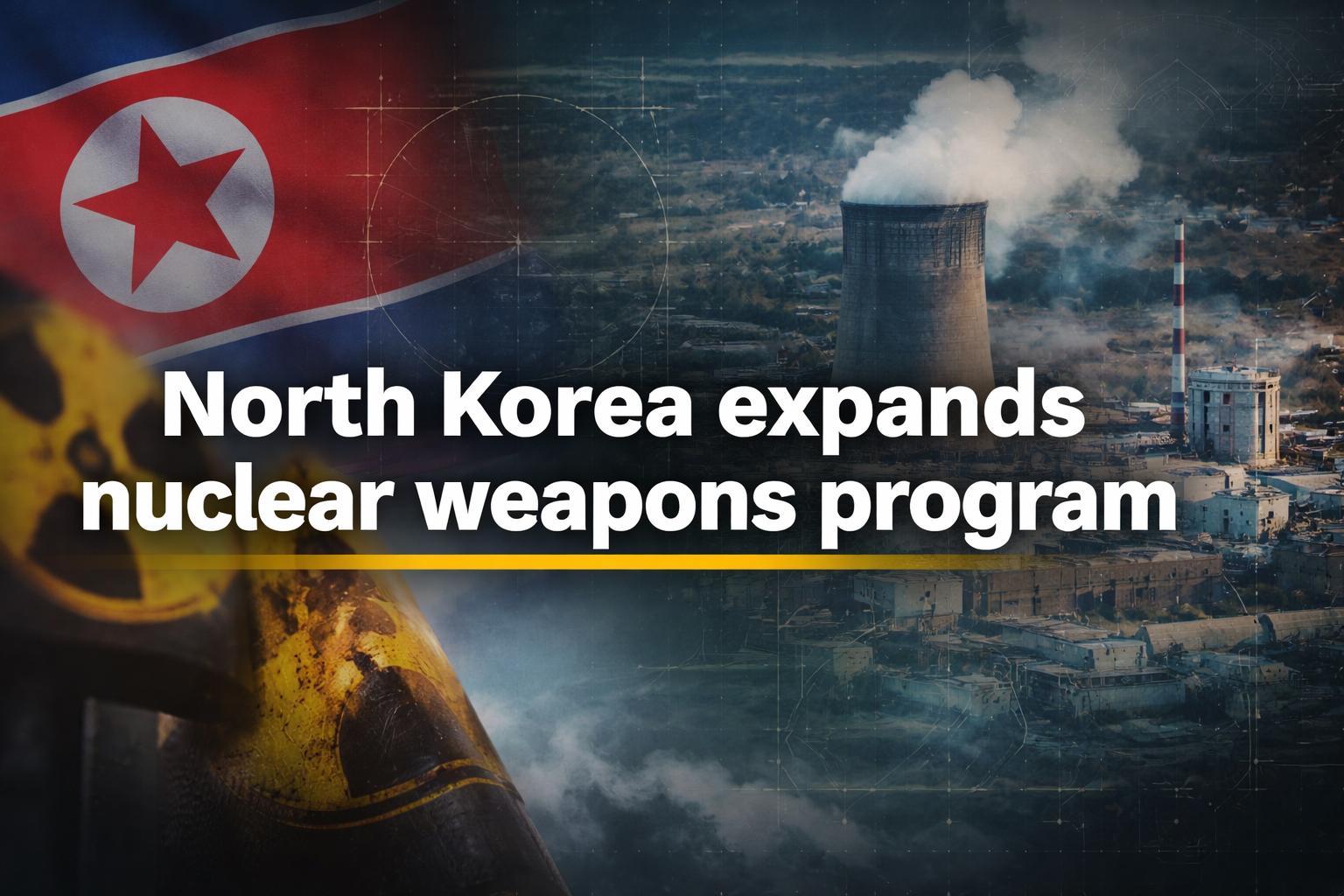
The International Atomic Energy Agency (IAEA) has raised concerns over North Korea’s increasing nuclear capabilities, citing a significant rise in activity at the Yongbyon nuclear complex. Rafael Grossi, the head of the IAEA, confirmed during his visit to Seoul that the agency has observed intensified operations at the five-megawatt reactor and the reprocessing unit at Yongbyon. Grossi noted that these developments signal a troubling expansion of North Korea’s nuclear weapons production capabilities.
“During our periodic assessments, we have confirmed a rapid increase in operations at the Yongbyon reactor,” Grossi said. This heightened activity, he added, points to a serious expansion of the country’s ability to produce nuclear weapons. The IAEA's findings are consistent with satellite imagery that supports the possibility of new production facilities at Yongbyon, capable of generating weapons-grade material.
The construction of a new uranium enrichment facility has also been detected, further bolstering the concerns over North Korea’s nuclear ambitions. Enriching uranium, experts say, offers a more effective method for producing weapons-grade material than plutonium reprocessing, which has been North Korea's traditional approach. The new enrichment facility suggests that the country is diversifying its nuclear production methods to increase its stockpile of fissile material.
Despite the ongoing concerns, Grossi emphasized that direct inspections of North Korea’s nuclear facilities are not currently possible. Pyongyang expelled IAEA inspectors in 2009, making external analysis through satellite imagery the primary means of monitoring the country’s nuclear program. The IAEA’s assessment points to a significant increase in North Korea’s uranium enrichment capacity, underscoring the expansion of its nuclear weapons infrastructure.
Grossi also addressed the growing concerns over North Korea’s ties with Russia, noting that the agency had not observed any specific Russian assistance in North Korea’s nuclear weapons program. However, the increasing activity at Yongbyon remains a major concern for global security.
North Korea’s nuclear program, which began with its first nuclear test in 2006, has consistently raised alarms in the international community. Despite heavy UN sanctions and widespread condemnation, the regime has vowed not to abandon its nuclear weapons ambitions, further heightening tensions in the region. As North Korea continues to advance its nuclear capabilities, the threat of nuclear proliferation remains a significant global concern.