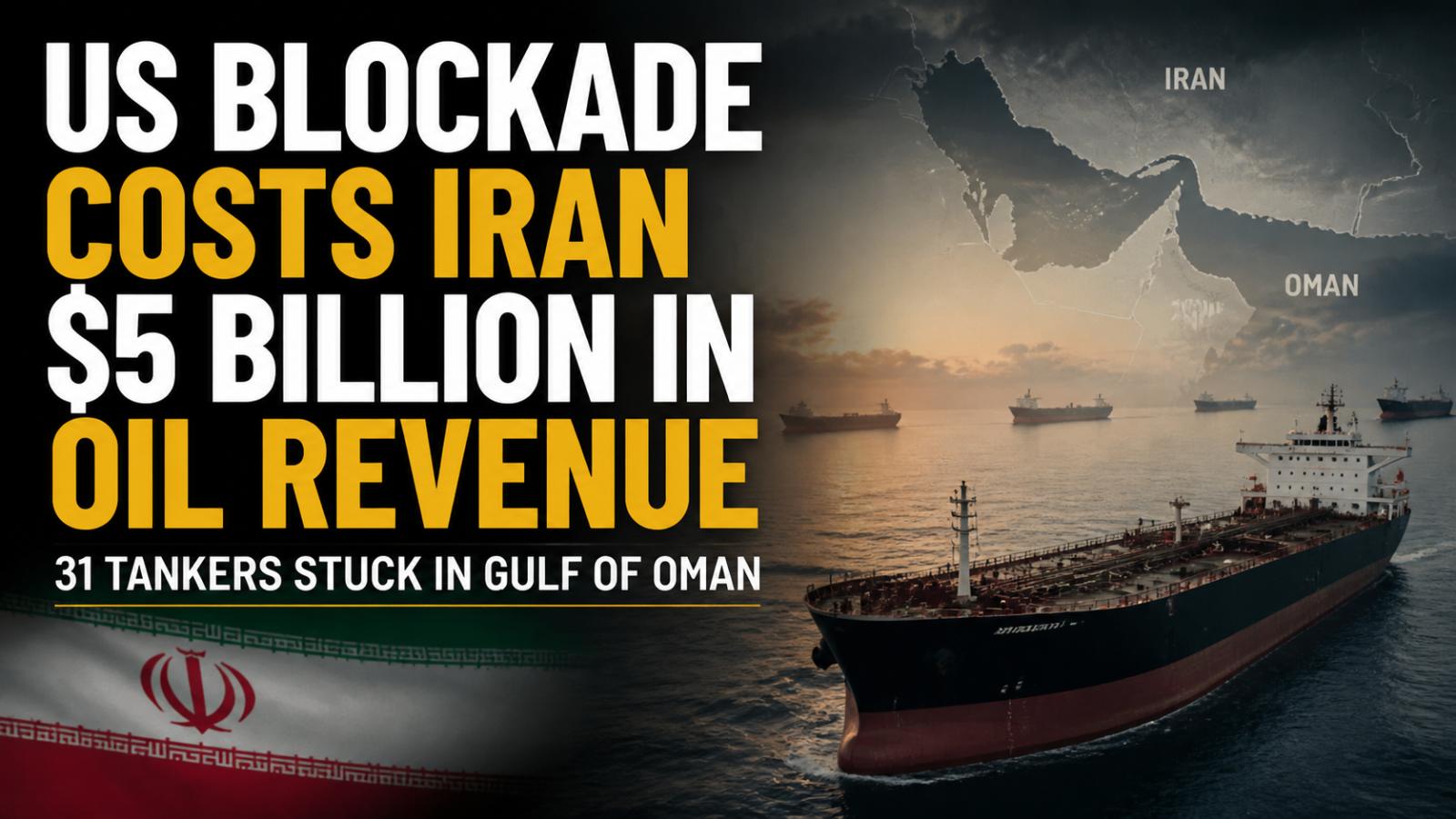
The ongoing US blockade in the Gulf of Oman has forced Iran to face a massive loss, with the US Defense Department estimating that Tehran has lost nearly $5 billion in oil revenue. This economic setback is the result of a blockade imposed by the US military in an effort to increase pressure on Iran’s economy. The blockade, which began on April 13, 2025, has been described as one of President Donald Trump’s most powerful tools to drive Iran into negotiations that aim to resolve the ongoing conflict. However, diplomatic talks have been repeatedly stalling and restarting, leaving both parties in a stalemate.
According to Pentagon officials, more than 40 vessels have been redirected since the operation’s start, as they attempted to smuggle oil and other contraband through the region. In total, 31 tankers carrying approximately 53 million barrels of Iranian crude are now stuck in the Gulf of Oman, and these shipments are valued at around $4.8 billion. Of these, two vessels have already been seized by US forces.
With storage capacity on land reaching its limits, Iran has resorted to using older tankers as floating storage units, as reported by analysts. These tankers, which are no longer fit for regular commercial routes, have become temporary storage sites for Iran’s oil. Some shipments are being rerouted along longer and more expensive paths, primarily to avoid interception by US forces. To achieve this, Iranian ships have been following coastlines near Pakistan and India and using safer maritime corridors towards the Strait of Malacca, a key transit point for oil bound for China.
Tanker tracking analysts such as Samir Madani, co-founder of TankerTrackers.com, have noted a shift in Iranian shipping patterns. He explained how one Iranian tanker, called “HUGE,” cleverly demonstrated how ships are using stealth routes to evade detection. According to Madani, ships are increasingly relying on hidden paths through regional waters to avoid the US military blockade. Madani also predicted that, in the future, Iran might attempt a large-scale breakout of its tankers.
"I think the Iranians will wait for an opportunity to launch an overnight 'Great Escape' once they have built up further storage near the border with Pakistan,” Madani told Axios.
This situation is part of a broader economic struggle between Iran and the United States, with both countries resorting to maritime pressure tactics. Iran has previously restricted access to the Strait of Hormuz, a critical shipping route, in retaliation. Meanwhile, the US has been tightening its control over the Gulf of Oman, an entry point to key waterways.
According to Gregory Brew, an analyst at Eurasia Group, Iran is just weeks away from running out of storage space for its oil, which could collapse its oil production capacity. "They're probably several weeks, or perhaps as much as a month, away from running out of storage," Brew said.
The Pentagon’s spokesperson, Joel Valdez, emphasized the severity of the situation, stating that the blockade is fully active and that the US military is delivering a devastating blow to Iran’s ability to fund terrorism and regional destabilization. “Our armed forces in the region will continue to maintain this unrelenting pressure,” Valdez said. This strategy, although harsh, seems designed to wear down Iran’s ability to sustain itself economically, and possibly force a change in its approach to negotiations.
The ongoing US blockade in the Gulf of Oman has forced Iran to face a massive loss, with the US Defense Department estimating that Tehran has lost nearly $5 billion in oil revenue. This economic setback is the result of a blockade imposed by the US military in an effort to increase pressure on Iran’s economy. The blockade, which began on April 13, 2025, has been described as one of President Donald Trump’s most powerful tools to drive Iran into negotiations that aim to resolve the ongoing conflict. However, diplomatic talks have been repeatedly stalling and restarting, leaving both parties in a stalemate.
According to Pentagon officials, more than 40 vessels have been redirected since the operation’s start, as they attempted to smuggle oil and other contraband through the region. In total, 31 tankers carrying approximately 53 million barrels of Iranian crude are now stuck in the Gulf of Oman, and these shipments are valued at around $4.8 billion. Of these, two vessels have already been seized by US forces.
With storage capacity on land reaching its limits, Iran has resorted to using older tankers as floating storage units, as reported by analysts. These tankers, which are no longer fit for regular commercial routes, have become temporary storage sites for Iran’s oil. Some shipments are being rerouted along longer and more expensive paths, primarily to avoid interception by US forces. To achieve this, Iranian ships have been following coastlines near Pakistan and India and using safer maritime corridors towards the Strait of Malacca, a key transit point for oil bound for China.
Tanker tracking analysts such as Samir Madani, co-founder of TankerTrackers.com, have noted a shift in Iranian shipping patterns. He explained how one Iranian tanker, called “HUGE,” cleverly demonstrated how ships are using stealth routes to evade detection. According to Madani, ships are increasingly relying on hidden paths through regional waters to avoid the US military blockade. Madani also predicted that, in the future, Iran might attempt a large-scale breakout of its tankers.
"I think the Iranians will wait for an opportunity to launch an overnight 'Great Escape' once they have built up further storage near the border with Pakistan,” Madani told Axios.
This situation is part of a broader economic struggle between Iran and the United States, with both countries resorting to maritime pressure tactics. Iran has previously restricted access to the Strait of Hormuz, a critical shipping route, in retaliation. Meanwhile, the US has been tightening its control over the Gulf of Oman, an entry point to key waterways.
According to Gregory Brew, an analyst at Eurasia Group, Iran is just weeks away from running out of storage space for its oil, which could collapse its oil production capacity. "They're probably several weeks, or perhaps as much as a month, away from running out of storage," Brew said.
The Pentagon’s spokesperson, Joel Valdez, emphasized the severity of the situation, stating that the blockade is fully active and that the US military is delivering a devastating blow to Iran’s ability to fund terrorism and regional destabilization. “Our armed forces in the region will continue to maintain this unrelenting pressure,” Valdez said. This strategy, although harsh, seems designed to wear down Iran’s ability to sustain itself economically, and possibly force a change in its approach to negotiations.
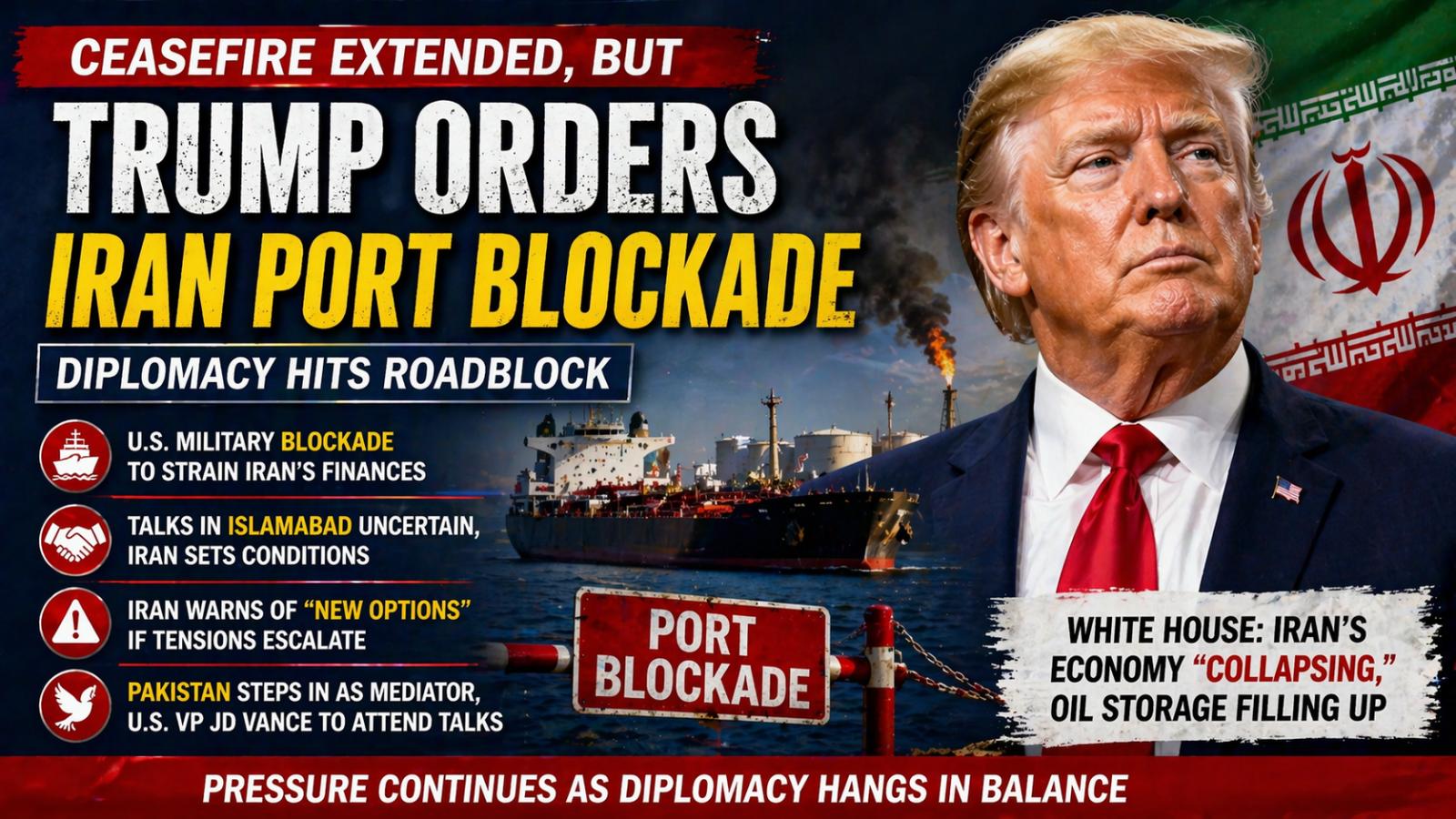
The United States has maintained pressure on Iran despite a formal agreement to extend a ceasefire aimed at creating space for diplomacy. President Donald Trump has ordered the continuation of a military blockade targeting Iranian ports, a move designed to restrict Tehran’s financial resources. The administration has indicated that Iran’s economy is under significant strain, citing limited cash reserves and increasing pressure on oil storage facilities, particularly at Kharg Island.
While the ceasefire extension was initially viewed as an opportunity to advance negotiations, diplomatic progress remains uncertain. Reports of a possible summit in Islamabad have been challenged by Iranian officials, who state that no delegation has departed for Pakistan. Iranian state authorities have dismissed claims of imminent talks, emphasizing that key preconditions have not been met.
Tehran has maintained that any formal negotiations would require a complete halt to Israeli military actions in Lebanon. Without such assurances, Iranian leaders have expressed reluctance to engage in further discussions. Officials have also accused the United States of pursuing a strategy focused on coercion rather than constructive dialogue, raising concerns about the credibility of ongoing diplomatic efforts.
Senior Iranian figures have issued strong warnings about the potential consequences of continued pressure. Parliamentary speaker Mohammad Baqer Ghalibaf suggested that Iran could explore alternative responses if tensions escalate further. Foreign Minister Abbas Araghchi criticized what he described as repeated violations of the ceasefire, while President Masoud Pezeshkian underscored the importance of trust and consistency in any negotiation process.
Pakistan has emerged as a potential mediator, preparing to host talks in Islamabad in an effort to bridge differences between the two sides. The United States is expected to send Vice President JD Vance to participate in discussions, although Iran has yet to confirm its involvement. As both diplomatic and military dynamics continue to unfold, the path toward resolution remains uncertain.
The United States has maintained pressure on Iran despite a formal agreement to extend a ceasefire aimed at creating space for diplomacy. President Donald Trump has ordered the continuation of a military blockade targeting Iranian ports, a move designed to restrict Tehran’s financial resources. The administration has indicated that Iran’s economy is under significant strain, citing limited cash reserves and increasing pressure on oil storage facilities, particularly at Kharg Island.
While the ceasefire extension was initially viewed as an opportunity to advance negotiations, diplomatic progress remains uncertain. Reports of a possible summit in Islamabad have been challenged by Iranian officials, who state that no delegation has departed for Pakistan. Iranian state authorities have dismissed claims of imminent talks, emphasizing that key preconditions have not been met.
Tehran has maintained that any formal negotiations would require a complete halt to Israeli military actions in Lebanon. Without such assurances, Iranian leaders have expressed reluctance to engage in further discussions. Officials have also accused the United States of pursuing a strategy focused on coercion rather than constructive dialogue, raising concerns about the credibility of ongoing diplomatic efforts.
Senior Iranian figures have issued strong warnings about the potential consequences of continued pressure. Parliamentary speaker Mohammad Baqer Ghalibaf suggested that Iran could explore alternative responses if tensions escalate further. Foreign Minister Abbas Araghchi criticized what he described as repeated violations of the ceasefire, while President Masoud Pezeshkian underscored the importance of trust and consistency in any negotiation process.
Pakistan has emerged as a potential mediator, preparing to host talks in Islamabad in an effort to bridge differences between the two sides. The United States is expected to send Vice President JD Vance to participate in discussions, although Iran has yet to confirm its involvement. As both diplomatic and military dynamics continue to unfold, the path toward resolution remains uncertain.
The United States has intensified its use of energy shipments as a foreign policy tool, launching parallel efforts aimed at Iran in the Middle East and Cuba in the Caribbean. Under President Donald Trump, a naval blockade targeting Iranian vessels in and around the Strait of Hormuz began on Monday, marking a significant escalation despite a ceasefire agreement reached on April 7 between regional actors.
At the same time, Washington has imposed a de facto fuel blockade on Cuba, warn
The United States has intensified its use of energy shipments as a foreign policy tool, launching parallel efforts aimed at Iran in the Middle East and Cuba in the Caribbean. Under President Donald Trump, a naval blockade targeting Iranian vessels in and around the Strait of Hormuz began on Monday, marking a significant escalation despite a ceasefire agreement reached on April 7 between regional actors.
At the same time, Washington has imposed a de facto fuel blockade on Cuba, warn