






Maddalena vs Prates stuns UFC Perth crowd in intense main event
Maddalena vs Prates stuns UFC Perth crowd in intense main event as fans inside RAC Arena witnessed a charged atmosphere on Saturday, May 2, 2026, with emotions running high even before the first strike was thrown. The welterweight clash between Jack Della Maddalena and
Maddalena vs Prates stuns UFC Perth crowd in intense main event
Maddalena vs Prates stuns UFC Perth crowd in intense main event as fans inside RAC Arena witnessed a charged atmosphere on Saturday, May 2, 2026, with emotions running high even before the first strike was thrown. The welterweight clash between Jack Della Maddalena and
Spirit Airlines shuts down after failed bailout deal
Spirit Airlines shuts down after failed bailout deal as the low-cost U.S. carrier began an immediate wind-down of operations on Saturday, May 2, 2026, after rescue talks failed and rising fuel prices deepened its financial crisis. The airline canceled all flights and warned passengers with existing tickets not to go to the airport, saying refunds would be issued but rebooking support through other carriers would not be provided. Spirit Aviation Holdings, the parent company of Spirit
Spirit Airlines shuts down after failed bailout deal
Spirit Airlines shuts down after failed bailout deal as the low-cost U.S. carrier began an immediate wind-down of operations on Saturday, May 2, 2026, after rescue talks failed and rising fuel prices deepened its financial crisis. The airline canceled all flights and warned passengers with existing tickets not to go to the airport, saying refunds would be issued but rebooking support through other carriers would not be provided. Spirit Aviation Holdings, the parent company of Spirit
Interstellar comet 3I/ATLAS reveals origins in an alien solar system
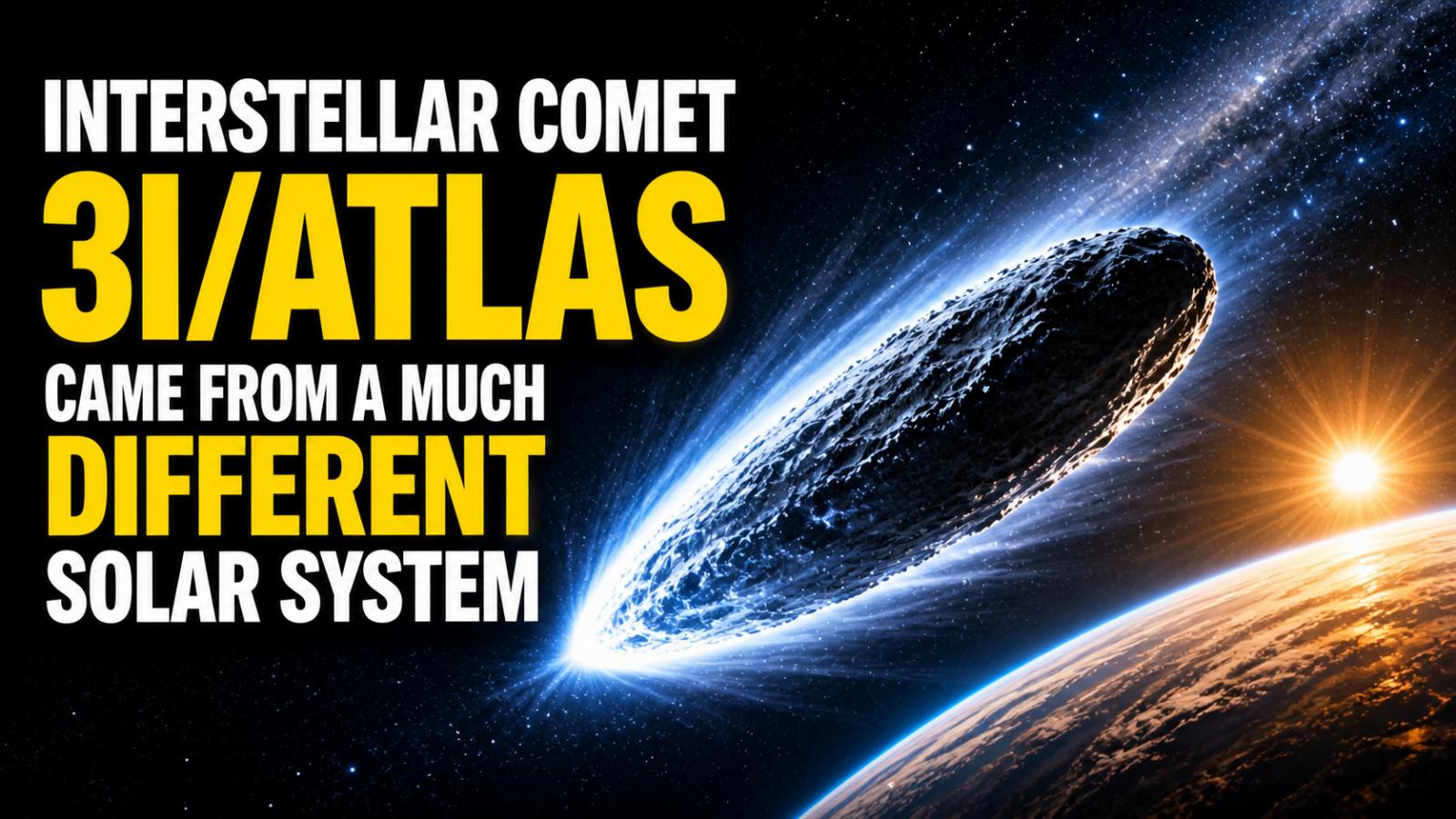
Interstellar comet 3I/ATLAS reveals origins in an alien solar system as astronomers analyzing the rare celestial object have uncovered evidence suggesting it formed in conditions vastly different from those that shaped our own planetary system. The comet, known as 3I/ATLAS, was first detected passing through our solar system in July and is only the third known interstellar object ever observed in such a trajectory. New findings, published on Wednesday, April 23, 2026, in the journal Nature Astronomy, indicate that the comet likely originated in an extremely cold and distant region of another planetary system. Researchers used the Atacama Large Millimeter/submillimeter Array (ALMA) in Chile to observe the comet in early November, shortly after it made its closest approach to the sun. The study marks the first time scientists have detected deuterium, a heavier isotope of hydrogen, in an interstellar object. This form of hydrogen is typically found in deuterated water, also known as semi-heavy water. According to lead researcher Luis Eduardo Salazar Manzano of the University of Michigan, the concentration of deuterium in 3I/ATLAS is more than 40 times higher than levels found in Earth’s oceans and over 30 times higher than in comets within our solar system. Such unusually high levels suggest that the comet formed in an environment with extremely low temperatures—below 30 Kelvin, or approximately minus 405 degrees Fahrenheit. Scientists believe this indicates formation in the outer regions of a protoplanetary disk, far from its host star, where icy materials can preserve their original chemical signatures for billions of years. Further analysis suggests that 3I/ATLAS may be up to 11 billion years old, making it significantly older than our solar system, which formed about 4.5 billion years ago. The preserved water within the comet likely dates back to the early stages of the Milky Way, offering a rare glimpse into the galaxy’s ancient conditions. Researchers also noted that standard water (H₂O) was not directly detected during observations, likely due to instrument sensitivity limits. However, the clear detection of deuterated water underscores the comet’s unusual composition and reinforces its value as a scientific “time capsule.” Experts say interstellar objects like 3I/ATLAS provide unique insights into how planetary systems form and evolve across the universe. Future observations from facilities such as the Vera C. Rubin Observatory are expected to identify more such objects, potentially helping scientists determine whether 3I/ATLAS is an anomaly or part of a broader population of chemically distinct comets. By studying these rare visitors, astronomers hope to better understand how the composition of planets—and even the building blocks of life—may differ across the galaxy, offering new perspectives on the origins of planetary systems beyond our own.
Interstellar comet 3I/ATLAS reveals origins in an alien solar system
Interstellar comet 3I/ATLAS reveals origins in an alien solar system as astronomers analyzing the rare celestial object have uncovered evidence suggesting it formed in conditions vastly different from those that shaped our own planetary system. The comet, known as 3I/ATLAS, was first detected passing through our solar system in July and is only the third known interstellar object ever observed in such a trajectory. New findings, published on Wednesday, April 23, 2026, in the journal Nature Astronomy, indicate that the comet likely originated in an extremely cold and distant region of another planetary system. Researchers used the Atacama Large Millimeter/submillimeter Array (ALMA) in Chile to observe the comet in early November, shortly after it made its closest approach to the sun. The study marks the first time scientists have detected deuterium, a heavier isotope of hydrogen, in an interstellar object. This form of hydrogen is typically found in deuterated water, also known as semi-heavy water. According to lead researcher Luis Eduardo Salazar Manzano of the University of Michigan, the concentration of deuterium in 3I/ATLAS is more than 40 times higher than levels found in Earth’s oceans and over 30 times higher than in comets within our solar system. Such unusually high levels suggest that the comet formed in an environment with extremely low temperatures—below 30 Kelvin, or approximately minus 405 degrees Fahrenheit. Scientists believe this indicates formation in the outer regions of a protoplanetary disk, far from its host star, where icy materials can preserve their original chemical signatures for billions of years. Further analysis suggests that 3I/ATLAS may be up to 11 billion years old, making it significantly older than our solar system, which formed about 4.5 billion years ago. The preserved water within the comet likely dates back to the early stages of the Milky Way, offering a rare glimpse into the galaxy’s ancient conditions. Researchers also noted that standard water (H₂O) was not directly detected during observations, likely due to instrument sensitivity limits. However, the clear detection of deuterated water underscores the comet’s unusual composition and reinforces its value as a scientific “time capsule.” Experts say interstellar objects like 3I/ATLAS provide unique insights into how planetary systems form and evolve across the universe. Future observations from facilities such as the Vera C. Rubin Observatory are expected to identify more such objects, potentially helping scientists determine whether 3I/ATLAS is an anomaly or part of a broader population of chemically distinct comets. By studying these rare visitors, astronomers hope to better understand how the composition of planets—and even the building blocks of life—may differ across the galaxy, offering new perspectives on the origins of planetary systems beyond our own.

Rohit Sharma Fitness Update Ahead Of CSK vs MI IPL 2026 Clash
Date & Time: May 2, 2026, 04:00 PM IST The upcoming IPL 2026 clash between Chennai Super Kings and Mumbai Indians has generated immense anticipation, not only because of the rivalry between the two franchises but also due to the uncertainty surrounding the availability of their star players. Fans are eagerly waiting for confirmation on whether MS Dhoni and Rohit Sharma will feature in the match, as both players are currentl
Rohit Sharma Fitness Update Ahead Of CSK vs MI IPL 2026 Clash
Date & Time: May 2, 2026, 04:00 PM IST The upcoming IPL 2026 clash between Chennai Super Kings and Mumbai Indians has generated immense anticipation, not only because of the rivalry between the two franchises but also due to the uncertainty surrounding the availability of their star players. Fans are eagerly waiting for confirmation on whether MS Dhoni and Rohit Sharma will feature in the match, as both players are currentl

Supreme Court Disposes Of Trinamool Congress Petition As Bengal Repolls Continue With Healthy Voter Turnout
Date: May 02, 2026 | Time: 11:06 AM IST | Place: West Bengal, India
Supreme Court Disposes Of Trinamool Congress Petition As Bengal Repolls Continue With Healthy Voter Turnout
Date: May 02, 2026 | Time: 11:06 AM IST | Place: West Bengal, India

French nun attacked in Jerusalem by suspected Jewish extremist
Violent Attack on French Nun in Jerusalem A shocking attack on a French Catholic nun in Jerusalem has sparked widespread outrage, drawing condemnation from both Israel's foreign ministry and France's consulate. This incident, which took place on a Jerusalem street, has raised significant concerns about the rising hostility toward the Christian community and its symbols in the region. Authorities h
French nun attacked in Jerusalem by suspected Jewish extremist
Violent Attack on French Nun in Jerusalem A shocking attack on a French Catholic nun in Jerusalem has sparked widespread outrage, drawing condemnation from both Israel's foreign ministry and France's consulate. This incident, which took place on a Jerusalem street, has raised significant concerns about the rising hostility toward the Christian community and its symbols in the region. Authorities h
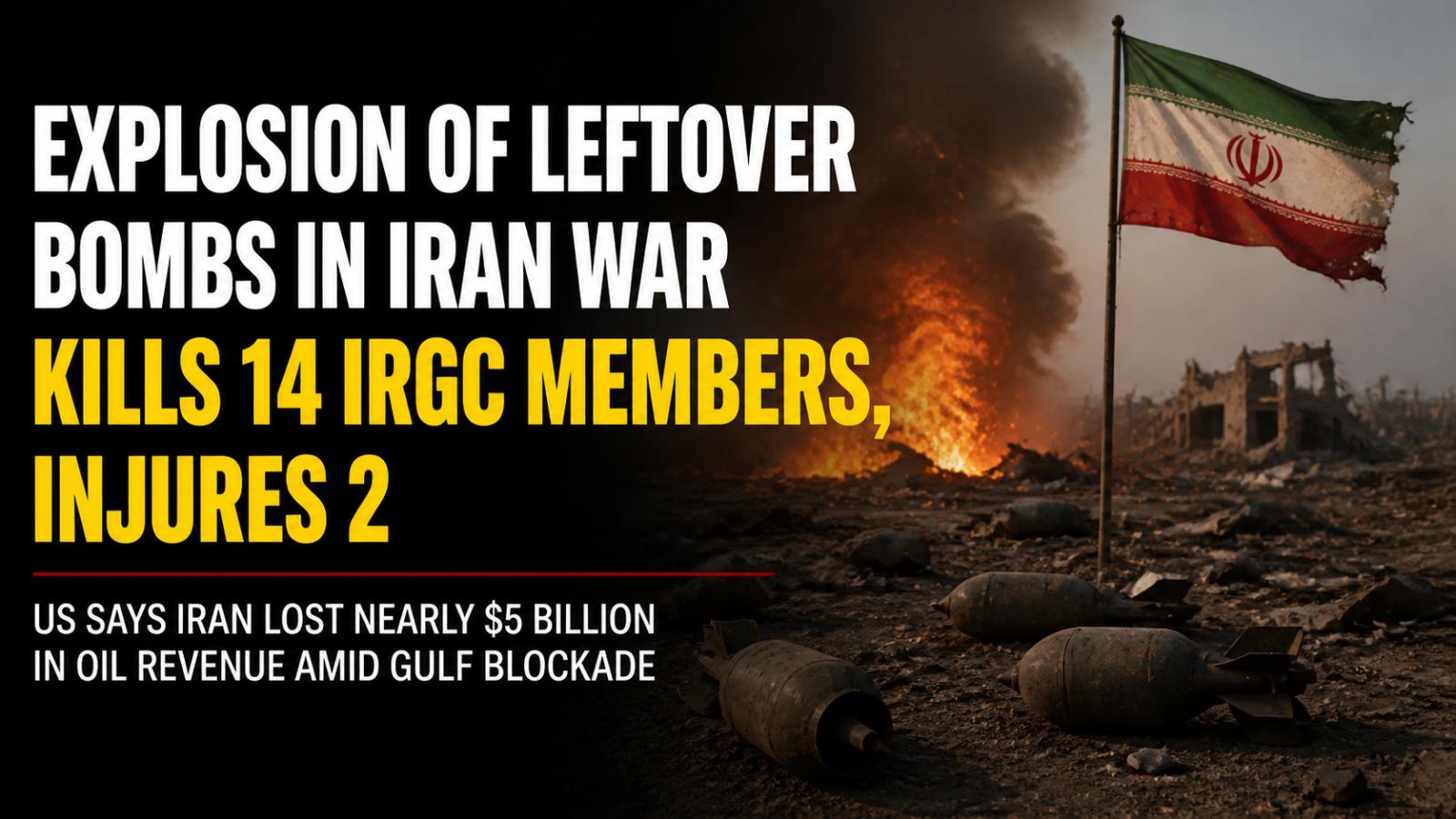
Explosion of leftover bombs kills 14 IRGC members in northwestern Iran
Explosion kills 14 IRGC members in northwestern Iran On Friday, May 1, 14 members of Iran's Islamic Revolutionary Guard Corps (IRGC) were killed in an explosion caused by leftover bombs from the ongoing war. The explosion took place in Zanjan Province, a region in northwestern Iran. This incident marks the largest number of casualties for the IRGC since the US-Iran ceasefi
Explosion of leftover bombs kills 14 IRGC members in northwestern Iran
Explosion kills 14 IRGC members in northwestern Iran On Friday, May 1, 14 members of Iran's Islamic Revolutionary Guard Corps (IRGC) were killed in an explosion caused by leftover bombs from the ongoing war. The explosion took place in Zanjan Province, a region in northwestern Iran. This incident marks the largest number of casualties for the IRGC since the US-Iran ceasefi
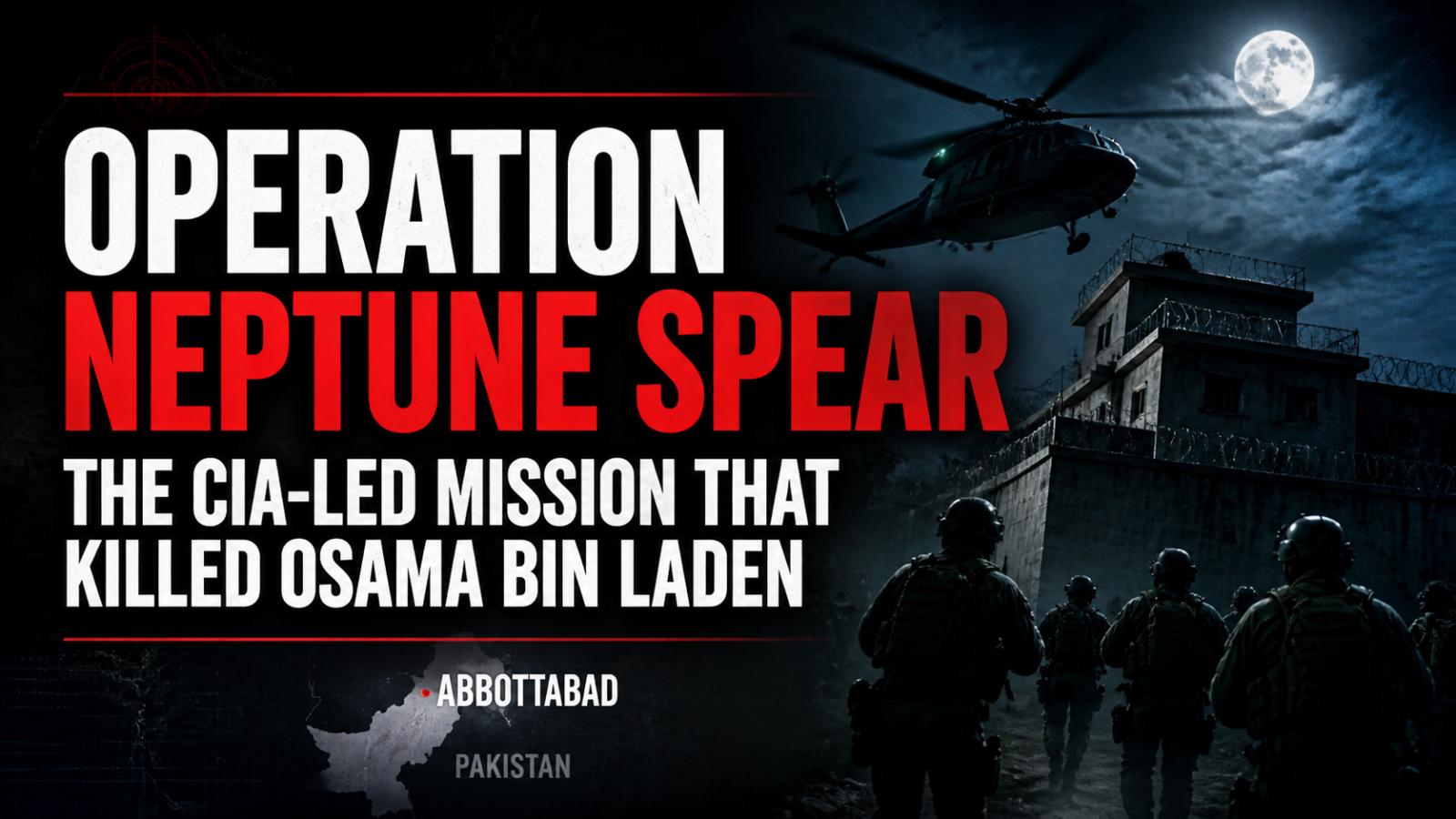
Operation Neptune Spear: Inside the raid that killed Osama bin Laden
The world’s most wanted man: Osama bin Laden On May 2, 2011, Osama bin Laden, the world’s most wanted terrorist, was killed in a CIA-led operation called Operation Neptune Spear. After nearly a decade of intensive intelligence work, Bin Laden’s hideout in Abbottabad, Pakistan, was pinpointed, marking a major victory in the war on terror. The mission, involving a covert night
Operation Neptune Spear: Inside the raid that killed Osama bin Laden
The world’s most wanted man: Osama bin Laden On May 2, 2011, Osama bin Laden, the world’s most wanted terrorist, was killed in a CIA-led operation called Operation Neptune Spear. After nearly a decade of intensive intelligence work, Bin Laden’s hideout in Abbottabad, Pakistan, was pinpointed, marking a major victory in the war on terror. The mission, involving a covert night
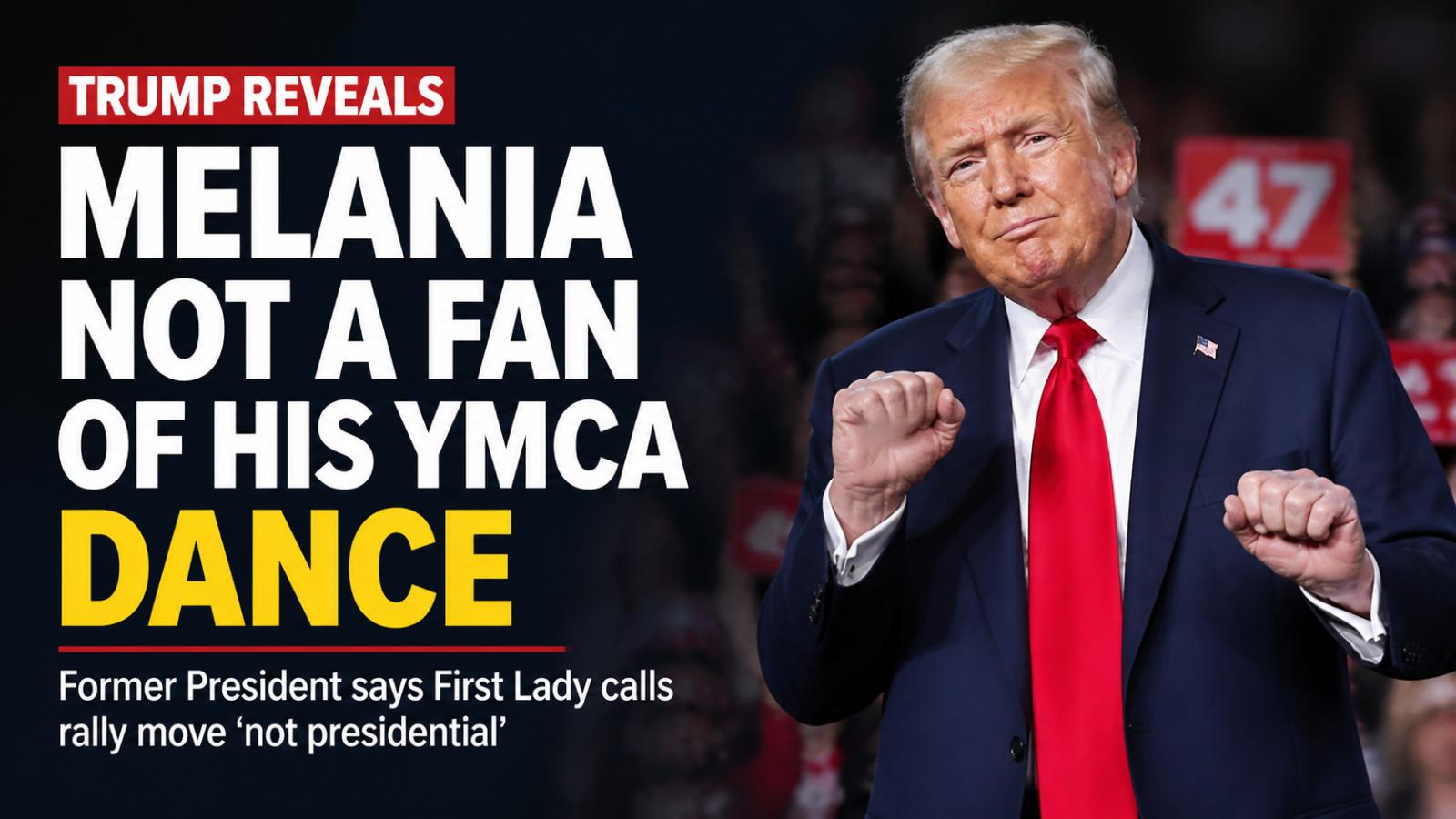
Donald Trump jokes about his YMCA dance routine at Florida rally
Trump shares Melania's disapproval of his YMCA dance move Donald Trump recently offered a humorous confession at a rally in The Villages, Florida, revealing that Melania Trump is not a fan of his signature post-rally YMCA dance move. Speaking to a cheering crowd, the former president disclosed that his wife often objects to this routine, which has become synonymous with his rallies. Melania says the dance is "not presidential"
Donald Trump jokes about his YMCA dance routine at Florida rally
Trump shares Melania's disapproval of his YMCA dance move Donald Trump recently offered a humorous confession at a rally in The Villages, Florida, revealing that Melania Trump is not a fan of his signature post-rally YMCA dance move. Speaking to a cheering crowd, the former president disclosed that his wife often objects to this routine, which has become synonymous with his rallies. Melania says the dance is "not presidential"
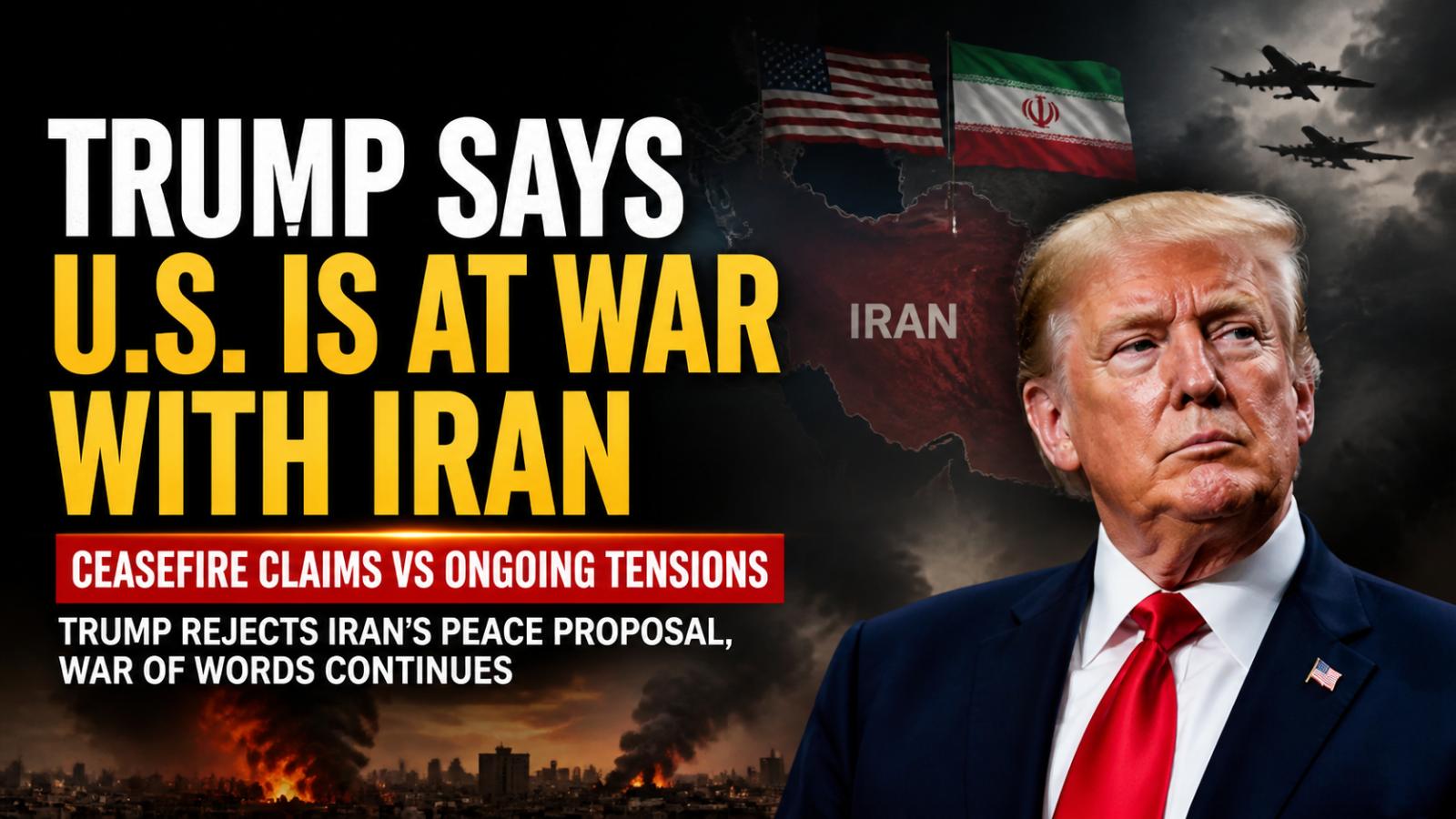
US-Iran conflict: Trump speaks on war, rejects Iran’s ceasefire deal
Trump declares war with Iran over nuclear threat President Donald Trump has reaffirmed his stance on the ongoing US-Iran conflict, declaring that the US is at war with Iran to prevent the country from acquiring nuclear weapons. In a statement made during a Florida event, Trump expressed his belief that Iran’s leadership poses a significant threat to global security, stating that "lunatics can't have a nuclear weapon." His comments come at a time when his administration has informed the US Congress that the war has reached its conclusion, though the situation remains tense. Trump emphasizes the importance of military action against Iran Trump explained that the US military action against Iran was crucial in preventing a nuclear-armed nation from destabilizing the Middle East. He credited US airstrikes with B2 bombers for preventing Iran from obtaining a nuclear weapon, which could have led to catastrophic consequences for Israel, the Middle East, and Europe. “If we didn’t do that, they would have had a nuclear weapon,” Trump added, emphasizing the urgency of the situation. He claimed that Iran's military capabilities have been severely diminished, stating that the country no longer has a navy, air force, anti-aircraft systems, or effective radar defenses. Trump rejects Iran's ceasefire proposal In a direct response to Iran’s proposal for a ceasefire, Trump made it clear that the US would not end the conflict prematurely. “We’re not going to leave early and have this kind of problem arise in three more years,” he said, reinforcing his position on the need for a strong and comprehensive resolution. Trump blamed Iran's leadership for the ongoing conflict, criticizing their fractured decision-making. “It’s a very disjointed leadership,” he remarked, indicating that despite their willingness to negotiate, Iran’s leaders are unable to reach a viable agreement. The ceasefire proposal is dismissed The ceasefire proposal, delivered by Pakistan on behalf of Iran, was quickly dismissed by the US. Despite this, a fragile ceasefire between the two nations has held, albeit with mutual accusations of violations. Tensions remain high, especially in the Strait of Hormuz, where a significant portion of the world’s oil and gas passes through. Trump outlined two potential paths forward: either continuing the conflict to decisively end Iran’s nuclear ambitions, or attempting to secure a deal. “Do we want to go and just blast the hell out of them and finish them forever? Or do we want to try and make a deal?” he questioned. Iran’s diplomatic efforts and continued tension Iran’s Foreign Minister, Abbas Araghchi, has been actively engaged in diplomatic efforts to resolve the war. He held discussions with several regional counterparts, including Turkey, Saudi Arabia, and Qatar, to brief them on Iran’s latest peace initiatives. However, the rounds of talks held in Pakistan have yielded no substantial progress. Trump expressed frustration over the lack of direct communication, stating, “No more 18-hour flights” for US envoys. What lies ahead for US-Iran relations? As the situation evolves, it remains uncertain whether further diplomatic efforts will lead to a resolution or whether military action will continue to dominate the US-Iran relationship. With both sides unwilling to compromise, the world watches closely, particularly in regard to the ongoing instability in the Strait of Hormuz. Will Iran’s diplomatic efforts succeed, or will the US pursue a more aggressive approach? The answer remains unclear as the two nations continue to grapple with the possibility of conflict or peace.
US-Iran conflict: Trump speaks on war, rejects Iran’s ceasefire deal
Trump declares war with Iran over nuclear threat President Donald Trump has reaffirmed his stance on the ongoing US-Iran conflict, declaring that the US is at war with Iran to prevent the country from acquiring nuclear weapons. In a statement made during a Florida event, Trump expressed his belief that Iran’s leadership poses a significant threat to global security, stating that "lunatics can't have a nuclear weapon." His comments come at a time when his administration has informed the US Congress that the war has reached its conclusion, though the situation remains tense. Trump emphasizes the importance of military action against Iran Trump explained that the US military action against Iran was crucial in preventing a nuclear-armed nation from destabilizing the Middle East. He credited US airstrikes with B2 bombers for preventing Iran from obtaining a nuclear weapon, which could have led to catastrophic consequences for Israel, the Middle East, and Europe. “If we didn’t do that, they would have had a nuclear weapon,” Trump added, emphasizing the urgency of the situation. He claimed that Iran's military capabilities have been severely diminished, stating that the country no longer has a navy, air force, anti-aircraft systems, or effective radar defenses. Trump rejects Iran's ceasefire proposal In a direct response to Iran’s proposal for a ceasefire, Trump made it clear that the US would not end the conflict prematurely. “We’re not going to leave early and have this kind of problem arise in three more years,” he said, reinforcing his position on the need for a strong and comprehensive resolution. Trump blamed Iran's leadership for the ongoing conflict, criticizing their fractured decision-making. “It’s a very disjointed leadership,” he remarked, indicating that despite their willingness to negotiate, Iran’s leaders are unable to reach a viable agreement. The ceasefire proposal is dismissed The ceasefire proposal, delivered by Pakistan on behalf of Iran, was quickly dismissed by the US. Despite this, a fragile ceasefire between the two nations has held, albeit with mutual accusations of violations. Tensions remain high, especially in the Strait of Hormuz, where a significant portion of the world’s oil and gas passes through. Trump outlined two potential paths forward: either continuing the conflict to decisively end Iran’s nuclear ambitions, or attempting to secure a deal. “Do we want to go and just blast the hell out of them and finish them forever? Or do we want to try and make a deal?” he questioned. Iran’s diplomatic efforts and continued tension Iran’s Foreign Minister, Abbas Araghchi, has been actively engaged in diplomatic efforts to resolve the war. He held discussions with several regional counterparts, including Turkey, Saudi Arabia, and Qatar, to brief them on Iran’s latest peace initiatives. However, the rounds of talks held in Pakistan have yielded no substantial progress. Trump expressed frustration over the lack of direct communication, stating, “No more 18-hour flights” for US envoys. What lies ahead for US-Iran relations? As the situation evolves, it remains uncertain whether further diplomatic efforts will lead to a resolution or whether military action will continue to dominate the US-Iran relationship. With both sides unwilling to compromise, the world watches closely, particularly in regard to the ongoing instability in the Strait of Hormuz. Will Iran’s diplomatic efforts succeed, or will the US pursue a more aggressive approach? The answer remains unclear as the two nations continue to grapple with the possibility of conflict or peace.
US blockade in Gulf of Oman halts $5 billion in Iranian oil revenue
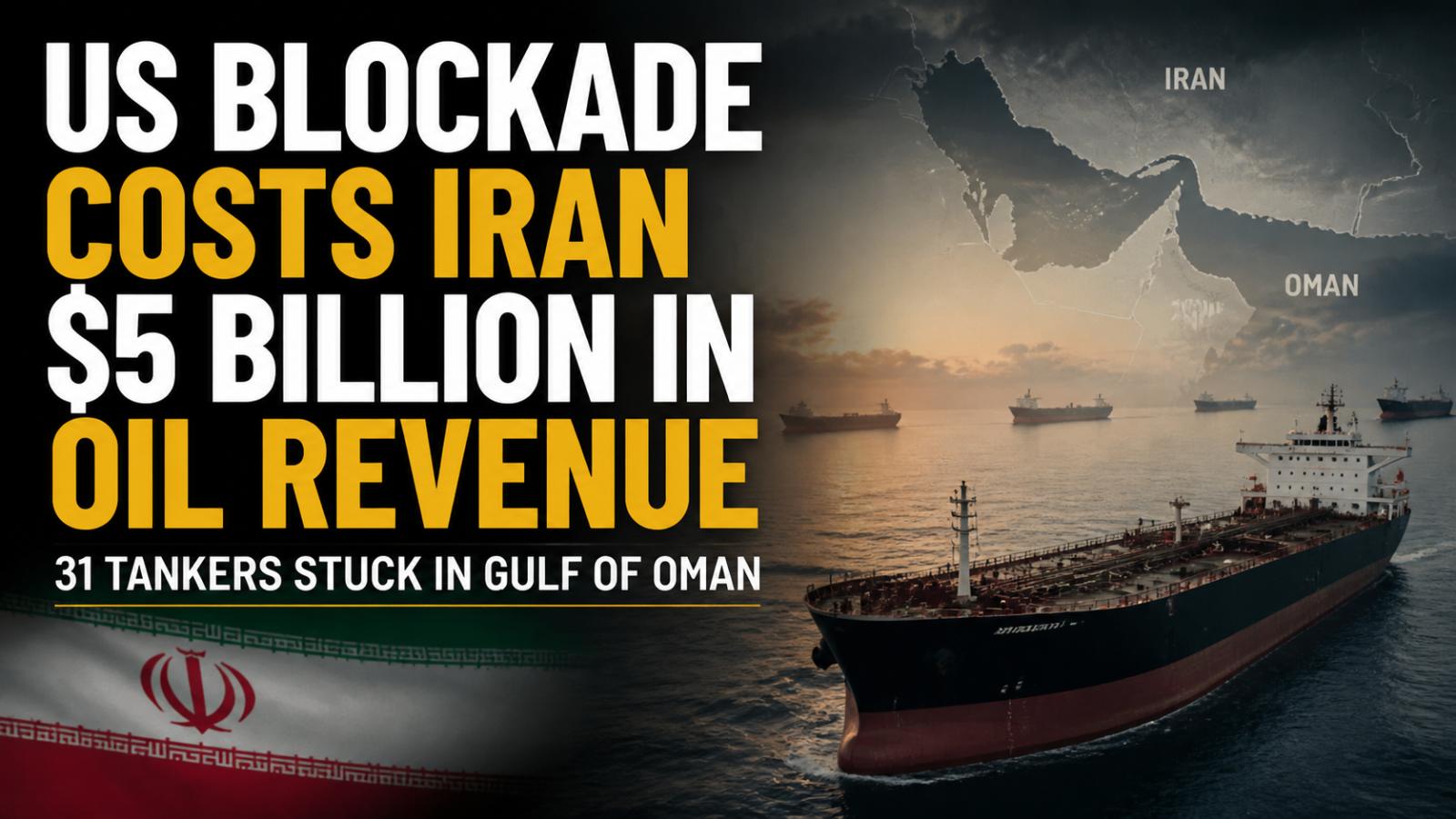
The ongoing US blockade in the Gulf of Oman has forced Iran to face a massive loss, with the US Defense Department estimating that Tehran has lost nearly $5 billion in oil revenue. This economic setback is the result of a blockade imposed by the US military in an effort to increase pressure on Iran’s economy. The blockade, which began on April 13, 2025, has been described as one of President Donald Trump’s most powerful tools to drive Iran into negotiations that aim to resolve the ongoing conflict. However, diplomatic talks have been repeatedly stalling and restarting, leaving both parties in a stalemate. According to Pentagon officials, more than 40 vessels have been redirected since the operation’s start, as they attempted to smuggle oil and other contraband through the region. In total, 31 tankers carrying approximately 53 million barrels of Iranian crude are now stuck in the Gulf of Oman, and these shipments are valued at around $4.8 billion. Of these, two vessels have already been seized by US forces. With storage capacity on land reaching its limits, Iran has resorted to using older tankers as floating storage units, as reported by analysts. These tankers, which are no longer fit for regular commercial routes, have become temporary storage sites for Iran’s oil. Some shipments are being rerouted along longer and more expensive paths, primarily to avoid interception by US forces. To achieve this, Iranian ships have been following coastlines near Pakistan and India and using safer maritime corridors towards the Strait of Malacca, a key transit point for oil bound for China. Tanker tracking analysts such as Samir Madani, co-founder of TankerTrackers.com, have noted a shift in Iranian shipping patterns. He explained how one Iranian tanker, called “HUGE,” cleverly demonstrated how ships are using stealth routes to evade detection. According to Madani, ships are increasingly relying on hidden paths through regional waters to avoid the US military blockade. Madani also predicted that, in the future, Iran might attempt a large-scale breakout of its tankers. "I think the Iranians will wait for an opportunity to launch an overnight 'Great Escape' once they have built up further storage near the border with Pakistan,” Madani told Axios. This situation is part of a broader economic struggle between Iran and the United States, with both countries resorting to maritime pressure tactics. Iran has previously restricted access to the Strait of Hormuz, a critical shipping route, in retaliation. Meanwhile, the US has been tightening its control over the Gulf of Oman, an entry point to key waterways. According to Gregory Brew, an analyst at Eurasia Group, Iran is just weeks away from running out of storage space for its oil, which could collapse its oil production capacity. "They're probably several weeks, or perhaps as much as a month, away from running out of storage," Brew said. The Pentagon’s spokesperson, Joel Valdez, emphasized the severity of the situation, stating that the blockade is fully active and that the US military is delivering a devastating blow to Iran’s ability to fund terrorism and regional destabilization. “Our armed forces in the region will continue to maintain this unrelenting pressure,” Valdez said. This strategy, although harsh, seems designed to wear down Iran’s ability to sustain itself economically, and possibly force a change in its approach to negotiations.
US blockade in Gulf of Oman halts $5 billion in Iranian oil revenue
The ongoing US blockade in the Gulf of Oman has forced Iran to face a massive loss, with the US Defense Department estimating that Tehran has lost nearly $5 billion in oil revenue. This economic setback is the result of a blockade imposed by the US military in an effort to increase pressure on Iran’s economy. The blockade, which began on April 13, 2025, has been described as one of President Donald Trump’s most powerful tools to drive Iran into negotiations that aim to resolve the ongoing conflict. However, diplomatic talks have been repeatedly stalling and restarting, leaving both parties in a stalemate. According to Pentagon officials, more than 40 vessels have been redirected since the operation’s start, as they attempted to smuggle oil and other contraband through the region. In total, 31 tankers carrying approximately 53 million barrels of Iranian crude are now stuck in the Gulf of Oman, and these shipments are valued at around $4.8 billion. Of these, two vessels have already been seized by US forces. With storage capacity on land reaching its limits, Iran has resorted to using older tankers as floating storage units, as reported by analysts. These tankers, which are no longer fit for regular commercial routes, have become temporary storage sites for Iran’s oil. Some shipments are being rerouted along longer and more expensive paths, primarily to avoid interception by US forces. To achieve this, Iranian ships have been following coastlines near Pakistan and India and using safer maritime corridors towards the Strait of Malacca, a key transit point for oil bound for China. Tanker tracking analysts such as Samir Madani, co-founder of TankerTrackers.com, have noted a shift in Iranian shipping patterns. He explained how one Iranian tanker, called “HUGE,” cleverly demonstrated how ships are using stealth routes to evade detection. According to Madani, ships are increasingly relying on hidden paths through regional waters to avoid the US military blockade. Madani also predicted that, in the future, Iran might attempt a large-scale breakout of its tankers. "I think the Iranians will wait for an opportunity to launch an overnight 'Great Escape' once they have built up further storage near the border with Pakistan,” Madani told Axios. This situation is part of a broader economic struggle between Iran and the United States, with both countries resorting to maritime pressure tactics. Iran has previously restricted access to the Strait of Hormuz, a critical shipping route, in retaliation. Meanwhile, the US has been tightening its control over the Gulf of Oman, an entry point to key waterways. According to Gregory Brew, an analyst at Eurasia Group, Iran is just weeks away from running out of storage space for its oil, which could collapse its oil production capacity. "They're probably several weeks, or perhaps as much as a month, away from running out of storage," Brew said. The Pentagon’s spokesperson, Joel Valdez, emphasized the severity of the situation, stating that the blockade is fully active and that the US military is delivering a devastating blow to Iran’s ability to fund terrorism and regional destabilization. “Our armed forces in the region will continue to maintain this unrelenting pressure,” Valdez said. This strategy, although harsh, seems designed to wear down Iran’s ability to sustain itself economically, and possibly force a change in its approach to negotiations.
What is Trump’s new retirement plan? It expands savings access for millions
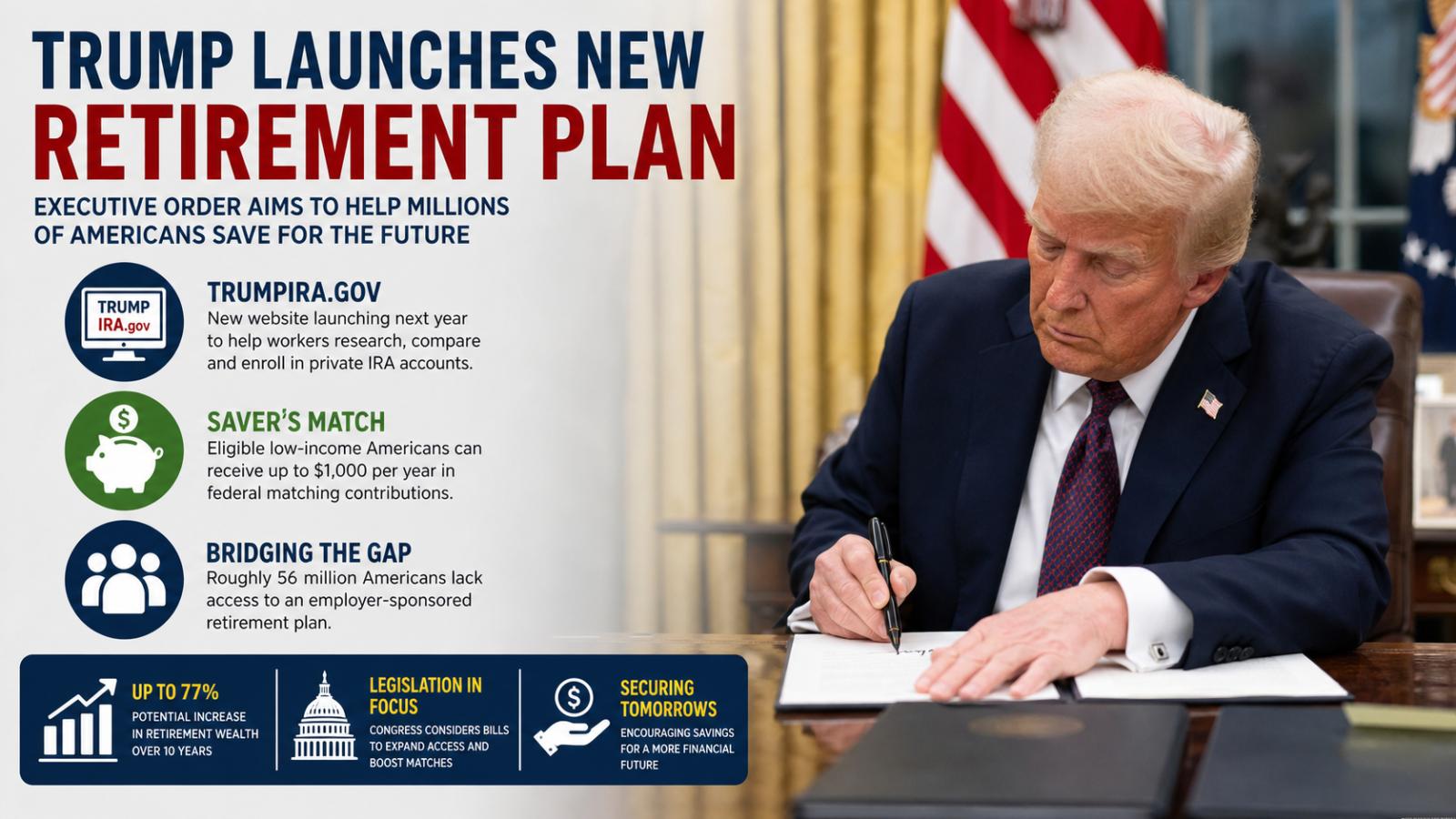
Expanding retirement access for underserved workers What is Trump’s new retirement plan? It expands savings access for millions, as a new executive order introduces a federal initiative aimed at workers without employer-sponsored retirement options. According to details outlined in the policy , tens of millions of Americans currently lack access to plans such as 401(k)s, creating long-term financial vulnerability. The initiative proposes a centralized platform, T
What is Trump’s new retirement plan? It expands savings access for millions
Expanding retirement access for underserved workers What is Trump’s new retirement plan? It expands savings access for millions, as a new executive order introduces a federal initiative aimed at workers without employer-sponsored retirement options. According to details outlined in the policy , tens of millions of Americans currently lack access to plans such as 401(k)s, creating long-term financial vulnerability. The initiative proposes a centralized platform, T
US warns Iran as Strait of Hormuz blockade tightens pressure
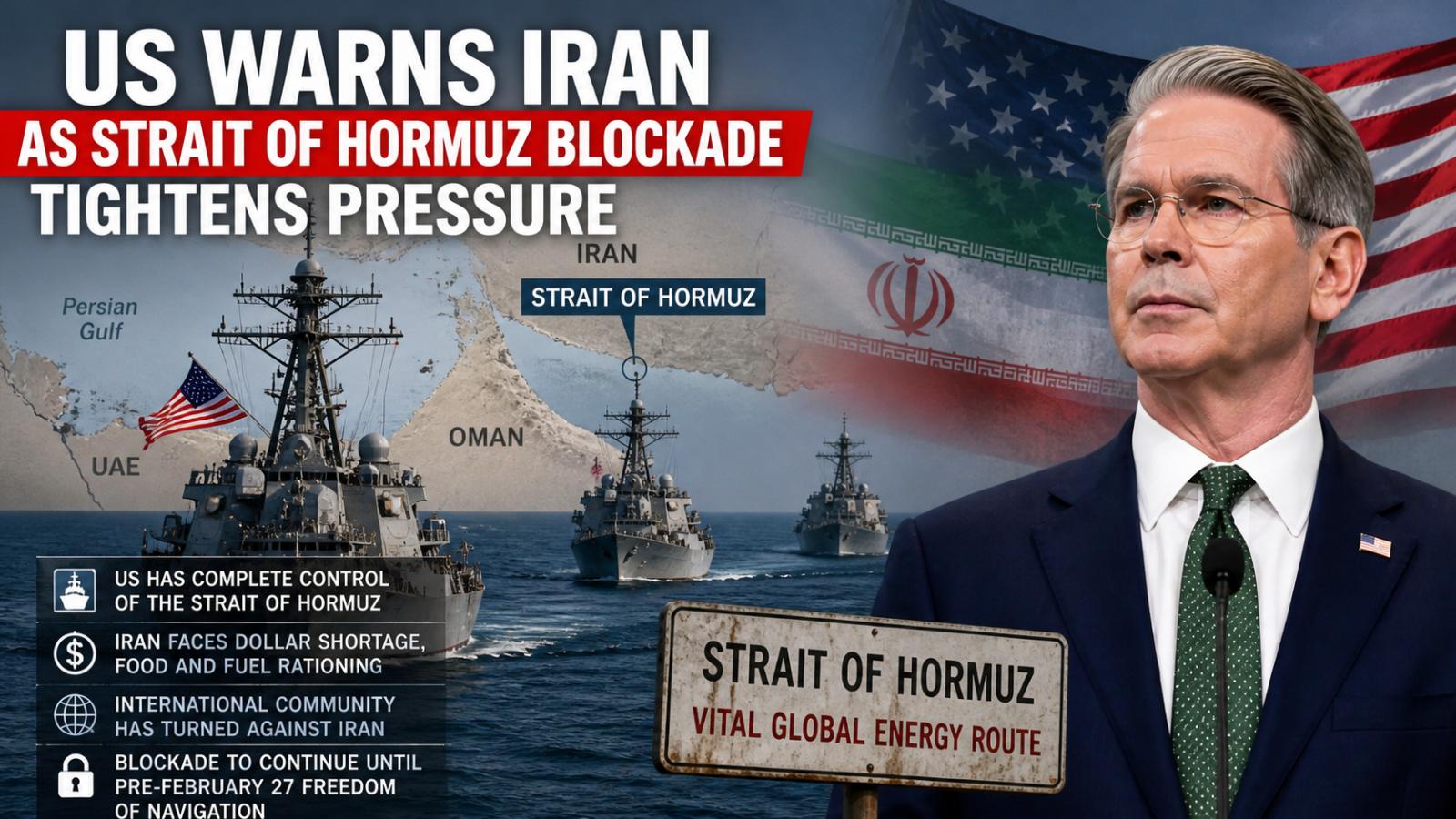
The US tightened pressure on Iran with a Strait of Hormuz blockade, disrupting oil trade and worsening Iran’s economic crisis, while internal political divisions grow and tensions with Washington escalate. US warns Iran as Strait of Hormuz blockade tightens pressure as tensions escalated following a sharply worded statement by U.S. Treasury Secretary Scott Bessent on Friday, in which he criticized Iran’s leadership and outlined the United States’ strategic position in the ongoing standoff. In a public post, Bessent asserted that the United States maintains full control over the Strait of Hormuz, a critical global energy transit route, and emphasized that a naval blockade would remain in effect until freedom of navigation conditions are restored to levels seen before February 27. The remarks come amid heightened geopolitical tensions involving Iran and the United States, with Bessent also pointing to economic strain within Iran, including a shortage of U.S. dollars and the implementation of food and gasoline rationing. He further stated that international sentiment has increasingly turned against Tehran, underscoring Washington’s broader diplomatic stance. The blockade represents a significant shift in pressure tactics. For years, Iran had managed to navigate sanctions by exporting oil through informal channels, particularly to China, using a network of so-called shadow vessels. However, U.S. naval operations have disrupted these routes, preventing tankers from bypassing enforcement measures and, in some cases, pursuing them beyond the Persian Gulf into the Indian Ocean. The situation escalated after Iran targeted commercial vessels and restricted maritime traffic through the Hormuz corridor, a move that disrupted global oil and liquefied natural gas shipments. In response, the United States deployed naval forces to secure the passage, effectively limiting Iran’s ability to continue its covert export operations. Internally, the crisis has exposed divisions within Iran’s leadership. President Masoud Pezeshkian is reportedly aligned with moderate factions seeking negotiations, while hardline figures such as Saeed Jalili advocate a more confrontational approach. The divergence reflects broader concerns about the sustainability of the conflict, particularly as economic conditions deteriorate. President Donald Trump has indicated support for maintaining the blockade, describing it as highly effective and signaling preparedness for a prolonged standoff. According to statements made to reporters, the administration is considering extending the measure until Iran meets specific nuclear-related demands. The economic impact on Iran has been severe. Reports indicate that unemployment has surged, food prices have risen sharply, and widespread internet disruptions have affected digital commerce. The national currency has weakened significantly over the past year, with the exchange rate reaching approximately 1.81 million rials per U.S. dollar, intensifying concerns about potential economic collapse.
US warns Iran as Strait of Hormuz blockade tightens pressure
The US tightened pressure on Iran with a Strait of Hormuz blockade, disrupting oil trade and worsening Iran’s economic crisis, while internal political divisions grow and tensions with Washington escalate. US warns Iran as Strait of Hormuz blockade tightens pressure as tensions escalated following a sharply worded statement by U.S. Treasury Secretary Scott Bessent on Friday, in which he criticized Iran’s leadership and outlined the United States’ strategic position in the ongoing standoff. In a public post, Bessent asserted that the United States maintains full control over the Strait of Hormuz, a critical global energy transit route, and emphasized that a naval blockade would remain in effect until freedom of navigation conditions are restored to levels seen before February 27. The remarks come amid heightened geopolitical tensions involving Iran and the United States, with Bessent also pointing to economic strain within Iran, including a shortage of U.S. dollars and the implementation of food and gasoline rationing. He further stated that international sentiment has increasingly turned against Tehran, underscoring Washington’s broader diplomatic stance. The blockade represents a significant shift in pressure tactics. For years, Iran had managed to navigate sanctions by exporting oil through informal channels, particularly to China, using a network of so-called shadow vessels. However, U.S. naval operations have disrupted these routes, preventing tankers from bypassing enforcement measures and, in some cases, pursuing them beyond the Persian Gulf into the Indian Ocean. The situation escalated after Iran targeted commercial vessels and restricted maritime traffic through the Hormuz corridor, a move that disrupted global oil and liquefied natural gas shipments. In response, the United States deployed naval forces to secure the passage, effectively limiting Iran’s ability to continue its covert export operations. Internally, the crisis has exposed divisions within Iran’s leadership. President Masoud Pezeshkian is reportedly aligned with moderate factions seeking negotiations, while hardline figures such as Saeed Jalili advocate a more confrontational approach. The divergence reflects broader concerns about the sustainability of the conflict, particularly as economic conditions deteriorate. President Donald Trump has indicated support for maintaining the blockade, describing it as highly effective and signaling preparedness for a prolonged standoff. According to statements made to reporters, the administration is considering extending the measure until Iran meets specific nuclear-related demands. The economic impact on Iran has been severe. Reports indicate that unemployment has surged, food prices have risen sharply, and widespread internet disruptions have affected digital commerce. The national currency has weakened significantly over the past year, with the exchange rate reaching approximately 1.81 million rials per U.S. dollar, intensifying concerns about potential economic collapse.

Oscar statuette recovered after going missing on flight from New York to Frankfurt
An Oscar statuette belonging to Russian director Pavel Talankin was recovered after going missing on a Lufthansa flight from New York to Frankfurt. The incident followed a TSA security check that required the award to be placed in checked luggage, prompting an internal review. Oscar statuette recovered after going missing on flight from New York to Frankfurt blends into a broader aviation and security incident that raised concerns over airport screeni
Oscar statuette recovered after going missing on flight from New York to Frankfurt
An Oscar statuette belonging to Russian director Pavel Talankin was recovered after going missing on a Lufthansa flight from New York to Frankfurt. The incident followed a TSA security check that required the award to be placed in checked luggage, prompting an internal review. Oscar statuette recovered after going missing on flight from New York to Frankfurt blends into a broader aviation and security incident that raised concerns over airport screeni

Veteran Korean actor Park Dong-bin found dead at 56 in South Korea
South Korean actor Park Dong-bin was found dead at age 56 in Pyeongtaek on Wednesday, April 29, 2026, at 4:25 PM KST. Police reported no signs of foul play and are investigating. Known for a viral K-drama meme, he is survived by his wife and daughter. Veteran Korean actor Park Dong-bin found dead at 56 in South Korea as authorities confirmed the longtime performer was discovered deceased at a restaurant he was preparing to open in Pyeongtaek, Gyeonggi Province. The incident occurred at approximately 4:25 PM local time (KST) on Wednesday, April 29, 2026, according to reports citing the Pyeongtaek Police Station. Officials responding to the scene reported no immediate signs of foul play or forced entry, indicating that the circumstances surrounding the actor’s death remain unclear. Authorities have launched an ongoing investigation to determine the exact cause and sequence of events leading to his death. Further details have not yet been released as of this writing. Park Dong-bin, 56, was a familiar figure in South Korea’s entertainment industry and gained renewed international recognition in recent years after a scene from the 2012 television drama It Was Love went viral online. The clip, which showed him humorously spitting out orange juice in reaction to shocking news, circulated widely on social media and earned him the nickname “Juice Guy,” introducing his work to a younger, global audience. His passing has drawn attention not only for his acting career but also for his recent entrepreneurial efforts. Reports indicate that he had been in the process of opening a new restaurant in Pyeongtaek, where he was found. Funeral arrangements were scheduled for the morning of Friday, May 1, 2026 (KST). According to local reports, his remains were to pass through the Yongin Forest of Peace before being laid to rest at Woosung Memorial Park. Park is survived by his wife, Lee Sang-yi, and their young daughter, Ji-yoo, who was born in 2023 and has reportedly been undergoing treatment for a congenital heart condition.
Veteran Korean actor Park Dong-bin found dead at 56 in South Korea
South Korean actor Park Dong-bin was found dead at age 56 in Pyeongtaek on Wednesday, April 29, 2026, at 4:25 PM KST. Police reported no signs of foul play and are investigating. Known for a viral K-drama meme, he is survived by his wife and daughter. Veteran Korean actor Park Dong-bin found dead at 56 in South Korea as authorities confirmed the longtime performer was discovered deceased at a restaurant he was preparing to open in Pyeongtaek, Gyeonggi Province. The incident occurred at approximately 4:25 PM local time (KST) on Wednesday, April 29, 2026, according to reports citing the Pyeongtaek Police Station. Officials responding to the scene reported no immediate signs of foul play or forced entry, indicating that the circumstances surrounding the actor’s death remain unclear. Authorities have launched an ongoing investigation to determine the exact cause and sequence of events leading to his death. Further details have not yet been released as of this writing. Park Dong-bin, 56, was a familiar figure in South Korea’s entertainment industry and gained renewed international recognition in recent years after a scene from the 2012 television drama It Was Love went viral online. The clip, which showed him humorously spitting out orange juice in reaction to shocking news, circulated widely on social media and earned him the nickname “Juice Guy,” introducing his work to a younger, global audience. His passing has drawn attention not only for his acting career but also for his recent entrepreneurial efforts. Reports indicate that he had been in the process of opening a new restaurant in Pyeongtaek, where he was found. Funeral arrangements were scheduled for the morning of Friday, May 1, 2026 (KST). According to local reports, his remains were to pass through the Yongin Forest of Peace before being laid to rest at Woosung Memorial Park. Park is survived by his wife, Lee Sang-yi, and their young daughter, Ji-yoo, who was born in 2023 and has reportedly been undergoing treatment for a congenital heart condition.

Sachin Tendulkar Net Worth: The Quiet Power Behind Cricket’s Greatest Icon
Few names in world sport carry the weight of Sachin Tendulkar. When people search “Sachin Tendulkar net worth,” they aren’t chasing a number—they’re trying to understand how excellence, discipline, and trust turn into lasting wealth. As of 2026, his net worth is estimated at ₹1,400–₹1,500 crore, a figure built not on hype, but on decades of unmatched credibi
Sachin Tendulkar Net Worth: The Quiet Power Behind Cricket’s Greatest Icon
Few names in world sport carry the weight of Sachin Tendulkar. When people search “Sachin Tendulkar net worth,” they aren’t chasing a number—they’re trying to understand how excellence, discipline, and trust turn into lasting wealth. As of 2026, his net worth is estimated at ₹1,400–₹1,500 crore, a figure built not on hype, but on decades of unmatched credibi
Will Trump raise EU auto tariffs to 25%? Yes, escalation risks trade tensions
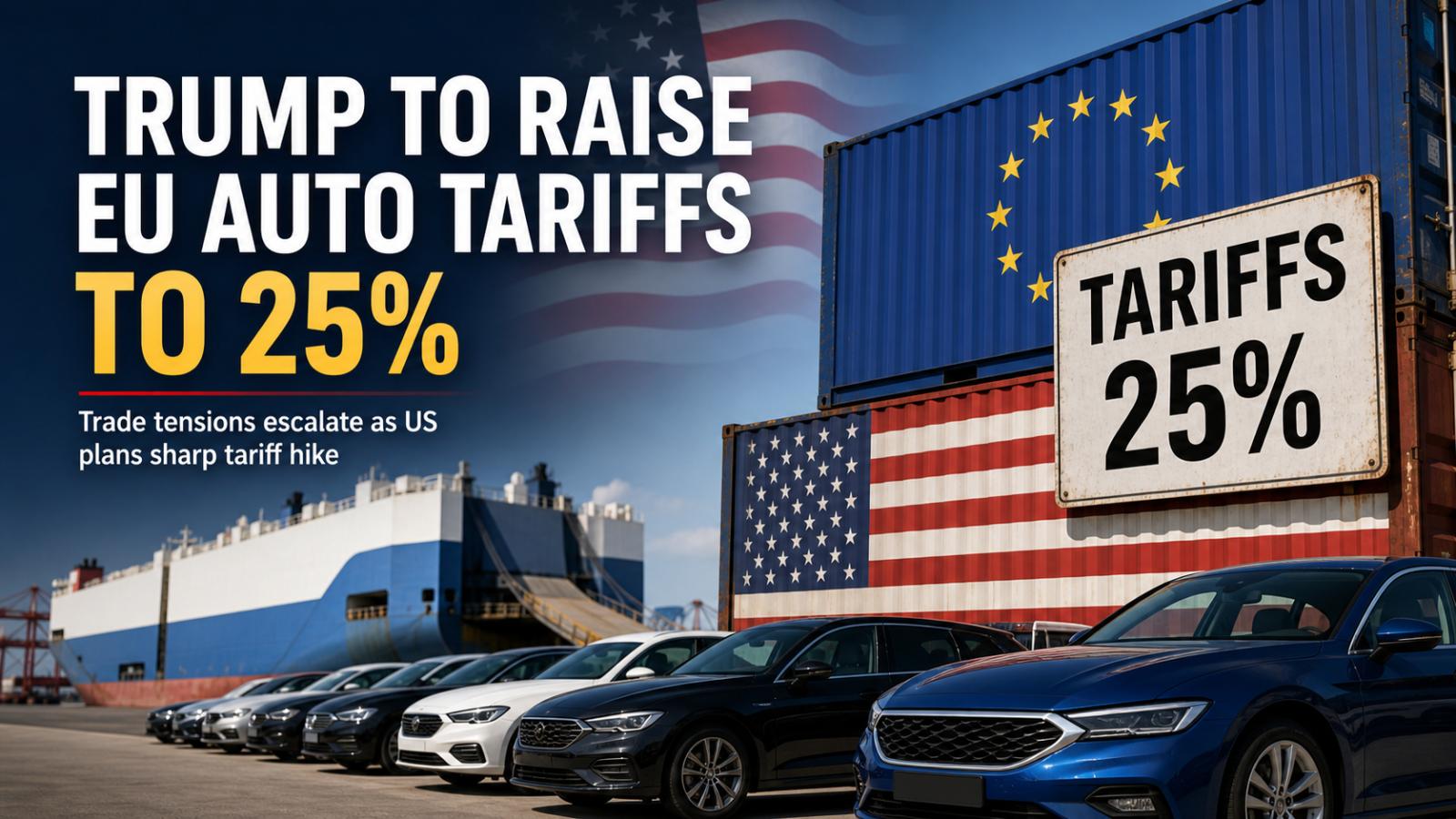
Trump signals sharp increase in tariffs on EU vehicles WASHINGTON — On Friday, May 1, 2026, U.S. President Donald Trump announced plans to raise tariffs on cars and trucks imported from the European Union to 25%, signaling a significant shift in U.S.-EU trade policy. The move, shared publicly in a statement, comes at a time when global markets remain sensitive to policy changes and could trigger broader economic repercussions. Trump stated that the European Union was “not complying” with the previously agreed trade deal, though he did not provide specific details regarding the alleged violations. The announcement marks a departure from the earlier tariff framework negotiated between both sides. Background of the US-EU Turnberry trade framework The current dispute traces back to a bilateral agreement reached in July 2025 between Trump and Ursula von der Leyen, which set a 15% tariff ceiling on most traded goods. Known as the Turnberry Agreement, the arrangement aimed to stabilize trade relations and reduce uncertainty for industries on both sides of the Atlantic. Both the United States and the European Union had reaffirmed their commitment to maintaining this framework even after legal and policy challenges emerged earlier in 2026. Legal challenges reshape tariff authority The agreement’s stability was called into question after a ruling by the U.S. Supreme Court, which determined that the president lacked authority to impose tariffs under an economic emergency declaration. Following the ruling, tariff limits were effectively reduced, prompting the administration to explore alternative legal pathways to implement new import taxes. Ongoing investigations into trade imbalances and national security concerns have since been cited by the administration as justification for a revised tariff strategy, potentially putting the original agreement at risk. Economic stakes for EU and global markets The European Union has consistently emphasized the importance of maintaining agreed tariff limits, noting that the deal was expected to save its automotive sector between €500 million and €600 million monthly. Trade between the U.S. and EU reached approximately €1.7 trillion ($2 trillion) in 2024, highlighting the scale of economic interdependence. European officials have reiterated that commitments under the agreement should be upheld, stressing that EU exports must continue to benefit from competitive tariff treatment without unexpected increases. Rising tensions threaten trade stability The proposed tariff increase introduces fresh uncertainty into one of the world’s largest trading relationships. Analysts warn that such measures could disrupt supply chains, increase costs for manufacturers and consumers, and strain diplomatic ties. As the administration moves forward with its trade investigations, the future of the U.S.-EU trade framework remains uncertain, with potential implications extending beyond the automotive sector into the broader global economy.
Will Trump raise EU auto tariffs to 25%? Yes, escalation risks trade tensions
Trump signals sharp increase in tariffs on EU vehicles WASHINGTON — On Friday, May 1, 2026, U.S. President Donald Trump announced plans to raise tariffs on cars and trucks imported from the European Union to 25%, signaling a significant shift in U.S.-EU trade policy. The move, shared publicly in a statement, comes at a time when global markets remain sensitive to policy changes and could trigger broader economic repercussions. Trump stated that the European Union was “not complying” with the previously agreed trade deal, though he did not provide specific details regarding the alleged violations. The announcement marks a departure from the earlier tariff framework negotiated between both sides. Background of the US-EU Turnberry trade framework The current dispute traces back to a bilateral agreement reached in July 2025 between Trump and Ursula von der Leyen, which set a 15% tariff ceiling on most traded goods. Known as the Turnberry Agreement, the arrangement aimed to stabilize trade relations and reduce uncertainty for industries on both sides of the Atlantic. Both the United States and the European Union had reaffirmed their commitment to maintaining this framework even after legal and policy challenges emerged earlier in 2026. Legal challenges reshape tariff authority The agreement’s stability was called into question after a ruling by the U.S. Supreme Court, which determined that the president lacked authority to impose tariffs under an economic emergency declaration. Following the ruling, tariff limits were effectively reduced, prompting the administration to explore alternative legal pathways to implement new import taxes. Ongoing investigations into trade imbalances and national security concerns have since been cited by the administration as justification for a revised tariff strategy, potentially putting the original agreement at risk. Economic stakes for EU and global markets The European Union has consistently emphasized the importance of maintaining agreed tariff limits, noting that the deal was expected to save its automotive sector between €500 million and €600 million monthly. Trade between the U.S. and EU reached approximately €1.7 trillion ($2 trillion) in 2024, highlighting the scale of economic interdependence. European officials have reiterated that commitments under the agreement should be upheld, stressing that EU exports must continue to benefit from competitive tariff treatment without unexpected increases. Rising tensions threaten trade stability The proposed tariff increase introduces fresh uncertainty into one of the world’s largest trading relationships. Analysts warn that such measures could disrupt supply chains, increase costs for manufacturers and consumers, and strain diplomatic ties. As the administration moves forward with its trade investigations, the future of the U.S.-EU trade framework remains uncertain, with potential implications extending beyond the automotive sector into the broader global economy.
What caused U.K. exports to the U.S. to fall? Tariffs cut goods by nearly 25%
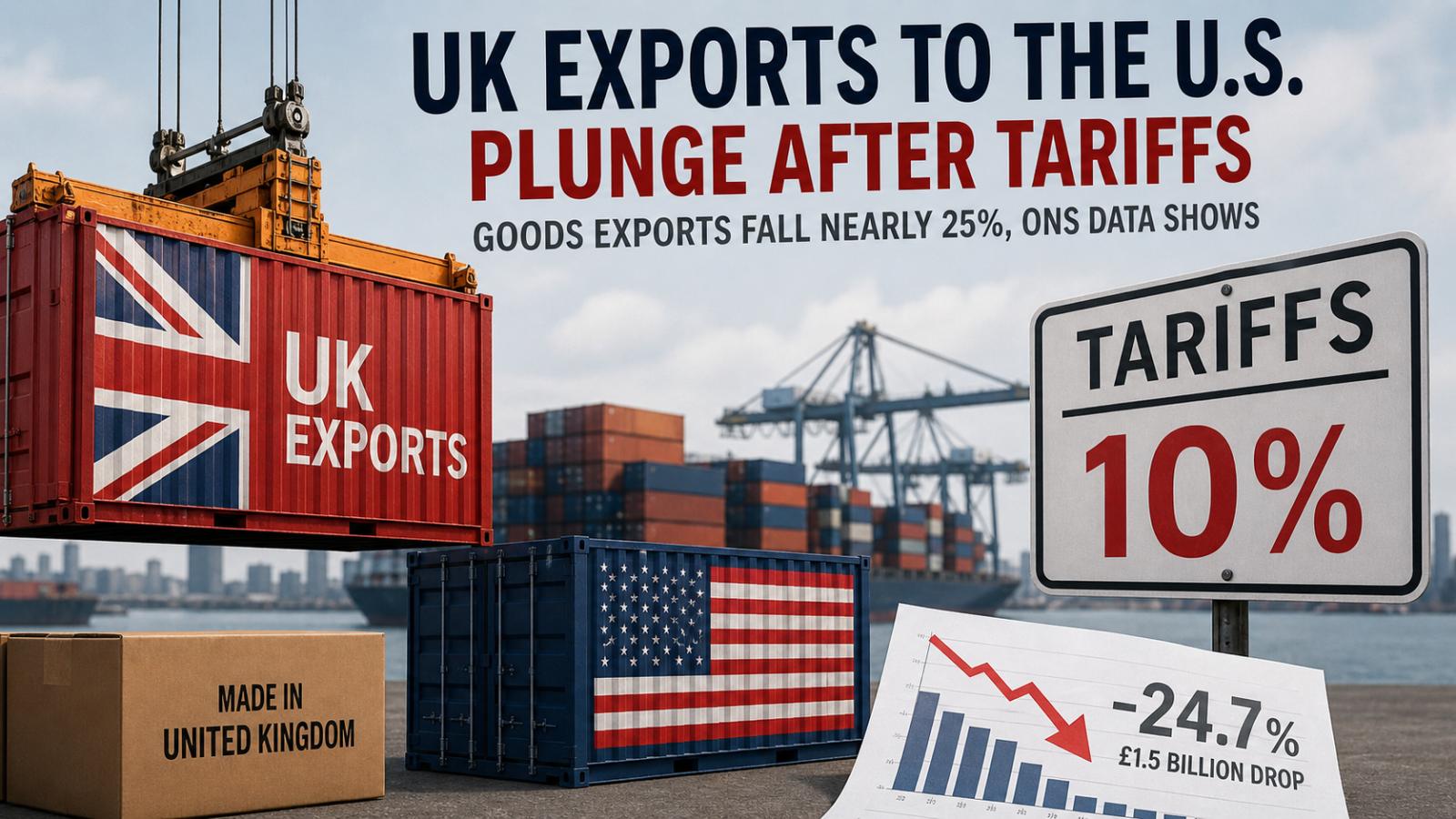
Tariffs trigger sharp decline in U.K. exports to the U.S. What caused U.K. exports to the U.S. to fall? Tariffs cut goods by nearly 25% as official data shows a steep decline in trade flows following sweeping tariff measures. According to figures released Friday by the Office for National Statistics, goods exports from the United Kingdom to the United States dropped by £1.5 billion, marking a 24.7% decrease after tariffs were introduced. The data, which excludes precious metals, highlights the immediate and sustained impact of trade policy changes initiated under Donald Trump. The tariffs, introduced as part of a broader “liberation day” strategy, disrupted established trading patterns between the two countries, which had previously benefited from largely tariff-free exchanges. Automotive and key sectors remain below pre-tariff levels The downturn has been particularly evident in the automotive sector, where U.K. car exports to the U.S. have remained below pre-tariff levels for the 12 months since April 2025. Analysts note that the continued weakness reflects both higher costs and reduced competitiveness in the American market. While exports have struggled, imports from the United States into the U.K. increased at the beginning of 2026. This imbalance has resulted in a trade deficit for three consecutive months, underscoring the broader economic consequences of the tariff regime on bilateral trade. Trade deal reshapes transatlantic economic ties The United Kingdom was the first nation to secure a post-tariff trade agreement with the U.S., following the introduction of the new measures. The deal included a 10% blanket tariff on goods entering the American market, effectively ending the previous zero-tariff environment that had benefited exporters on both sides. The new framework also imposed duties on key British exports, including Scotch whisky and other spirits. However, in a recent development, Trump announced plans to remove tariffs on Scotch whisky “in honor” of King Charles III and Queen Camilla following their state visit. Despite this move, industry experts caution that relief in one sector is unlikely to offset broader trade declines. Economic pressures weigh on exporters and growth outlook Economists warn that the sustained drop in exports could have wider implications for the U.K. economy. The United States remains the country’s largest export market, making the scale of the downturn particularly significant. Samuel Edwards, head of client portfolio management at Ebury, said exporters are facing mounting challenges. He pointed to a combination of higher trading costs from tariffs, increased employment expenses, and rising input prices, all of which are squeezing profit margins. These overlapping pressures are making it more difficult for U.K. businesses to remain competitive internationally, raising concerns about long-term growth and stability in the evolving global trade environment.
What caused U.K. exports to the U.S. to fall? Tariffs cut goods by nearly 25%
Tariffs trigger sharp decline in U.K. exports to the U.S. What caused U.K. exports to the U.S. to fall? Tariffs cut goods by nearly 25% as official data shows a steep decline in trade flows following sweeping tariff measures. According to figures released Friday by the Office for National Statistics, goods exports from the United Kingdom to the United States dropped by £1.5 billion, marking a 24.7% decrease after tariffs were introduced. The data, which excludes precious metals, highlights the immediate and sustained impact of trade policy changes initiated under Donald Trump. The tariffs, introduced as part of a broader “liberation day” strategy, disrupted established trading patterns between the two countries, which had previously benefited from largely tariff-free exchanges. Automotive and key sectors remain below pre-tariff levels The downturn has been particularly evident in the automotive sector, where U.K. car exports to the U.S. have remained below pre-tariff levels for the 12 months since April 2025. Analysts note that the continued weakness reflects both higher costs and reduced competitiveness in the American market. While exports have struggled, imports from the United States into the U.K. increased at the beginning of 2026. This imbalance has resulted in a trade deficit for three consecutive months, underscoring the broader economic consequences of the tariff regime on bilateral trade. Trade deal reshapes transatlantic economic ties The United Kingdom was the first nation to secure a post-tariff trade agreement with the U.S., following the introduction of the new measures. The deal included a 10% blanket tariff on goods entering the American market, effectively ending the previous zero-tariff environment that had benefited exporters on both sides. The new framework also imposed duties on key British exports, including Scotch whisky and other spirits. However, in a recent development, Trump announced plans to remove tariffs on Scotch whisky “in honor” of King Charles III and Queen Camilla following their state visit. Despite this move, industry experts caution that relief in one sector is unlikely to offset broader trade declines. Economic pressures weigh on exporters and growth outlook Economists warn that the sustained drop in exports could have wider implications for the U.K. economy. The United States remains the country’s largest export market, making the scale of the downturn particularly significant. Samuel Edwards, head of client portfolio management at Ebury, said exporters are facing mounting challenges. He pointed to a combination of higher trading costs from tariffs, increased employment expenses, and rising input prices, all of which are squeezing profit margins. These overlapping pressures are making it more difficult for U.K. businesses to remain competitive internationally, raising concerns about long-term growth and stability in the evolving global trade environment.
Iran’s Mojtaba Khamenei calls US bases “paper tigers” amid Gulf tensions
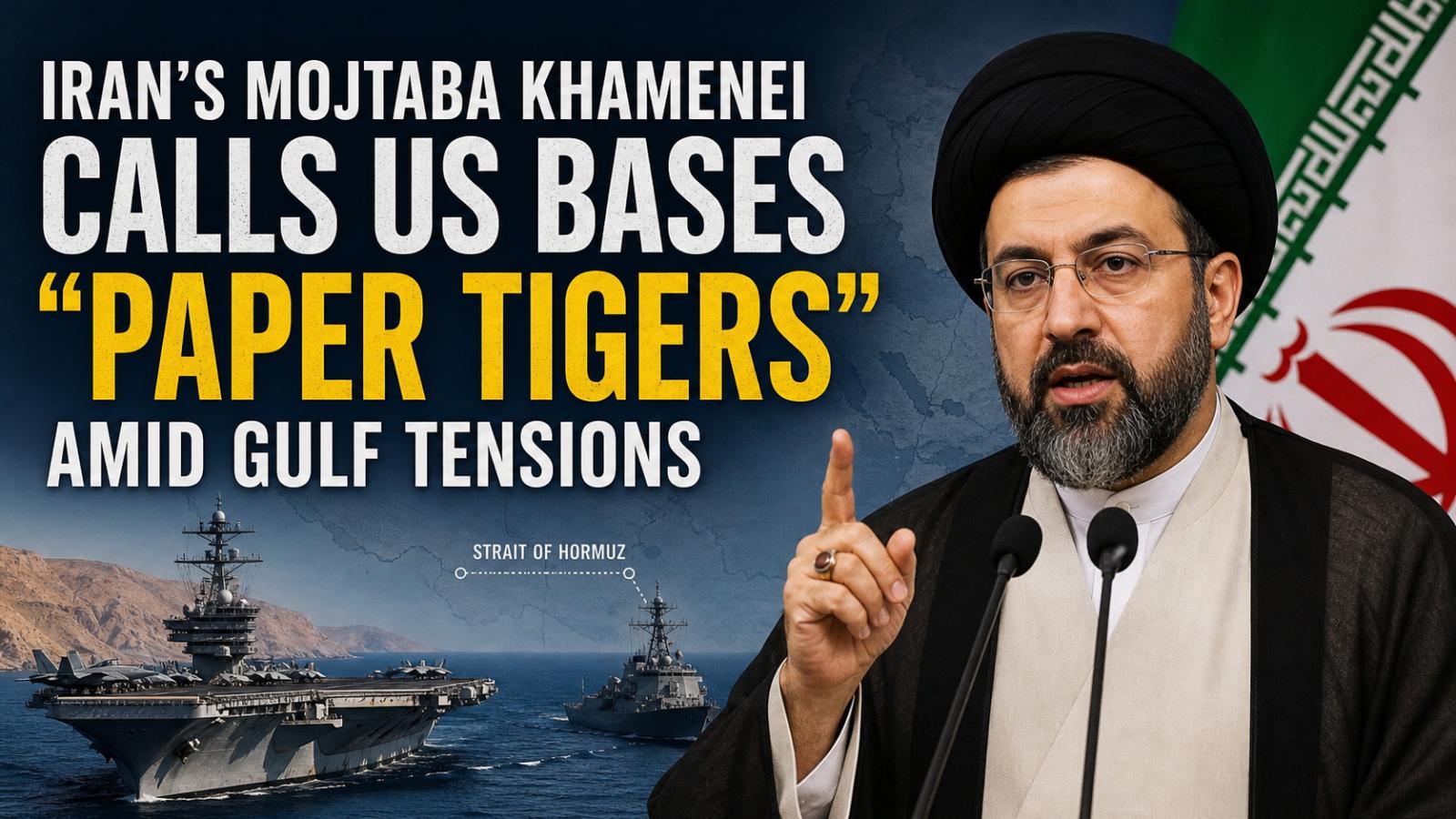
Iran’s Mojtaba Khamenei called US bases “paper tigers” on Friday, May 1, 2026, criticizing American presence in the Persian Gulf and linking it to regional insecurity amid rising Strait of Hormuz tensions Iran’s Mojtaba Khamenei calls US bases “paper tigers” amid Gulf tensions as Mojtaba Khamenei sharply criticized the United States’ military presence in the
Iran’s Mojtaba Khamenei calls US bases “paper tigers” amid Gulf tensions
Iran’s Mojtaba Khamenei called US bases “paper tigers” on Friday, May 1, 2026, criticizing American presence in the Persian Gulf and linking it to regional insecurity amid rising Strait of Hormuz tensions Iran’s Mojtaba Khamenei calls US bases “paper tigers” amid Gulf tensions as Mojtaba Khamenei sharply criticized the United States’ military presence in the
What did Iran propose to the U.S.? New talks plan sent via Pakistan signals diplomacy
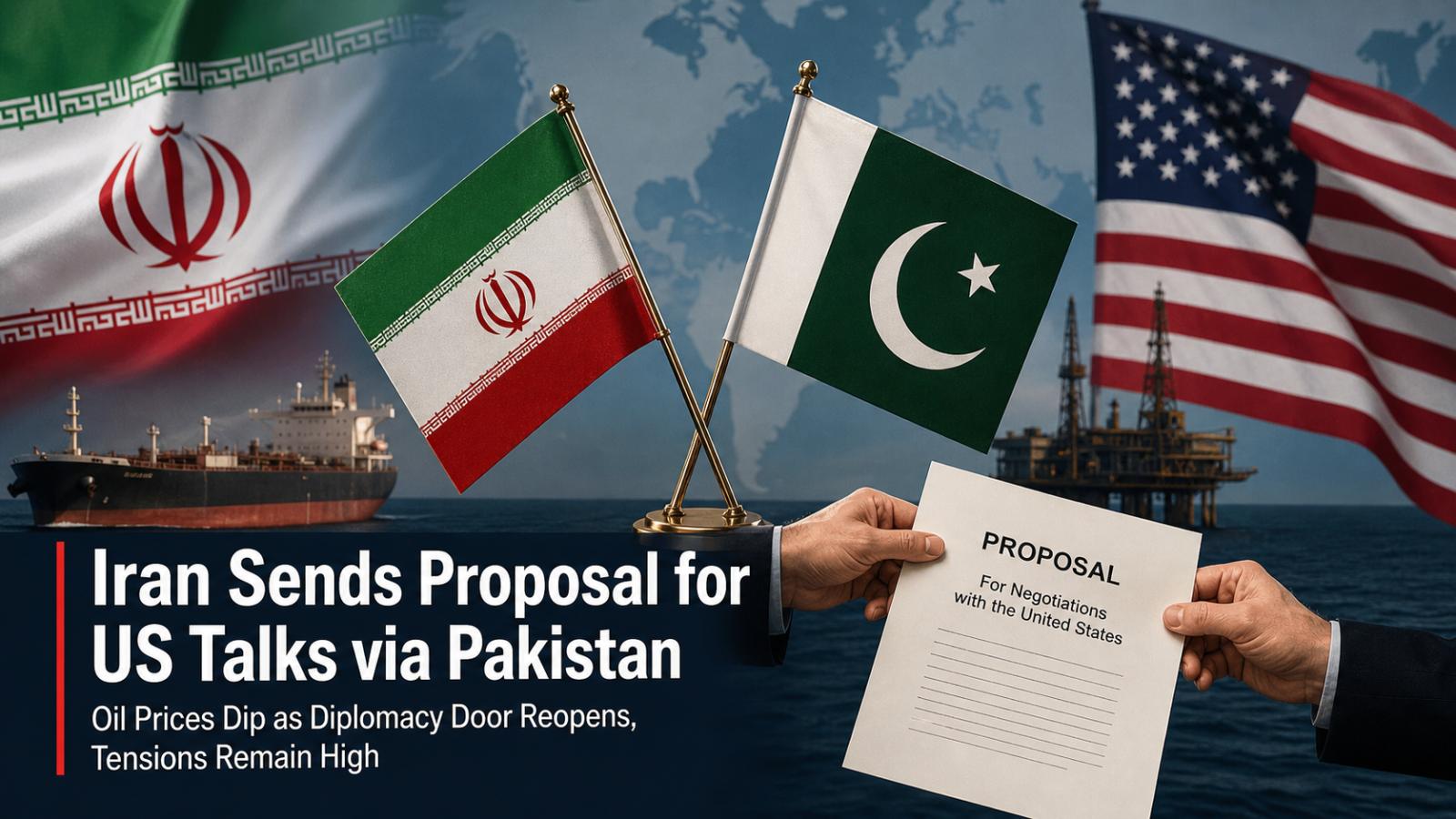
Iran has delivered a new proposal for negotiations with the United States through Pakistan, signaling a potential diplomatic opening amid heightened regional tensions. According to IRNA, the proposal was formally
What did Iran propose to the U.S.? New talks plan sent via Pakistan signals diplomacy
Iran has delivered a new proposal for negotiations with the United States through Pakistan, signaling a potential diplomatic opening amid heightened regional tensions. According to IRNA, the proposal was formally










