





















#pcos
PCOS Renamed PMOS: What the New Diagnosis Means for Women
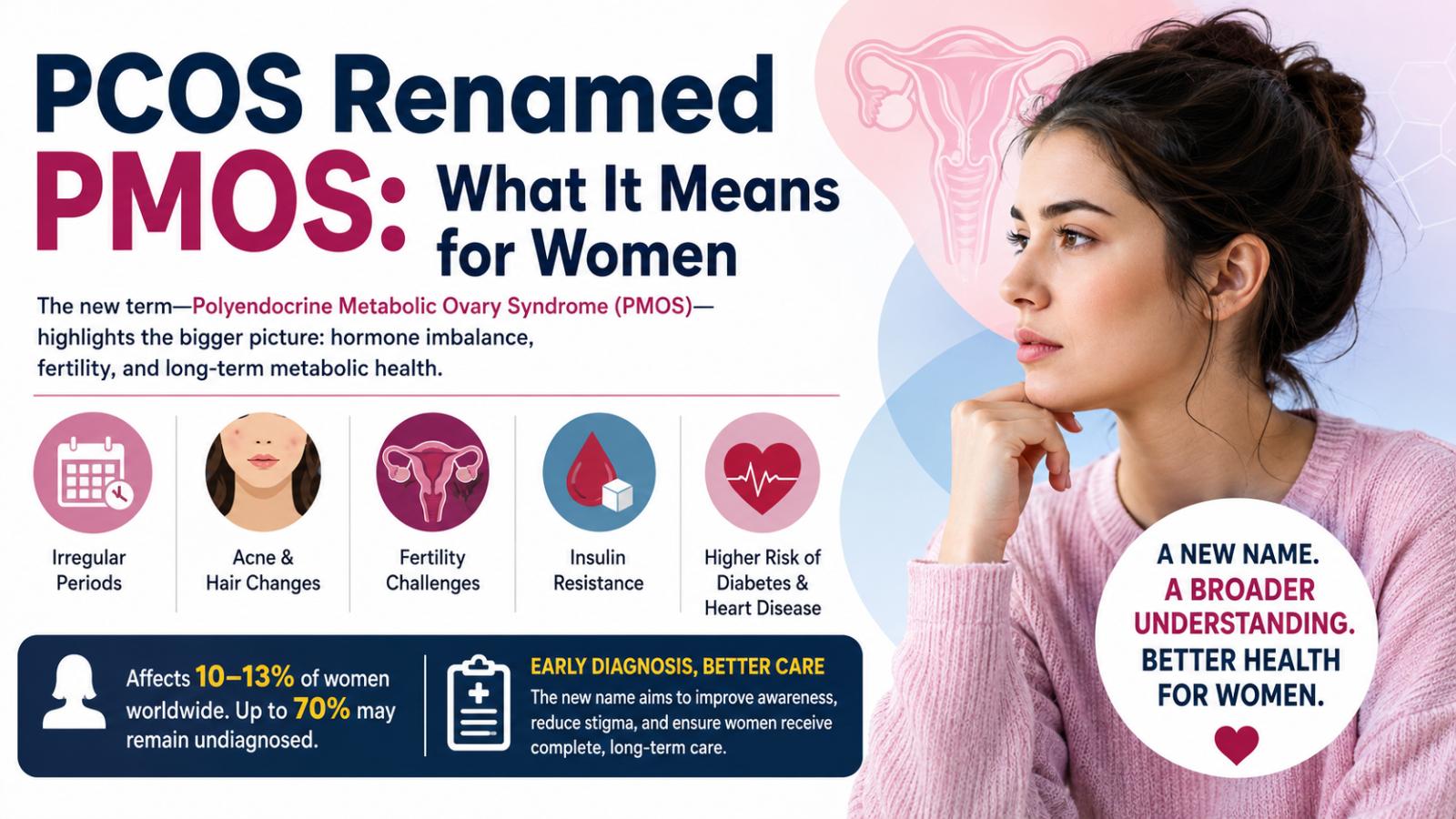
PCOS has been renamed PMOS to show that the condition is not only about ovarian cysts, but also hormones, fertility and long-term metabolic health. The new name, polyendocrine metabolic ovarian syndrome, was announced Tuesday, May 12, 2026, after a global medical review involving patient and professional groups. Why the Name Changed Experts said the old PCOS label often misled patients because many symptoms are driven by hormone changes and insulin resistance, not cysts alone. PMOS can affect menstrual cycles, ovulation, skin, hair growth, weight, fertility and mental health. It is also linked to higher risks of type 2 diabetes, heart disease, sleep apnea and pregnancy complications. What PMOS Means for Diagnosis The change does not mean every patient needs a new diagnosis immediately. Instead, doctors hope the PMOS name will push care beyond reproductive symptoms and help more women get screened earlier. Women should seek medical advice if they have irregular or absent periods, severe acne, excess facial or body hair, hair thinning, trouble getting pregnant or signs of insulin resistance. How PMOS Is Treated Treatment depends on symptoms and pregnancy plans. Doctors may recommend lifestyle changes, cycle-regulating medicines, insulin-sensitizing drugs, anti-androgen treatment or fertility support. The new name may feel small, but for many patients it could change the way the condition is understood: as a whole-body endocrine and metabolic disorder that deserves earlier, more complete care.
PCOS Renamed PMOS: What the New Diagnosis Means for Women
PCOS has been renamed PMOS to show that the condition is not only about ovarian cysts, but also hormones, fertility and long-term metabolic health. The new name, polyendocrine metabolic ovarian syndrome, was announced Tuesday, May 12, 2026, after a global medical review involving patient and professional groups. Why the Name Changed Experts said the old PCOS label often misled patients because many symptoms are driven by hormone changes and insulin resistance, not cysts alone. PMOS can affect menstrual cycles, ovulation, skin, hair growth, weight, fertility and mental health. It is also linked to higher risks of type 2 diabetes, heart disease, sleep apnea and pregnancy complications. What PMOS Means for Diagnosis The change does not mean every patient needs a new diagnosis immediately. Instead, doctors hope the PMOS name will push care beyond reproductive symptoms and help more women get screened earlier. Women should seek medical advice if they have irregular or absent periods, severe acne, excess facial or body hair, hair thinning, trouble getting pregnant or signs of insulin resistance. How PMOS Is Treated Treatment depends on symptoms and pregnancy plans. Doctors may recommend lifestyle changes, cycle-regulating medicines, insulin-sensitizing drugs, anti-androgen treatment or fertility support. The new name may feel small, but for many patients it could change the way the condition is understood: as a whole-body endocrine and metabolic disorder that deserves earlier, more complete care.
5 High-Protein PCOS-Friendly Dinners to Help Lose Belly Fat
Managing weight and belly fat with PCOS can be challenging due to hormonal imbalances, a slow metabolism, and cravings. For vegetarians, getting enough protein without relying on processed foods can be tricky. But good news! You can nourish your body with the right protein sources and still enjoy tasty meals. Here are five expert-approved, high-protein dinners for PCOS, each containing at least 30 grams of protein per serving to support hormone balance and help with belly fat loss: &nb
5 High-Protein PCOS-Friendly Dinners to Help Lose Belly Fat
Managing weight and belly fat with PCOS can be challenging due to hormonal imbalances, a slow metabolism, and cravings. For vegetarians, getting enough protein without relying on processed foods can be tricky. But good news! You can nourish your body with the right protein sources and still enjoy tasty meals. Here are five expert-approved, high-protein dinners for PCOS, each containing at least 30 grams of protein per serving to support hormone balance and help with belly fat loss: &nb


