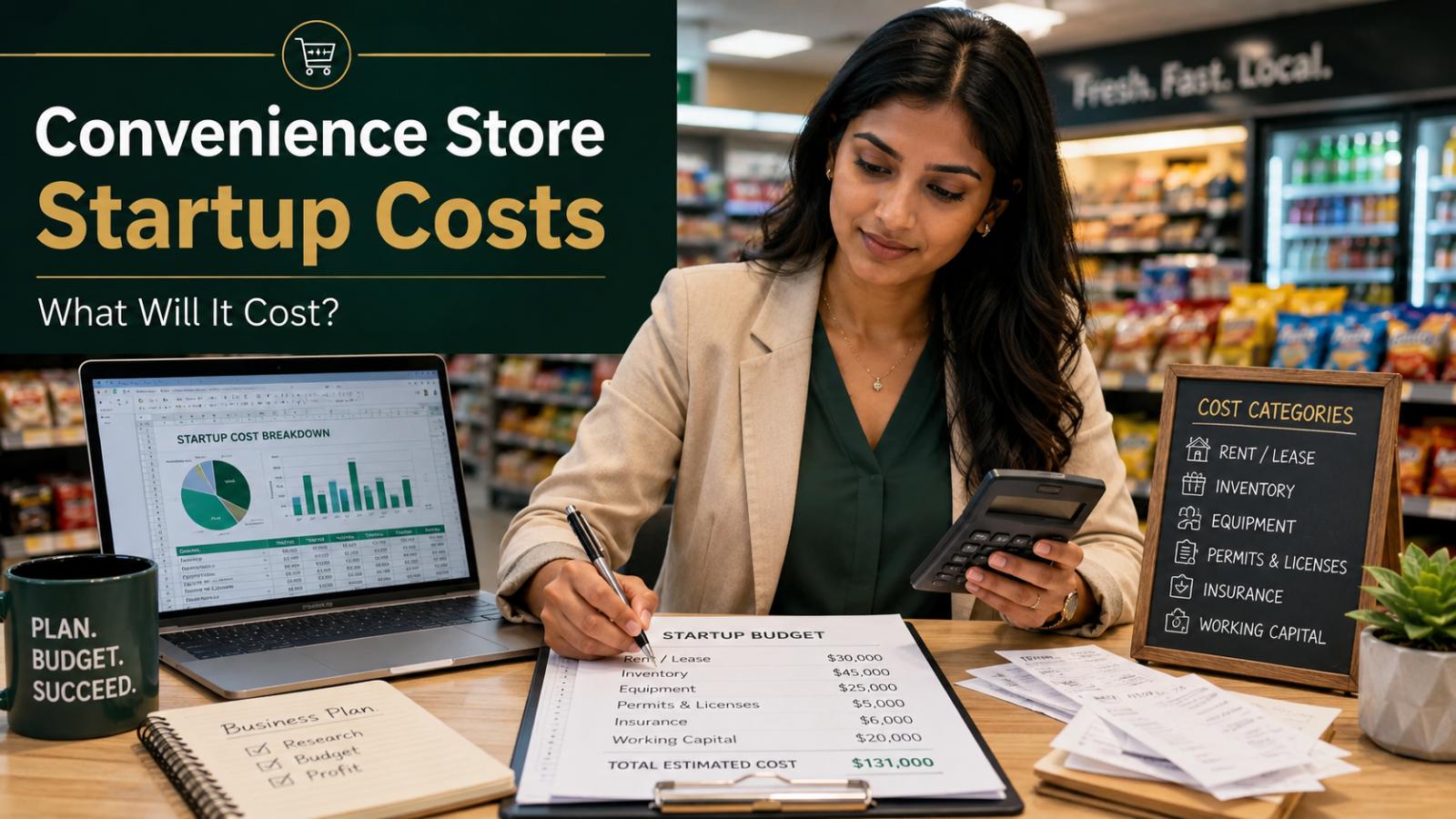
The cost to open a convenience store in the US can vary widely by location, size and product mix. A no-fuel store may require roughly $100,000 to $450,000 in startup capital, with rent, buildout, refrigeration, inventory, permits, insurance and working capital among the biggest expenses.
Opening a convenience store in the United States can require a substantial investment. There is no government-set national startup price because costs depend heavily on location, store size, property condition and products sold.
Current 2026 industry planning estimates suggest a typical convenience store without fuel may require roughly $100,000 to $450,000 to launch. Smaller stores using existing fixtures may cost less, while larger or heavily renovated locations can exceed that range.
Rent and store buildout
Location is one of the biggest cost variables. Owners may need a security deposit, advance rent, renovations, electrical work, lighting, counters and signage.
The SBA notes that rental rates, property values, wages, utilities, insurance and government fees can vary significantly depending on location.
A store taking over an already equipped retail space may require considerably less buildout than converting an empty property.
Equipment, refrigeration and POS costs
Convenience stores commonly need refrigerators, freezers, shelving, checkout counters, security cameras and a point-of-sale system.
One 2026 industry estimate places equipment and refrigeration at roughly $35,800 to $143,000, with technology and POS systems adding approximately $2,500 to $8,500, depending on store size and equipment quality.
How much does opening inventory cost?
Owners also need cash to stock beverages, snacks, groceries, household products and other merchandise before opening.
Current planning estimates commonly place initial inventory around $20,000 to $60,000, although a larger product range can push the amount higher.
Alcohol and tobacco inventory can add both product costs and licensing requirements.
Licenses, insurance and employees
Business registration, local permits, food retail approvals, insurance and professional fees should be included in the startup budget.
The SBA recommends calculating licenses, permits, insurance, inventory, employee salaries, utilities and professional costs before launching a brick-and-mortar business.
Stores selling food are primarily regulated by state and local retail-food authorities.
Do not forget working capital
Opening costs are only part of the required investment. Owners still need money for rent, payroll, utilities, insurance and inventory replenishment while sales develop.
The SBA recommends separating one-time startup expenses from recurring monthly expenses when calculating how much capital a business needs.
A prospective owner should therefore build a location-specific budget before signing a lease or buying a store. A convenience store with fuel pumps, extensive food service or alcohol sales should be budgeted separately because those features can substantially change the investment.