India Japan economic ties shift toward supply chain resilience
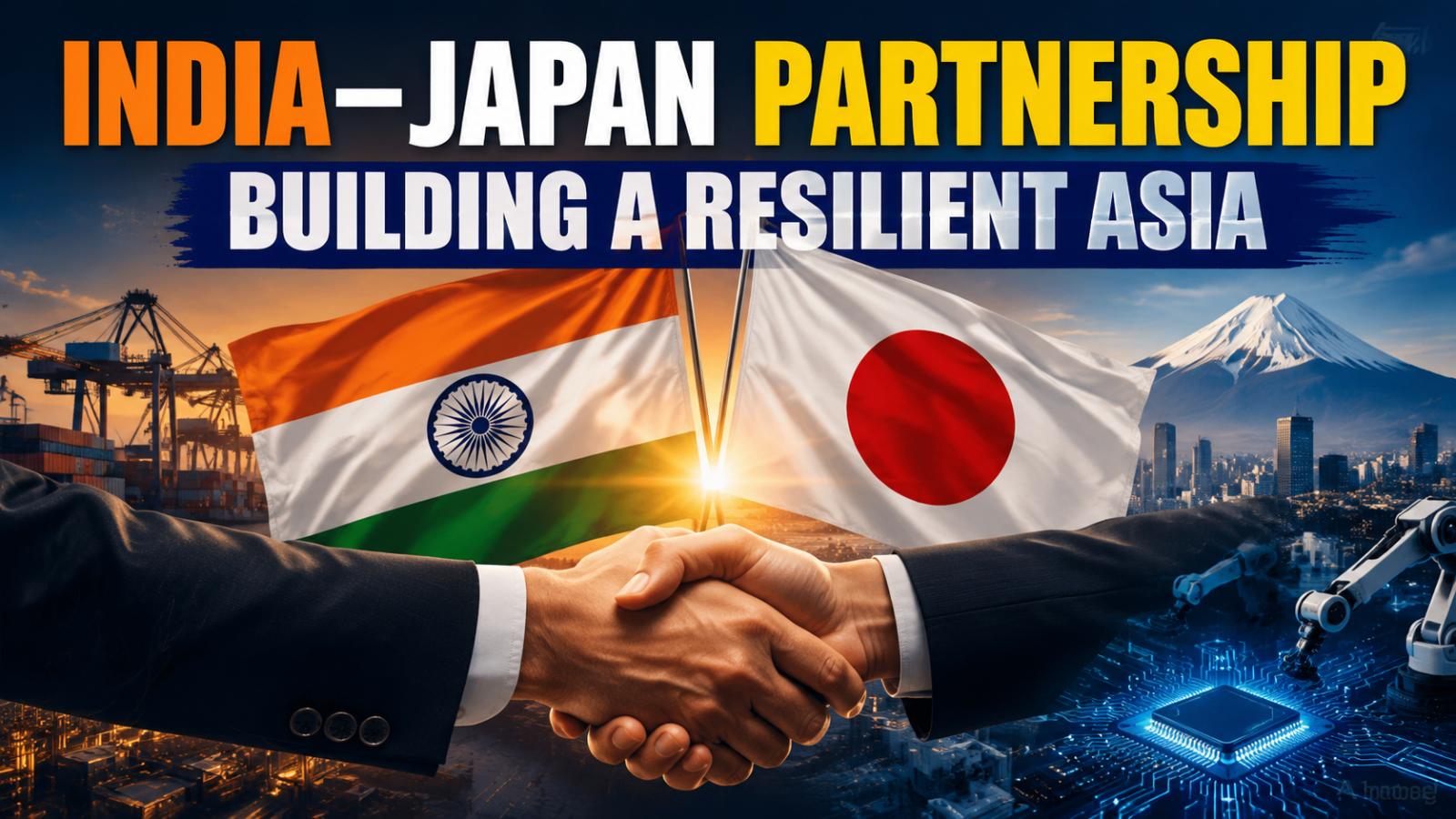
India and Japan are steadily moving their partnership beyond routine trade discussions into a broader realignment shaped by global risk and industrial restructuring. What looks like increased investment flows is actually part of a deeper repositioning of how both countries want to secure long-term economic stability in an uncertain global environment. Investment growth driven by risk recalibration Japanese companies are expanding their footprint in India not only for growth but also to reduce exposure to concentrated supply networks in East Asia. Rising geopolitical friction and periodic trade restrictions have forced firms to reconsider how dependent they are on single-country manufacturing systems. India is increasingly viewed as a viable diversification hub due to its scale, labor availability, and expanding industrial base. Supply chain restructuring becomes the core driver The most significant shift is happening in supply chains rather than headline investment figures. Japanese manufacturers are gradually redesigning sourcing and production models to reduce vulnerabilities in electronics, automotive components, and precision engineering. India fits into this transition as an alternative production and assembly base, especially for sectors where demand is growing but diversification is still limited. Technology and industrial cooperation deepen Cooperation is also expanding into advanced sectors such as semiconductors, digital systems, and artificial intelligence. These areas are no longer treated as purely commercial exchanges but as strategic capabilities. Both countries are aligning on technology resilience, where production continuity and security of supply matter as much as cost efficiency. Rare earths and critical materials gain importance Another emerging focus is critical minerals and rare earth supply chains. These materials are essential for electronics, renewable energy systems, and defence manufacturing. Dependence on concentrated suppliers has pushed both India and Japan to explore alternative sourcing strategies and joint development frameworks to reduce long-term risk. Financial flows signal long-term positioning Japanese capital inflows into Indian financial institutions and industrial projects suggest more than short-term investment interest. Financial participation typically indicates long-term confidence in policy stability and market expansion. However, the real test will be whether this capital flow expands into deeper manufacturing integration rather than remaining portfolio-based exposure. Economic security becomes the defining theme At the core of this evolving relationship is economic security. Trade decisions are increasingly shaped by geopolitical uncertainty rather than pure cost advantage. This marks a shift from efficiency-driven globalization to resilience-driven partnerships, where countries prioritize stability over optimization. A cautious but strategic realignment The India–Japan partnership is gradually becoming a case study in how middle and advanced economies adjust to global fragmentation. While the direction is clear—greater cooperation in technology, investment, and supply chains—the pace will depend on regulatory alignment, infrastructure readiness, and how effectively both sides manage external geopolitical pressures.
India Japan economic ties shift toward supply chain resilience
India and Japan are steadily moving their partnership beyond routine trade discussions into a broader realignment shaped by global risk and industrial restructuring. What looks like increased investment flows is actually part of a deeper repositioning of how both countries want to secure long-term economic stability in an uncertain global environment. Investment growth driven by risk recalibration Japanese companies are expanding their footprint in India not only for growth but also to reduce exposure to concentrated supply networks in East Asia. Rising geopolitical friction and periodic trade restrictions have forced firms to reconsider how dependent they are on single-country manufacturing systems. India is increasingly viewed as a viable diversification hub due to its scale, labor availability, and expanding industrial base. Supply chain restructuring becomes the core driver The most significant shift is happening in supply chains rather than headline investment figures. Japanese manufacturers are gradually redesigning sourcing and production models to reduce vulnerabilities in electronics, automotive components, and precision engineering. India fits into this transition as an alternative production and assembly base, especially for sectors where demand is growing but diversification is still limited. Technology and industrial cooperation deepen Cooperation is also expanding into advanced sectors such as semiconductors, digital systems, and artificial intelligence. These areas are no longer treated as purely commercial exchanges but as strategic capabilities. Both countries are aligning on technology resilience, where production continuity and security of supply matter as much as cost efficiency. Rare earths and critical materials gain importance Another emerging focus is critical minerals and rare earth supply chains. These materials are essential for electronics, renewable energy systems, and defence manufacturing. Dependence on concentrated suppliers has pushed both India and Japan to explore alternative sourcing strategies and joint development frameworks to reduce long-term risk. Financial flows signal long-term positioning Japanese capital inflows into Indian financial institutions and industrial projects suggest more than short-term investment interest. Financial participation typically indicates long-term confidence in policy stability and market expansion. However, the real test will be whether this capital flow expands into deeper manufacturing integration rather than remaining portfolio-based exposure. Economic security becomes the defining theme At the core of this evolving relationship is economic security. Trade decisions are increasingly shaped by geopolitical uncertainty rather than pure cost advantage. This marks a shift from efficiency-driven globalization to resilience-driven partnerships, where countries prioritize stability over optimization. A cautious but strategic realignment The India–Japan partnership is gradually becoming a case study in how middle and advanced economies adjust to global fragmentation. While the direction is clear—greater cooperation in technology, investment, and supply chains—the pace will depend on regulatory alignment, infrastructure readiness, and how effectively both sides manage external geopolitical pressures.
India Japan summit 2026 reshapes Indo Pacific alignment
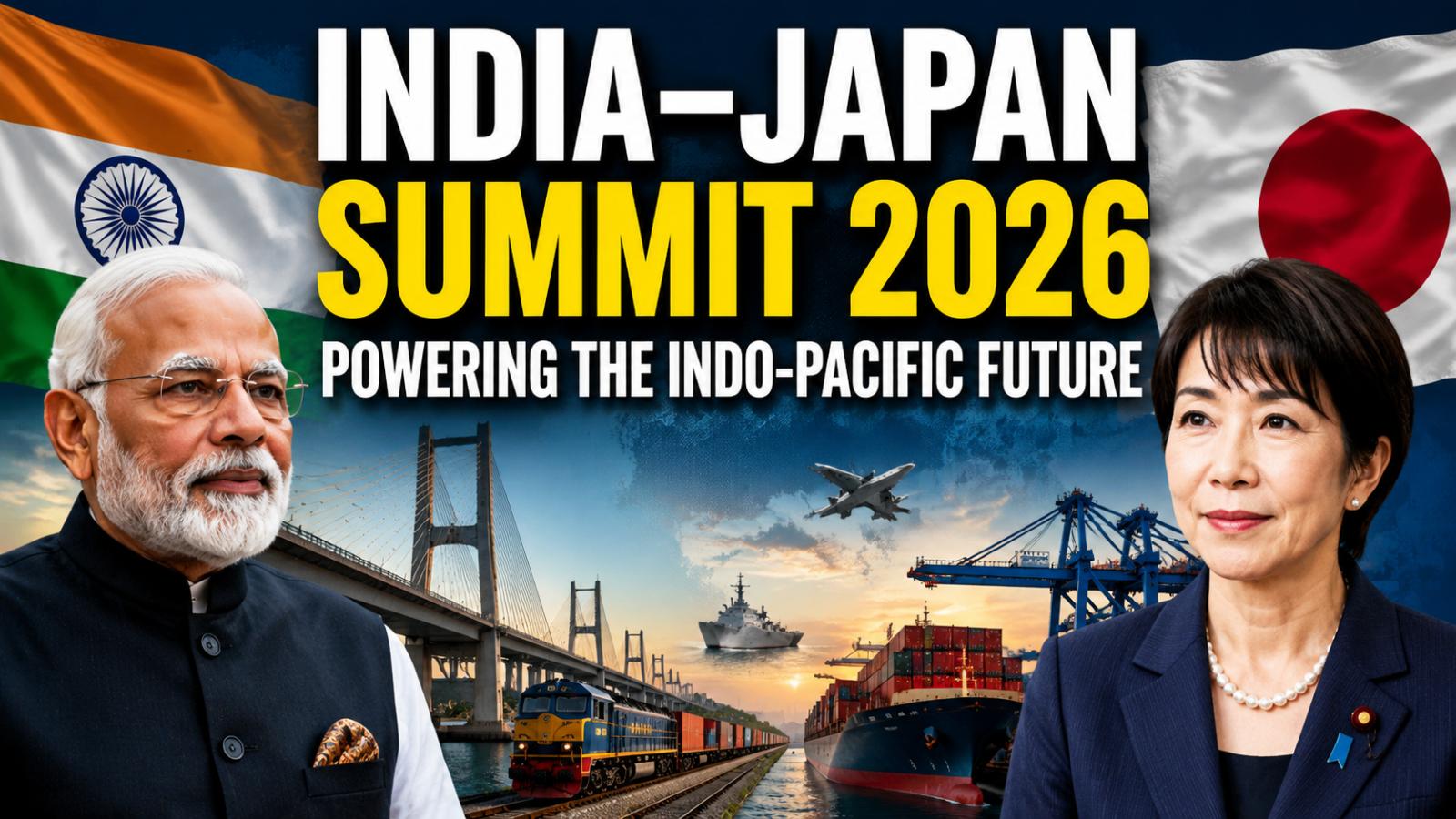
The latest round of strategic talks between India and Japan signals a shift from broad diplomatic alignment to project-driven cooperation. The visit by Japanese Prime Minister Sanae Takaichi marks a renewed focus on infrastructure delivery, supply chain redesign, and
India Japan summit 2026 reshapes Indo Pacific alignment
The latest round of strategic talks between India and Japan signals a shift from broad diplomatic alignment to project-driven cooperation. The visit by Japanese Prime Minister Sanae Takaichi marks a renewed focus on infrastructure delivery, supply chain redesign, and
India Japan summit to review 10-year joint vision roadmap cooperation
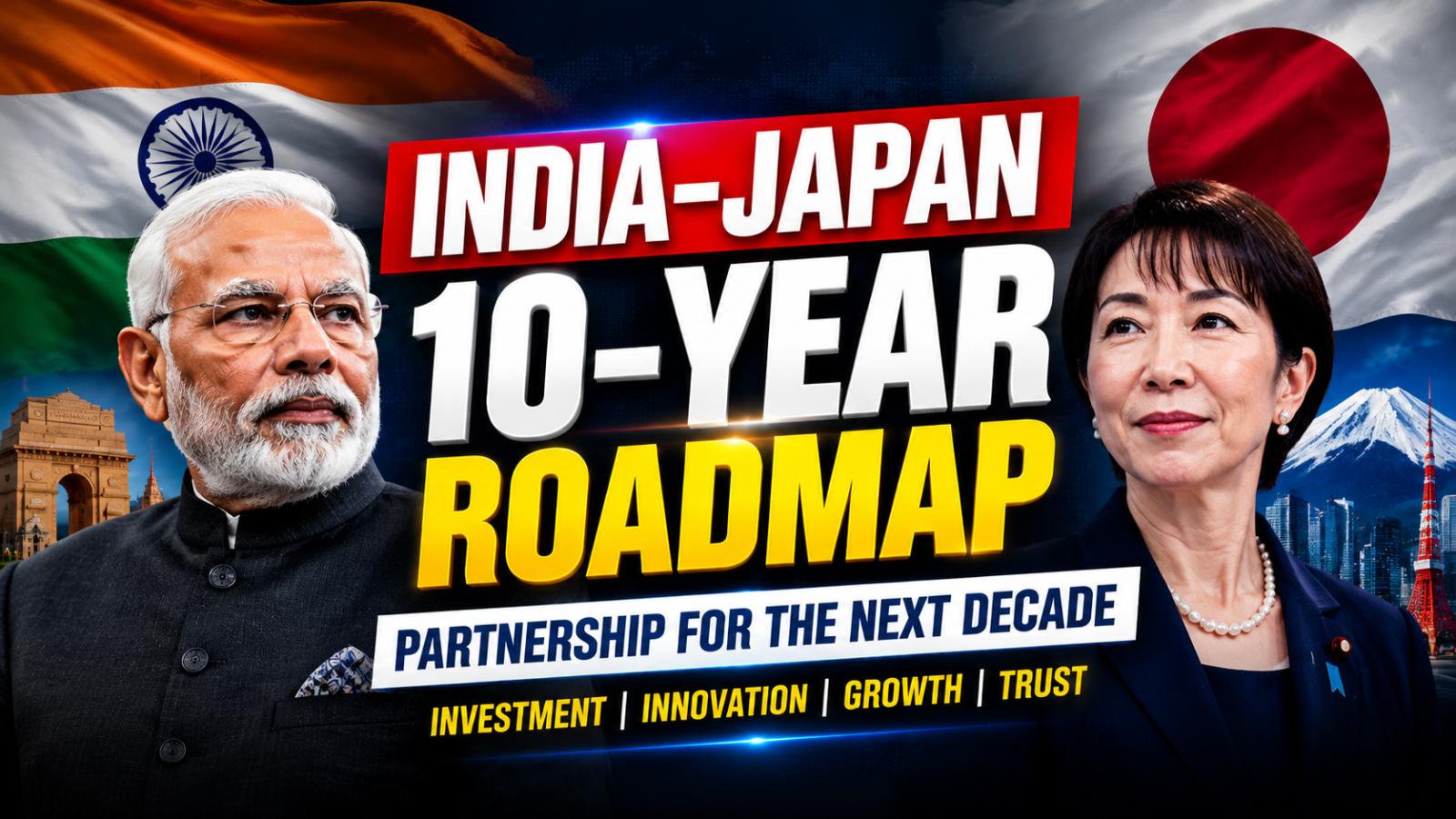
India-Japan Summit to Review Long-Term Strategic Roadmap India is set to host Japanese Prime Minister Sanae Takaichi from July 1 to 3 for the 16th India-Japan Annual Summit, where both sides are expected to review progress under the Japan-India Joint Vision for the Next Decade. The framework, signed in Tokyo in August 2025, outlines a long-term roadmap aimed at streng
India Japan summit to review 10-year joint vision roadmap cooperation
India-Japan Summit to Review Long-Term Strategic Roadmap India is set to host Japanese Prime Minister Sanae Takaichi from July 1 to 3 for the 16th India-Japan Annual Summit, where both sides are expected to review progress under the Japan-India Joint Vision for the Next Decade. The framework, signed in Tokyo in August 2025, outlines a long-term roadmap aimed at streng
Trump earns over $1 billion from crypto ventures financial filing shows
Financial Disclosure Reveals Major Crypto Earnings US financial disclosure documents released by the Office of Government Ethics show that President Donald Trump earned more than $1 billion from cryptocurrency-related ventures over the past year. The filings outline a significant increase in income during the first year of his return to the White House, highlighting t
Trump earns over $1 billion from crypto ventures financial filing shows
Financial Disclosure Reveals Major Crypto Earnings US financial disclosure documents released by the Office of Government Ethics show that President Donald Trump earned more than $1 billion from cryptocurrency-related ventures over the past year. The filings outline a significant increase in income during the first year of his return to the White House, highlighting t
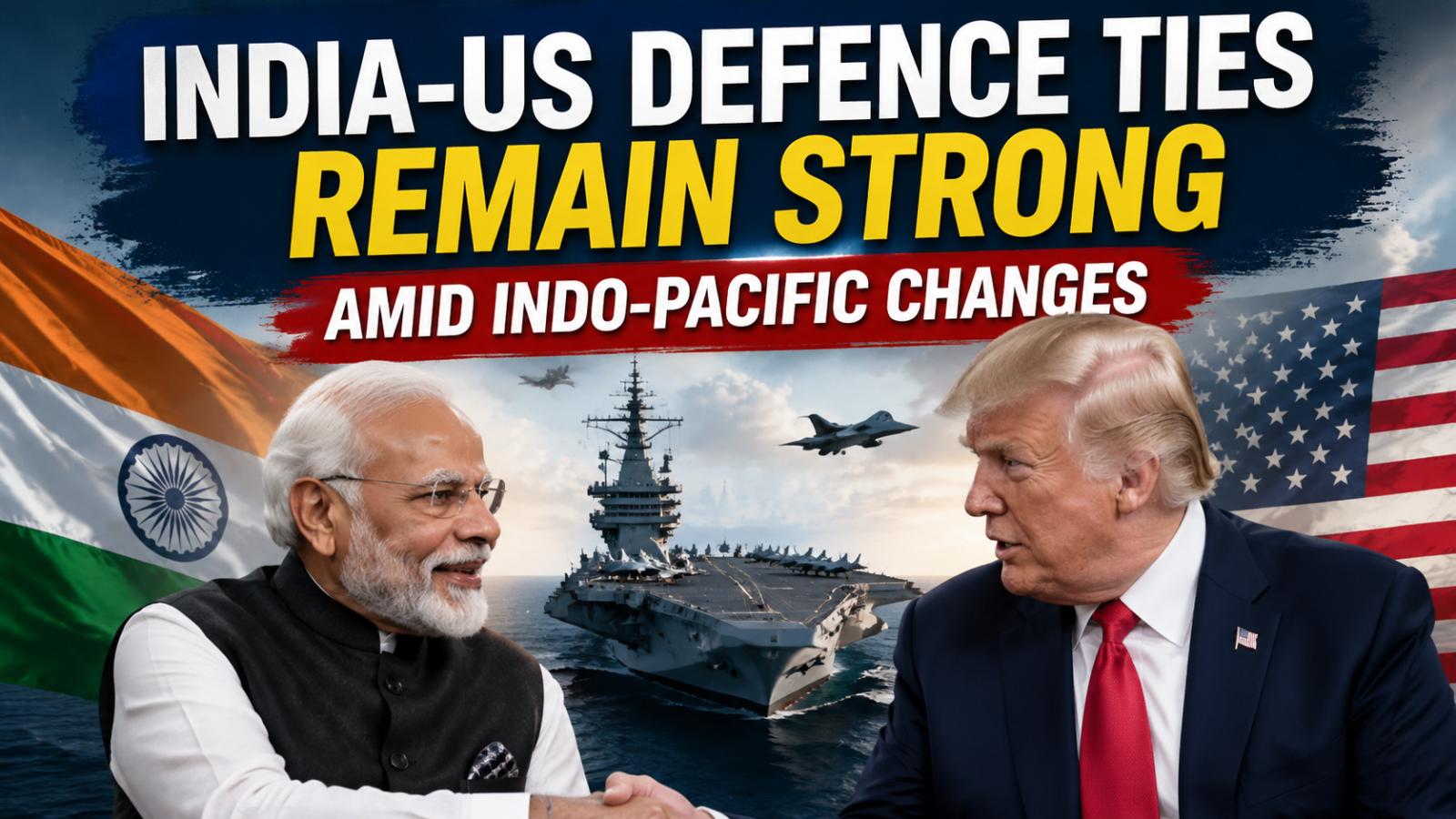
India-US defence ties remain stable amid Indo-Pacific changes
India and the United States continue to maintain stable defence cooperation despite recent adjustments in how Washington refers to its Indo-Pacific military structure. US Ambassador Sergio Gor reiterated that operational collaboration between the two countries is unaffected by the change in terminology, stressing continuity over symbolism. Military engagement remains active According to Gor, defence interaction between both nations is not only ongoing but expanding. Joint exercises, training programs, and coordinated operational planning continue across multiple domains. He noted that India remains one of the most frequently engaged partners in US military exercises globally, reflecting long-term strategic alignment rather than short-term political messaging. Indo-Pacific command terminology shift The discussion gained attention after the US reverted from the “Indo-Pacific Command” branding to its earlier designation. While the naming change sparked speculation about shifting priorities, officials clarified that command responsibilities and regional engagement remain unchanged. The operational scope still spans a vast area covering key maritime and security corridors in Asia-Pacific. Interpretation and political reactions The naming adjustment has been interpreted in different ways across policy circles, with some viewing it as symbolic recalibration. However, US officials have consistently pushed back on that narrative, arguing that defence cooperation with India is driven by shared strategic interests rather than administrative labels. Leadership relations and diplomatic tone Gor also highlighted the working relationship between former US President Donald Trump and Indian Prime Minister Narendra Modi, describing it as direct and pragmatic. He pointed to informal diplomatic interactions as evidence of sustained trust and coordination between leadership levels, which continues to influence broader strategic engagement. Long-term partnership outlook Despite periodic debates over terminology and diplomatic optics, both nations continue to prioritize defence, technology collaboration, and regional security coordination. The emphasis remains on sustained engagement in the Indo-Pacific region, where shared concerns over maritime security and strategic balance continue to drive cooperation rather than divergence.
India-US defence ties remain stable amid Indo-Pacific changes
India and the United States continue to maintain stable defence cooperation despite recent adjustments in how Washington refers to its Indo-Pacific military structure. US Ambassador Sergio Gor reiterated that operational collaboration between the two countries is unaffected by the change in terminology, stressing continuity over symbolism. Military engagement remains active According to Gor, defence interaction between both nations is not only ongoing but expanding. Joint exercises, training programs, and coordinated operational planning continue across multiple domains. He noted that India remains one of the most frequently engaged partners in US military exercises globally, reflecting long-term strategic alignment rather than short-term political messaging. Indo-Pacific command terminology shift The discussion gained attention after the US reverted from the “Indo-Pacific Command” branding to its earlier designation. While the naming change sparked speculation about shifting priorities, officials clarified that command responsibilities and regional engagement remain unchanged. The operational scope still spans a vast area covering key maritime and security corridors in Asia-Pacific. Interpretation and political reactions The naming adjustment has been interpreted in different ways across policy circles, with some viewing it as symbolic recalibration. However, US officials have consistently pushed back on that narrative, arguing that defence cooperation with India is driven by shared strategic interests rather than administrative labels. Leadership relations and diplomatic tone Gor also highlighted the working relationship between former US President Donald Trump and Indian Prime Minister Narendra Modi, describing it as direct and pragmatic. He pointed to informal diplomatic interactions as evidence of sustained trust and coordination between leadership levels, which continues to influence broader strategic engagement. Long-term partnership outlook Despite periodic debates over terminology and diplomatic optics, both nations continue to prioritize defence, technology collaboration, and regional security coordination. The emphasis remains on sustained engagement in the Indo-Pacific region, where shared concerns over maritime security and strategic balance continue to drive cooperation rather than divergence.
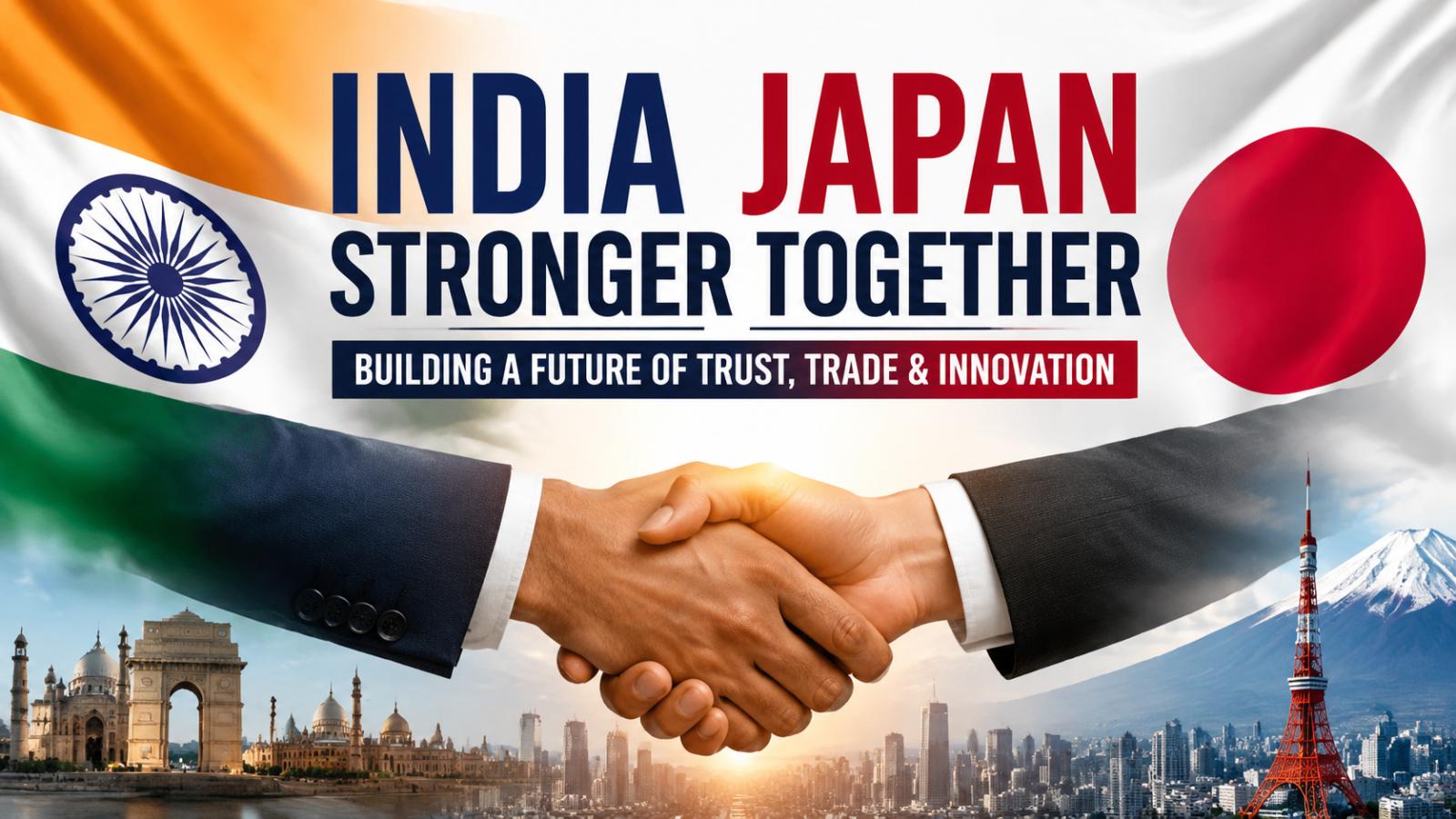
Japan PM visit pushes India Japan tech and defence cooperation
India and Japan have taken another step toward strengthening their long-term strategic relationship as high-level discussions were held in New Delhi focused on expanding cooperation across trade, defence, technology, and infrastructure. The engagement reflects a broader effort by both nations to build resilience in supply chains and increase coordination in the Indo-Pacific region amid shifting global economic and security dynamics. Rather than treating the relationship as routine diplomacy, both sides are increasingly positioning it as a structured partnership tied to economic security, innovation, and regional stability. Trade and investment becoming the core growth driver Economic cooperation continues to act as the backbone of the relationship. Japan remains one of India’s key foreign investors, with long-term commitments spread across manufacturing, transport, and urban development sectors. Japanese companies continue to expand their presence in India, particularly in automotive, electronics, and industrial technology. Infrastructure development remains a central pillar, with ongoing support for metro systems, freight corridors, and high-speed rail projects. Financial and institutional backing through Japanese development agencies has played a major role in shaping large-scale connectivity projects across Indian cities. However, both sides still face structural challenges such as slow project execution timelines and regulatory bottlenecks, which limit the speed of capital deployment despite strong political alignment. Defence cooperation expands beyond symbolic engagement Security collaboration between India and Japan has gradually shifted from occasional exercises to more consistent operational coordination. Joint drills such as maritime exercises and regional security training programs have strengthened interoperability between the two defence forces. The focus is increasingly on maritime domain awareness, especially in the Indo-Pacific region where strategic sea lanes remain critical for global trade. Both countries are also exploring ways to improve defence technology exchange, although this area remains sensitive due to regulatory and strategic constraints. Despite progress, defence cooperation is still relatively cautious compared to economic engagement, reflecting differing strategic thresholds and domestic policy considerations. Northeast India emerges as a strategic connectivity zone One of the most notable areas of cooperation is India’s northeastern region, which has gained attention as a key connectivity and development corridor. Japanese-supported infrastructure projects have contributed to road development, bridge construction, and logistics improvement in the region. Beyond physical infrastructure, skill development initiatives are also being introduced to improve employment readiness and cross-border workforce mobility. The region is increasingly being viewed as a bridge between South Asia and Southeast Asia, aligning with broader Indo-Pacific connectivity goals. Still, the region continues to face challenges including terrain constraints, limited industrial base, and slower private sector participation. Technology, AI and future-oriented collaboration Both countries are expanding cooperation in advanced technologies including artificial intelligence, clean energy systems, and digital infrastructure. Joint initiatives are being explored in areas such as smart manufacturing, automation, and next-generation communication systems. There is also growing interest in building more resilient supply chains for critical sectors like semiconductors and green energy technologies. This reflects a shared concern over global supply disruptions and overdependence on concentrated manufacturing hubs. While ambitions are high, actual implementation will depend on regulatory alignment and private sector participation, which remain uneven across sectors. Strategic outlook for the partnership The India–Japan relationship is increasingly being shaped by long-term geopolitical and economic considerations rather than short-term diplomatic exchanges. Both countries appear aligned on maintaining stability in the Indo-Pacific while expanding economic integration. However, the partnership is still evolving and remains uneven across sectors—strong in trade and infrastructure, moderate in defence, and still developing in advanced technology cooperation. The next phase will depend on execution efficiency and the ability to convert policy agreements into large-scale operational outcomes.
Japan PM visit pushes India Japan tech and defence cooperation
India and Japan have taken another step toward strengthening their long-term strategic relationship as high-level discussions were held in New Delhi focused on expanding cooperation across trade, defence, technology, and infrastructure. The engagement reflects a broader effort by both nations to build resilience in supply chains and increase coordination in the Indo-Pacific region amid shifting global economic and security dynamics. Rather than treating the relationship as routine diplomacy, both sides are increasingly positioning it as a structured partnership tied to economic security, innovation, and regional stability. Trade and investment becoming the core growth driver Economic cooperation continues to act as the backbone of the relationship. Japan remains one of India’s key foreign investors, with long-term commitments spread across manufacturing, transport, and urban development sectors. Japanese companies continue to expand their presence in India, particularly in automotive, electronics, and industrial technology. Infrastructure development remains a central pillar, with ongoing support for metro systems, freight corridors, and high-speed rail projects. Financial and institutional backing through Japanese development agencies has played a major role in shaping large-scale connectivity projects across Indian cities. However, both sides still face structural challenges such as slow project execution timelines and regulatory bottlenecks, which limit the speed of capital deployment despite strong political alignment. Defence cooperation expands beyond symbolic engagement Security collaboration between India and Japan has gradually shifted from occasional exercises to more consistent operational coordination. Joint drills such as maritime exercises and regional security training programs have strengthened interoperability between the two defence forces. The focus is increasingly on maritime domain awareness, especially in the Indo-Pacific region where strategic sea lanes remain critical for global trade. Both countries are also exploring ways to improve defence technology exchange, although this area remains sensitive due to regulatory and strategic constraints. Despite progress, defence cooperation is still relatively cautious compared to economic engagement, reflecting differing strategic thresholds and domestic policy considerations. Northeast India emerges as a strategic connectivity zone One of the most notable areas of cooperation is India’s northeastern region, which has gained attention as a key connectivity and development corridor. Japanese-supported infrastructure projects have contributed to road development, bridge construction, and logistics improvement in the region. Beyond physical infrastructure, skill development initiatives are also being introduced to improve employment readiness and cross-border workforce mobility. The region is increasingly being viewed as a bridge between South Asia and Southeast Asia, aligning with broader Indo-Pacific connectivity goals. Still, the region continues to face challenges including terrain constraints, limited industrial base, and slower private sector participation. Technology, AI and future-oriented collaboration Both countries are expanding cooperation in advanced technologies including artificial intelligence, clean energy systems, and digital infrastructure. Joint initiatives are being explored in areas such as smart manufacturing, automation, and next-generation communication systems. There is also growing interest in building more resilient supply chains for critical sectors like semiconductors and green energy technologies. This reflects a shared concern over global supply disruptions and overdependence on concentrated manufacturing hubs. While ambitions are high, actual implementation will depend on regulatory alignment and private sector participation, which remain uneven across sectors. Strategic outlook for the partnership The India–Japan relationship is increasingly being shaped by long-term geopolitical and economic considerations rather than short-term diplomatic exchanges. Both countries appear aligned on maintaining stability in the Indo-Pacific while expanding economic integration. However, the partnership is still evolving and remains uneven across sectors—strong in trade and infrastructure, moderate in defence, and still developing in advanced technology cooperation. The next phase will depend on execution efficiency and the ability to convert policy agreements into large-scale operational outcomes.
EU India trade talks near final approval stage
The proposed free trade agreement between the European Union and India has moved into its last procedural stage after years of negotiation. Both sides have already agreed on the core framework, and the current focus is on legal refinement and institutional clearance before formal approval. Officials describe this phase as technical but decisive, as even small wording changes can affect implementation across sectors. The agreement is being revi
EU India trade talks near final approval stage
The proposed free trade agreement between the European Union and India has moved into its last procedural stage after years of negotiation. Both sides have already agreed on the core framework, and the current focus is on legal refinement and institutional clearance before formal approval. Officials describe this phase as technical but decisive, as even small wording changes can affect implementation across sectors. The agreement is being revi
Rolls-Royce Eyes India Manufacturing Investment Under UK Pact
Rolls-Royce and India discussed deeper manufacturing investment, technology partnerships and an engine proposal tied to the country’s next-generation AMCA fighter program on Friday, June 26, 2026. The talks focused on how the India-UK Comprehensive Economic and Trade Agreement, or CETA, could support advanced manufacturing, engineering cooperation and more resilient supply chains. Rolls-Royce India Manufacturing Investment
Rolls-Royce Eyes India Manufacturing Investment Under UK Pact
Rolls-Royce and India discussed deeper manufacturing investment, technology partnerships and an engine proposal tied to the country’s next-generation AMCA fighter program on Friday, June 26, 2026. The talks focused on how the India-UK Comprehensive Economic and Trade Agreement, or CETA, could support advanced manufacturing, engineering cooperation and more resilient supply chains. Rolls-Royce India Manufacturing Investment
Cuba unveils major reforms to expand private sector
Cuba proposes major shift in economic policy Cuban Prime Minister Manuel Marrero has presented lawmakers with a sweeping economic reform package aimed at reshaping parts of the island’s tightly controlled economy. The proposals, backed by the Communist Party and former leader Raúl Castro, come as Cuba faces rising pressure from US sanctions, a fuel blockade and worsening shortages of basic goods. The package still requires approval from th
Cuba unveils major reforms to expand private sector
Cuba proposes major shift in economic policy Cuban Prime Minister Manuel Marrero has presented lawmakers with a sweeping economic reform package aimed at reshaping parts of the island’s tightly controlled economy. The proposals, backed by the Communist Party and former leader Raúl Castro, come as Cuba faces rising pressure from US sanctions, a fuel blockade and worsening shortages of basic goods. The package still requires approval from th
US-India trade deal enters final stage ahead of Modi-Trump meeting
US-India Trade Deal Nears Final Stage The United States and India are approaching the final phase of a long-anticipated trade agreement, with officials indicating that negotiations are now in their “last mile” and could conclude within weeks. The development comes just ahead of a high-profile bilateral meeting between Prime Minister Narendra Modi and US President Donald Trump on the sidelines of the G7 s
US-India trade deal enters final stage ahead of Modi-Trump meeting
US-India Trade Deal Nears Final Stage The United States and India are approaching the final phase of a long-anticipated trade agreement, with officials indicating that negotiations are now in their “last mile” and could conclude within weeks. The development comes just ahead of a high-profile bilateral meeting between Prime Minister Narendra Modi and US President Donald Trump on the sidelines of the G7 s
PM Modi Visits Slovakia To Strengthen India-Europe Ties
Prime Minister Narendra Modi arrived in Bratislava on a landmark visit to Slovakia, becoming the first Indian prime minister to travel to the country since it became independent in 1993. The visit is part of his three-nation European tour and comes at a time when India is working to deepen its political, economic and technology partnerships across Europe. During his two-day stay, Modi is scheduled to hold bilateral meetings with Slovak Pre
PM Modi Visits Slovakia To Strengthen India-Europe Ties
Prime Minister Narendra Modi arrived in Bratislava on a landmark visit to Slovakia, becoming the first Indian prime minister to travel to the country since it became independent in 1993. The visit is part of his three-nation European tour and comes at a time when India is working to deepen its political, economic and technology partnerships across Europe. During his two-day stay, Modi is scheduled to hold bilateral meetings with Slovak Pre
SpaceX IPO Makes Elon Musk the First Trillionaire
Elon Musk became the world’s first trillionaire on paper after SpaceX completed its record-setting stock-market debut on Friday, June 12, 2026. The milestone also renewed attention on the modest South Texas home Musk has described as his primary residence. SpaceX IPO Makes Elon Musk the First Trillionaire SpaceX priced its initial public offering at $135 per share, valuing the company at approximately $1.77 trillion before trading began. Shares, listed
SpaceX IPO Makes Elon Musk the First Trillionaire
Elon Musk became the world’s first trillionaire on paper after SpaceX completed its record-setting stock-market debut on Friday, June 12, 2026. The milestone also renewed attention on the modest South Texas home Musk has described as his primary residence. SpaceX IPO Makes Elon Musk the First Trillionaire SpaceX priced its initial public offering at $135 per share, valuing the company at approximately $1.77 trillion before trading began. Shares, listed
Gold Gains Amid Market Moves – Thursday, June 11, 2026
Gold and silver prices rose, with the US dollar steady against major currencies. Gold Price Gold (per oz): $4,083.40 (↑) Gold 24K (per 10g): ₹1,257,600 approx Gold 22K (per 10g): ₹1,151,400 approx Silver Price Silver (per oz): $63.89 (↑) (₹6,120 approx) Silver (per kg): $1,954.85 (₹1,870,000 approx)

Gold Gains Amid Market Moves – Thursday, June 11, 2026
Gold and silver prices rose, with the US dollar steady against major currencies. Gold Price Gold (per oz): $4,083.40 (↑) Gold 24K (per 10g): ₹1,257,600 approx Gold 22K (per 10g): ₹1,151,400 approx Silver Price Silver (per oz): $63.89 (↑) (₹6,120 approx) Silver (per kg): $1,954.85 (₹1,870,000 approx)

INNOPROM India 2026 to boost Russia-India trade ties
India and Russia are preparing to host the first INNOPROM International Industrial Technology Exhibition in India, marking a fresh push in their expanding economic and industrial partnership. The event is scheduled to take place from September 9 to 11 at Bharat Mandapam Exhibition and Convention Centre in New Delhi, bringing together manufacturers, investors, technology companies, industrial buyers and government representatives. The exhib

INNOPROM India 2026 to boost Russia-India trade ties
India and Russia are preparing to host the first INNOPROM International Industrial Technology Exhibition in India, marking a fresh push in their expanding economic and industrial partnership. The event is scheduled to take place from September 9 to 11 at Bharat Mandapam Exhibition and Convention Centre in New Delhi, bringing together manufacturers, investors, technology companies, industrial buyers and government representatives. The exhib
PM Modi Meets Venezuela Acting President to Boost Bilateral Ties
Strengthening India-Venezuela Relations Prime Minister Narendra Modi held a high-level meeting with Venezuela's Acting President Delcy Rodriguez in New Delhi on Thursday. The meeting took place at Hyderabad House, where both leaders discussed the full spectrum of India-Venezuela relations. Key focus areas included energy security, trade and investment, pharmaceuticals, healthcare, transportation, and renewabl
PM Modi Meets Venezuela Acting President to Boost Bilateral Ties
Strengthening India-Venezuela Relations Prime Minister Narendra Modi held a high-level meeting with Venezuela's Acting President Delcy Rodriguez in New Delhi on Thursday. The meeting took place at Hyderabad House, where both leaders discussed the full spectrum of India-Venezuela relations. Key focus areas included energy security, trade and investment, pharmaceuticals, healthcare, transportation, and renewabl
India-South Africa trade ties deepen as Mashatile courts firms
South Africa’s Deputy President Shipokosa Paulus Mashatile said India remains a reliable partner as he pushed for deeper India-South Africa trade ties during a working visit to New Delhi. Mashatile used the New Delhi leg of his six-day visit to invite Indian companies to expand investment in South Africa, especially in clean energy, pharmaceuticals, ICT, automotive components, infrastructure, agriculture and agro-processing. Mashatile seeks stronger India-South
India-South Africa trade ties deepen as Mashatile courts firms
South Africa’s Deputy President Shipokosa Paulus Mashatile said India remains a reliable partner as he pushed for deeper India-South Africa trade ties during a working visit to New Delhi. Mashatile used the New Delhi leg of his six-day visit to invite Indian companies to expand investment in South Africa, especially in clean energy, pharmaceuticals, ICT, automotive components, infrastructure, agriculture and agro-processing. Mashatile seeks stronger India-South
Illinois Swipe Fee Law Delay Pushes IFPA Fight Over Tips and Taxes Toward 2027
Illinois lawmakers voted to delay the state’s swipe fee law for another year, keeping the fight over card fees on sales taxes and tips in court and before federal regulators. The delay affects the Interchange Fee Prohibition Act, or IFPA, a first-of-its-kind Illinois law that would restrict banks, credit unions and card companies from collecting interchange fees on the tax and tip portions of debit and credit card transactions. Illinois Swipe Fee Law Delay Exten
Illinois Swipe Fee Law Delay Pushes IFPA Fight Over Tips and Taxes Toward 2027
Illinois lawmakers voted to delay the state’s swipe fee law for another year, keeping the fight over card fees on sales taxes and tips in court and before federal regulators. The delay affects the Interchange Fee Prohibition Act, or IFPA, a first-of-its-kind Illinois law that would restrict banks, credit unions and card companies from collecting interchange fees on the tax and tip portions of debit and credit card transactions. Illinois Swipe Fee Law Delay Exten
Piyush Goyal Canada Visit To Push $50 Billion Trade Goal
India-Canada Trade Talks Gain Momentum In May 2026 Union Commerce and Industry Minister Piyush Goyal is set to visit Canada from May 25 to May 27, 2026, as India and Canada work to rebuild economic confidence and push bilateral trade toward a $50 billion target by 2030. The visit comes at an important time because both countries are trying to move beyond recent diplomatic strain and focus on business, investment, energy, and technology cooperation. Goyal w
Piyush Goyal Canada Visit To Push $50 Billion Trade Goal
India-Canada Trade Talks Gain Momentum In May 2026 Union Commerce and Industry Minister Piyush Goyal is set to visit Canada from May 25 to May 27, 2026, as India and Canada work to rebuild economic confidence and push bilateral trade toward a $50 billion target by 2030. The visit comes at an important time because both countries are trying to move beyond recent diplomatic strain and focus on business, investment, energy, and technology cooperation. Goyal w
Bengaluru Fintech Scam: MobiKwik Xtra Investors Face Blocked Funds
Bengaluru police have registered cases against MobiKwik and Lendbox, following complaints from investors who claim that their funds are blocked under the MobiKwik Xtra investment scheme. The complaints allege that the fintech companies promised high, fixed-deposit-like returns and easy withdrawals but later restricted access to invested money. Authorities say more than 1,050 investors across India could be affected, with combined exposure of over Rs 11.9 crore. Investors hav
Bengaluru Fintech Scam: MobiKwik Xtra Investors Face Blocked Funds
Bengaluru police have registered cases against MobiKwik and Lendbox, following complaints from investors who claim that their funds are blocked under the MobiKwik Xtra investment scheme. The complaints allege that the fintech companies promised high, fixed-deposit-like returns and easy withdrawals but later restricted access to invested money. Authorities say more than 1,050 investors across India could be affected, with combined exposure of over Rs 11.9 crore. Investors hav
Massive Investments Pour Into Andhra Pradesh, Boosting Industrial Growth and Employment
Andhra Pradesh has emerged as a hotspot for fresh investments, as evidenced by the announcements made during the 17th State Investment Promotion Board (SIPB) meeting. The state continues to attract national and international investors across various sectors, such as renewable energy, green hydrogen, bio CNG, manufacturing, and data infrastructure, bringing an unprecedented boost to its industrial and employment landscape.
Massive Investments Pour Into Andhra Pradesh, Boosting Industrial Growth and Employment
Andhra Pradesh has emerged as a hotspot for fresh investments, as evidenced by the announcements made during the 17th State Investment Promotion Board (SIPB) meeting. The state continues to attract national and international investors across various sectors, such as renewable energy, green hydrogen, bio CNG, manufacturing, and data infrastructure, bringing an unprecedented boost to its industrial and employment landscape.