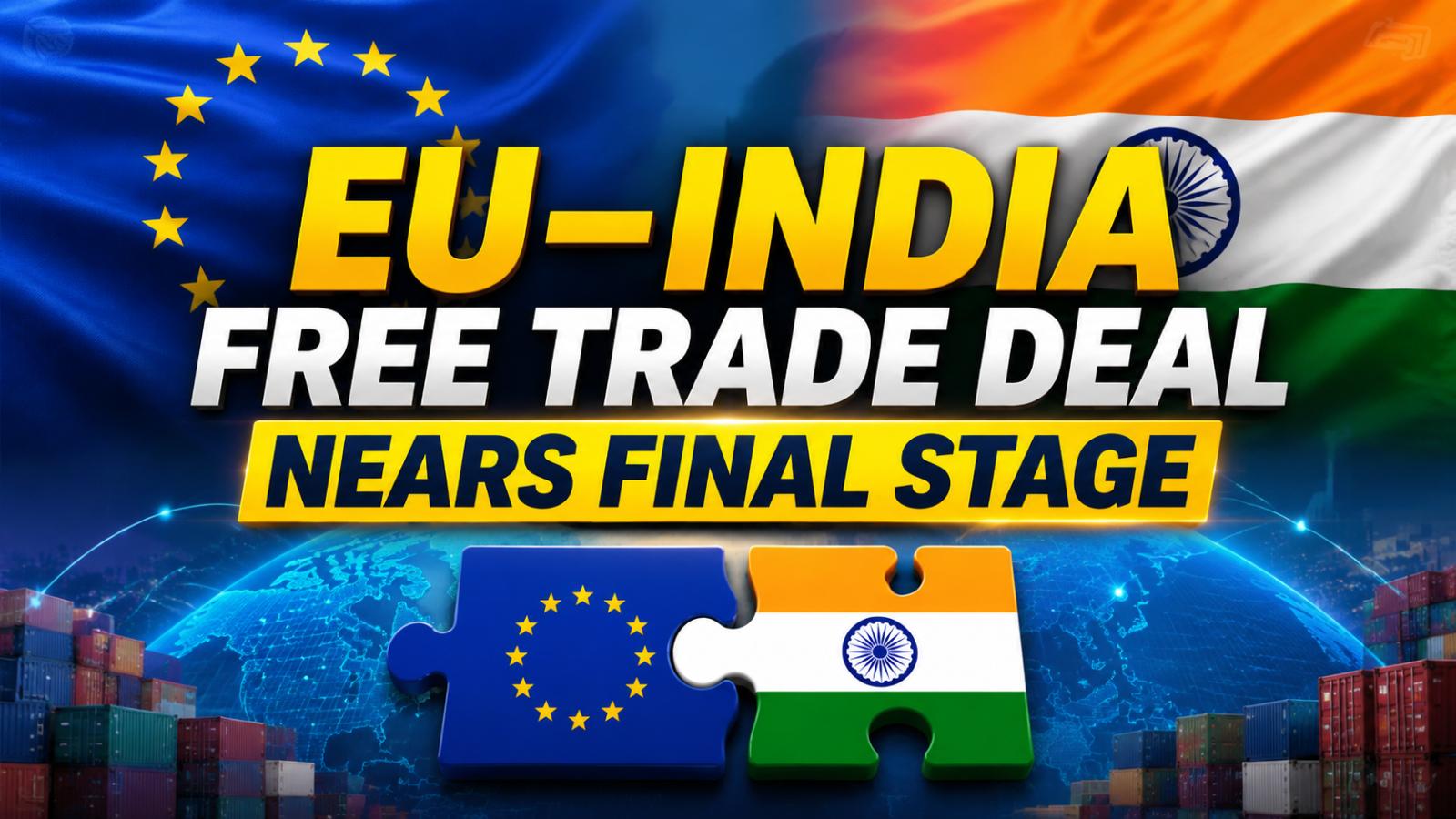
The proposed free trade agreement between the European Union and India has moved into its last procedural stage after years of negotiation. Both sides have already agreed on the core framework, and the current focus is on legal refinement and institutional clearance before formal approval. Officials describe this phase as technical but decisive, as even small wording changes can affect implementation across sectors.
The agreement is being reviewed in Brussels while Indian negotiators continue coordination to ensure consistency across trade provisions. The process is not expected to reopen negotiations on core issues, but rather to finalize legal clarity so the document can be signed without disputes in interpretation later.
Why the agreement is taking time at the final stage
The delay is not political disagreement but procedural scrutiny. The European side must ensure the agreement aligns with internal legal standards and regulatory frameworks, while also preparing it for approval by the European Parliament. On the Indian side, similar internal checks are being carried out to align trade commitments with domestic policy priorities.
Although this stage is often slow in major trade deals, officials indicate that progress has been steady. Both parties are aiming to avoid post-signing disputes, which requires careful legal alignment before final endorsement.
Economic scope and trade expansion potential
The agreement covers one of the largest combined markets in the world, bringing together a major manufacturing base and a highly diversified services economy. Once implemented, it is expected to reduce tariffs across industrial goods, open new opportunities in agriculture, and improve access in sectors such as technology, pharmaceuticals, and automotive components.
Trade analysts expect the deal to significantly increase bilateral trade volumes over the medium term. Beyond exports and imports, the agreement is also expected to encourage cross-border investment, with businesses expanding production networks between Europe and India.
Supply chain realignment and global impact
A key long-term outcome of the agreement is expected to be a shift in global supply chain structures. Companies operating in both regions are likely to diversify sourcing strategies, reducing dependence on single-market supply chains. This could strengthen resilience in manufacturing and logistics networks, particularly in sectors sensitive to geopolitical disruptions.
The agreement also reflects a broader trend of regional trade partnerships becoming more strategic rather than purely commercial, with both sides seeking stable and predictable economic relationships.
Strategic cooperation beyond trade
Alongside economic discussions, cooperation between the EU and India has expanded into security and strategic areas. Areas such as maritime security, cyber resilience, and information sharing have gained importance in recent years. Both sides are also exploring deeper collaboration in defence-related manufacturing and emerging technologies.
This added strategic layer is seen as reinforcing the economic partnership, making the relationship more comprehensive and aligned with long-term geopolitical interests rather than short-term trade gains.