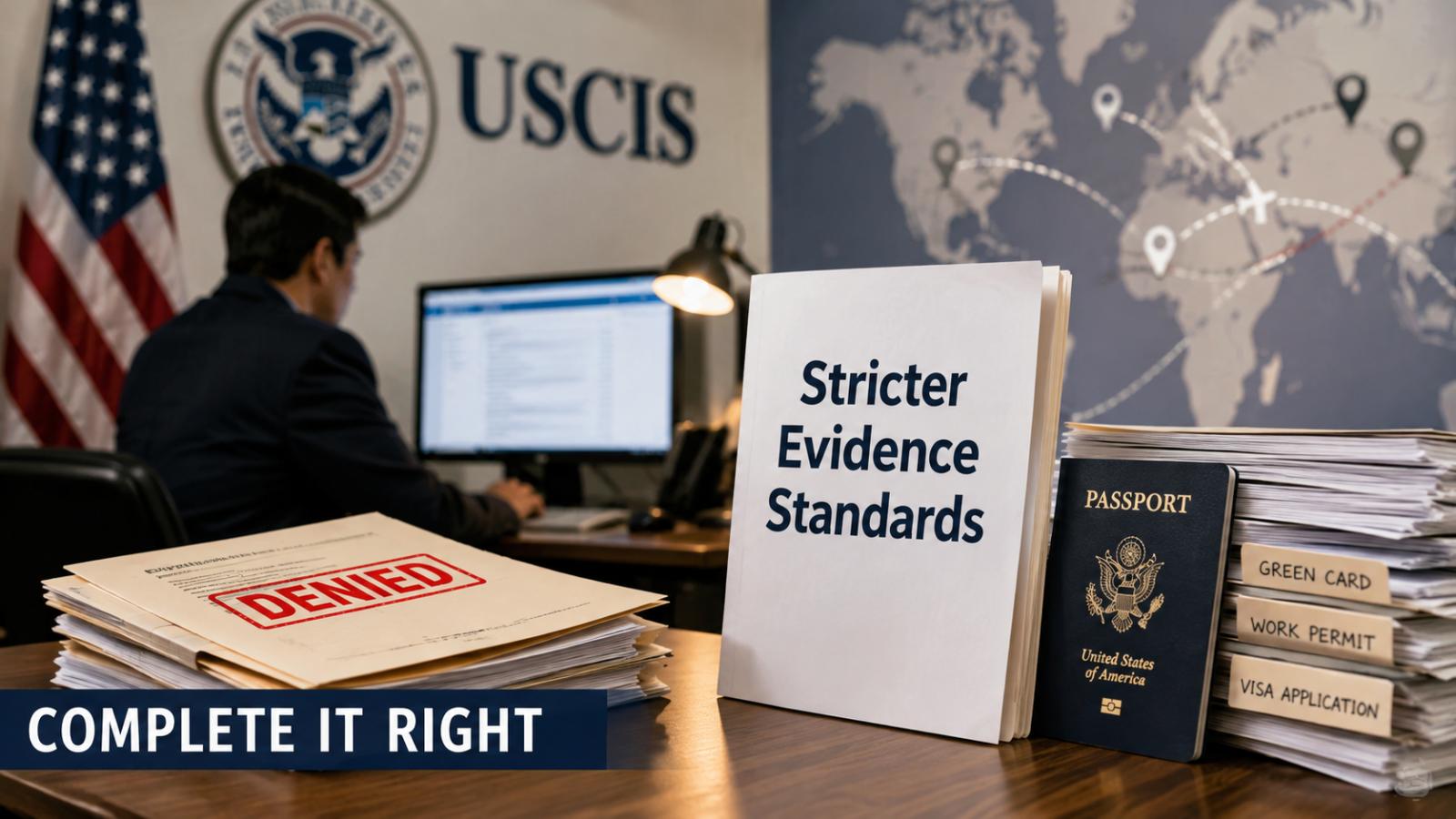
The USCIS denial without RFE or NOID policy gives officers broader discretion to reject immigration benefit requests that lack required evidence. Effective Wednesday, August 5, 2026, it applies to pending and newly filed cases, while evidence requests remain available.
U.S. Citizenship and Immigration Services has restored broader officer discretion to deny immigration benefit requests without first issuing a Request for Evidence, known as an RFE, or a Notice of Intent to Deny, known as a NOID. The policy took effect immediately on Wednesday, August 5, 2026.
Policy applies to pending and new cases
USCIS said the guidance applies to benefit requests pending or filed on or after Wednesday, August 5, 2026, unless a regulation or another agency policy requires a different procedure.
The change replaces guidance issued in June 2021 that generally directed officers to issue an RFE or NOID when additional evidence could potentially establish eligibility.
Applicants carry the burden of proof
Applicants and petitioners must submit all required initial evidence and demonstrate eligibility when filing. They must also remain eligible throughout the adjudication process.
Officers may deny a request when required evidence is missing, the record does not satisfy the applicable standard of proof or the request has no legal basis for approval. USCIS said filings submitted without required initial evidence can hinder the agency’s ability to determine eligibility efficiently.
RFEs and NOIDs remain available
The revised policy does not eliminate RFEs or NOIDs. Officers may still seek additional information when they determine that a response could help establish eligibility or address a potential basis for denial.
The central change is that adjudicators now have wider discretion to decide whether an additional evidence request is warranted before issuing a decision.
Complete filings become more important
USCIS said the policy is intended partly to discourage incomplete or “placeholder” benefit requests that do not contain sufficient evidence for adjudication.
Applicants should follow current form instructions, submit the correct edition, provide valid signatures and fees, and include all required supporting records with the initial filing.
The practical effect will depend on the immigration category and the facts of each case. A denial may require a new application and additional fees, while certain decisions may permit a motion or appeal. Applicants should not assume USCIS will provide another opportunity to correct a deficient submission before making its decision.