Last Updated: July 20, 2026
Indian students renting cars in the United States should understand the insurance options before driving. This guide explains liability insurance, collision damage waivers, personal accident insurance, credit card coverage and what to do after a rental car accident.
Renting a car is common for many Indian students studying in the United States, especially for vacations, internships and weekend travel. Before driving away, students should understand what insurance is included in the rental agreement and what additional protection may be worth considering.
Rental car protection is only one part of a student’s overall coverage. Students should also understand whether Indian students in the U.S. have insurance and which policies protect them during medical emergencies, accidents and travel.
Can International Students Rent a Car?
Yes. Many rental companies allow international students to rent vehicles if they meet the company's age requirements and present valid identification and a driver's license accepted by the rental company. Some companies may also require a credit card and charge additional fees for younger drivers.
Students should review the rental agreement carefully before accepting the vehicle.
What Insurance Options Are Available?
Because coverage differs between university, health, travel and accidental-death policies, families should first check whether Indian students in the U.S. have insurance and what benefits may be available.
Families bringing a deceased student home should also verify whether student insurance covers repatriation to India, as this benefit is not included in every policy.
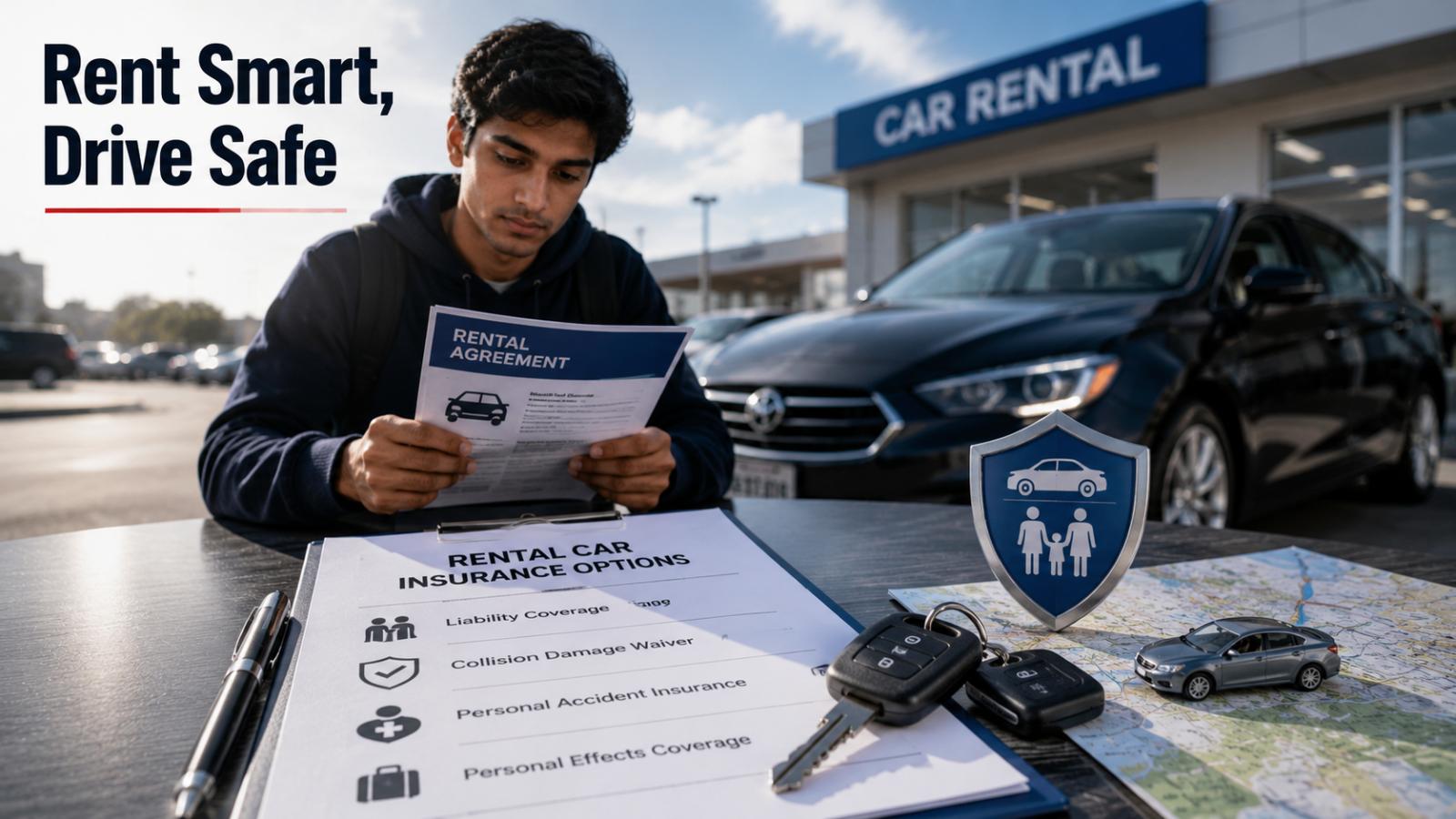
Rental companies commonly offer several types of protection:
- Liability Insurance: Helps cover damage or injuries caused to other people if the renter is legally responsible for the crash.
- Collision Damage Waiver (CDW) or Loss Damage Waiver (LDW): Helps reduce or eliminate the renter's financial responsibility for damage to the rental vehicle, subject to the agreement's terms.
- Personal Accident Insurance (PAI): May provide limited medical or accidental death benefits for the driver and passengers.
- Personal Effects Coverage: May cover certain personal belongings stolen from the vehicle, depending on the policy.
Can Credit Cards Provide Rental Coverage?
Some credit cards include rental car protection when the rental is paid for with the card and the card's conditions are met. Coverage varies significantly by issuer and often excludes liability insurance. Students should confirm the benefits before relying on them.
What Should You Do After a Rental Car Accident?
If an accident occurs:
- Ensure everyone's safety and call emergency services if needed.
- Report the accident to local law enforcement when required.
- Inform the rental company as soon as possible.
- Notify the insurance provider or credit card company if applicable.
- Take photographs of the vehicles and the scene, and collect contact information from witnesses when it is safe to do so.
Do not admit fault at the scene. The official investigation and insurance process will determine responsibility.
Why Understanding Coverage Matters
If investigators determine that the student caused the fatal collision, the compensation process changes significantly. Read who pays after an international student causes a fatal U.S. crash to understand insurance and estate liability.
Rental car insurance can reduce unexpected financial losses after an accident, but every policy has exclusions, deductibles and coverage limits. Before renting a vehicle, Indian students should understand exactly what protection they already have and whether additional coverage is appropriate for their trip.