
















#regionalstability
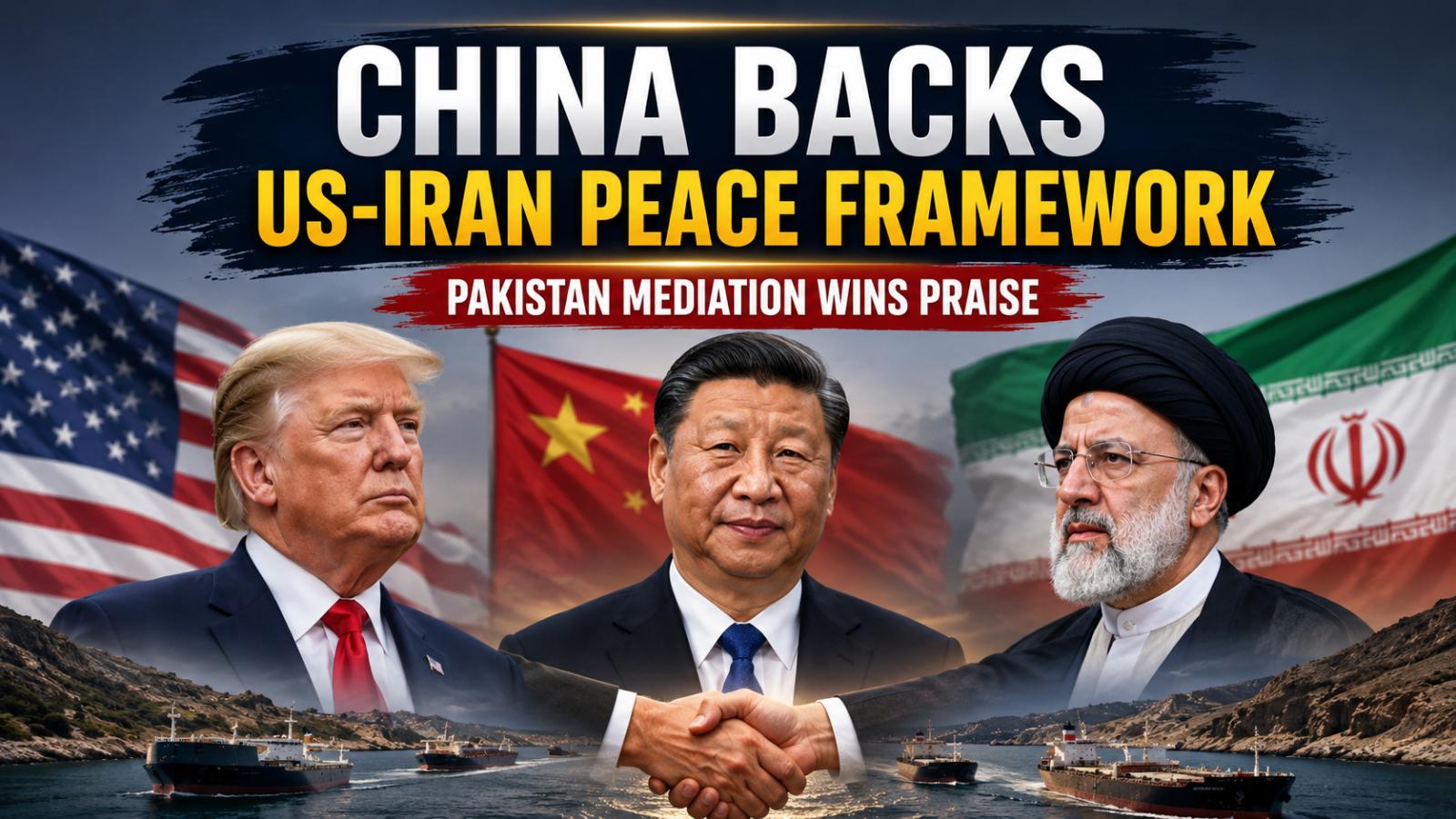
China backs US-Iran peace framework
China has welcomed the reported US-Iran peace framework and said the move could help reduce tensions in the Middle East after weeks of uncertainty. Beijing described the development as a positive step and said it supports efforts that can bring stability, stop further escalation and protect the movement of ships through key regional routes. Chinese foreign ministry spokesperson Lin Jian said China appreciates Pakistan’s mediation efforts
China backs US-Iran peace framework
China has welcomed the reported US-Iran peace framework and said the move could help reduce tensions in the Middle East after weeks of uncertainty. Beijing described the development as a positive step and said it supports efforts that can bring stability, stop further escalation and protect the movement of ships through key regional routes. Chinese foreign ministry spokesperson Lin Jian said China appreciates Pakistan’s mediation efforts
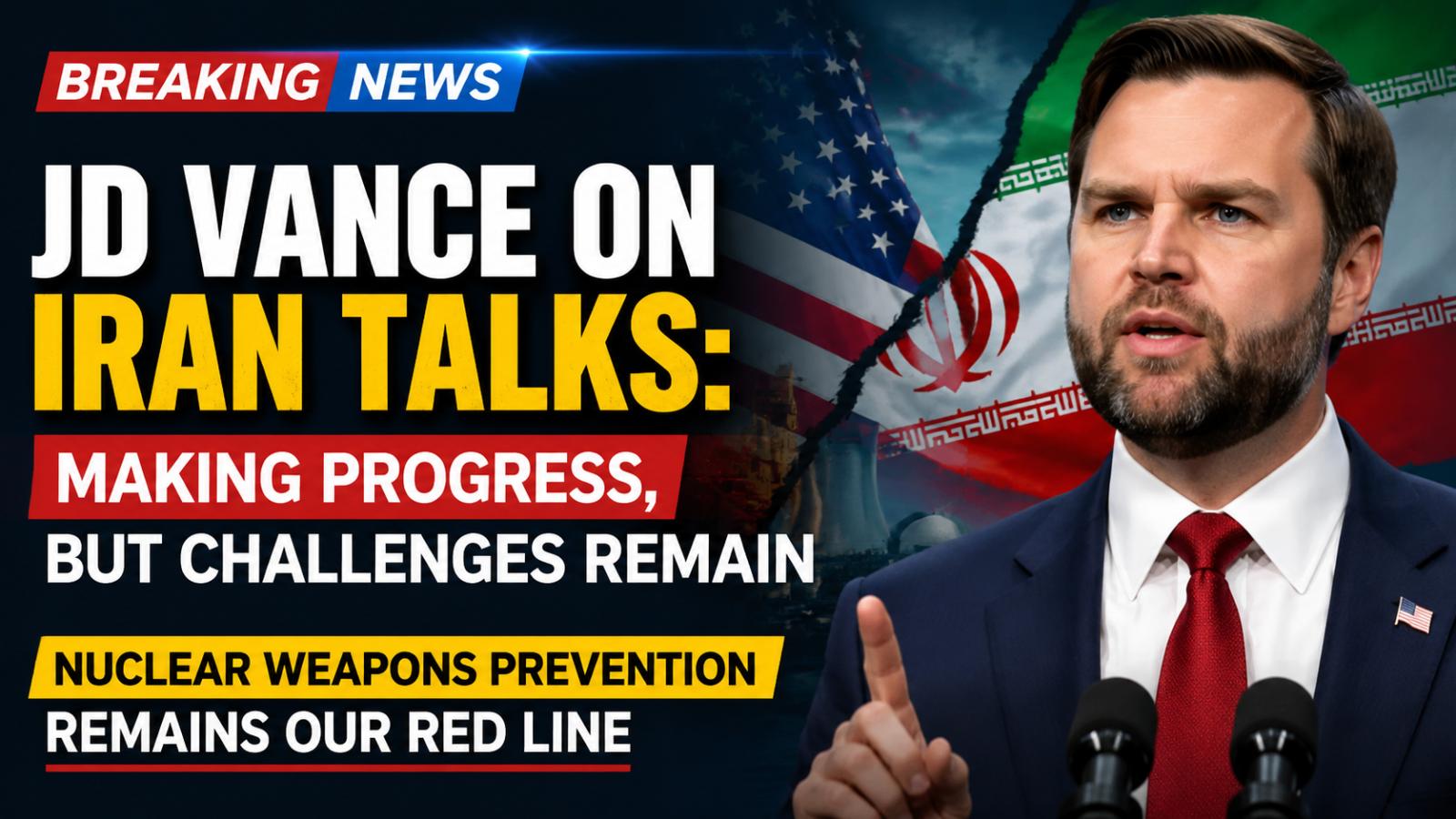
US Vice President JD Vance updates on Iran negotiations and challenges
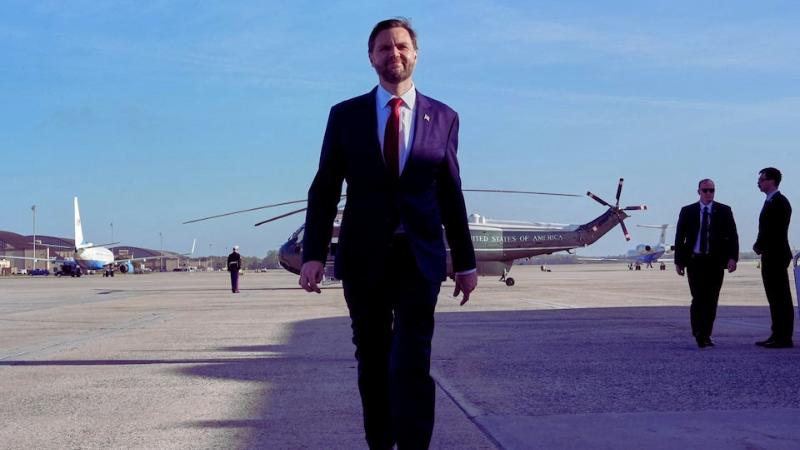
On May 13, US Vice President JD Vance opened up about the ongoing negotiations with Iran and the hurdles the US has faced as these talks progress. While the US continues its diplomatic outreach to Tehran, Vance acknowledged the growing frustration due to unsatisfactory responses from the Iranian side. This has raised questions about whether a comprehensive deal is truly within reach. Diplomacy Amid Rising Tensions In a recent press briefing, Vance shed l
US Vice President JD Vance updates on Iran negotiations and challenges
On May 13, US Vice President JD Vance opened up about the ongoing negotiations with Iran and the hurdles the US has faced as these talks progress. While the US continues its diplomatic outreach to Tehran, Vance acknowledged the growing frustration due to unsatisfactory responses from the Iranian side. This has raised questions about whether a comprehensive deal is truly within reach. Diplomacy Amid Rising Tensions In a recent press briefing, Vance shed l
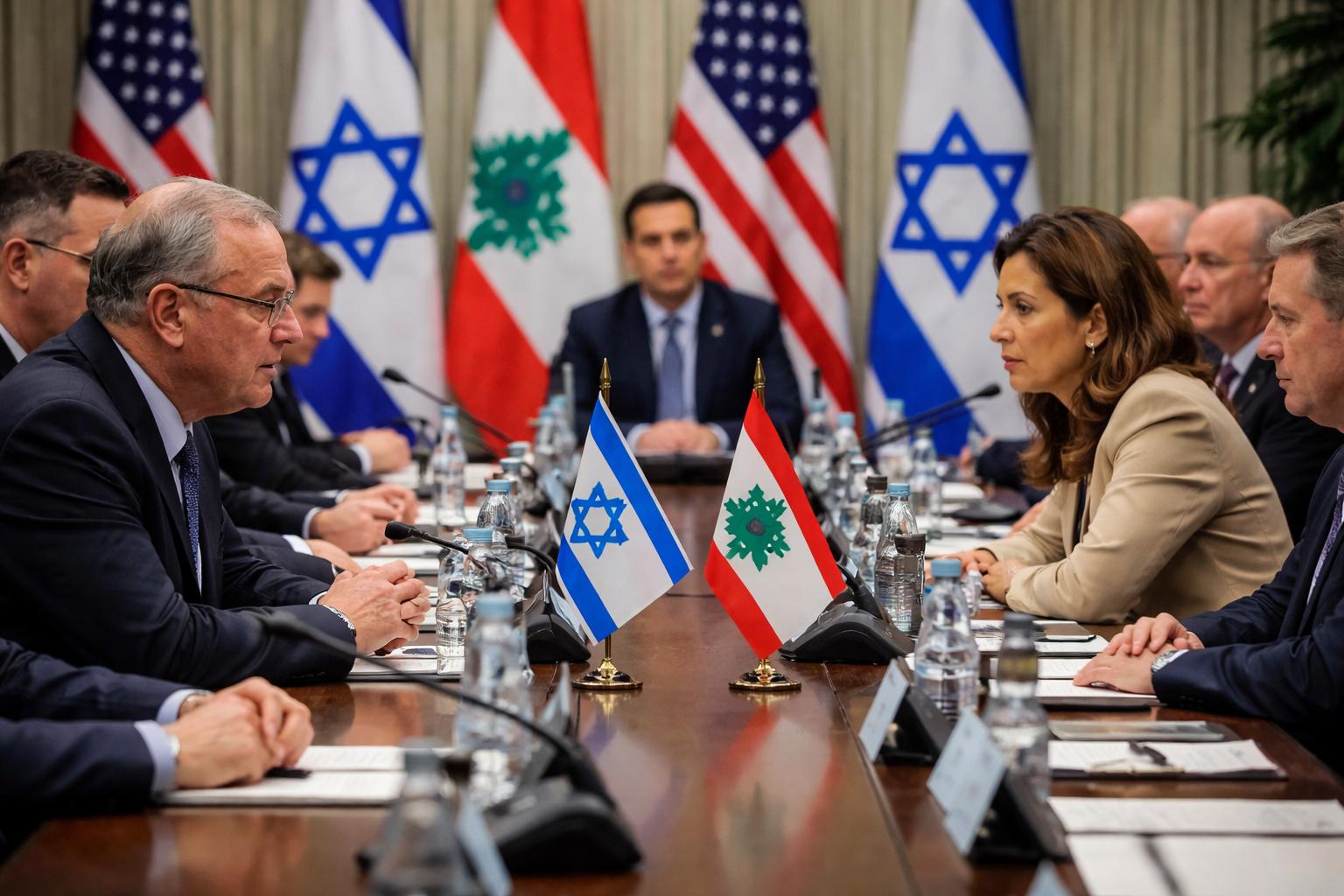
Israel and Lebanon hold rare talks in Washington amid Hezbollah conflict
Israeli and Lebanese officials held more than two hours of direct talks in Washington, D.C., on Tuesday, April 14, 2026, marking the first such high-level engagement between the two countries in decades as fighting between Israel and the Iran-backed Hezbollah group continues to escalate. The meeting, hosted by U.S. Secretary of State Marco Rubio, comes amid a fragile regional environment shaped by ongoing hostilities in Lebanon and broader tensions involving Iran. Rubio described the talks as a long-term diplomatic effort rather than an immediate solution, emphasizing that deeply rooted issues between the two sides would take time to resolve. Israeli Ambassador Yechiel Leiter said the discussions reflect a shared objective of reducing Hezbollah’s influence in Lebanon, which Israel views as an extension of Iranian power in the region. Lebanese Ambassador Nada Hamadeh Moawad participated in the talks, though public comments from the Lebanese side remained limited immediately afterward. The talks are notable given that Israel and Lebanon do not maintain formal diplomatic relations and have been technically at war for decades. Despite this, U.S. officials have pushed for dialogue as part of a broader effort to stabilize the region and prevent further escalation tied to the ongoing conflict with Iran and its allies. The diplomatic engagement comes as Israeli military operations continue across southern Lebanon. The conflict intensified after Hezbollah launched rocket attacks on northern Israel on Sunday, March 2, 2026, prompting a large-scale Israeli response that has included airstrikes and ground operations. Hezbollah, which is not part of the negotiations and opposes direct talks with Israel, has continued its military activities during the diplomatic effort. The group’s rejection of the talks highlights internal divisions within Lebanon, where the government has limited control over Hezbollah’s armed wing. Beyond the immediate conflict, the situation has broader global implications. Tensions surrounding Iran, including disputes over its nuclear program and control of the Strait of Hormuz, have raised concerns about disruptions to global energy supplies. Analysts warn that instability in the region could affect oil markets and contribute to economic uncertainty worldwide. While no immediate breakthroughs are expected, officials describe the Washington meeting as a significant first step toward potential de-escalation, even as violence on the ground and political divisions continue to complicate the path forward.
Israel and Lebanon hold rare talks in Washington amid Hezbollah conflict
Israeli and Lebanese officials held more than two hours of direct talks in Washington, D.C., on Tuesday, April 14, 2026, marking the first such high-level engagement between the two countries in decades as fighting between Israel and the Iran-backed Hezbollah group continues to escalate. The meeting, hosted by U.S. Secretary of State Marco Rubio, comes amid a fragile regional environment shaped by ongoing hostilities in Lebanon and broader tensions involving Iran. Rubio described the talks as a long-term diplomatic effort rather than an immediate solution, emphasizing that deeply rooted issues between the two sides would take time to resolve. Israeli Ambassador Yechiel Leiter said the discussions reflect a shared objective of reducing Hezbollah’s influence in Lebanon, which Israel views as an extension of Iranian power in the region. Lebanese Ambassador Nada Hamadeh Moawad participated in the talks, though public comments from the Lebanese side remained limited immediately afterward. The talks are notable given that Israel and Lebanon do not maintain formal diplomatic relations and have been technically at war for decades. Despite this, U.S. officials have pushed for dialogue as part of a broader effort to stabilize the region and prevent further escalation tied to the ongoing conflict with Iran and its allies. The diplomatic engagement comes as Israeli military operations continue across southern Lebanon. The conflict intensified after Hezbollah launched rocket attacks on northern Israel on Sunday, March 2, 2026, prompting a large-scale Israeli response that has included airstrikes and ground operations. Hezbollah, which is not part of the negotiations and opposes direct talks with Israel, has continued its military activities during the diplomatic effort. The group’s rejection of the talks highlights internal divisions within Lebanon, where the government has limited control over Hezbollah’s armed wing. Beyond the immediate conflict, the situation has broader global implications. Tensions surrounding Iran, including disputes over its nuclear program and control of the Strait of Hormuz, have raised concerns about disruptions to global energy supplies. Analysts warn that instability in the region could affect oil markets and contribute to economic uncertainty worldwide. While no immediate breakthroughs are expected, officials describe the Washington meeting as a significant first step toward potential de-escalation, even as violence on the ground and political divisions continue to complicate the path forward.
US Delegation Led by JD Vance Arrives in Islamabad for Critical Iran Ceasefire Talks
Vice President JD Vance has arrived in Islamabad with a US delegation to engage in critical ceasefire talks with Iran. The high-level discussions, described as "make-or-break," are aimed at negotiating a ceasefire agreement to ease tensions in the region. The outcome of these talks could significantly impact the broader US-Iran relations and regional stability.
US Delegation Led by JD Vance Arrives in Islamabad for Critical Iran Ceasefire Talks
Vice President JD Vance has arrived in Islamabad with a US delegation to engage in critical ceasefire talks with Iran. The high-level discussions, described as "make-or-break," are aimed at negotiating a ceasefire agreement to ease tensions in the region. The outcome of these talks could significantly impact the broader US-Iran relations and regional stability.
Pakistan declares open war on Afghan Taliban after border escalation
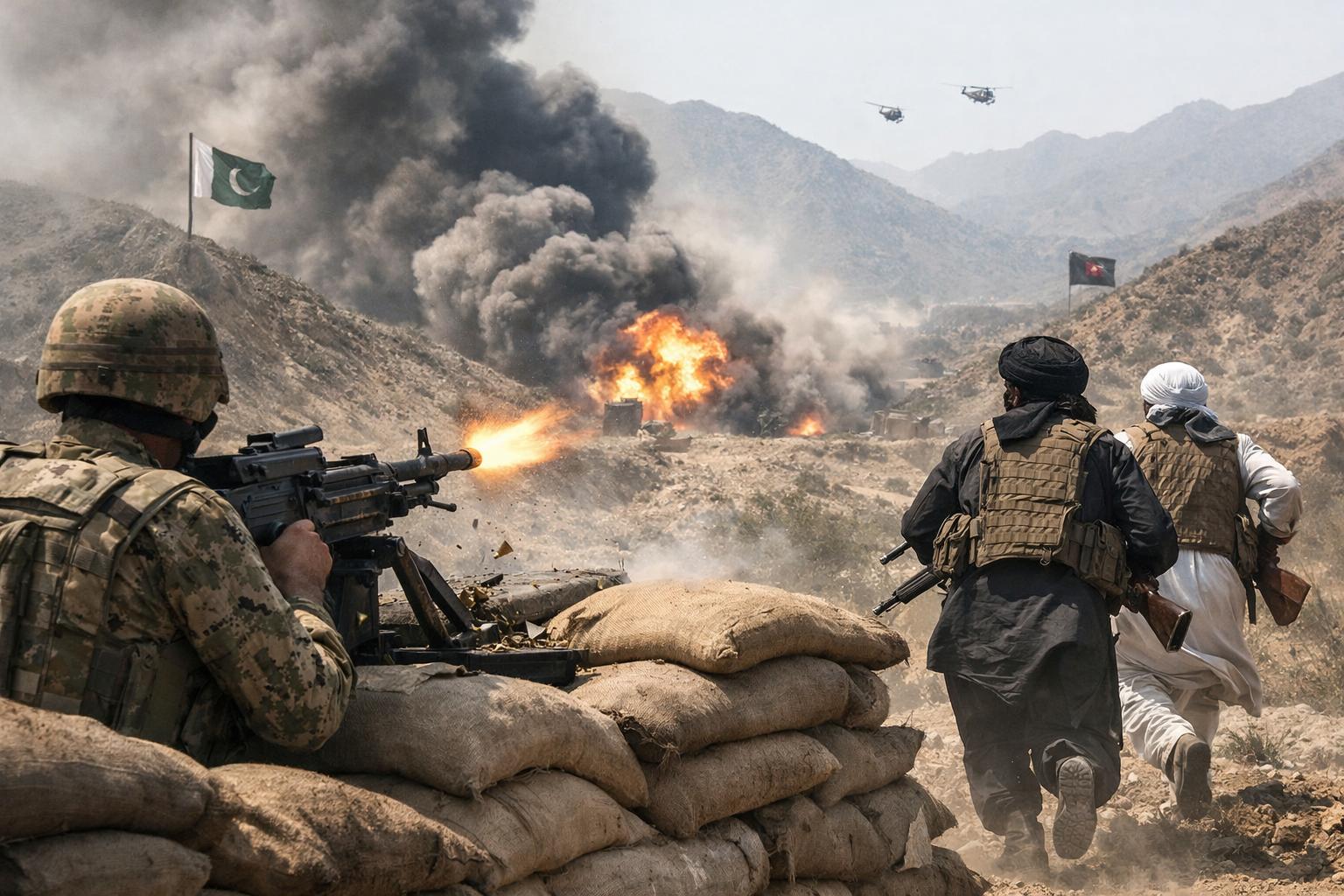
Pakistan on Friday declared what it described as an “open war” against Afghanistan’s Taliban authorities following a sharp escalation in cross-border fighting that has heightened fears of a broader regional conflict. The announcement came as reports of explosions and heavy gunfire emerged from Kabul and Kandahar, underscoring the deteriorating security situation along the frontier. Defence Minister Khawaja Asif said Islamabad’s patience had been exhausted after months of mou
Pakistan declares open war on Afghan Taliban after border escalation
Pakistan on Friday declared what it described as an “open war” against Afghanistan’s Taliban authorities following a sharp escalation in cross-border fighting that has heightened fears of a broader regional conflict. The announcement came as reports of explosions and heavy gunfire emerged from Kabul and Kandahar, underscoring the deteriorating security situation along the frontier. Defence Minister Khawaja Asif said Islamabad’s patience had been exhausted after months of mou
Kabul blast kills seven as attack targets foreign nationals in secure district
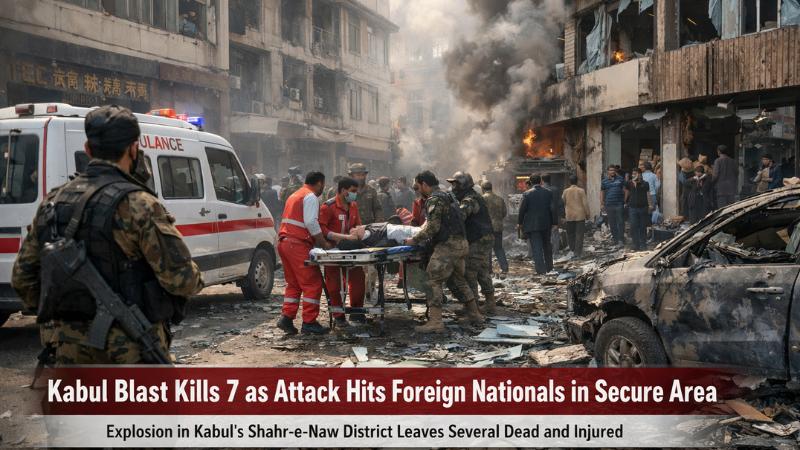
At least seven people were killed and several others injured after a powerful explosion struck Kabul’s Shahr-e-Naw district on Monday, an area widely regarded as one of the Afghan capital’s most secure neighborhoods. The blast hit a hotel on Gulfaroshi Street, close to a restaurant popular with foreign visitors, triggering panic in a locality known for hosting diplomats, business travelers, and international residents. Emergency teams rushed to the scene as smoke and debris filled the street
Kabul blast kills seven as attack targets foreign nationals in secure district
At least seven people were killed and several others injured after a powerful explosion struck Kabul’s Shahr-e-Naw district on Monday, an area widely regarded as one of the Afghan capital’s most secure neighborhoods. The blast hit a hotel on Gulfaroshi Street, close to a restaurant popular with foreign visitors, triggering panic in a locality known for hosting diplomats, business travelers, and international residents. Emergency teams rushed to the scene as smoke and debris filled the street
China denies Japan's interference claims amid rising regional strain
China has firmly rejected Japan’s claims regarding recent aerial encounters, escalating a diplomatic dispute that has widened to include political, economic, and regional security dimensions. A spokesperson for the Chinese navy, Colonel Wang Xuemeng, stated that Japanese aircraft had repeatedly approached Chinese vessels as they carried out previously announced carrier-based flight training east of the Miyako Strait. According to Wang, the operations were routine and transparent, and China
China denies Japan's interference claims amid rising regional strain
China has firmly rejected Japan’s claims regarding recent aerial encounters, escalating a diplomatic dispute that has widened to include political, economic, and regional security dimensions. A spokesperson for the Chinese navy, Colonel Wang Xuemeng, stated that Japanese aircraft had repeatedly approached Chinese vessels as they carried out previously announced carrier-based flight training east of the Miyako Strait. According to Wang, the operations were routine and transparent, and China


