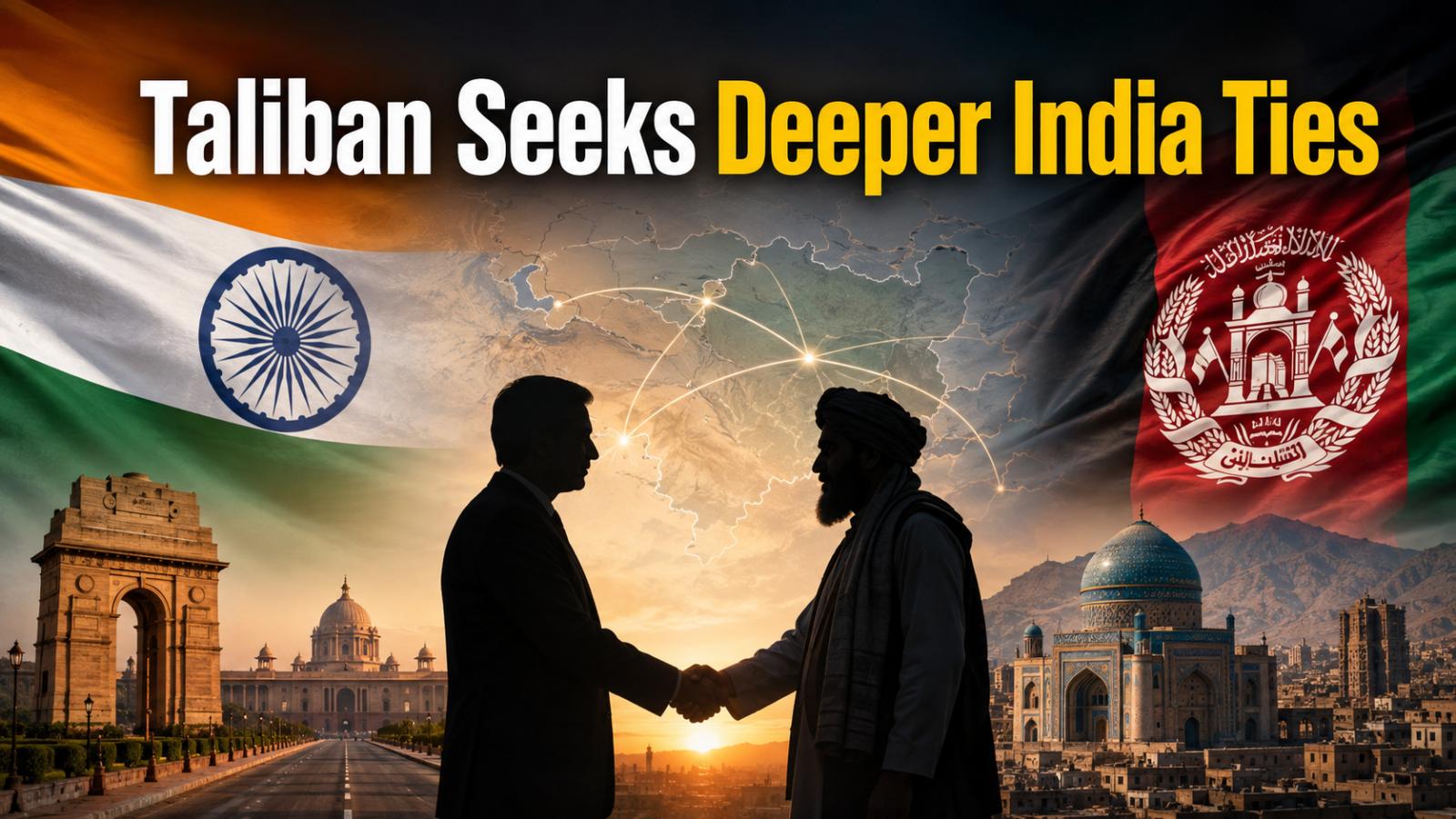
The Taliban seeks deeper India ties as Afghanistan looks to strengthen political trust, trade and regional connectivity with New Delhi. Taliban chargé d’affaires Noor Ahmed Noor highlighted India ties and their shared history while outlining Kabul’s interest in broader diplomatic and economic engagement.
India ties gain focus at New Delhi event
Noor made the remarks during a New Delhi event commemorating five years since the Taliban returned to power in Kabul on August 15, 2021. He said Afghanistan wants to expand engagement with India on the basis of mutual respect, shared interests and cooperation that can benefit the wider region.
India was represented at the gathering by Anand Prakash, joint secretary responsible for the Pakistan-Afghanistan-Iran division of the Ministry of External Affairs, and PAI Director Sneha Dubey. Diplomats from several other countries, including Iran, China, Russia, Qatar, Oman and the United Arab Emirates, were also present.
The participation of Indian officials comes as New Delhi continues practical engagement with Afghanistan while maintaining a cautious approach toward the Taliban administration.
Trust and trade shape Taliban's agenda
Noor described Afghanistan's foreign policy as based on balanced engagement and non-interference. He said stronger trust and trade with India could create opportunities for both countries and contribute to economic development.
He argued that closer cooperation should extend beyond political contacts and include a stronger economic partnership. Afghanistan's location between South Asia and Central Asia also gives it potential importance in regional commerce and transportation.
For India, developments in Afghanistan remain significant because of security, humanitarian concerns and the country's strategic position. Kabul, meanwhile, is seeking wider diplomatic and commercial relationships as it attempts to expand its engagement with regional governments.
Connectivity and links could support regional stability
Noor said stronger Afghanistan-India cooperation could contribute to regional stability, connectivity and shared prosperity. He presented Afghanistan as a potential bridge for regional economic activity rather than a source of instability.
He also said diplomatic contacts have expanded, with missions becoming more active and delegations exchanging visits. The remarks point to Kabul's effort to build a more structured relationship with New Delhi despite the absence of full diplomatic recognition of the Taliban government by India.
India has continued engagement with Afghanistan on issues including humanitarian assistance, development interests and diplomatic communication. The evolving relationship is therefore increasingly centred on practical cooperation rather than formal political recognition.
Shared history remains part of diplomacy
Noor also used history to underline the relationship between the two countries. He recalled how Kabul, Herat and Kandahar once received Indian traders and caravans, while cities across the Indian subcontinent were influenced by Afghan scholars, poets and Sufi traditions.
He thanked External Affairs Minister S. Jaishankar and India for what he described as support for Afghanistan's international interests.
The message from the New Delhi gathering was clear: the Taliban administration wants India to play a larger role in Afghanistan's diplomatic and economic future. Whether that produces a significantly deeper partnership will depend on security concerns, regional developments and how both governments balance strategic interests with their existing diplomatic positions.