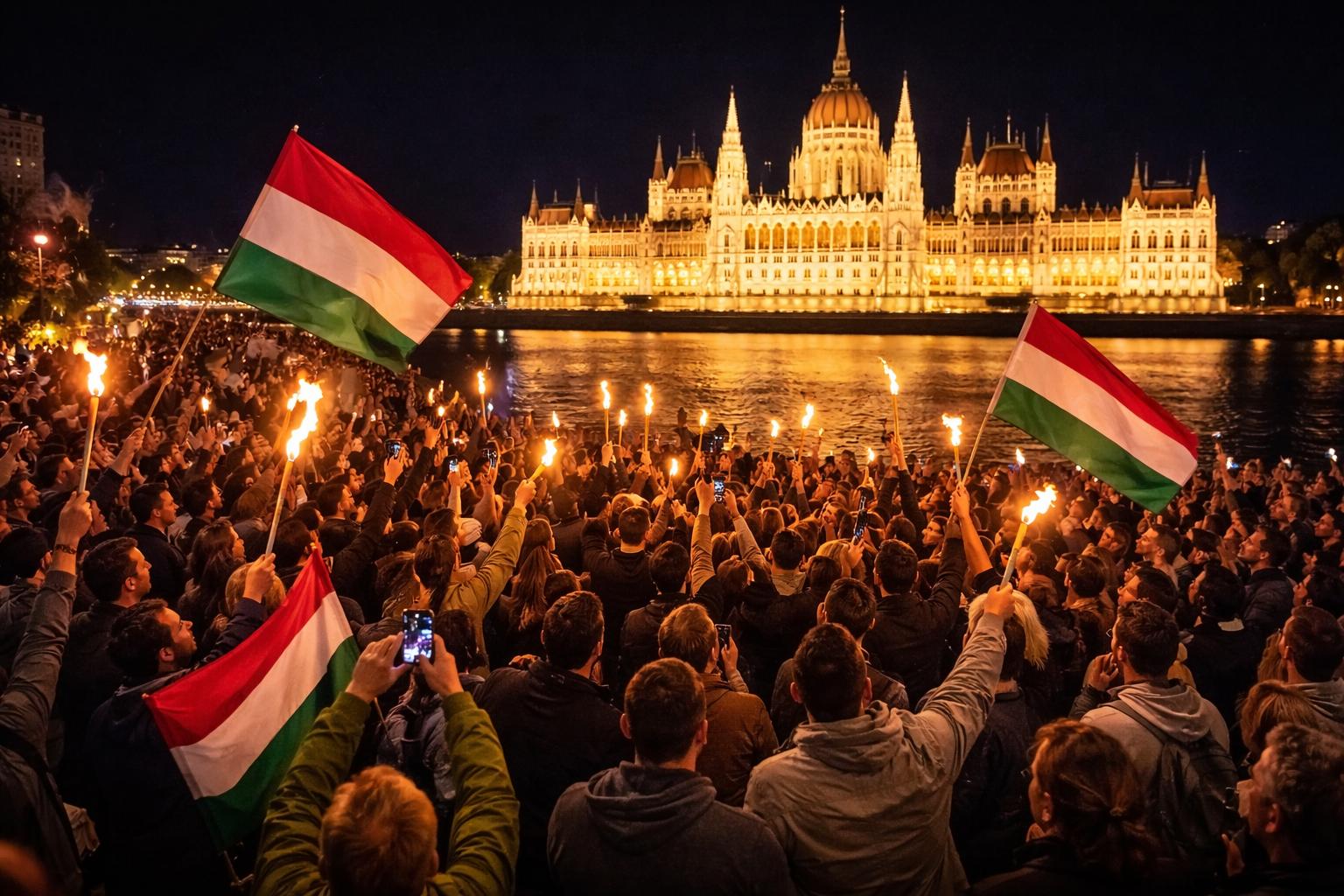
Hungary experienced a dramatic political shift following its national elections held on Sunday, as Prime Minister Viktor Orban conceded defeat after a decisive loss to opposition leader Peter Magyar. The outcome triggered widespread celebrations across the capital, Budapest, with large crowds gathering along the Danube River to mark what many described as a turning point for democracy in the country.
The election served as a referendum on Orban’s 16-year leadership, during which Hungary increasingly distanced itself from the European Union and strengthened ties with Russia. The vote also drew global attention due to Orban’s alignment with nationalist movements, including those associated with former U.S. President Donald Trump.
Voter turnout reached its highest level since the fall of communism in 1989, reflecting strong public engagement amid economic concerns and political polarization. Many Hungarians expressed surprise at the scale of Orban’s defeat, given long-standing concerns about electoral fairness and structural advantages held by his party, Fidesz.
Preliminary results indicated that Fidesz secured 55 seats in the 199-member parliament, while Magyar’s Tisza party was projected to win 138 seats, ensuring a clear majority. Analysts noted that fears of a contested outcome eased after Orban’s prompt concession, paving the way for a peaceful transition of power.
Public reaction highlighted a mix of relief and optimism, particularly among voters frustrated with economic challenges and Hungary’s geopolitical direction. Some residents cited job scarcity outside major cities and financial pressures as key motivations behind their vote. Others pointed to concerns about Hungary’s relationship with Europe, emphasizing a desire to realign with broader European values.
However, not all citizens welcomed the result. Some supporters of Orban expressed uncertainty and concern about the country’s future identity and stability following the leadership change.
Despite differing views, the election outcome represents a significant moment in Hungary’s modern political history, signaling potential shifts in both domestic policy and international alignment as the country prepares for a new administration.
The election served as a referendum on Orban’s 16-year leadership, during which Hungary increasingly distanced itself from the European Union and strengthened ties with Russia. The vote also drew global attention due to Orban’s alignment with nationalist movements, including those associated with former U.S. President Donald Trump.
Voter turnout reached its highest level since the fall of communism in 1989, reflecting strong public engagement amid economic concerns and political polarization. Many Hungarians expressed surprise at the scale of Orban’s defeat, given long-standing concerns about electoral fairness and structural advantages held by his party, Fidesz.
Preliminary results indicated that Fidesz secured 55 seats in the 199-member parliament, while Magyar’s Tisza party was projected to win 138 seats, ensuring a clear majority. Analysts noted that fears of a contested outcome eased after Orban’s prompt concession, paving the way for a peaceful transition of power.
Public reaction highlighted a mix of relief and optimism, particularly among voters frustrated with economic challenges and Hungary’s geopolitical direction. Some residents cited job scarcity outside major cities and financial pressures as key motivations behind their vote. Others pointed to concerns about Hungary’s relationship with Europe, emphasizing a desire to realign with broader European values.
However, not all citizens welcomed the result. Some supporters of Orban expressed uncertainty and concern about the country’s future identity and stability following the leadership change.
Despite differing views, the election outcome represents a significant moment in Hungary’s modern political history, signaling potential shifts in both domestic policy and international alignment as the country prepares for a new administration.