Cruise ship illness risk is low—but hantavirus symptoms can turn serious fast if ignored. Knowing the early warning signs could save your life at sea.
What Are Early Hantavirus Symptoms?
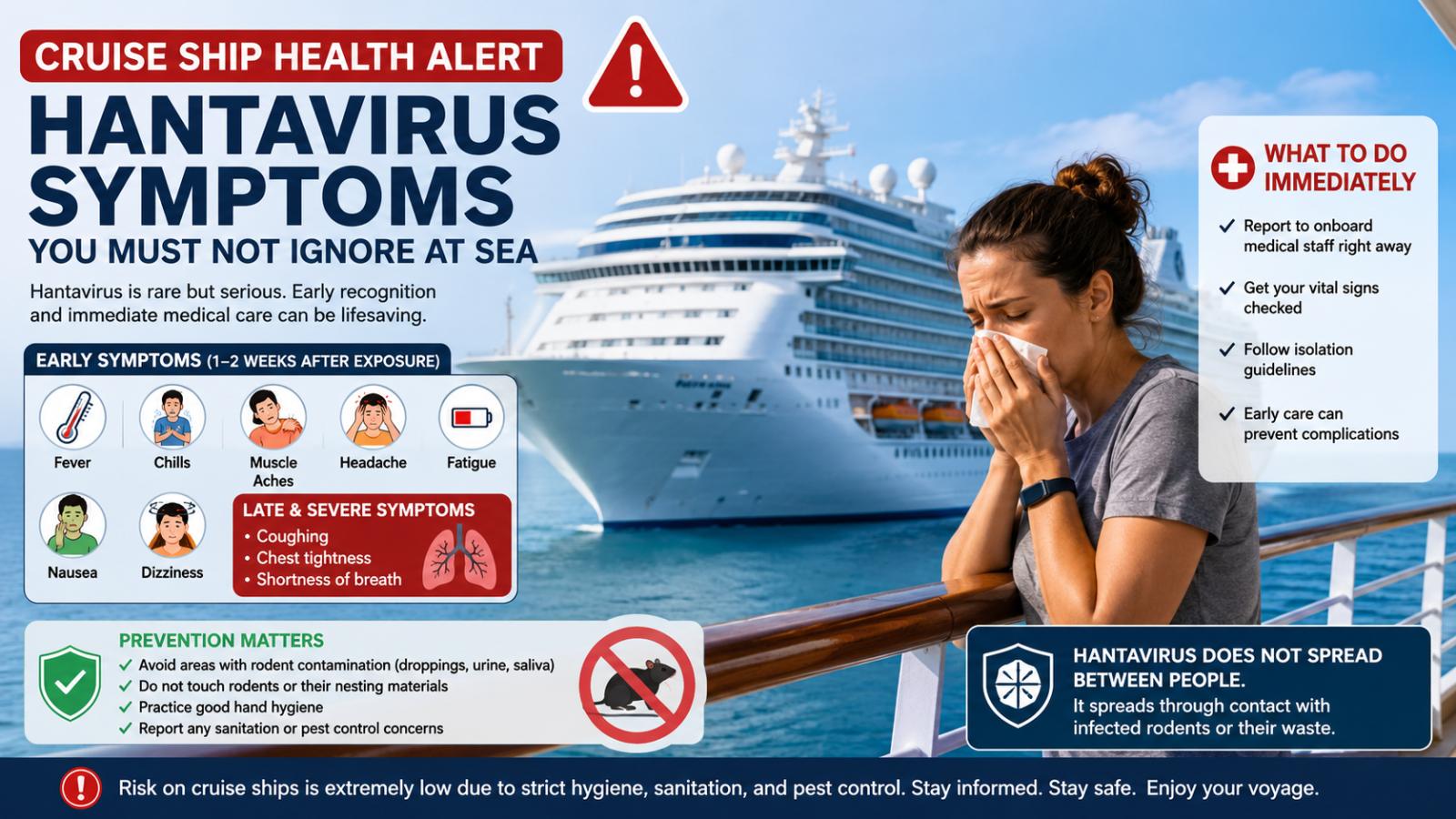
Hantavirus symptoms often start like the flu—fever, chills, muscle aches, headache, nausea, and fatigue. Health experts warn these early signs can appear within 1–2 weeks after exposure and are easily mistaken for common viral infections.
When Does It Become Dangerous?
Within days, symptoms may escalate to severe respiratory illness, including coughing, chest tightness, and difficulty breathing. Officials say falling oxygen levels and labored breathing are critical red flags requiring urgent care.
Is Hantavirus a Real Risk on Cruise Ships?
The risk of hantavirus on cruise ships remains extremely low, thanks to strict hygiene, sanitation, and pest control systems. However, rare exposure can occur through contaminated food storage or contact with rodent droppings at certain ports.
What Should You Do If You Feel Sick Onboard?
If you notice flu-like symptoms on a cruise:
Report immediately to onboard medical staff
Isolate to prevent confusion with contagious illnesses
Get oxygen levels and vital signs checked early
Doctors emphasize there is no specific antiviral cure, so early supportive care—oxygen therapy and monitoring—is critical.
Why Awareness Matters for Travelers
While hantavirus is rare, delayed recognition can lead to life-threatening complications. Cruise operators maintain strict safety protocols, but passenger awareness remains the first line of defense. Staying informed ensures that even in the safest environments, you can respond quickly—and travel with confidence.
Cruise ship illness risk is low—but hantavirus symptoms can turn serious fast if ignored. Knowing the early warning signs could save your life at sea.
What Are Early Hantavirus Symptoms?
Hantavirus symptoms often start like the flu—fever, chills, muscle aches, headache, nausea, and fatigue. Health experts warn these early signs can appear within 1–2 weeks after exposure and are easily mistaken for common viral infections.
When Does It Become Dangerous?
Within days, symptoms may escalate to severe respiratory illness, including coughing, chest tightness, and difficulty breathing. Officials say falling oxygen levels and labored breathing are critical red flags requiring urgent care.
Is Hantavirus a Real Risk on Cruise Ships?
The risk of hantavirus on cruise ships remains extremely low, thanks to strict hygiene, sanitation, and pest control systems. However, rare exposure can occur through contaminated food storage or contact with rodent droppings at certain ports.
What Should You Do If You Feel Sick Onboard?
If you notice flu-like symptoms on a cruise:
Report immediately to onboard medical staff
Isolate to prevent confusion with contagious illnesses
Get oxygen levels and vital signs checked early
Doctors emphasize there is no specific antiviral cure, so early supportive care—oxygen therapy and monitoring—is critical.
Why Awareness Matters for Travelers
While hantavirus is rare, delayed recognition can lead to life-threatening complications. Cruise operators maintain strict safety protocols, but passenger awareness remains the first line of defense. Staying informed ensures that even in the safest environments, you can respond quickly—and travel with confidence.
New Jersey health officials have confirmed the first pediatric death linked to influenza during the 2025–26 flu season, underscoring growing concerns about an early and intense wave of respiratory illness across the state. The child, who was under the age of five and lived in northern New Jersey, died as a result of flu-related complications, according to a statement released by the New Jersey Department of Health.
State officials reported that influenza activity this season has a
New Jersey health officials have confirmed the first pediatric death linked to influenza during the 2025–26 flu season, underscoring growing concerns about an early and intense wave of respiratory illness across the state. The child, who was under the age of five and lived in northern New Jersey, died as a result of flu-related complications, according to a statement released by the New Jersey Department of Health.
State officials reported that influenza activity this season has a
Health authorities in the United States have confirmed the country’s first human case of the H5N5 bird flu virus after a Washington state resident tested positive for the strain earlier this month. The infection marks the first documented instance of H5N5 in a person anywhere in the world, underscoring what experts describe as the unpredictable evolution of avian influenza viruses. Officials emphasized that the overall public risk remains low, but the case is being closely monitored due to the unusual nature of the strain.
According to Washington state health officials, the patient became severely ill in early November, presenting with a high fever, significant breathing difficulty, and episodes of confusion. The individual was initially treated at a medical facility in Grays Harbor County, approximately 100 miles from Seattle, before being transferred to a hospital in King County for advanced care. Authorities revealed that the patient is older and has underlying health conditions, though no further identifying information was provided.
Laboratory testing confirmed that the patient had contracted H5N5, a subtype of bird flu previously detected only in birds. Until now, human infections in the United States have involved the more widely recognized H5N1 strain. Researchers say the emergence of H5N5 in a human highlights the ongoing adaptability of influenza viruses circulating in domestic and wild bird populations.
Investigators believe the patient’s exposure likely came from their own property, where they kept a mixed backyard flock of domestic poultry. The area is also frequented by wild birds such as ducks and geese, which are known carriers of various avian influenza strains. Officials stated that either domestic birds or wild species could have transmitted the virus, and both scenarios are under review.
Despite the unusual circumstances, health authorities maintain that the case does not indicate increased transmission risk to the broader public. The Centers for Disease Control and Prevention and Washington state officials reiterated that there is no evidence of human-to-human spread associated with H5N5. Individuals who had close contact with the patient were evaluated and tested, and no additional infections have been identified.
Experts also clarified that H5N5 is not a newly discovered virus; it has been circulating among birds for some time. This instance simply marks the first confirmation of the strain infecting a human. Because influenza viruses regularly mutate as they pass between species, scientists continue to track their behavior, particularly when new patterns of infection appear.
This case is the first recorded human bird flu infection in the United States in at least eight months. The country has been dealing with a widespread bird flu outbreak since early 2022, during which 71 human infections have been documented. One fatality was reported in Louisiana. Only a handful of cases have occurred so far this year, reflecting the sporadic and largely low-risk nature of avian influenza transmission to people.
Health agencies continue to monitor bird populations, agricultural settings, and human cases to better understand how avian influenza evolves and to ensure timely guidance for the public. While the H5N5 infection represents a rare event, officials stressed that prevention measures, including avoiding contact with sick or dead birds and practicing proper hygiene around poultry, remain important tools in reducing exposure risks.
Health authorities in the United States have confirmed the country’s first human case of the H5N5 bird flu virus after a Washington state resident tested positive for the strain earlier this month. The infection marks the first documented instance of H5N5 in a person anywhere in the world, underscoring what experts describe as the unpredictable evolution of avian influenza viruses. Officials emphasized that the overall public risk remains low, but the case is being closely monitored due to the unusual nature of the strain.
According to Washington state health officials, the patient became severely ill in early November, presenting with a high fever, significant breathing difficulty, and episodes of confusion. The individual was initially treated at a medical facility in Grays Harbor County, approximately 100 miles from Seattle, before being transferred to a hospital in King County for advanced care. Authorities revealed that the patient is older and has underlying health conditions, though no further identifying information was provided.
Laboratory testing confirmed that the patient had contracted H5N5, a subtype of bird flu previously detected only in birds. Until now, human infections in the United States have involved the more widely recognized H5N1 strain. Researchers say the emergence of H5N5 in a human highlights the ongoing adaptability of influenza viruses circulating in domestic and wild bird populations.
Investigators believe the patient’s exposure likely came from their own property, where they kept a mixed backyard flock of domestic poultry. The area is also frequented by wild birds such as ducks and geese, which are known carriers of various avian influenza strains. Officials stated that either domestic birds or wild species could have transmitted the virus, and both scenarios are under review.
Despite the unusual circumstances, health authorities maintain that the case does not indicate increased transmission risk to the broader public. The Centers for Disease Control and Prevention and Washington state officials reiterated that there is no evidence of human-to-human spread associated with H5N5. Individuals who had close contact with the patient were evaluated and tested, and no additional infections have been identified.
Experts also clarified that H5N5 is not a newly discovered virus; it has been circulating among birds for some time. This instance simply marks the first confirmation of the strain infecting a human. Because influenza viruses regularly mutate as they pass between species, scientists continue to track their behavior, particularly when new patterns of infection appear.
This case is the first recorded human bird flu infection in the United States in at least eight months. The country has been dealing with a widespread bird flu outbreak since early 2022, during which 71 human infections have been documented. One fatality was reported in Louisiana. Only a handful of cases have occurred so far this year, reflecting the sporadic and largely low-risk nature of avian influenza transmission to people.
Health agencies continue to monitor bird populations, agricultural settings, and human cases to better understand how avian influenza evolves and to ensure timely guidance for the public. While the H5N5 infection represents a rare event, officials stressed that prevention measures, including avoiding contact with sick or dead birds and practicing proper hygiene around poultry, remain important tools in reducing exposure risks.