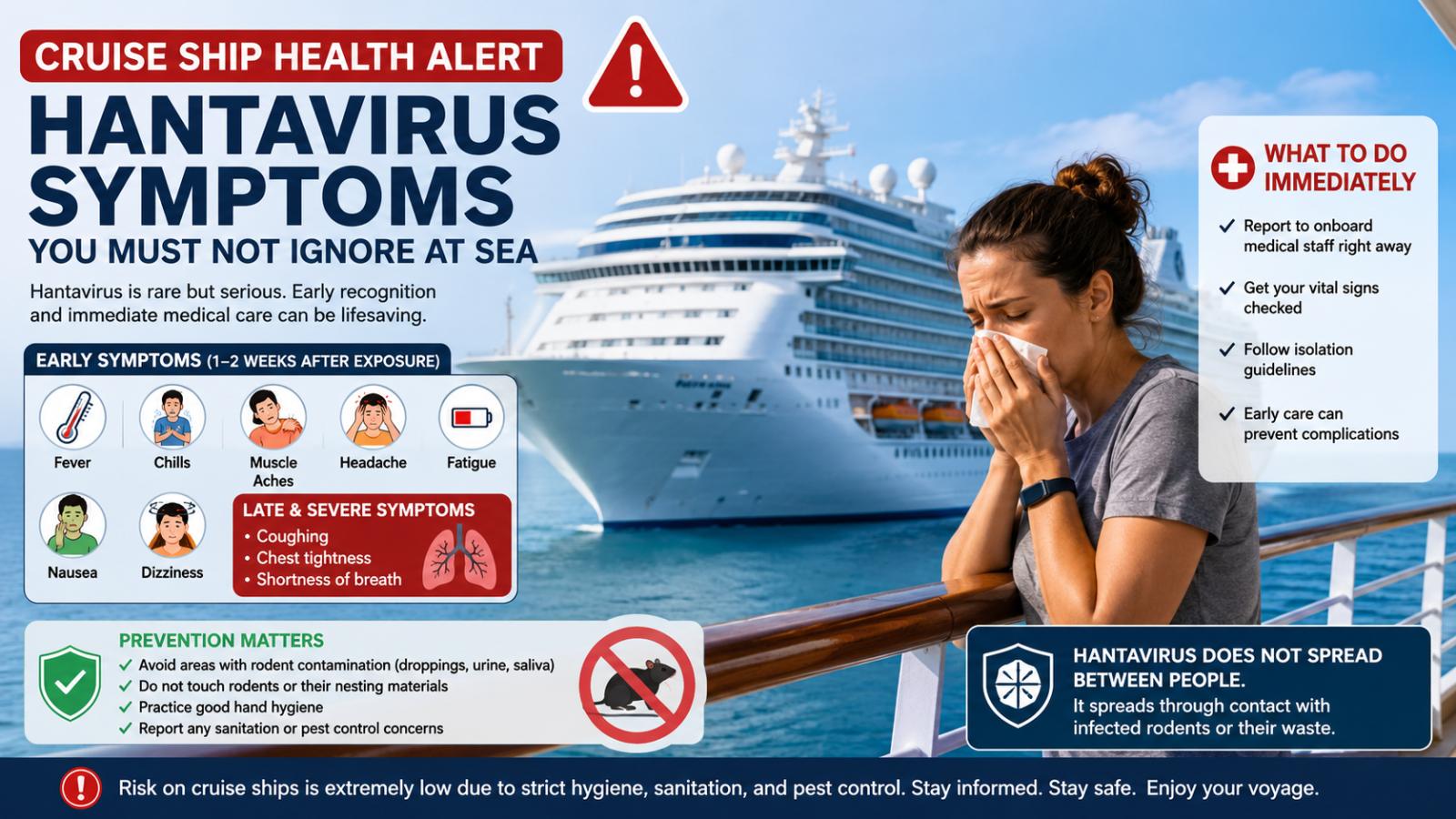
Cruise ship illness risk is low—but hantavirus symptoms can turn serious fast if ignored. Knowing the early warning signs could save your life at sea.
What Are Early Hantavirus Symptoms?
Hantavirus symptoms often start like the flu—fever, chills, muscle aches, headache, nausea, and fatigue. Health experts warn these early signs can appear within 1–2 weeks after exposure and are easily mistaken for common viral infections.
When Does It Become Dangerous?
Within days, symptoms may escalate to severe respiratory illness, including coughing, chest tightness, and difficulty breathing. Officials say falling oxygen levels and labored breathing are critical red flags requiring urgent care.
Is Hantavirus a Real Risk on Cruise Ships?
The risk of hantavirus on cruise ships remains extremely low, thanks to strict hygiene, sanitation, and pest control systems. However, rare exposure can occur through contaminated food storage or contact with rodent droppings at certain ports.
What Should You Do If You Feel Sick Onboard?
If you notice flu-like symptoms on a cruise:
- Report immediately to onboard medical staff
- Isolate to prevent confusion with contagious illnesses
- Get oxygen levels and vital signs checked early
Doctors emphasize there is no specific antiviral cure, so early supportive care—oxygen therapy and monitoring—is critical.
Why Awareness Matters for Travelers
While hantavirus is rare, delayed recognition can lead to life-threatening complications. Cruise operators maintain strict safety protocols, but passenger awareness remains the first line of defense. Staying informed ensures that even in the safest environments, you can respond quickly—and travel with confidence.