









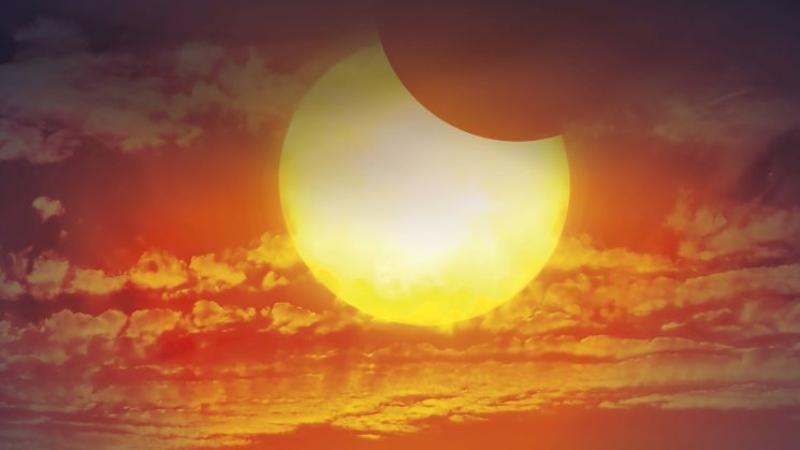











The partial solar eclipse on September 21, 2025, is one of the most anticipated celestial events of the year. Unlike a total eclipse where the Moon completely hides the Sun, this will be a partial eclipse, with the Moon covering up to 80–85% of the Sun’s disk in the most favorable viewing spots. The spectacle will be most striking at sunrise in southern New Zealand and during the morning hours in eastern and southern Australia, including cities like
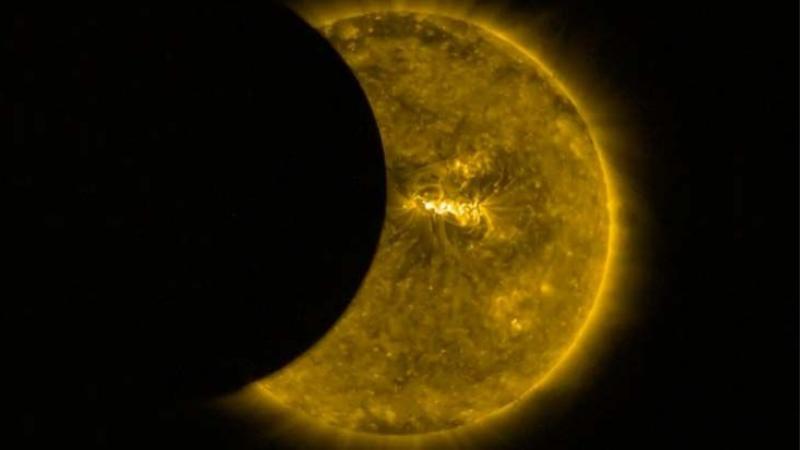
In a spectacular display of cosmic alignment, NASA’s Solar Dynamics Observatory (SDO) captured rare and stunning images of a solar eclipse visible only from space. This event, known as a "lunar transit," took place on Sunday, April 27, 2025. Unlike solar eclipses witnessed from Earth, this particular event was not visible to ground-based observers. The moon passed between the SDO and the sun, covering approximately 23% of the sun’s surface, creating a dramatic yet serene
The first solar eclipse of 2025 is scheduled for March 29 and will be a partial solar eclipse. During this event, the Moon will partially obscure the Sun, casting a shadow over various parts of the Northern Hemisphere. The eclipse will begin at 2:20 PM IST in the Atlantic Ocean and end around 6:13 PM IST over northern Siberia. Key areas that will witness this stunning event include northeastern Canada, parts of the northeastern United States (including New York City and Boston)