




















#solarstorm
Volcanoes Quakes Solar Storms Why 2025 Is Testing Earth’s Limits
The year 2025 has become one of the most turbulent in recent memory as Earth experiences a wave of overlapping natural crises. A rare volcanic eruption in Ethiopia sent ash drifting thousands of kilometres toward Asia, Indonesia recorded more than 1,400 earthquakes in just 30 days, and California battled massive wildfires that claimed hundreds of lives. Severe monsoon flooding washed through India and Pakistan, and the planet was struck by the strongest solar storm in over twenty years. These
Volcanoes Quakes Solar Storms Why 2025 Is Testing Earth’s Limits
The year 2025 has become one of the most turbulent in recent memory as Earth experiences a wave of overlapping natural crises. A rare volcanic eruption in Ethiopia sent ash drifting thousands of kilometres toward Asia, Indonesia recorded more than 1,400 earthquakes in just 30 days, and California battled massive wildfires that claimed hundreds of lives. Severe monsoon flooding washed through India and Pakistan, and the planet was struck by the strongest solar storm in over twenty years. These
Geomagnetic storm brings northern lights chance over Chicago skies
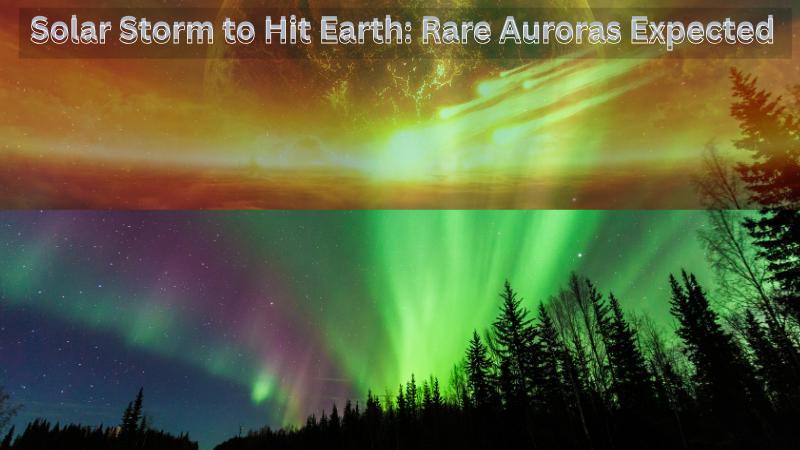
A geomagnetic storm that began Monday evening across the Northern Hemisphere has raised the possibility of a rare sight in the skies over Chicago, with the northern lights potentially visible overnight. The storm was triggered by a Coronal Mass Ejection, or CME, that erupted from the sun over the weekend. This burst of solar particles reached Earth near 5 p.m. EDT on Monday, with the first signs detected at the L1 orbital point about one million miles away from Earth by monitoring satellites.
Geomagnetic storm brings northern lights chance over Chicago skies
A geomagnetic storm that began Monday evening across the Northern Hemisphere has raised the possibility of a rare sight in the skies over Chicago, with the northern lights potentially visible overnight. The storm was triggered by a Coronal Mass Ejection, or CME, that erupted from the sun over the weekend. This burst of solar particles reached Earth near 5 p.m. EDT on Monday, with the first signs detected at the L1 orbital point about one million miles away from Earth by monitoring satellites.
Geomagnetic storm from cannibal CME could light up skies across US and Europe
A rare and powerful space weather event is on its way, as a cannibal coronal mass ejection from the sun is forecast to strike Earth late on Monday, September 1, 2025. Scientists warn that this unusual solar explosion could create a strong geomagnetic storm, bringing both dazzling auroras and potential disruptions to satellites, power grids, and communications. The phenomenon began on August 30 when sunspot region AR 41
Geomagnetic storm from cannibal CME could light up skies across US and Europe
A rare and powerful space weather event is on its way, as a cannibal coronal mass ejection from the sun is forecast to strike Earth late on Monday, September 1, 2025. Scientists warn that this unusual solar explosion could create a strong geomagnetic storm, bringing both dazzling auroras and potential disruptions to satellites, power grids, and communications. The phenomenon began on August 30 when sunspot region AR 41
Massive Coronal Hole on Sun to Trigger Solar Storm June 25
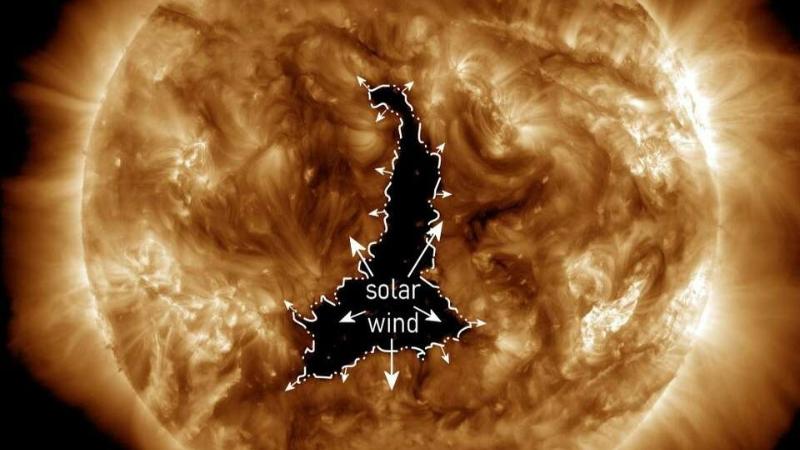
A massive coronal hole in the Sun’s atmosphere is facing Earth and is expected to bring a stream of high-speed solar wind, potentially triggering geomagnetic storms. According to the National Oceanic and Atmospheric Administration (NOAA), the leading edge of this solar phenomenon is projected to reach Earth late on June 25, possibly resulting in G1-class geomagnetic activity. Coronal holes are cooler, darker re
Massive Coronal Hole on Sun to Trigger Solar Storm June 25
A massive coronal hole in the Sun’s atmosphere is facing Earth and is expected to bring a stream of high-speed solar wind, potentially triggering geomagnetic storms. According to the National Oceanic and Atmospheric Administration (NOAA), the leading edge of this solar phenomenon is projected to reach Earth late on June 25, possibly resulting in G1-class geomagnetic activity. Coronal holes are cooler, darker re


