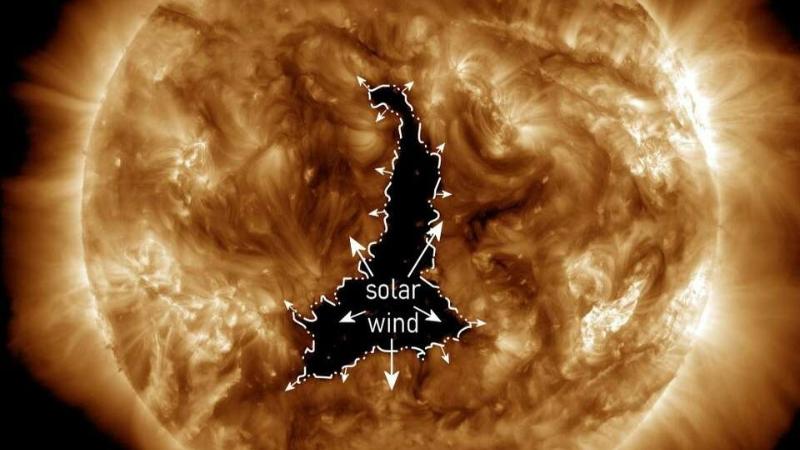
A massive coronal hole in the Sun’s atmosphere is facing Earth and is expected to bring a stream of high-speed solar wind, potentially triggering geomagnetic storms. According to the National Oceanic and Atmospheric Administration (NOAA), the leading edge of this solar phenomenon is projected to reach Earth late on June 25, possibly resulting in G1-class geomagnetic activity.
Coronal holes are cooler, darker regions in the Sun’s atmosphere that appear in ultraviolet and X-ray images. These zones have open magnetic fields, allowing charged solar particles to escape into space more freely. As a result, these areas send out high-speed solar winds streams of charged particles that can disturb Earth’s magnetic field when they arrive. Currently, the solar wind speed is around 457 kilometers per second.
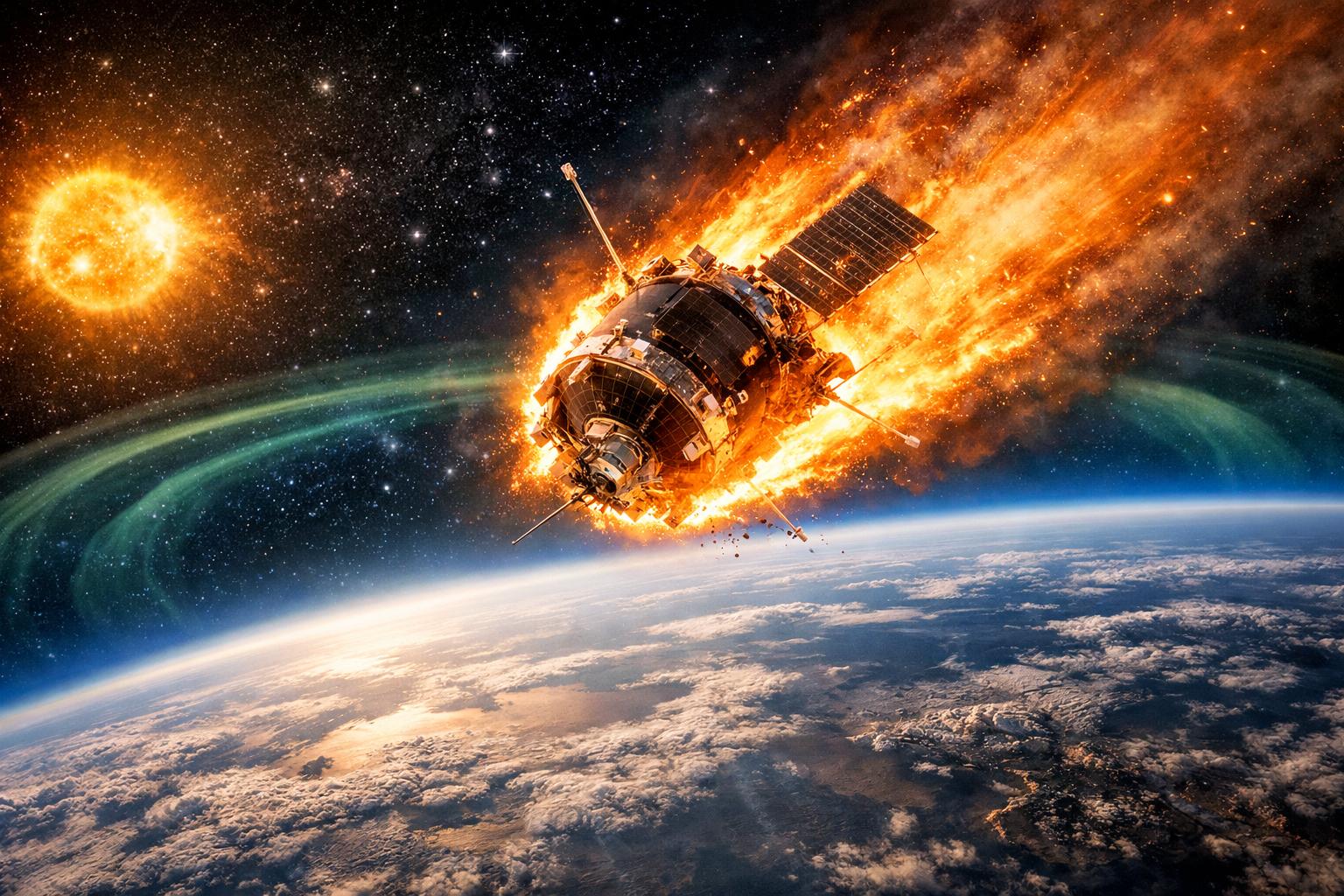
The Sun is approaching the peak of its solar activity cycle, known as the solar maximum, leading to more frequent and intense solar events. Earlier this month, the Sun released the strongest eruption of 2025 a powerful M8.2-class solar flare from sunspot 4100, which caused dazzling auroras across the globe. Astronomers are closely watching the current coronal hole as it aligns with Earth. While G1-class storms are considered minor, they can still disrupt satellite operations, power grid fluctuations, and create stunning auroral displays at higher latitudes.