







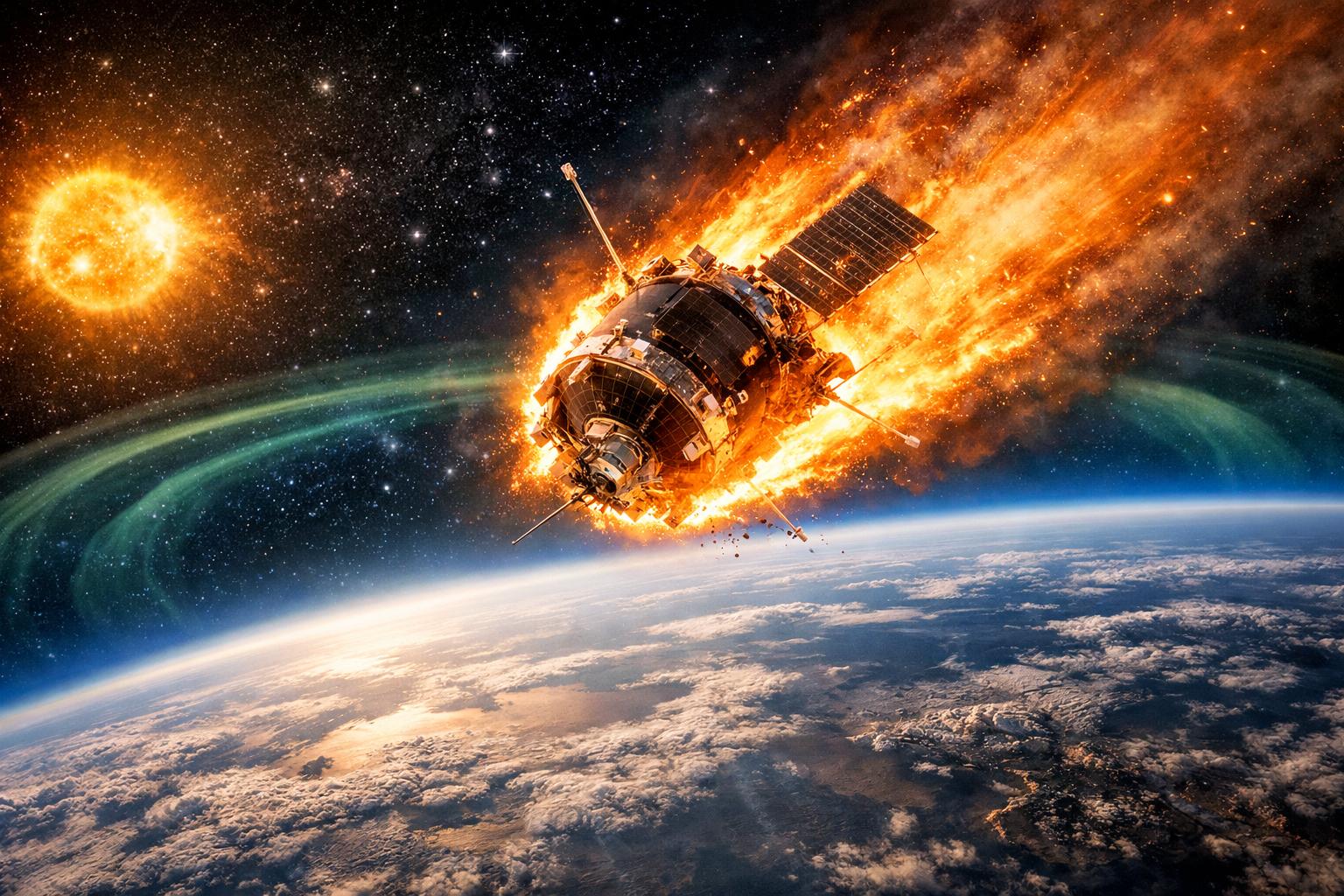













A decommissioned NASA satellite that once helped scientists understand how Earth’s magnetic field protects the planet from harmful cosmic radiation is expected to reenter Earth’s atmosphere on Tuesday evening. According to NASA, the spacecraft known as Van Allen Probe A could make atmospheric reentry around 7:45 p.m. Eastern Time, though officials note that predicting the exact moment remains difficult. Space agencies say the timing of the event carries uncertainty, with the act
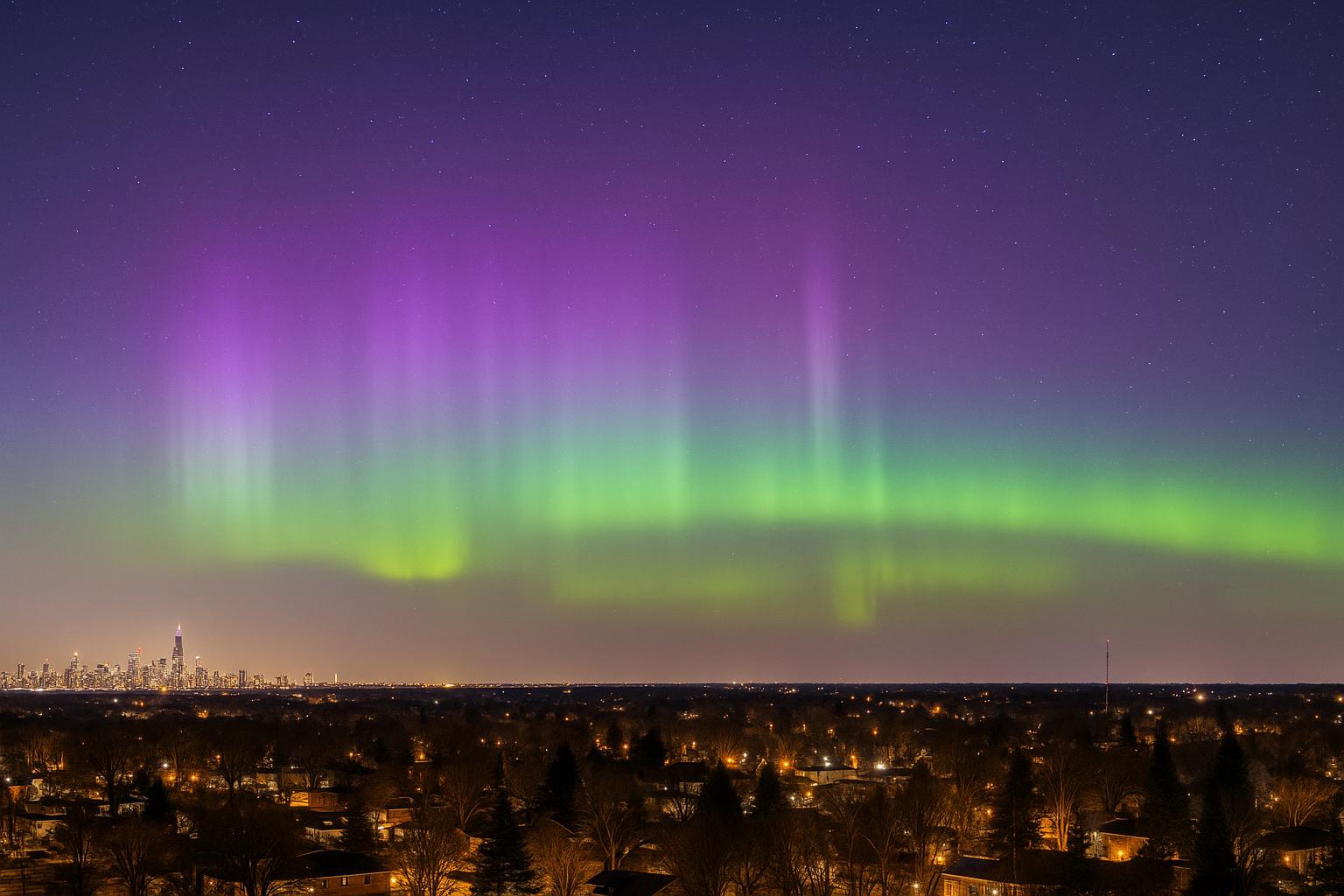
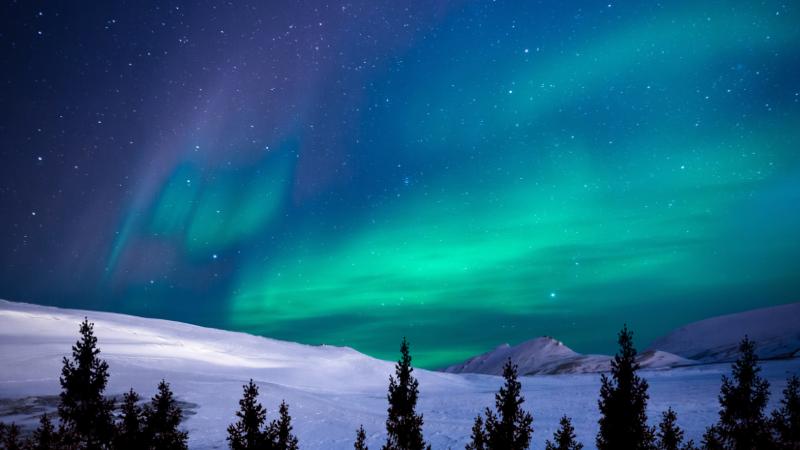
On Tuesday night, residents throughout the Chicago metropolitan area were treated to a rare celestial display as the multi-hued ribbons of the aurora borealis lit up the sky following a powerful solar flare. From the heart of the city to suburban neighbourhoods, witnesses described vivid shades of pink, purple, green and yellow drifting across the horizon, signalling the arrival of an energetic stream of solar particles. Meteorologists and space-weather experts attribute the spectac
A geomagnetic storm that began Monday evening across the Northern Hemisphere has raised the possibility of a rare sight in the skies over Chicago, with the northern lights potentially visible overnight. The storm was triggered by a Coronal Mass Ejection, or CME, that erupted from the sun over the weekend. This burst of solar particles reached Earth near 5 p.m. EDT on Monday, with the first signs detected at the L1 orbital point about one million miles away from Earth by monitoring satellites.
A rare and powerful space weather event is on its way, as a cannibal coronal mass ejection from the sun is forecast to strike Earth late on Monday, September 1, 2025. Scientists warn that this unusual solar explosion could create a strong geomagnetic storm, bringing both dazzling auroras and potential disruptions to satellites, power grids, and communications. The phenomenon began on August 30 when sunspot region AR 41
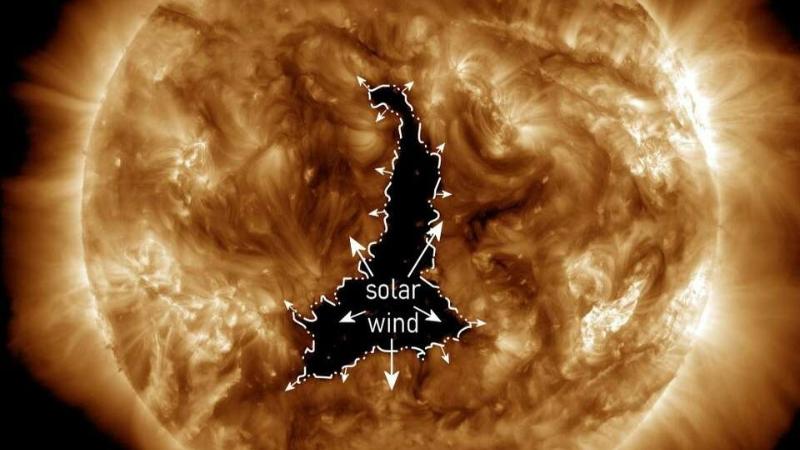
A massive coronal hole in the Sun’s atmosphere is facing Earth and is expected to bring a stream of high-speed solar wind, potentially triggering geomagnetic storms. According to the National Oceanic and Atmospheric Administration (NOAA), the leading edge of this solar phenomenon is projected to reach Earth late on June 25, possibly resulting in G1-class geomagnetic activity. Coronal holes are cooler, darker re
An earthquake’s effects are not confined to the ground—it can send invisible shockwaves high into the atmosphere, affecting even space-based technology. Researchers from a university in Japan have recently achieved a groundbreaking milestone by creating the world’s first 3D visualization of how seismic activity disturbs the ionosphere, the charged layer of the atmosphere that sits between 60 and 1,000 kilometers above the Earth’s surface. The study focused on the power
A breathtaking display of northern lights may be visible across parts of the United States tonight, May 31, as space weather experts forecast heightened geomagnetic storm activity that could push auroras much farther south than usual. According to the National Oceanic and Atmospheric Administration, Earth is currently being impacted by high-speed solar wind, which is increasing geomagnetic pressure and fueling storm conditions in Earth’s upper atmosphere—an ideal scenario for auro
NASA is preparing to launch the Lunar Environment Heliospheric X-ray Imager (LEXI) to the moon to gather groundbreaking data on Earth’s magnetosphere. LEXI will capture high-resolution images of the magnetosphere's movements, offering crucial insights into how it reacts to solar wind and space weather conditions. This mission is designed to enhance our understanding of space weather, which impacts satellites, electronics, and infrastructure on Earth. The LEXI instrument wi