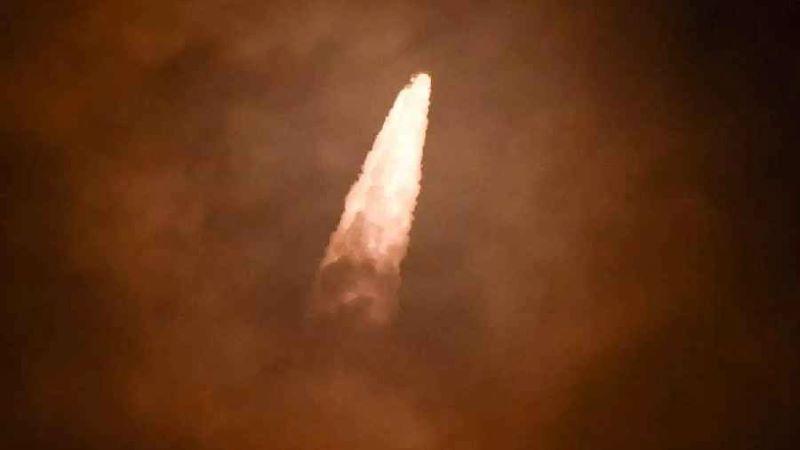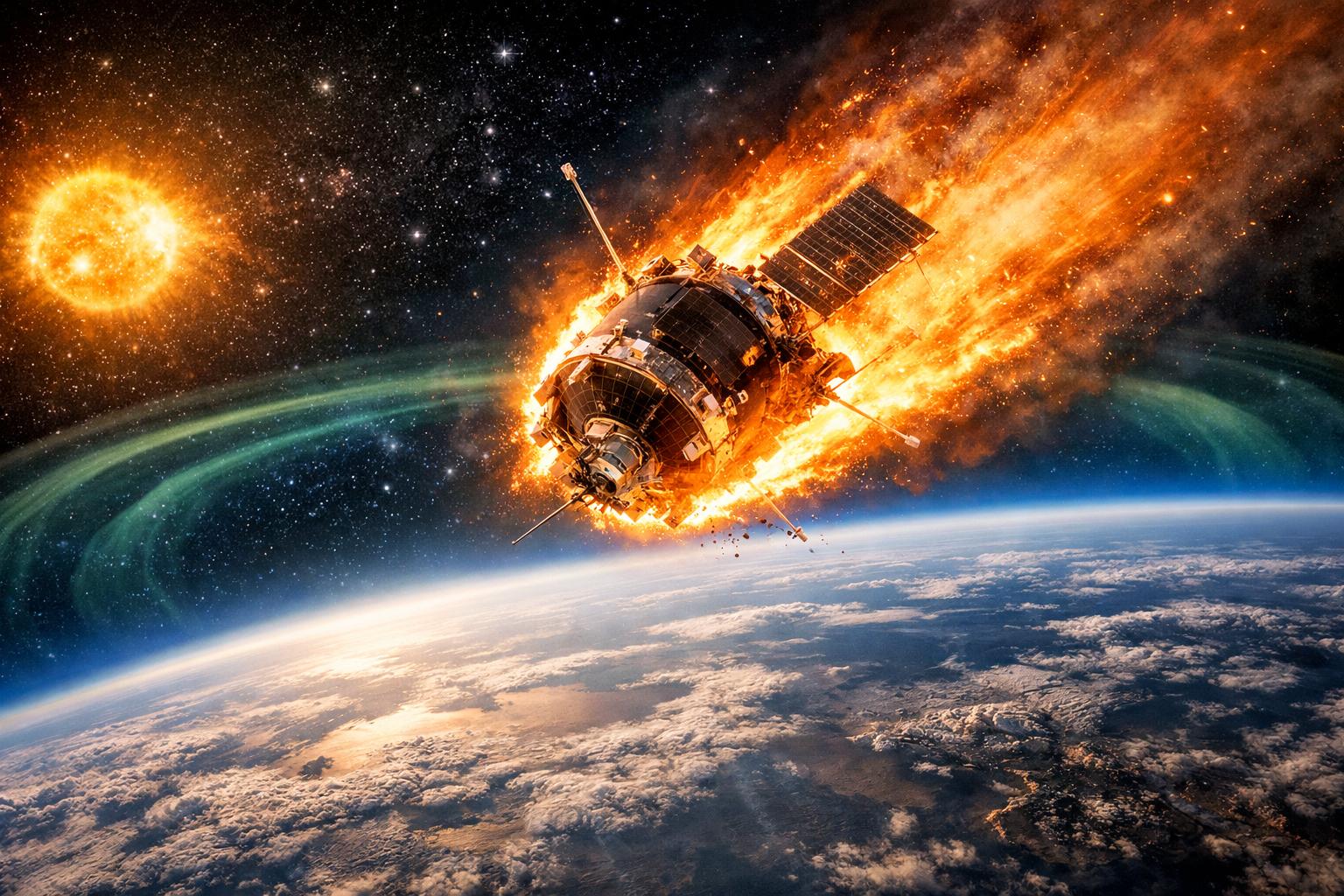
A decommissioned NASA satellite that once helped scientists understand how Earth’s magnetic field protects the planet from harmful cosmic radiation is expected to reenter Earth’s atmosphere on Tuesday evening. According to NASA, the spacecraft known as Van Allen Probe A could make atmospheric reentry around 7:45 p.m. Eastern Time, though officials note that predicting the exact moment remains difficult.
Space agencies say the timing of the event carries uncertainty, with the actual reentry potentially occurring within a 24-hour window before or after the projected time. As the spacecraft descends through Earth’s atmosphere, most of the satellite’s structure is expected to burn up due to intense heat generated during reentry. However, NASA has indicated that a small number of components may survive the process and reach the ground.
Despite this possibility, the agency emphasizes that the overall risk to people on Earth remains extremely low. NASA estimates the chance of harm at roughly one in 4,200, underscoring that uncontrolled spacecraft reentries occur periodically and rarely result in any danger to populated areas.
Van Allen Probe A was launched in August 2012 along with its twin spacecraft, Van Allen Probe B, as part of a mission designed to study the Van Allen radiation belts. These belts are regions of charged particles trapped by Earth’s magnetic field that help shield the planet from dangerous cosmic radiation and solar activity. Although the mission was originally planned to last two years, both satellites continued operating for nearly seven years and delivered valuable scientific data about space weather and the space environment surrounding Earth.
The mission concluded in 2019 after the spacecraft exhausted their fuel supplies and were no longer able to maintain orientation toward the Sun. Initial orbital calculations suggested that Van Allen Probe A would remain in space until around 2034 before gradually falling back toward Earth.
However, scientists later revised those projections after the current solar cycle became more intense than anticipated. In 2024, researchers confirmed that the Sun had entered a solar maximum phase, producing stronger space weather activity. Increased solar energy expanded Earth’s upper atmosphere and created additional atmospheric drag on the spacecraft, accelerating its orbital decay and causing the satellite to reenter years earlier than expected.
The U.S. Space Force is currently tracking the satellite’s descent and providing updated projections through its Space Track monitoring system. Meanwhile, NASA reports that the companion spacecraft, Van Allen Probe B, remains in orbit and is expected to reenter Earth’s atmosphere sometime around 2030 or later.