#spaceresearch
Interstellar comet 3I/ATLAS reveals origins in an alien solar system
Interstellar comet 3I/ATLAS reveals origins in an alien solar system as astronomers analyzing the rare celestial object have uncovered evidence suggesting it formed in conditions vastly different from those that shaped our own planetary system. The comet, known as 3I/ATLAS, was first detected passing through our solar system in July and is only the third known interstellar object ever observed in such a trajectory. New findings, published on Wednesday, April 23, 2026, in the journal Nature Astronomy, indicate that the comet likely originated in an extremely cold and distant region of another planetary system. Researchers used the Atacama Large Millimeter/submillimeter Array (ALMA) in Chile to observe the comet in early November, shortly after it made its closest approach to the sun. The study marks the first time scientists have detected deuterium, a heavier isotope of hydrogen, in an interstellar object. This form of hydrogen is typically found in deuterated water, also known as semi-heavy water. According to lead researcher Luis Eduardo Salazar Manzano of the University of Michigan, the concentration of deuterium in 3I/ATLAS is more than 40 times higher than levels found in Earth’s oceans and over 30 times higher than in comets within our solar system. Such unusually high levels suggest that the comet formed in an environment with extremely low temperatures—below 30 Kelvin, or approximately minus 405 degrees Fahrenheit. Scientists believe this indicates formation in the outer regions of a protoplanetary disk, far from its host star, where icy materials can preserve their original chemical signatures for billions of years. Further analysis suggests that 3I/ATLAS may be up to 11 billion years old, making it significantly older than our solar system, which formed about 4.5 billion years ago. The preserved water within the comet likely dates back to the early stages of the Milky Way, offering a rare glimpse into the galaxy’s ancient conditions. Researchers also noted that standard water (H₂O) was not directly detected during observations, likely due to instrument sensitivity limits. However, the clear detection of deuterated water underscores the comet’s unusual composition and reinforces its value as a scientific “time capsule.” Experts say interstellar objects like 3I/ATLAS provide unique insights into how planetary systems form and evolve across the universe. Future observations from facilities such as the Vera C. Rubin Observatory are expected to identify more such objects, potentially helping scientists determine whether 3I/ATLAS is an anomaly or part of a broader population of chemically distinct comets. By studying these rare visitors, astronomers hope to better understand how the composition of planets—and even the building blocks of life—may differ across the galaxy, offering new perspectives on the origins of planetary systems beyond our own.
Interstellar comet 3I/ATLAS reveals origins in an alien solar system
Interstellar comet 3I/ATLAS reveals origins in an alien solar system as astronomers analyzing the rare celestial object have uncovered evidence suggesting it formed in conditions vastly different from those that shaped our own planetary system. The comet, known as 3I/ATLAS, was first detected passing through our solar system in July and is only the third known interstellar object ever observed in such a trajectory. New findings, published on Wednesday, April 23, 2026, in the journal Nature Astronomy, indicate that the comet likely originated in an extremely cold and distant region of another planetary system. Researchers used the Atacama Large Millimeter/submillimeter Array (ALMA) in Chile to observe the comet in early November, shortly after it made its closest approach to the sun. The study marks the first time scientists have detected deuterium, a heavier isotope of hydrogen, in an interstellar object. This form of hydrogen is typically found in deuterated water, also known as semi-heavy water. According to lead researcher Luis Eduardo Salazar Manzano of the University of Michigan, the concentration of deuterium in 3I/ATLAS is more than 40 times higher than levels found in Earth’s oceans and over 30 times higher than in comets within our solar system. Such unusually high levels suggest that the comet formed in an environment with extremely low temperatures—below 30 Kelvin, or approximately minus 405 degrees Fahrenheit. Scientists believe this indicates formation in the outer regions of a protoplanetary disk, far from its host star, where icy materials can preserve their original chemical signatures for billions of years. Further analysis suggests that 3I/ATLAS may be up to 11 billion years old, making it significantly older than our solar system, which formed about 4.5 billion years ago. The preserved water within the comet likely dates back to the early stages of the Milky Way, offering a rare glimpse into the galaxy’s ancient conditions. Researchers also noted that standard water (H₂O) was not directly detected during observations, likely due to instrument sensitivity limits. However, the clear detection of deuterated water underscores the comet’s unusual composition and reinforces its value as a scientific “time capsule.” Experts say interstellar objects like 3I/ATLAS provide unique insights into how planetary systems form and evolve across the universe. Future observations from facilities such as the Vera C. Rubin Observatory are expected to identify more such objects, potentially helping scientists determine whether 3I/ATLAS is an anomaly or part of a broader population of chemically distinct comets. By studying these rare visitors, astronomers hope to better understand how the composition of planets—and even the building blocks of life—may differ across the galaxy, offering new perspectives on the origins of planetary systems beyond our own.
NASA satellite Van Allen Probe A expected to reenter Earth’s atmosphere Tuesday
A decommissioned NASA satellite that once helped scientists understand how Earth’s magnetic field protects the planet from harmful cosmic radiation is expected to reenter Earth’s atmosphere on Tuesday evening. According to NASA, the spacecraft known as Van Allen Probe A could make atmospheric reentry around 7:45 p.m. Eastern Time, though officials note that predicting the exact moment remains difficult. Space agencies say the timing of the event carries uncertainty, with the act
NASA satellite Van Allen Probe A expected to reenter Earth’s atmosphere Tuesday
A decommissioned NASA satellite that once helped scientists understand how Earth’s magnetic field protects the planet from harmful cosmic radiation is expected to reenter Earth’s atmosphere on Tuesday evening. According to NASA, the spacecraft known as Van Allen Probe A could make atmospheric reentry around 7:45 p.m. Eastern Time, though officials note that predicting the exact moment remains difficult. Space agencies say the timing of the event carries uncertainty, with the act
NASA Halts Operations as US Shutdown Disrupts Space Agency Activities
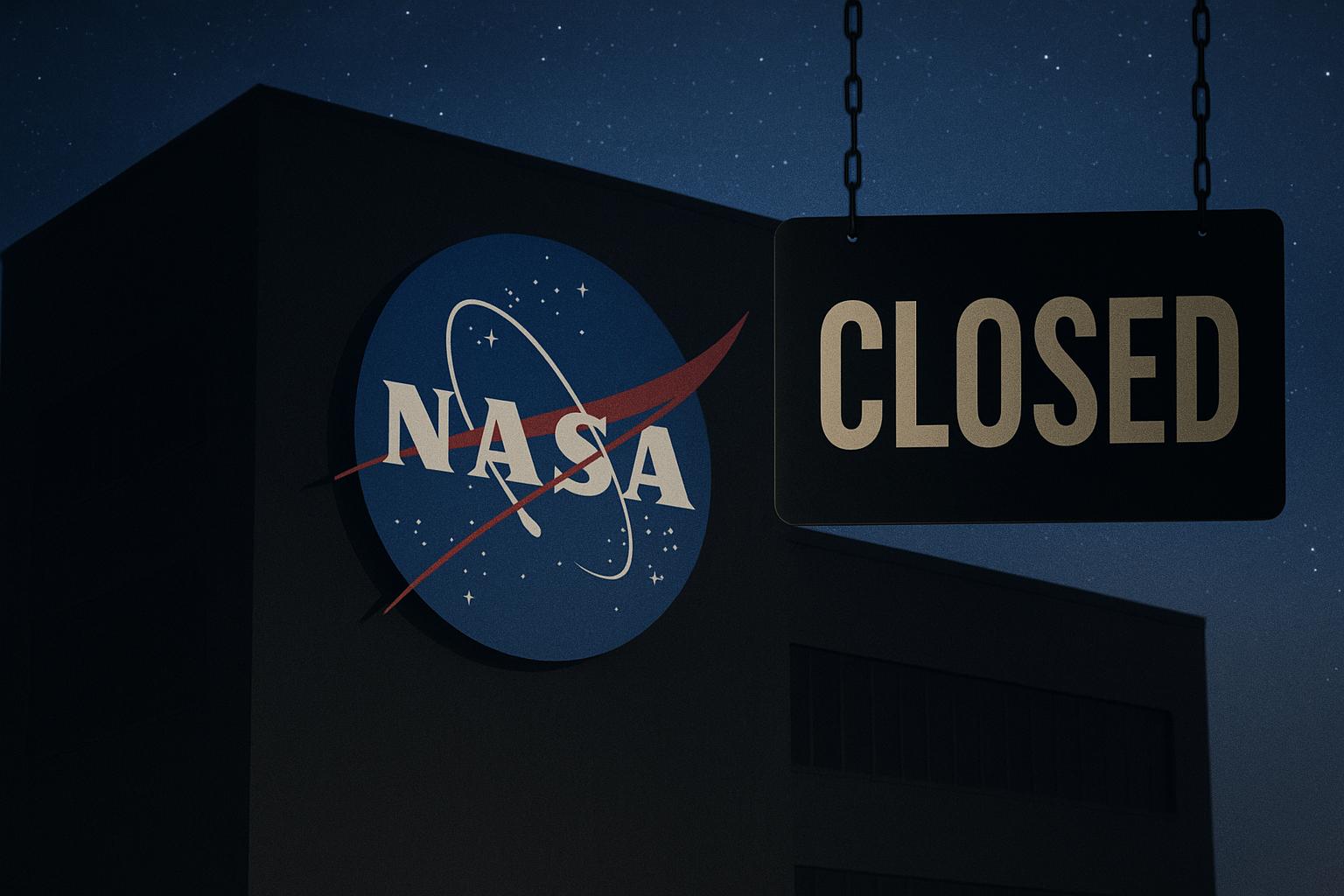
Nasa has announced that it is suspending most of its operations after the United States entered a government shutdown on October 1, 2025, following Congress’s failure to pass a budget or temporary funding measure. A notice on the agency’s website declared that it is “closed until further notice,” with only a limited workforce continuing essential tasks. The shutdown, the first in nearly six years, has led to thousands of federal employees being furloughed acr
NASA Halts Operations as US Shutdown Disrupts Space Agency Activities
Nasa has announced that it is suspending most of its operations after the United States entered a government shutdown on October 1, 2025, following Congress’s failure to pass a budget or temporary funding measure. A notice on the agency’s website declared that it is “closed until further notice,” with only a limited workforce continuing essential tasks. The shutdown, the first in nearly six years, has led to thousands of federal employees being furloughed acr
ISRO Unveils Bharatiya Antariksh Station Model, First Module To Launch By 2028
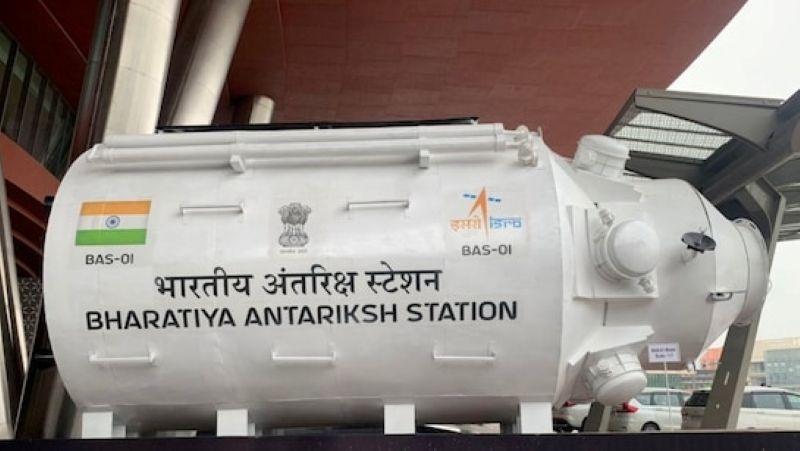
India took a major step towards its long-term space ambitions as ISRO unveiled a model of the Bharatiya Antariksh Station (BAS) during National Space Day celebrations in New Delhi. The move signals India’s entry into the elite group of nations operating orbital laboratories, joining the ranks of the International Space Station (ISS) and China’s Tiangong station. The first BAS module, BAS-01
ISRO Unveils Bharatiya Antariksh Station Model, First Module To Launch By 2028
India took a major step towards its long-term space ambitions as ISRO unveiled a model of the Bharatiya Antariksh Station (BAS) during National Space Day celebrations in New Delhi. The move signals India’s entry into the elite group of nations operating orbital laboratories, joining the ranks of the International Space Station (ISS) and China’s Tiangong station. The first BAS module, BAS-01
Russia Launches 75 Mice into Space to Study Effects of Spaceflight on Living Organisms
Russia has launched 75 mice aboard its Bion-M No.2 biosatellite for a month-long mission in low-Earth orbit, making a significant step in advancing our understanding of how spaceflight affects living organisms. The mission, which took place on August 20, 2025, is a pivotal research experiment aimed at gathering critical data that will aid in the preparation for human space missions to the Moon, Mars, and beyond. The
Russia Launches 75 Mice into Space to Study Effects of Spaceflight on Living Organisms
Russia has launched 75 mice aboard its Bion-M No.2 biosatellite for a month-long mission in low-Earth orbit, making a significant step in advancing our understanding of how spaceflight affects living organisms. The mission, which took place on August 20, 2025, is a pivotal research experiment aimed at gathering critical data that will aid in the preparation for human space missions to the Moon, Mars, and beyond. The
Voyager Technologies to build aerospace research park at Ohio State University
Ohio, long celebrated as the birthplace of aviation, is rapidly emerging as a major hub for aerospace and defense innovation. The state’s expanding role in the space industry has attracted another significant player, Voyager Technologies, which has announced plans to establish a central hub in Columbus. This move follows similar investments by other leading aerospace companies, signaling Ohio’s rising prominence in the sector. JobsOhio President J.P. Nauseef highlighted
Voyager Technologies to build aerospace research park at Ohio State University
Ohio, long celebrated as the birthplace of aviation, is rapidly emerging as a major hub for aerospace and defense innovation. The state’s expanding role in the space industry has attracted another significant player, Voyager Technologies, which has announced plans to establish a central hub in Columbus. This move follows similar investments by other leading aerospace companies, signaling Ohio’s rising prominence in the sector. JobsOhio President J.P. Nauseef highlighted
Shubhanshu Shukla Powers ISRO's Gaganyaan with Algae Test
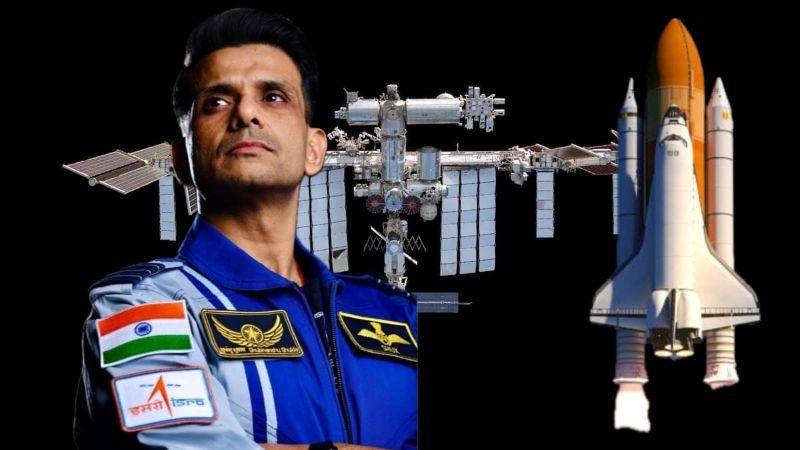
Group Captain Shubhanshu Shukla, India’s first astronaut aboard the International Space Station (ISS), is conducting a critical space microalgae experiment for the Indian Space Research Organisation (ISRO). This study is aimed at exploring the role of microalgae in sustaining long-duration space missions like Gaganyaan, India’s ambitious human spaceflight program. As part of the experiment, Shukla deployed microalgae sample bags and captured images
Shubhanshu Shukla Powers ISRO's Gaganyaan with Algae Test
Group Captain Shubhanshu Shukla, India’s first astronaut aboard the International Space Station (ISS), is conducting a critical space microalgae experiment for the Indian Space Research Organisation (ISRO). This study is aimed at exploring the role of microalgae in sustaining long-duration space missions like Gaganyaan, India’s ambitious human spaceflight program. As part of the experiment, Shukla deployed microalgae sample bags and captured images