#trade-tensions
Xi and Trump Summit at Beijing
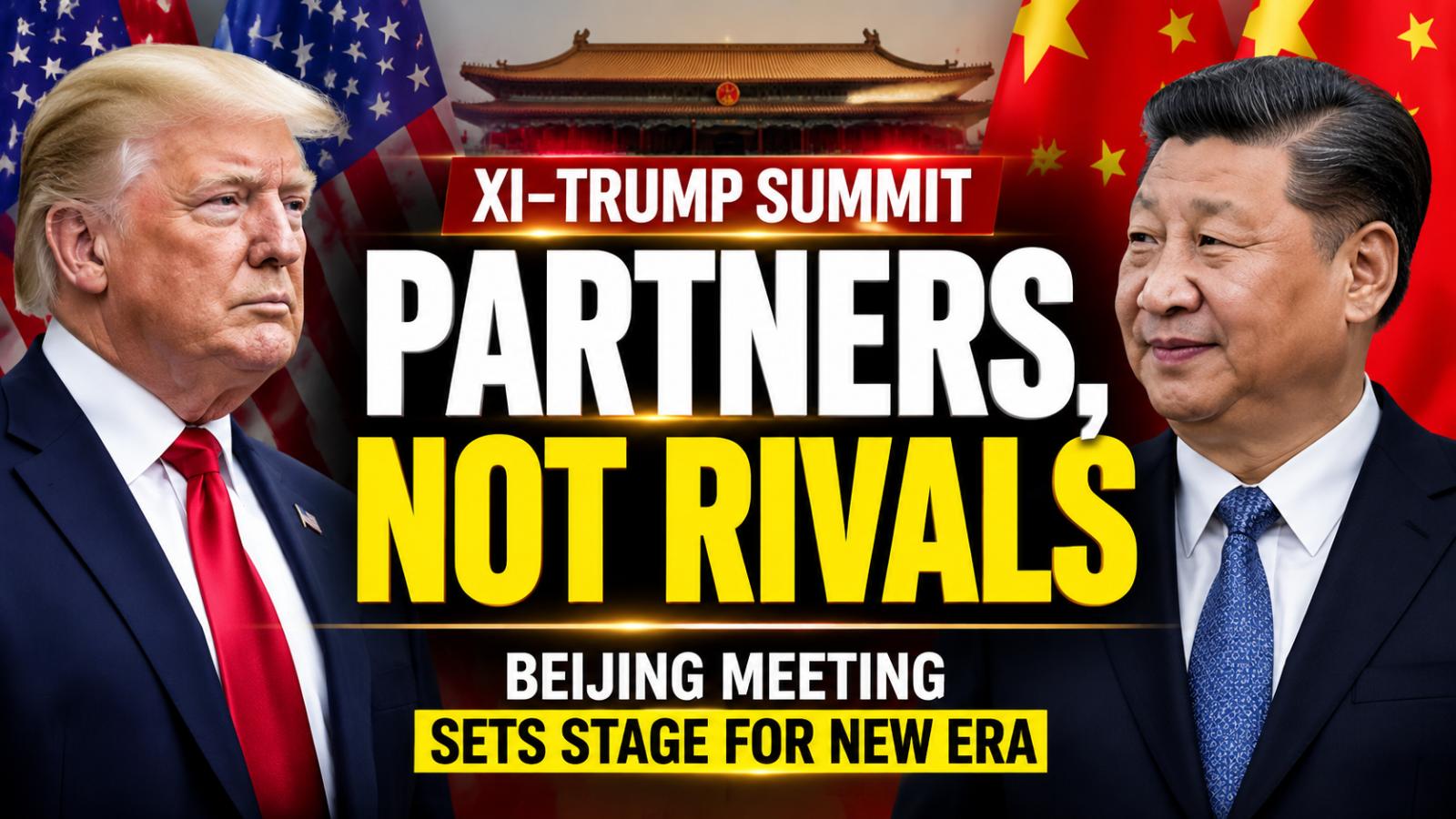
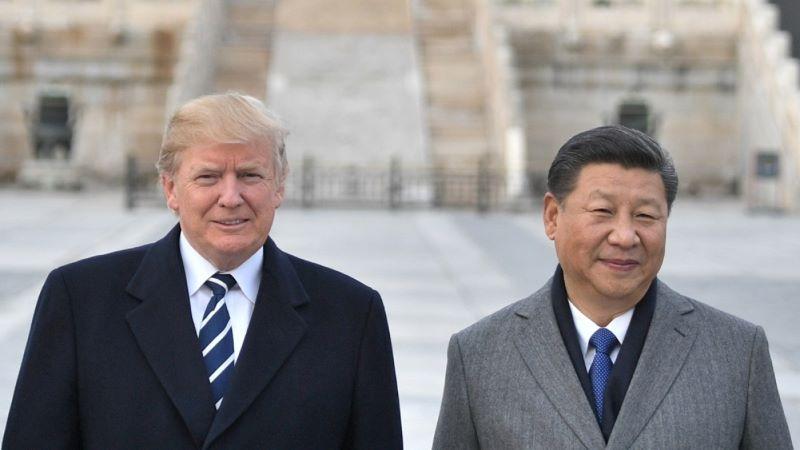
Historic Summit Marks a New Phase for US-China Relations On Thursday, May 14, 2026, Chinese President Xi Jinping welcomed US President Donald Trump to Beijing for a high-stakes summit, marking a critical moment in the evolving relationship between the two global powers. Xi set the tone for the summit by stressing the importance of cooperation over confrontation, calling for a stable US-China relationship as a foundation for global stability. “A stable China-US relationship is a
Xi and Trump Summit at Beijing
Historic Summit Marks a New Phase for US-China Relations On Thursday, May 14, 2026, Chinese President Xi Jinping welcomed US President Donald Trump to Beijing for a high-stakes summit, marking a critical moment in the evolving relationship between the two global powers. Xi set the tone for the summit by stressing the importance of cooperation over confrontation, calling for a stable US-China relationship as a foundation for global stability. “A stable China-US relationship is a
Trump-Xi summit: Key issues, trade talks, and Iran conflict to be addressed
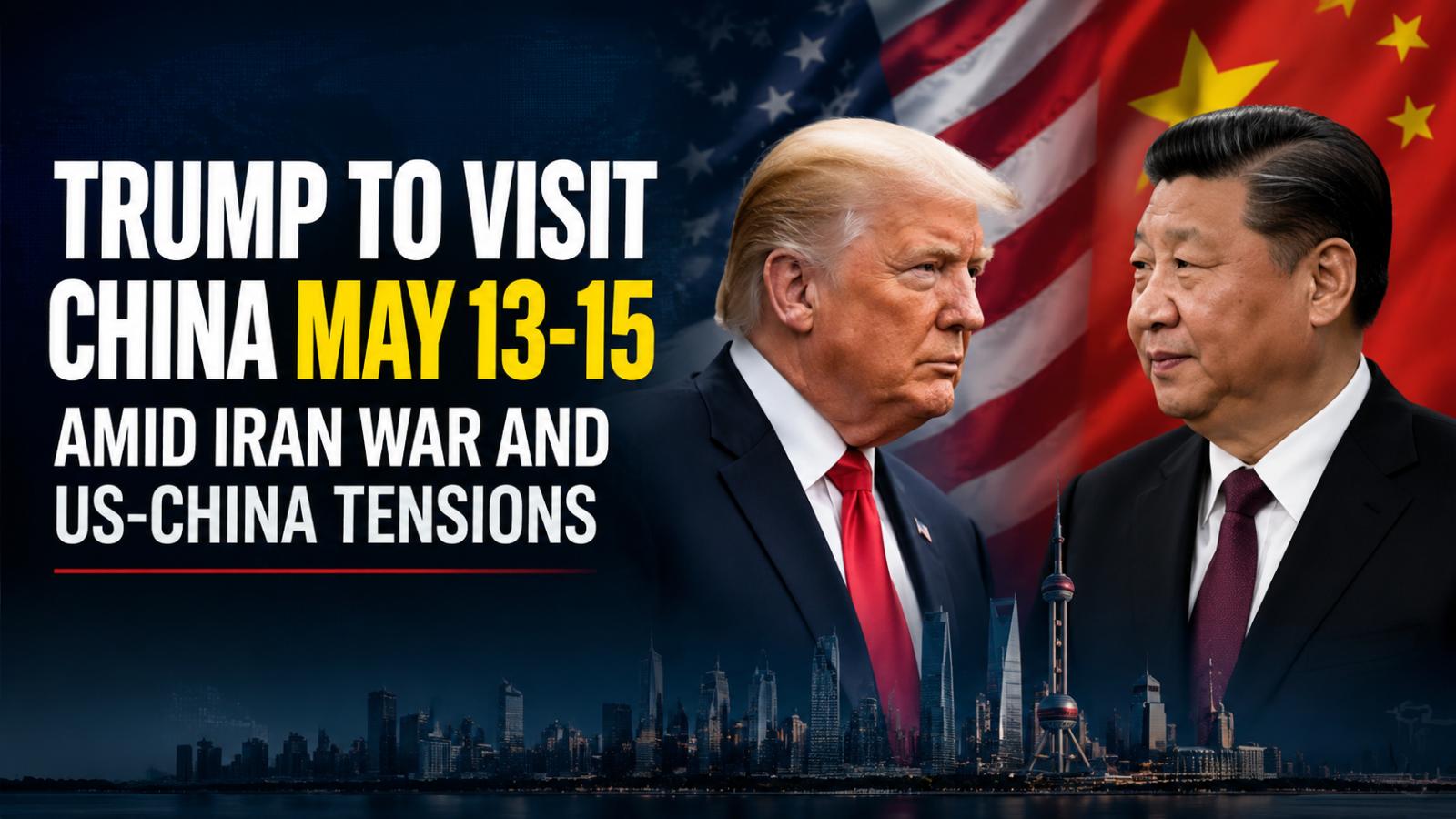
US President Donald Trump is set to visit China from May 13 to 15, marking the first visit to the country by an American president in nearly nine years. The invitation comes from Chinese President Xi Jinping amid growing tensions between the two nations over issues such as trade, technology, and defense. This visit comes at a critical time for global politics, with the ongoing Iran conflict impacting both economic stability and energy prices. The timing of Trump’s visit coincides with a volatile situation in the Strait of Hormuz, where a dual blockade has significantly disrupted global oil trade, driving up energy prices. These disruptions have the potential to harm global economic growth, as the Strait is a vital shipping route for the world’s oil supply. Trump’s administration has placed significant pressure on Iran over its nuclear program, and in recent remarks, he stated that the US would “finish the job” if Iran did not agree to the terms aimed at halting the conflict. While tensions remain high, the US continues to press for a diplomatic resolution to the situation, with President Trump asserting that Iran must meet specific demands regarding its nuclear ambitions. Despite these pressures, Trump maintains that the US does not need China’s assistance to resolve the issue, suggesting that the conflict could be settled with or without China’s involvement. Iran, for its part, has signaled its intention to pursue peace, with chief negotiator Mohammad Bagher Ghalibaf issuing an ultimatum to the US. According to Ghalibaf, Washington must accept Iran’s recent peace proposal or face further failure in negotiations. He emphasized that there was no alternative but to acknowledge the rights of the Iranian people as outlined in Tehran’s 14-point proposal. Beyond the Iran conflict, the upcoming Trump-Xi summit is expected to address several key issues affecting US-China relations. Trade discussions will likely focus on extending a temporary truce in the ongoing trade dispute, particularly concerning rare earth minerals. Both leaders are expected to explore agreements related to Boeing aircraft purchases, as well as expanding trade and investment ties. Additionally, China is anticipated to announce purchases in the US agricultural and energy sectors. Another significant topic of discussion will be Taiwan, with Xi expressing frustration over the US’s continued support for the island nation, which China claims as part of its territory. Trump’s administration has reiterated its commitment to Taiwan, despite escalating military activities in the region by China. The summit will also cover the rapid development of artificial intelligence (AI) in both countries, with US officials highlighting concerns about the potential military and economic implications of AI advancements. With both nations at the forefront of technological innovation, there is a growing need for open communication to avoid misunderstandings or potential conflicts arising from the use of AI. This high-stakes summit between the US and China is poised to shape the future of global trade, energy security, and technological development, with both sides seeking to manage their differences while addressing urgent geopolitical challenges. As the world watches, the outcome of these talks could have far-reaching implications for international relations.
Trump-Xi summit: Key issues, trade talks, and Iran conflict to be addressed
US President Donald Trump is set to visit China from May 13 to 15, marking the first visit to the country by an American president in nearly nine years. The invitation comes from Chinese President Xi Jinping amid growing tensions between the two nations over issues such as trade, technology, and defense. This visit comes at a critical time for global politics, with the ongoing Iran conflict impacting both economic stability and energy prices. The timing of Trump’s visit coincides with a volatile situation in the Strait of Hormuz, where a dual blockade has significantly disrupted global oil trade, driving up energy prices. These disruptions have the potential to harm global economic growth, as the Strait is a vital shipping route for the world’s oil supply. Trump’s administration has placed significant pressure on Iran over its nuclear program, and in recent remarks, he stated that the US would “finish the job” if Iran did not agree to the terms aimed at halting the conflict. While tensions remain high, the US continues to press for a diplomatic resolution to the situation, with President Trump asserting that Iran must meet specific demands regarding its nuclear ambitions. Despite these pressures, Trump maintains that the US does not need China’s assistance to resolve the issue, suggesting that the conflict could be settled with or without China’s involvement. Iran, for its part, has signaled its intention to pursue peace, with chief negotiator Mohammad Bagher Ghalibaf issuing an ultimatum to the US. According to Ghalibaf, Washington must accept Iran’s recent peace proposal or face further failure in negotiations. He emphasized that there was no alternative but to acknowledge the rights of the Iranian people as outlined in Tehran’s 14-point proposal. Beyond the Iran conflict, the upcoming Trump-Xi summit is expected to address several key issues affecting US-China relations. Trade discussions will likely focus on extending a temporary truce in the ongoing trade dispute, particularly concerning rare earth minerals. Both leaders are expected to explore agreements related to Boeing aircraft purchases, as well as expanding trade and investment ties. Additionally, China is anticipated to announce purchases in the US agricultural and energy sectors. Another significant topic of discussion will be Taiwan, with Xi expressing frustration over the US’s continued support for the island nation, which China claims as part of its territory. Trump’s administration has reiterated its commitment to Taiwan, despite escalating military activities in the region by China. The summit will also cover the rapid development of artificial intelligence (AI) in both countries, with US officials highlighting concerns about the potential military and economic implications of AI advancements. With both nations at the forefront of technological innovation, there is a growing need for open communication to avoid misunderstandings or potential conflicts arising from the use of AI. This high-stakes summit between the US and China is poised to shape the future of global trade, energy security, and technological development, with both sides seeking to manage their differences while addressing urgent geopolitical challenges. As the world watches, the outcome of these talks could have far-reaching implications for international relations.
Chinese Tanker Attack Near Strait of Hormuz Sparks Oil Route Alarm Amid Iran-US Tensions
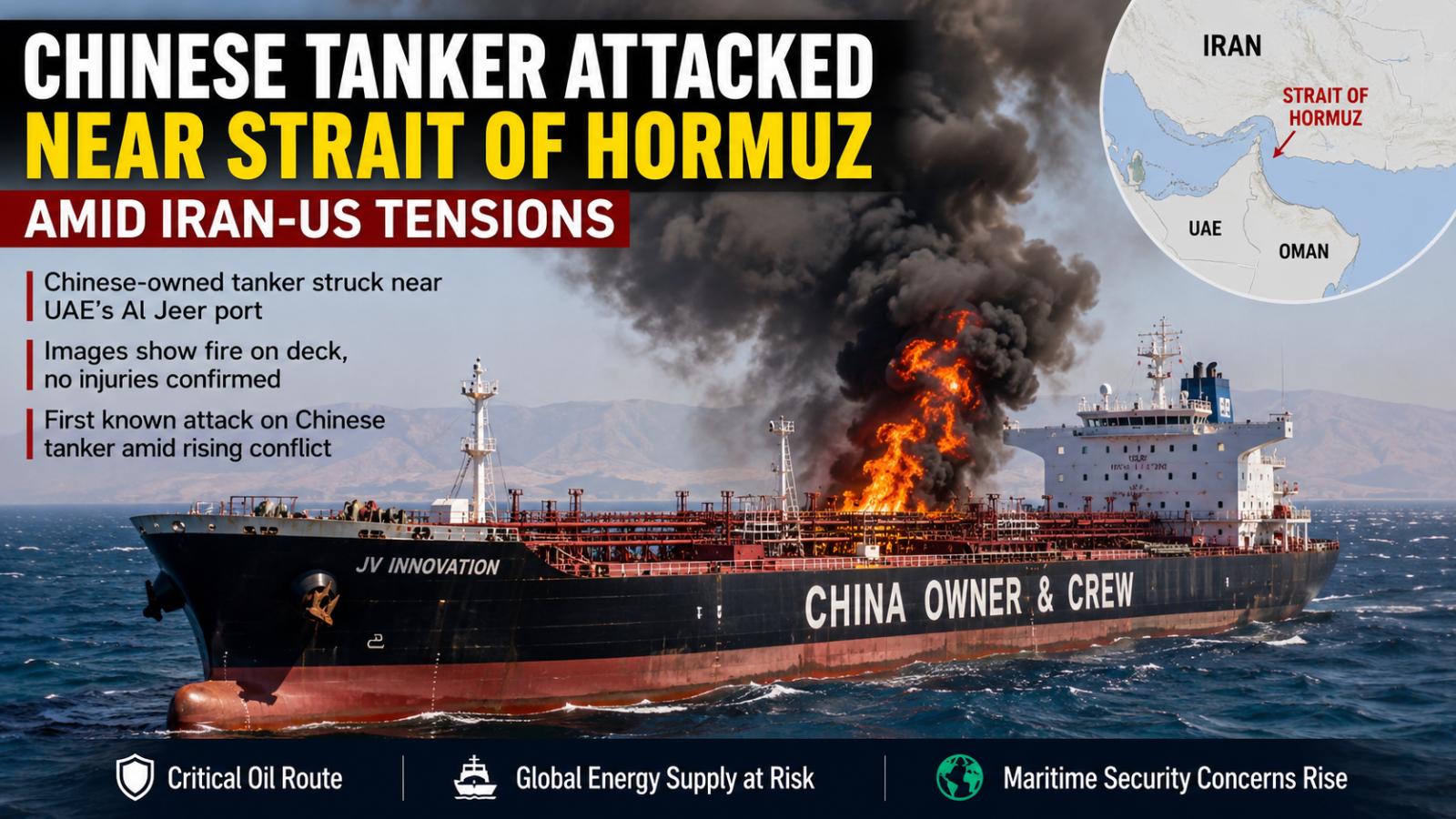
Chinese Tanker Attack Near Strait of Hormuz Raises Global Oil Fears A Chinese-owned oil tanker was attacked near the Strait of Hormuz, intensifying fears over oil shipping safety as Iran-US tensions deepen across Gulf waters. The vessel, identified in reports as JV Innovation, was reportedly hit off UAE’s Al Jeer port on May 4, with images showing flames on deck and markings reading “CHINA OWNER & CREW.”
Chinese Tanker Attack Near Strait of Hormuz Sparks Oil Route Alarm Amid Iran-US Tensions
Chinese Tanker Attack Near Strait of Hormuz Raises Global Oil Fears A Chinese-owned oil tanker was attacked near the Strait of Hormuz, intensifying fears over oil shipping safety as Iran-US tensions deepen across Gulf waters. The vessel, identified in reports as JV Innovation, was reportedly hit off UAE’s Al Jeer port on May 4, with images showing flames on deck and markings reading “CHINA OWNER & CREW.”
India’s High-Risk Energy Move: LPG Tanker Braces for Dangerous Strait of Hormuz Crossing
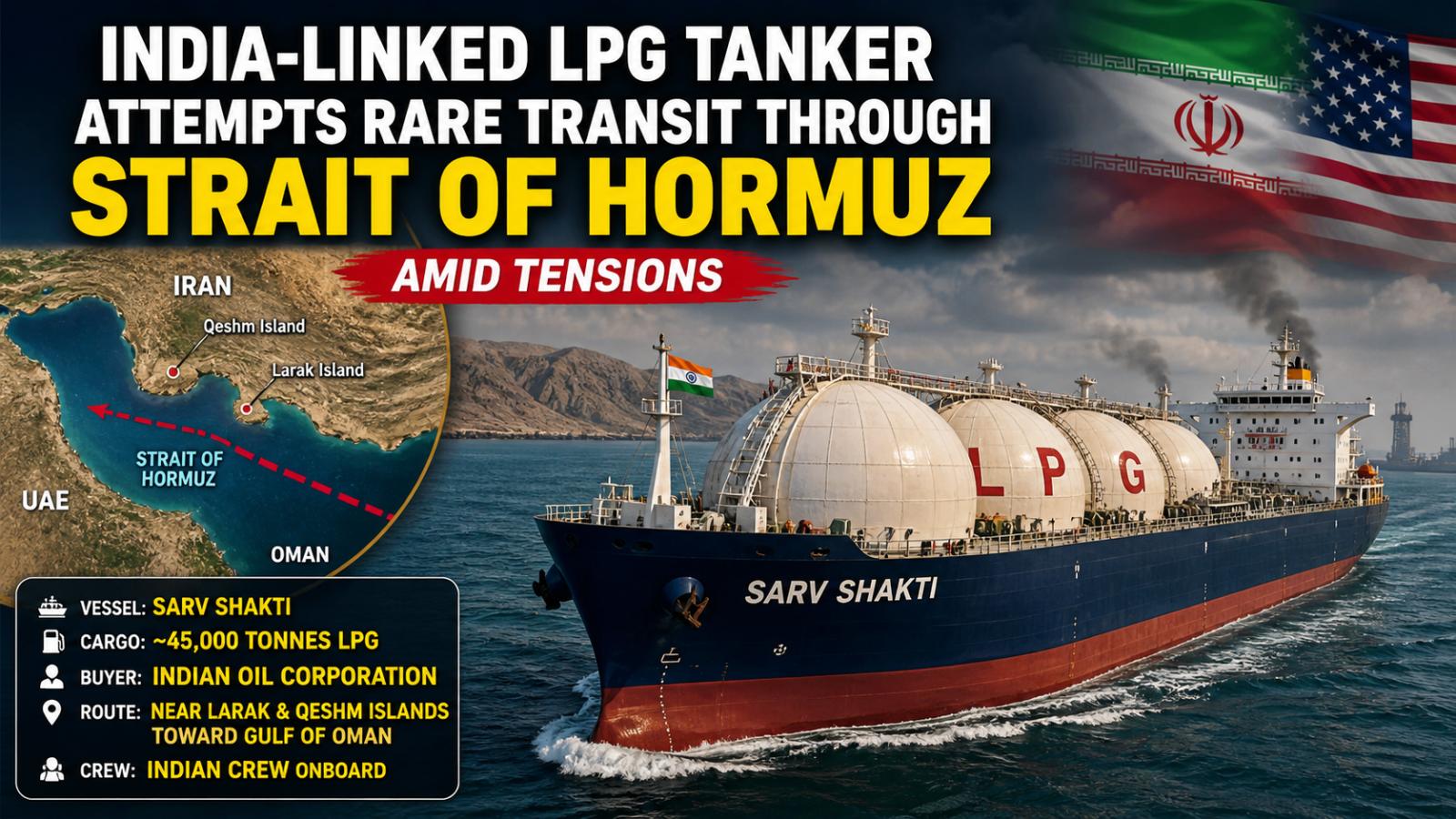
In a moment that could quietly shape global energy markets, an India-linked LPG tanker is attempting something most ships are now avoiding. The vessel, Sarv Shakti, loaded with nearly 45,000 tonnes of liquefied petroleum gas, is moving toward the tense waters of the Strait of Hormuz — a route that has suddenly become one of the world’s most dangerous maritime
India’s High-Risk Energy Move: LPG Tanker Braces for Dangerous Strait of Hormuz Crossing
In a moment that could quietly shape global energy markets, an India-linked LPG tanker is attempting something most ships are now avoiding. The vessel, Sarv Shakti, loaded with nearly 45,000 tonnes of liquefied petroleum gas, is moving toward the tense waters of the Strait of Hormuz — a route that has suddenly become one of the world’s most dangerous maritime
Trump's Tariffs Spark Global "Boycott USA" Movement, Impacting Trade and Businesses
The "Boycott USA" movement is gaining momentum globally in response to Donald Trump's tariffs imposed on Canada, Mexico, and China, which have ignited trade wars and fueled resentment towards American goods. The backlash, which has been rapidly spreading across social media platforms, reflects growing dissatisfaction with Trump's economic policies and international relations. In the past week alone, Google searches for “Boycott USA” have surged, with European cou
Trump's Tariffs Spark Global "Boycott USA" Movement, Impacting Trade and Businesses
The "Boycott USA" movement is gaining momentum globally in response to Donald Trump's tariffs imposed on Canada, Mexico, and China, which have ignited trade wars and fueled resentment towards American goods. The backlash, which has been rapidly spreading across social media platforms, reflects growing dissatisfaction with Trump's economic policies and international relations. In the past week alone, Google searches for “Boycott USA” have surged, with European cou
India’s Manufacturing Hit by China’s Export Restrictions Amid US-China Tensions
Impact of China’s Export Restrictions on Indian Manufacturing: India’s manufacturing industry is facing significant disruptions due to China’s export restrictions, which are part of the ongoing trade tensions between the United States and China. These curbs primarily affect industries in India that rely on raw materials, machinery, and components from China, such as the solar po
India’s Manufacturing Hit by China’s Export Restrictions Amid US-China Tensions
Impact of China’s Export Restrictions on Indian Manufacturing: India’s manufacturing industry is facing significant disruptions due to China’s export restrictions, which are part of the ongoing trade tensions between the United States and China. These curbs primarily affect industries in India that rely on raw materials, machinery, and components from China, such as the solar po