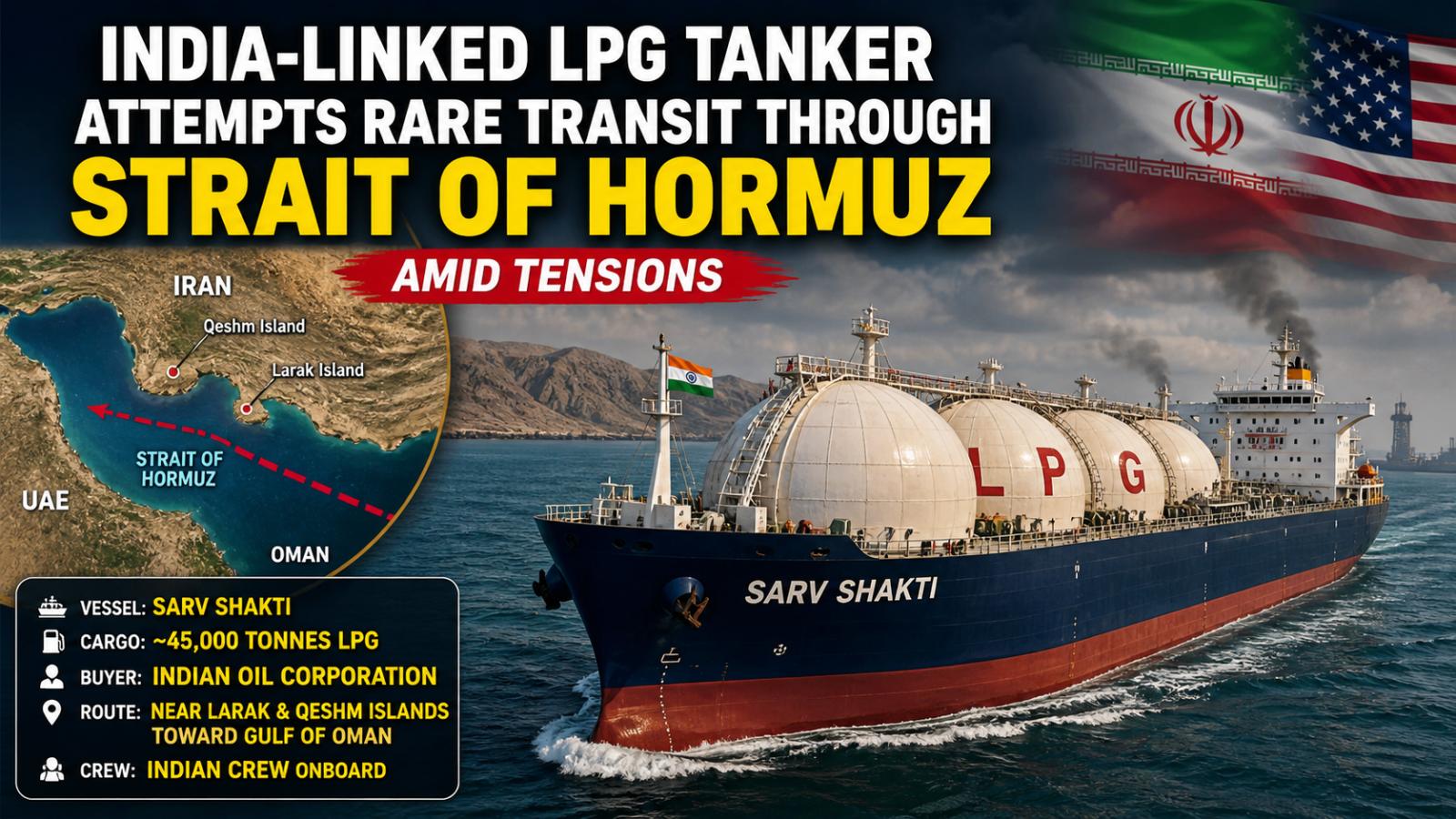
In a moment that could quietly shape global energy markets, an India-linked LPG tanker is attempting something most ships are now avoiding.
The vessel, Sarv Shakti, loaded with nearly 45,000 tonnes of liquefied petroleum gas, is moving toward the tense waters of the Strait of Hormuz — a route that has suddenly become one of the world’s most dangerous maritime corridors. And the timing couldn’t be more critical.
A Silent Crisis Unfolding at Sea
Over the past few days, traffic through the Strait has slowed to a trickle. Tensions between Iran and the United States have disrupted normal shipping patterns, forcing many tankers to reroute or pause operations entirely. Yet Sarv Shakti is pushing forward.
Tracking data shows the ship moving past Iran’s Larak and Qeshm islands, edging closer to open waters — a journey that typically takes just hours, but now carries far greater uncertainty.
Why This Journey Matters More Than It Seems
This isn’t just another cargo shipment. It’s a test.
- Can ships still safely pass through one of the world’s most critical oil routes?
- Will energy supply chains hold if tensions escalate further?
- And most importantly — what does this mean for India?
India’s Energy Lifeline Under Pressure
India depends heavily on imported fuel. As one of the world’s largest energy consumers, even small disruptions can ripple quickly:
- LPG supply tightening
- Price fluctuations
- Increased dependence on alternate routes
Shipping records suggest the cargo is linked to Indian Oil Corporation, though there’s been no official confirmation yet. Interestingly, the vessel is broadcasting that it has an Indian crew onboard — a subtle but strategic signal often used in high-risk zones.
The Strait That Powers the World
The Strait of Hormuz isn’t just any route. Nearly one-fifth of the world’s oil supply flows through this narrow stretch of water. When something goes wrong here, the effects are felt everywhere — from fuel stations in India to markets across the globe. Right now, that risk is very real.
What Happens Next Could Change Everything
If Sarv Shakti successfully completes its journey, it may signal that cautious movement through the Strait is still possible. But if disruptions deepen? The consequences could be far more serious:
- Rising global fuel prices
- Supply chain instability
- Increased geopolitical pressure
India has already begun preparing — boosting domestic production and exploring alternative sourcing strategies, as previously indicated by Oil Minister Hardeep Singh Puri.
A Journey the World Is Watching
For now, all eyes are on a single ship. A slow-moving tanker in uncertain waters — carrying not just fuel, but the weight of a much larger question:
How fragile is the world’s energy lifeline?