









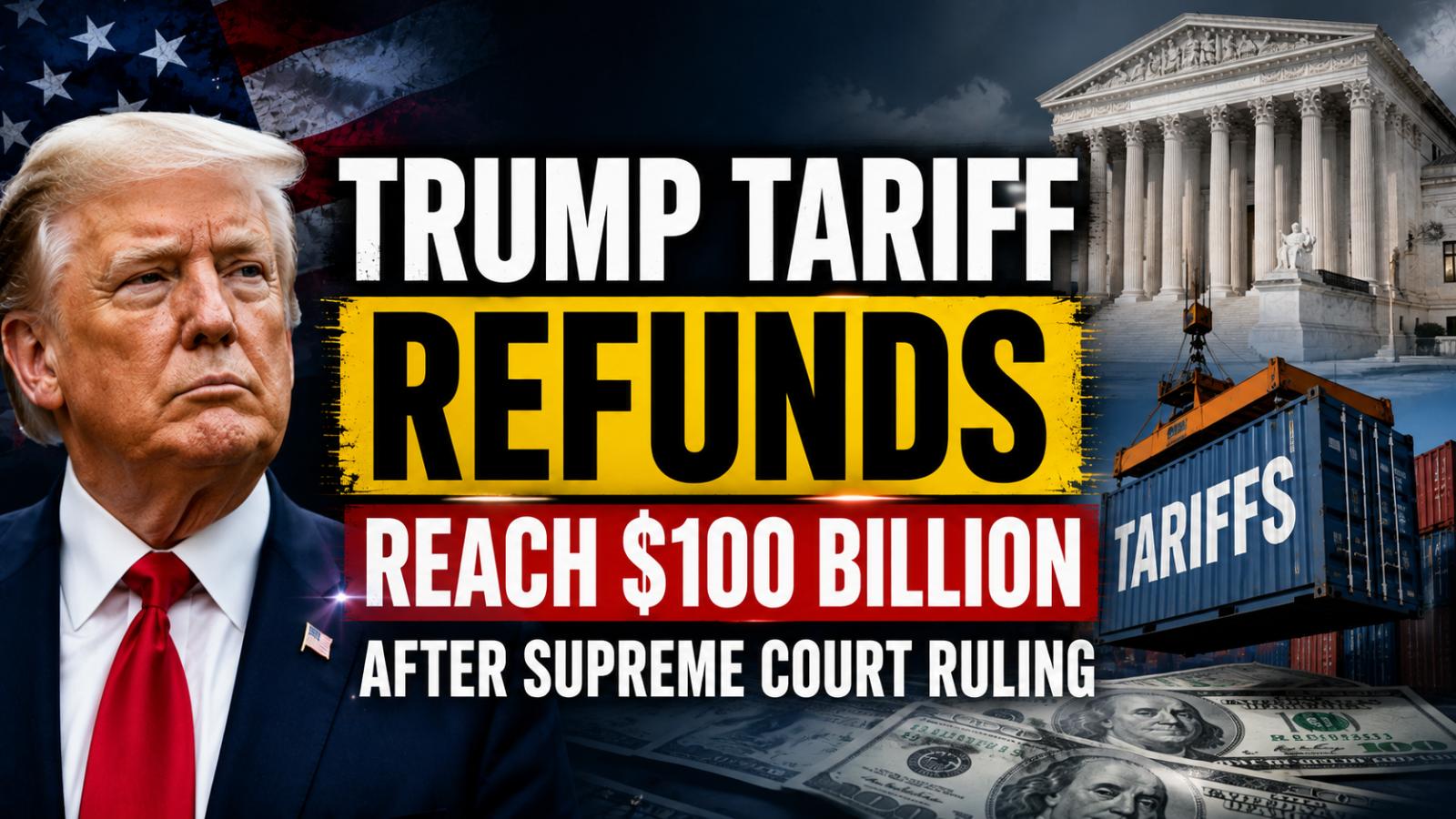
Trump Tariff Refunds Reach $100 Billion After Court Ruling
Trump tariff refunds have reached about $100 billion after the Supreme Court rejected the president’s use of emergency powers to impose sweeping import duties. The repayments are helping importers recover IEEPA charges while opening a new legal battle over replacement tariffs. Trump Tariff Refunds Reach $100 Billion The Trump administration has processed approximately $100 billion in refunds for importers that paid tariffs imposed unde
Trump Tariff Refunds Reach $100 Billion After Court Ruling
Trump tariff refunds have reached about $100 billion after the Supreme Court rejected the president’s use of emergency powers to impose sweeping import duties. The repayments are helping importers recover IEEPA charges while opening a new legal battle over replacement tariffs. Trump Tariff Refunds Reach $100 Billion The Trump administration has processed approximately $100 billion in refunds for importers that paid tariffs imposed unde
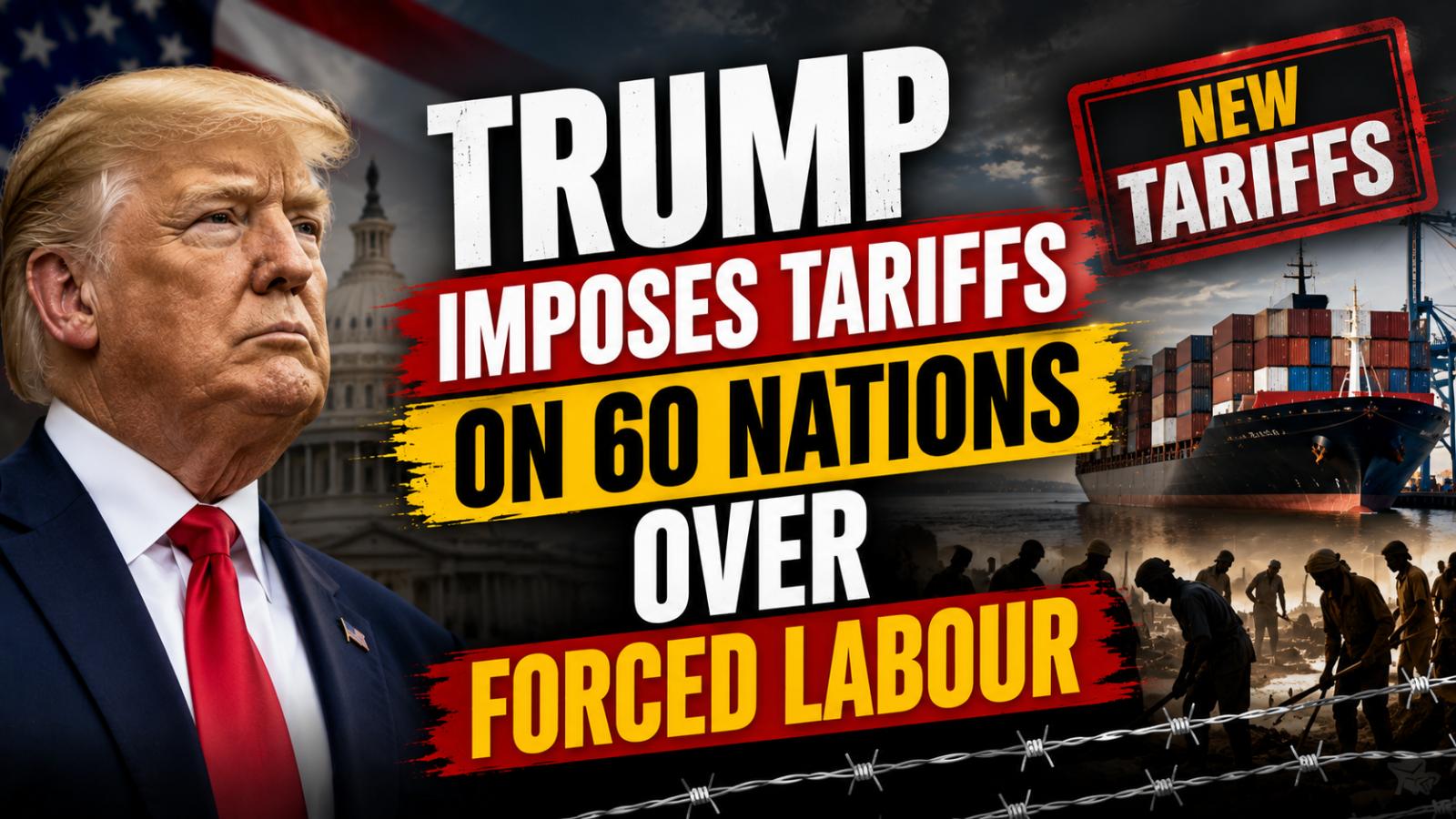
Trump Imposes Tariffs on 60 Nations Over Forced Labour
Trump imposes tariffs on 60 nations over forced labour as the administration launches a new trade initiative targeting countries accused of failing to block imports made with forced labour. The move follows investigations under Section 301 of the Trade Act and marks the latest shift in US trade policy after the Supreme Court struck down the previous tariff programme. US forced labour tariff policy
Trump Imposes Tariffs on 60 Nations Over Forced Labour
Trump imposes tariffs on 60 nations over forced labour as the administration launches a new trade initiative targeting countries accused of failing to block imports made with forced labour. The move follows investigations under Section 301 of the Trade Act and marks the latest shift in US trade policy after the Supreme Court struck down the previous tariff programme. US forced labour tariff policy
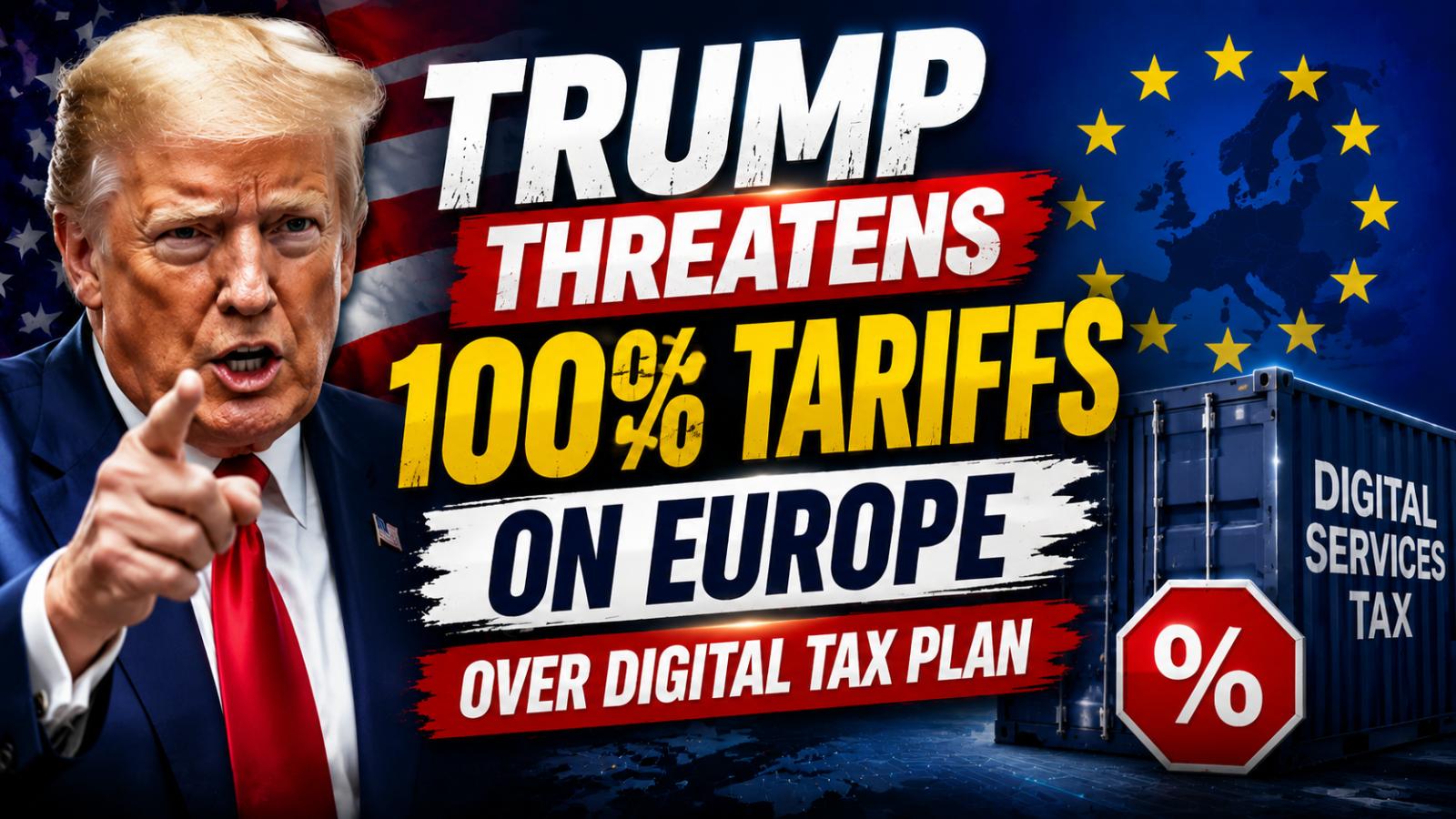
US–Europe trade tensions rise as Trump targets digital services taxes
US–Europe tensions escalate over digital taxation dispute US President Donald Trump has renewed tariff threats against European countries over proposed Digital Services Taxes targeting large technology companies. In a statement posted on his social media platform, he warned that nations introducing such taxes could face tariffs of up to 100 percent on goods exported
US–Europe trade tensions rise as Trump targets digital services taxes
US–Europe tensions escalate over digital taxation dispute US President Donald Trump has renewed tariff threats against European countries over proposed Digital Services Taxes targeting large technology companies. In a statement posted on his social media platform, he warned that nations introducing such taxes could face tariffs of up to 100 percent on goods exported
US signals India trade agreement close after key talks
India and the United States are edging closer to a structured trade agreement after fresh negotiations indicated reduced gaps on several contentious issues. US officials described the discussions as the most constructive phase so far, suggesting that a framework deal is now within reach, even though final clearance is still pending. The talks are part of a broader effort to establish a long-term Bilateral Trade Agreement aimed at improving market access, easing tariff friction, and stabilizing supply chain cooperation between the two economies. Tariff reduction and market access remain central issues At the core of the negotiations are tariff structures and access to each other’s markets. The United States is pushing for wider entry for industrial and agricultural goods, while India is focused on protecting sensitive domestic sectors while expanding export opportunities in technology, textiles, and pharmaceuticals. Both sides are trying to balance domestic political pressures with the need to expand bilateral trade volumes, which currently remain below their long-term potential despite strong economic ties. Digital trade and pharmaceutical rules under review A significant portion of the discussion is now centered on digital trade regulations and pharmaceutical standards. The US is seeking clearer digital data flow rules and stronger intellectual property protections, while India is prioritizing flexibility for its growing digital economy and affordable healthcare exports. Pharmaceutical trade remains a key pillar, with India seeking smoother regulatory pathways for generic drug exports, while the US is focusing on compliance and quality standard alignment. Strategic economic alignment driving urgency The urgency behind the negotiations is being shaped by global supply chain realignment and geopolitical competition. Both countries are increasingly aligning their trade policies within the Indo-Pacific framework, with an emphasis on reducing dependency on concentrated manufacturing hubs. India is positioning itself as an alternative global manufacturing base, while the US is looking to diversify sourcing and strengthen resilient supply networks. Next phase depends on unresolved policy gaps Despite visible progress, the agreement is not finalized. Several policy differences still need resolution, particularly around tariff ceilings, digital governance, and sector-specific protections. Officials from both sides are expected to continue technical-level discussions before moving toward a formalized trade framework. A final agreement timeline has not been confirmed, but momentum suggests continued acceleration in the coming months.
US signals India trade agreement close after key talks
India and the United States are edging closer to a structured trade agreement after fresh negotiations indicated reduced gaps on several contentious issues. US officials described the discussions as the most constructive phase so far, suggesting that a framework deal is now within reach, even though final clearance is still pending. The talks are part of a broader effort to establish a long-term Bilateral Trade Agreement aimed at improving market access, easing tariff friction, and stabilizing supply chain cooperation between the two economies. Tariff reduction and market access remain central issues At the core of the negotiations are tariff structures and access to each other’s markets. The United States is pushing for wider entry for industrial and agricultural goods, while India is focused on protecting sensitive domestic sectors while expanding export opportunities in technology, textiles, and pharmaceuticals. Both sides are trying to balance domestic political pressures with the need to expand bilateral trade volumes, which currently remain below their long-term potential despite strong economic ties. Digital trade and pharmaceutical rules under review A significant portion of the discussion is now centered on digital trade regulations and pharmaceutical standards. The US is seeking clearer digital data flow rules and stronger intellectual property protections, while India is prioritizing flexibility for its growing digital economy and affordable healthcare exports. Pharmaceutical trade remains a key pillar, with India seeking smoother regulatory pathways for generic drug exports, while the US is focusing on compliance and quality standard alignment. Strategic economic alignment driving urgency The urgency behind the negotiations is being shaped by global supply chain realignment and geopolitical competition. Both countries are increasingly aligning their trade policies within the Indo-Pacific framework, with an emphasis on reducing dependency on concentrated manufacturing hubs. India is positioning itself as an alternative global manufacturing base, while the US is looking to diversify sourcing and strengthen resilient supply networks. Next phase depends on unresolved policy gaps Despite visible progress, the agreement is not finalized. Several policy differences still need resolution, particularly around tariff ceilings, digital governance, and sector-specific protections. Officials from both sides are expected to continue technical-level discussions before moving toward a formalized trade framework. A final agreement timeline has not been confirmed, but momentum suggests continued acceleration in the coming months.
US Tariffs Expected In Mexico Trade Talks
US Pushes Tariffs Into Mexico Trade Talks The United States expects tariffs to be part of trade negotiations with Mexico this week as Washington prepares for talks tied to the future of the U.S.-Mexico-Canada Agreement. U.S. Trade Representative Jamieson Greer said President Donald Trump remains concerned about the trade deficit with Mexico and indicated that tariffs are likely to remain a tool in the administration’s broader trade strategy, even with close regional partners. Rules Of Origin Face Fresh Scrutiny Greer said officials are expected to discuss changes to USMCA rules of origin, including requirements that could increase the share of American-made content in goods produced across North America. The issue is especially important for manufacturing and supply chains, as the United States seeks to reduce dependence on Asia and bring more production closer to home. Greer said Mexico has benefited from American efforts to diversify away from China, but Washington wants a more balanced distribution of production. Mexico Talks Seen As Productive The United States views Mexico as a major part of its regional supply chain strategy because it competes with Asian economies for access to the US market. Greer said the administration wants supply chains sourced from the Western Hemisphere wherever possible, pointing to pandemic-era disruptions that limited access to goods from Asia. The goal, he said, is to strengthen North American manufacturing while reducing the deficit with Mexico. Canada Negotiations Look More Difficult Trade talks with Canada appear more complicated. Greer said the United States has significant trade challenges with Canada and noted that Ottawa’s response to tariffs has differed from that of many other partners. Canada has argued that USMCA remains a strong agreement and does not require major renegotiation. The disagreement sets up a difficult review process as Washington seeks tariff-related changes while Canada pushes to preserve the existing framework.
US Tariffs Expected In Mexico Trade Talks
US Pushes Tariffs Into Mexico Trade Talks The United States expects tariffs to be part of trade negotiations with Mexico this week as Washington prepares for talks tied to the future of the U.S.-Mexico-Canada Agreement. U.S. Trade Representative Jamieson Greer said President Donald Trump remains concerned about the trade deficit with Mexico and indicated that tariffs are likely to remain a tool in the administration’s broader trade strategy, even with close regional partners. Rules Of Origin Face Fresh Scrutiny Greer said officials are expected to discuss changes to USMCA rules of origin, including requirements that could increase the share of American-made content in goods produced across North America. The issue is especially important for manufacturing and supply chains, as the United States seeks to reduce dependence on Asia and bring more production closer to home. Greer said Mexico has benefited from American efforts to diversify away from China, but Washington wants a more balanced distribution of production. Mexico Talks Seen As Productive The United States views Mexico as a major part of its regional supply chain strategy because it competes with Asian economies for access to the US market. Greer said the administration wants supply chains sourced from the Western Hemisphere wherever possible, pointing to pandemic-era disruptions that limited access to goods from Asia. The goal, he said, is to strengthen North American manufacturing while reducing the deficit with Mexico. Canada Negotiations Look More Difficult Trade talks with Canada appear more complicated. Greer said the United States has significant trade challenges with Canada and noted that Ottawa’s response to tariffs has differed from that of many other partners. Canada has argued that USMCA remains a strong agreement and does not require major renegotiation. The disagreement sets up a difficult review process as Washington seeks tariff-related changes while Canada pushes to preserve the existing framework.
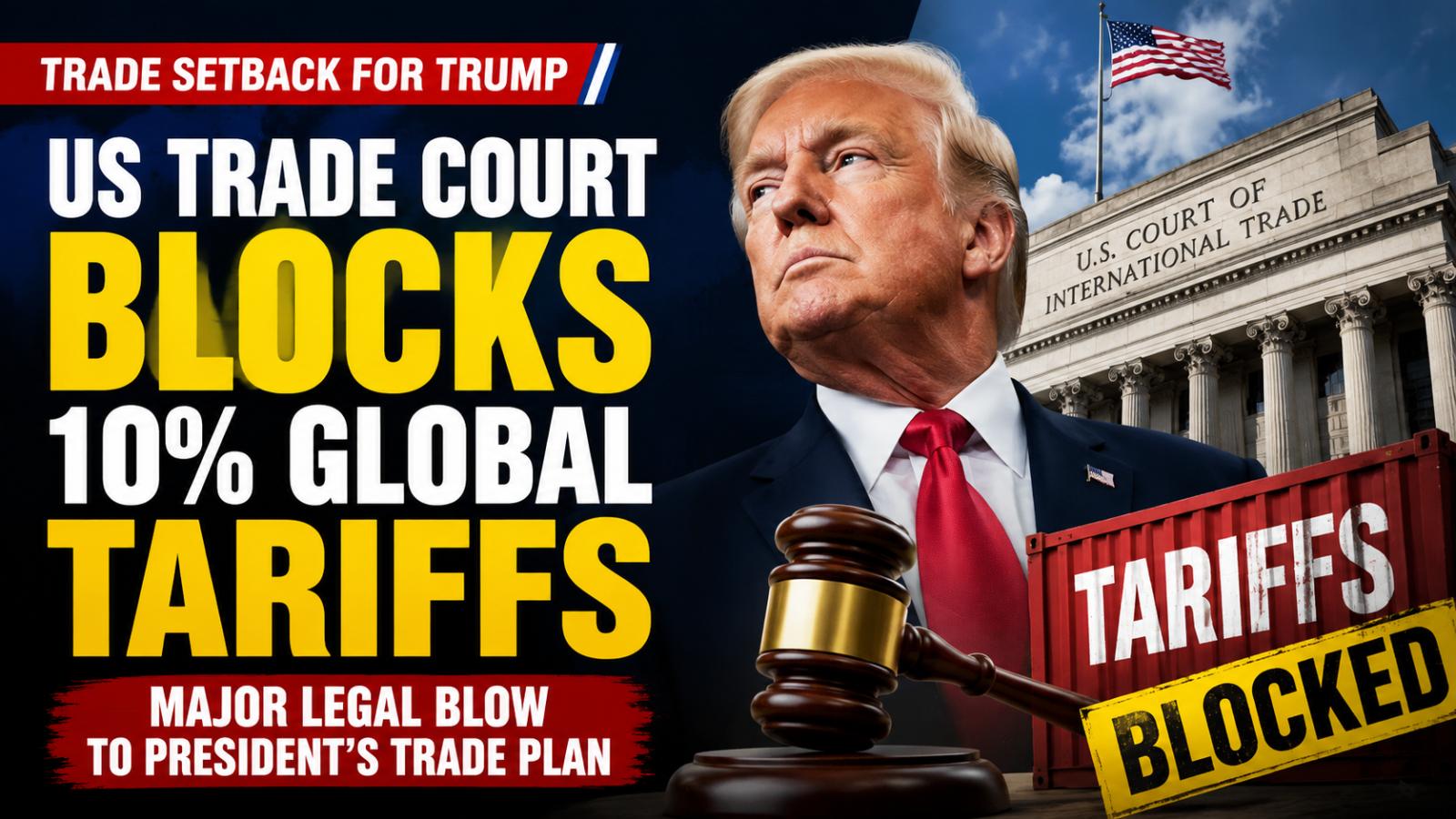
Trump’s 10% Global Tariffs Face Legal Setback, Court Orders Refunds
The Trump administration had introduced the 10% tariff in February, following a Supreme Court decision that struck down many of his earlier tariffs. The administration argued that the new measure was necessary to address balance-of-payments deficits, citing Section 122 of the Trade Act of 1974. However, the court found that this legal justification was not applicable to the current situation. The U.S. trade court's ruling has implications for the administrat
Trump’s 10% Global Tariffs Face Legal Setback, Court Orders Refunds
The Trump administration had introduced the 10% tariff in February, following a Supreme Court decision that struck down many of his earlier tariffs. The administration argued that the new measure was necessary to address balance-of-payments deficits, citing Section 122 of the Trade Act of 1974. However, the court found that this legal justification was not applicable to the current situation. The U.S. trade court's ruling has implications for the administrat
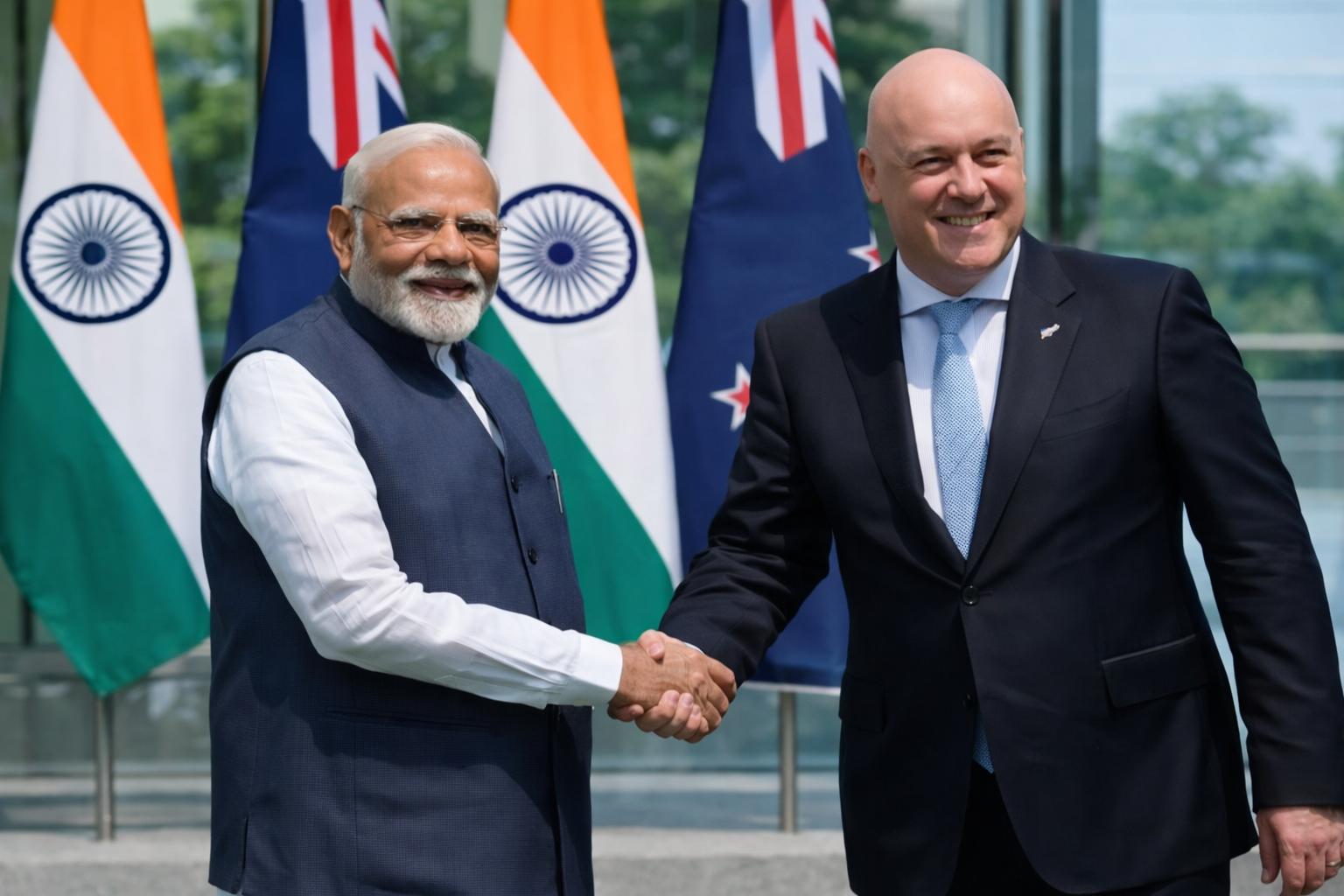
India, New Zealand to sign free trade agreement on April 24
India and New Zealand are expected to sign a Free Trade Agreement (FTA) on Thursday, April 24, 2026, in India, marking a significant step toward strengthening bilateral trade and economic cooperation. The agreement, which follows the conclusion of negotiations announced on Sunday, December 22, 2025, is expected to provide tariff-free access for Indian exporters to the New Zealand market while attracting an estimated $20 billion in investment over the next 15 years. According to offi
India, New Zealand to sign free trade agreement on April 24
India and New Zealand are expected to sign a Free Trade Agreement (FTA) on Thursday, April 24, 2026, in India, marking a significant step toward strengthening bilateral trade and economic cooperation. The agreement, which follows the conclusion of negotiations announced on Sunday, December 22, 2025, is expected to provide tariff-free access for Indian exporters to the New Zealand market while attracting an estimated $20 billion in investment over the next 15 years. According to offi
India allows Chinese investment in electronics and solar sectors under revised FDI rules
India has approved changes to its foreign direct investment policy to allow Chinese companies to invest in selected sectors, marking a cautious step toward improving economic ties between the two countries after years of strained relations. The decision was cleared by the Union Cabinet led by Prime Minister Narendra Modi and is aimed at easing investment constraints faced by certain industries while strengthening domestic manufacturing capacity. Under the revised policy framework, C
India allows Chinese investment in electronics and solar sectors under revised FDI rules
India has approved changes to its foreign direct investment policy to allow Chinese companies to invest in selected sectors, marking a cautious step toward improving economic ties between the two countries after years of strained relations. The decision was cleared by the Union Cabinet led by Prime Minister Narendra Modi and is aimed at easing investment constraints faced by certain industries while strengthening domestic manufacturing capacity. Under the revised policy framework, C
Trump warns of higher tariffs as India delays Washington trade visit
United States President Donald Trump has issued a fresh warning to global trade partners, threatening significantly higher tariffs for countries he claims have taken advantage of the American economy for years. The remarks come amid heightened uncertainty following a recent Supreme Court ruling that has reshaped the administration’s tariff authority and complicated ongoing trade negotiations. In a post on Truth Social, Trump cautioned that any nation attempting to “play games” in the w
Trump warns of higher tariffs as India delays Washington trade visit
United States President Donald Trump has issued a fresh warning to global trade partners, threatening significantly higher tariffs for countries he claims have taken advantage of the American economy for years. The remarks come amid heightened uncertainty following a recent Supreme Court ruling that has reshaped the administration’s tariff authority and complicated ongoing trade negotiations. In a post on Truth Social, Trump cautioned that any nation attempting to “play games” in the w
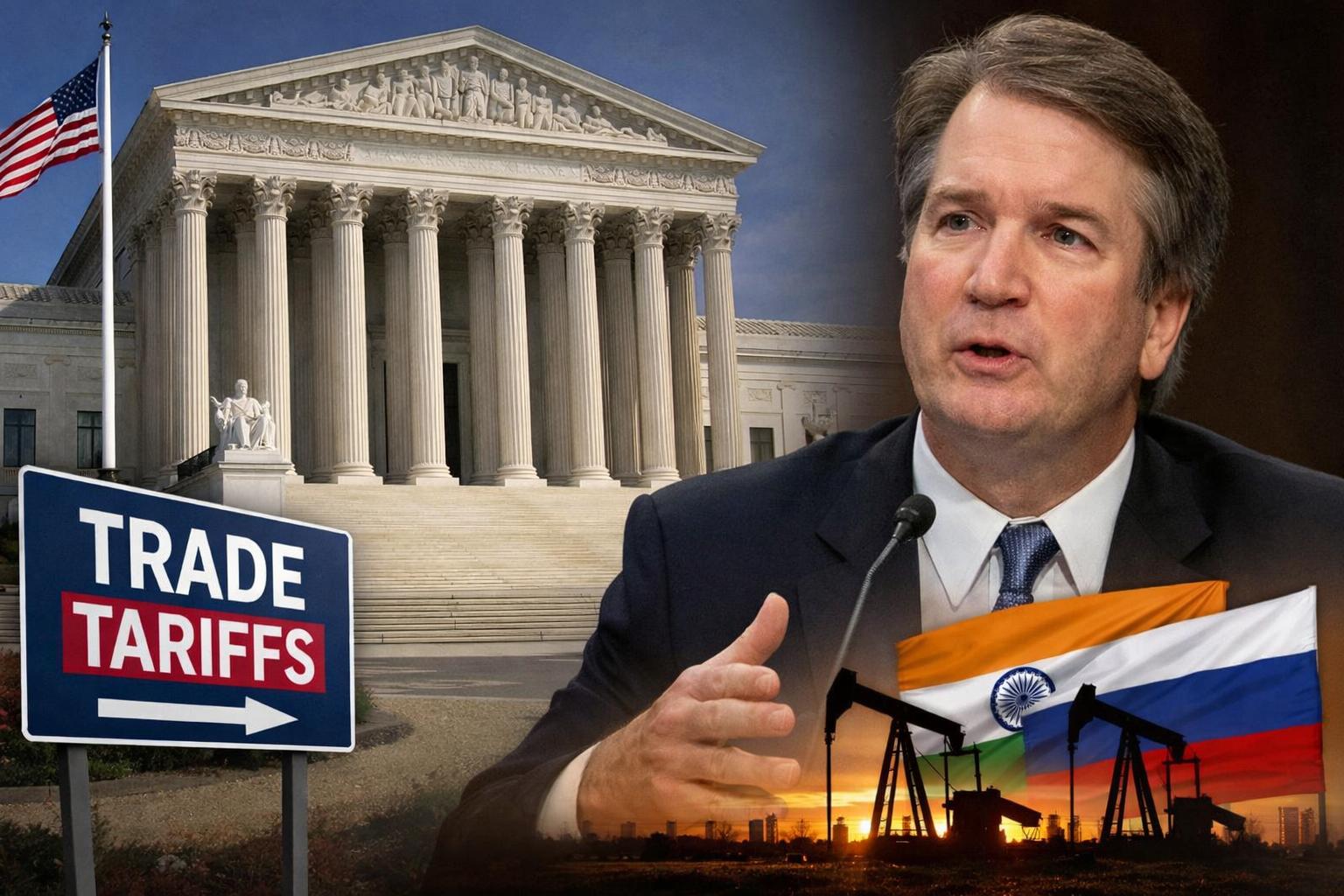
Top Court Limits Trump Tariff Powers Amid India-Russia Oil Dispute
The United States Supreme Court on Friday struck down a series of broad tariffs imposed by President Donald Trump, ruling that the administration had exceeded its authority under federal law. In a closely watched 6–3 decision, the court determined that the International Emergency Economic Powers Act does not authorize the president to unilaterally impose sweeping duties on foreign imports, a finding that could have significant implications for future trade policy and executive power. The ruling addressed the legal limits of presidential authority under the IEEPA, a statute historically used to regulate economic activity during national emergencies. Writing for the majority, the court concluded that the law does not grant the executive branch the expansive tariff powers claimed by the administration. The decision effectively invalidates the contested measures and reinforces congressional oversight over major trade actions. In his dissent, Justice Brett Kavanaugh pointed to the administration’s use of tariffs as a tool of foreign policy leverage, including duties imposed on India over its purchases of Russian oil. He argued that the tariffs were part of sensitive international negotiations and should be viewed within the broader context of the president’s conduct of foreign affairs. Kavanaugh noted that the government had maintained the tariffs helped secure trade concessions from major partners such as China, the United Kingdom and Japan. According to the administration’s position, the measures were intended to open foreign markets to American businesses and support trade agreements valued in the trillions of dollars. The dissent specifically referenced the August 2025 decision to impose a 25 percent tariff on India for what the administration described as direct or indirect imports of Russian Federation oil. At the time, the White House framed the move as part of broader efforts tied to geopolitical negotiations and energy security concerns. The tariffs included a reciprocal component initially set at 25 percent and later reduced to 18 percent. Kavanaugh further observed that the administration subsequently eased the India-specific penalties in February 2026 after the government reported that New Delhi had committed to halting purchases of Russian oil and to increasing imports of American energy products. He argued that such developments demonstrated the traditional diplomatic use of tariffs as leverage in complex international negotiations. Despite these arguments, the majority held that statutory limits must guide the exercise of executive power, even in matters touching on foreign affairs and national security. The court emphasized that significant economic measures with wide domestic consequences require clear authorization from Congress. The decision marks a notable judicial check on presidential trade authority and is likely to influence how future administrations deploy tariffs in pursuit of foreign policy objectives. Legal analysts say the ruling reinforces the principle that emergency economic powers cannot be broadly interpreted to reshape global trade relationships without explicit legislative backing. While the immediate policy effects remain to be fully assessed, the judgment underscores ongoing tensions between the executive branch’s flexibility in foreign affairs and the constitutional role of Congress in regulating commerce. The case is expected to shape debates over trade strategy, energy diplomacy and the scope of presidential economic powers in the years ahead.
Top Court Limits Trump Tariff Powers Amid India-Russia Oil Dispute
The United States Supreme Court on Friday struck down a series of broad tariffs imposed by President Donald Trump, ruling that the administration had exceeded its authority under federal law. In a closely watched 6–3 decision, the court determined that the International Emergency Economic Powers Act does not authorize the president to unilaterally impose sweeping duties on foreign imports, a finding that could have significant implications for future trade policy and executive power. The ruling addressed the legal limits of presidential authority under the IEEPA, a statute historically used to regulate economic activity during national emergencies. Writing for the majority, the court concluded that the law does not grant the executive branch the expansive tariff powers claimed by the administration. The decision effectively invalidates the contested measures and reinforces congressional oversight over major trade actions. In his dissent, Justice Brett Kavanaugh pointed to the administration’s use of tariffs as a tool of foreign policy leverage, including duties imposed on India over its purchases of Russian oil. He argued that the tariffs were part of sensitive international negotiations and should be viewed within the broader context of the president’s conduct of foreign affairs. Kavanaugh noted that the government had maintained the tariffs helped secure trade concessions from major partners such as China, the United Kingdom and Japan. According to the administration’s position, the measures were intended to open foreign markets to American businesses and support trade agreements valued in the trillions of dollars. The dissent specifically referenced the August 2025 decision to impose a 25 percent tariff on India for what the administration described as direct or indirect imports of Russian Federation oil. At the time, the White House framed the move as part of broader efforts tied to geopolitical negotiations and energy security concerns. The tariffs included a reciprocal component initially set at 25 percent and later reduced to 18 percent. Kavanaugh further observed that the administration subsequently eased the India-specific penalties in February 2026 after the government reported that New Delhi had committed to halting purchases of Russian oil and to increasing imports of American energy products. He argued that such developments demonstrated the traditional diplomatic use of tariffs as leverage in complex international negotiations. Despite these arguments, the majority held that statutory limits must guide the exercise of executive power, even in matters touching on foreign affairs and national security. The court emphasized that significant economic measures with wide domestic consequences require clear authorization from Congress. The decision marks a notable judicial check on presidential trade authority and is likely to influence how future administrations deploy tariffs in pursuit of foreign policy objectives. Legal analysts say the ruling reinforces the principle that emergency economic powers cannot be broadly interpreted to reshape global trade relationships without explicit legislative backing. While the immediate policy effects remain to be fully assessed, the judgment underscores ongoing tensions between the executive branch’s flexibility in foreign affairs and the constitutional role of Congress in regulating commerce. The case is expected to shape debates over trade strategy, energy diplomacy and the scope of presidential economic powers in the years ahead.
Global reaction after Supreme Court rules Trump exceeded tariff authority
World leaders and policymakers reacted quickly on Friday after the Supreme Court of the United States ruled that President Donald Trump exceeded his legal authority by imposing sweeping global tariffs, a decision that effectively blocks a key component of his trade policy agenda. The ruling has prompted governments and market observers worldwide to evaluate the potential consequences for international trade, economic stability, and future US trade relations. Speaking at a White House breakfa
Global reaction after Supreme Court rules Trump exceeded tariff authority
World leaders and policymakers reacted quickly on Friday after the Supreme Court of the United States ruled that President Donald Trump exceeded his legal authority by imposing sweeping global tariffs, a decision that effectively blocks a key component of his trade policy agenda. The ruling has prompted governments and market observers worldwide to evaluate the potential consequences for international trade, economic stability, and future US trade relations. Speaking at a White House breakfa
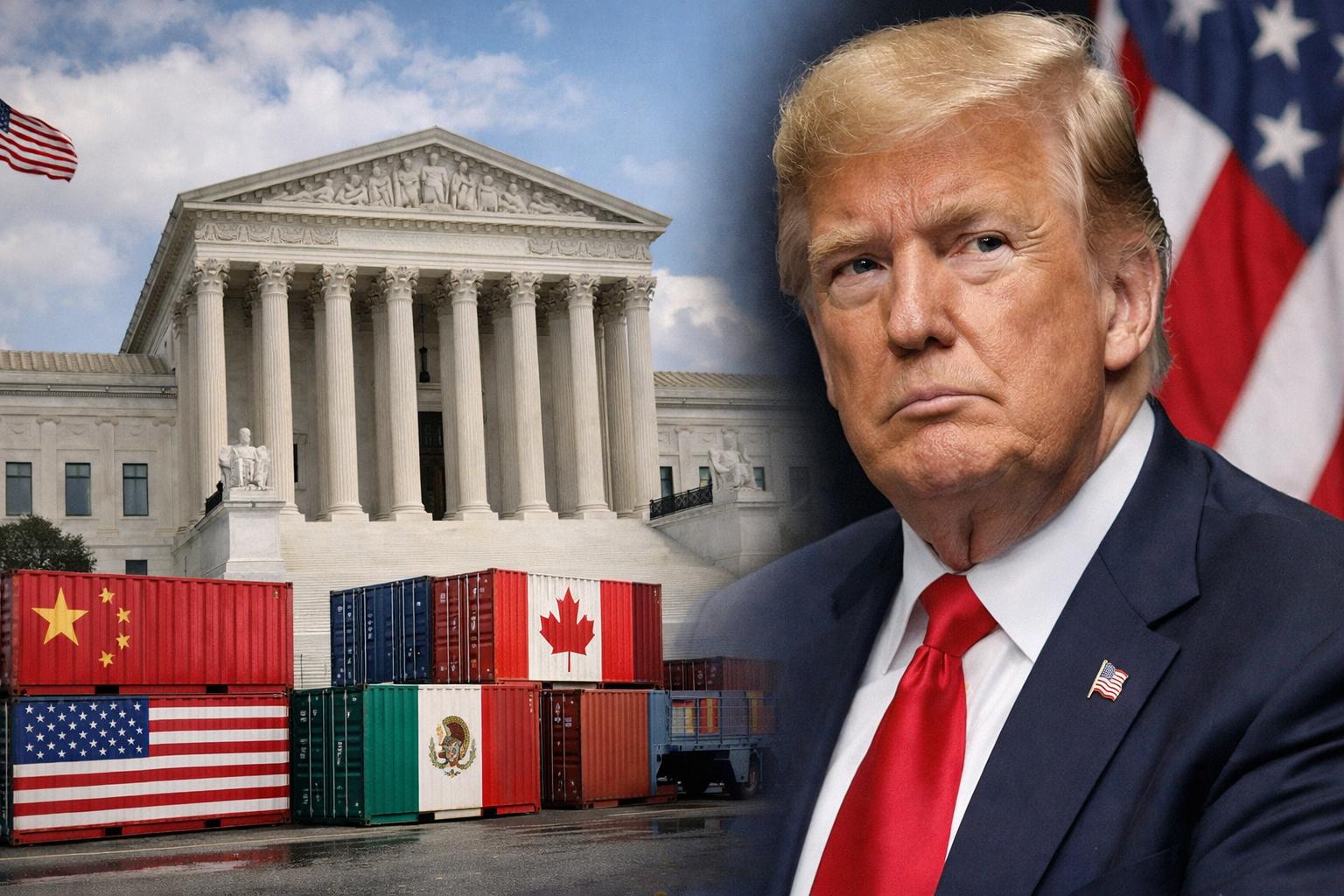
Supreme Court strikes down major portion of Trump tariff policy
The Supreme Court on Friday invalidated a significant portion of President Donald Trump’s sweeping tariff program, ruling that the law used to justify many of the import duties does not grant the president authority to impose such measures unilaterally. The decision marks a major development in the ongoing debate over presidential powers and U.S. trade policy. In a 6–3 ruling, the court’s majority concluded that the International Emergency Economic Powers Act (IEEPA), the statu
Supreme Court strikes down major portion of Trump tariff policy
The Supreme Court on Friday invalidated a significant portion of President Donald Trump’s sweeping tariff program, ruling that the law used to justify many of the import duties does not grant the president authority to impose such measures unilaterally. The decision marks a major development in the ongoing debate over presidential powers and U.S. trade policy. In a 6–3 ruling, the court’s majority concluded that the International Emergency Economic Powers Act (IEEPA), the statu
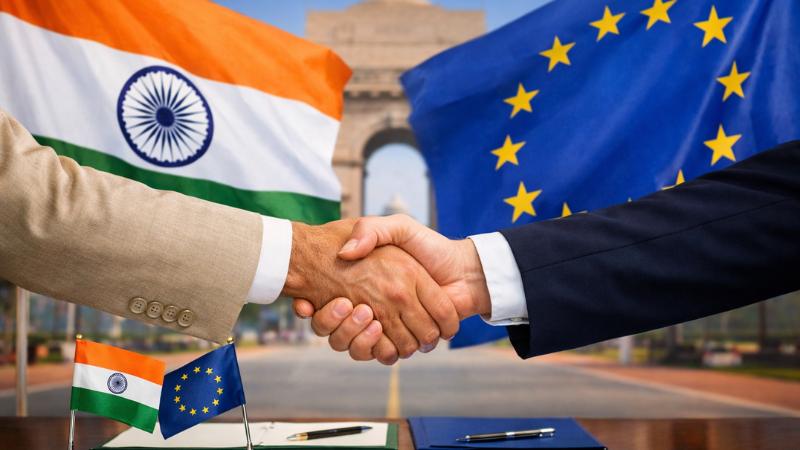
India and EU conclude free trade talks ahead of New Delhi summit
India and the European Union are set to announce the conclusion of negotiations on a long-awaited free trade agreement during a high-level summit in New Delhi on January 27. Senior leaders from both sides are expected to participate in the meeting, which will focus on trade liberalisation, security cooperation and mobility arrangements for students and professionals. The conclusion of the talks marks a significant moment in bilateral relations, reflecting renewed political momentum after years of intermittent progress. Officials involved in the process have indicated that the agreement is designed to be balanced and forward-looking, aligning with the long-term economic interests of both partners. While the pact is expected to boost trade volumes, policymakers see it as a qualitative shift in India–EU engagement, strengthening cooperation across manufacturing, services, technology and sustainable development. The timing is notable, as global trade flows continue to face uncertainty amid rising tariff barriers and geopolitical tensions. Economic experts have described the agreement as a landmark step that could reshape commercial ties between the two economies. They point to strong complementarities, with India offering a large and growing market and the European Union bringing advanced technology, investment capacity and diversified demand. The efficient exchange of goods and services under the agreement is expected to enhance supply chains and open new opportunities for businesses on both sides. From India’s perspective, the trade pact reflects a strategic effort to deepen integration with major global partners while safeguarding domestic priorities. Officials confirmed that negotiations have been completed and that the agreement is undergoing final legal review. The remaining procedural steps are expected to be completed soon, paving the way for formal signing and implementation. The announcement has drawn international attention, including criticism from some quarters in the United States. A senior US official recently expressed concern over the deal, linking it to broader disputes over energy trade and tariffs. The remarks underscored differing approaches to trade policy and highlighted how the India–EU agreement fits into a complex global economic landscape shaped by competing interests and sanctions regimes. The summit in New Delhi is also expected to mark progress beyond trade. Leaders are likely to finalise a Security and Defence Partnership aimed at enhancing strategic coordination, as well as a framework to facilitate mobility for Indian students and professionals seeking opportunities in Europe. These initiatives reflect a broader effort to strengthen people-to-people ties and cooperation in emerging areas of mutual interest. Negotiations for an India–EU free trade agreement first began in 2007 but were suspended in 2013 due to differences over ambition and market access. The process was revived in 2022, following renewed political commitment on both sides to address outstanding issues and adapt the talks to changing global conditions. The European Union remains India’s largest trading partner, accounting for a significant share of the country’s total trade in goods and services. With the conclusion of the free trade negotiations, both sides are positioning the agreement as a cornerstone of their economic relationship, one that could provide stability and growth amid an evolving global trade environment.
India and EU conclude free trade talks ahead of New Delhi summit
India and the European Union are set to announce the conclusion of negotiations on a long-awaited free trade agreement during a high-level summit in New Delhi on January 27. Senior leaders from both sides are expected to participate in the meeting, which will focus on trade liberalisation, security cooperation and mobility arrangements for students and professionals. The conclusion of the talks marks a significant moment in bilateral relations, reflecting renewed political momentum after years of intermittent progress. Officials involved in the process have indicated that the agreement is designed to be balanced and forward-looking, aligning with the long-term economic interests of both partners. While the pact is expected to boost trade volumes, policymakers see it as a qualitative shift in India–EU engagement, strengthening cooperation across manufacturing, services, technology and sustainable development. The timing is notable, as global trade flows continue to face uncertainty amid rising tariff barriers and geopolitical tensions. Economic experts have described the agreement as a landmark step that could reshape commercial ties between the two economies. They point to strong complementarities, with India offering a large and growing market and the European Union bringing advanced technology, investment capacity and diversified demand. The efficient exchange of goods and services under the agreement is expected to enhance supply chains and open new opportunities for businesses on both sides. From India’s perspective, the trade pact reflects a strategic effort to deepen integration with major global partners while safeguarding domestic priorities. Officials confirmed that negotiations have been completed and that the agreement is undergoing final legal review. The remaining procedural steps are expected to be completed soon, paving the way for formal signing and implementation. The announcement has drawn international attention, including criticism from some quarters in the United States. A senior US official recently expressed concern over the deal, linking it to broader disputes over energy trade and tariffs. The remarks underscored differing approaches to trade policy and highlighted how the India–EU agreement fits into a complex global economic landscape shaped by competing interests and sanctions regimes. The summit in New Delhi is also expected to mark progress beyond trade. Leaders are likely to finalise a Security and Defence Partnership aimed at enhancing strategic coordination, as well as a framework to facilitate mobility for Indian students and professionals seeking opportunities in Europe. These initiatives reflect a broader effort to strengthen people-to-people ties and cooperation in emerging areas of mutual interest. Negotiations for an India–EU free trade agreement first began in 2007 but were suspended in 2013 due to differences over ambition and market access. The process was revived in 2022, following renewed political commitment on both sides to address outstanding issues and adapt the talks to changing global conditions. The European Union remains India’s largest trading partner, accounting for a significant share of the country’s total trade in goods and services. With the conclusion of the free trade negotiations, both sides are positioning the agreement as a cornerstone of their economic relationship, one that could provide stability and growth amid an evolving global trade environment.
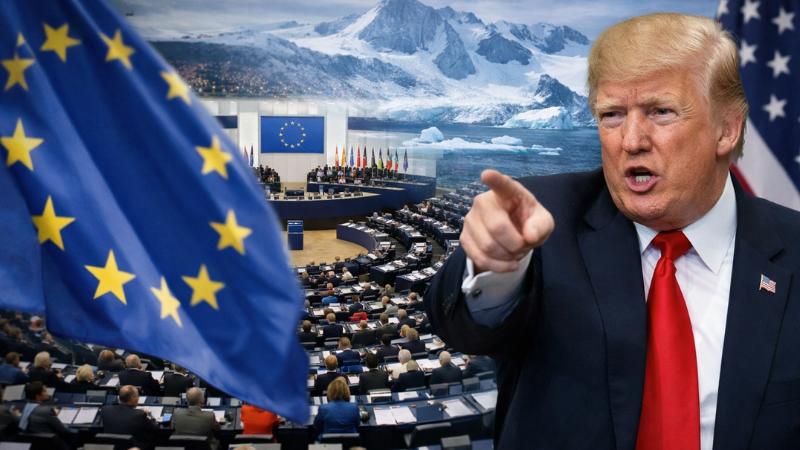
European Parliament halts EU-US trade deal talks amid Trump tariff and Greenland threats
The European Parliament has suspended its work on a proposed trade agreement between the European Union and the United States, citing escalating political pressure from US President
European Parliament halts EU-US trade deal talks amid Trump tariff and Greenland threats
The European Parliament has suspended its work on a proposed trade agreement between the European Union and the United States, citing escalating political pressure from US President
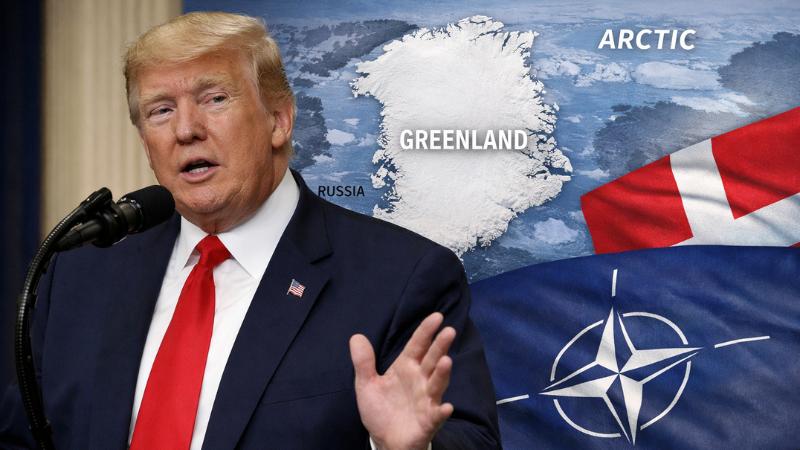
Trump warns of trade penalties tied to Greenland security stance
US President Donald Trump on Friday renewed his push for greater American control over Greenland, warning that countries opposing the idea could face economic consequences. Speaking at a White House event, Trump said he was prepared to use tariffs as leverage against nations that do not support what he described as a national security necessity for the United States. His remarks underscored a continued escalation in rhetoric surrounding the strategically important Arctic territory, which is a
Trump warns of trade penalties tied to Greenland security stance
US President Donald Trump on Friday renewed his push for greater American control over Greenland, warning that countries opposing the idea could face economic consequences. Speaking at a White House event, Trump said he was prepared to use tariffs as leverage against nations that do not support what he described as a national security necessity for the United States. His remarks underscored a continued escalation in rhetoric surrounding the strategically important Arctic territory, which is a
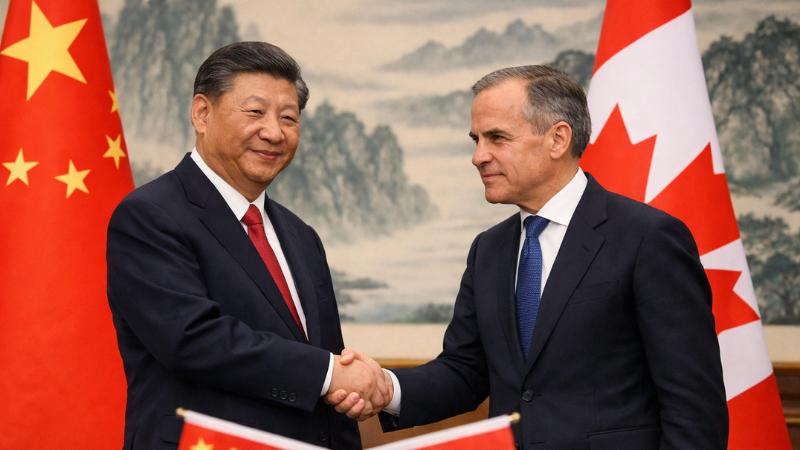
China and Canada cut tariffs and signal reset in bilateral relations after Beijing talks
China and Canada have announced a significant reduction in tariffs and signalled a broader reset in their bilateral relationship following high-level talks in Beijing, marking a notable shift after years of strained diplomatic and trade ties. The agreement was confirmed after a meeting on Friday between Chinese President Xi Jinping and Canadian Prime Minister Mark Carney, the first Canadian leader to visit China in nearly a decade. Under the deal, China is expected to reduce tariffs on Canad
China and Canada cut tariffs and signal reset in bilateral relations after Beijing talks
China and Canada have announced a significant reduction in tariffs and signalled a broader reset in their bilateral relationship following high-level talks in Beijing, marking a notable shift after years of strained diplomatic and trade ties. The agreement was confirmed after a meeting on Friday between Chinese President Xi Jinping and Canadian Prime Minister Mark Carney, the first Canadian leader to visit China in nearly a decade. Under the deal, China is expected to reduce tariffs on Canad
Supreme Court delays ruling on Trump-era tariffs, leaving markets in limbo
The Supreme Court did not issue a decision Friday on the legality of broad tariffs imposed during President Donald Trump’s administration, extending uncertainty for financial markets and trade policy observers who have been closely watching the case for its potential economic and fiscal implications. Expectations had grown that the ruling might be released before the end of the week, but the court issued only a single opinion on Friday, unrelated to tariffs or trade authority. The
Supreme Court delays ruling on Trump-era tariffs, leaving markets in limbo
The Supreme Court did not issue a decision Friday on the legality of broad tariffs imposed during President Donald Trump’s administration, extending uncertainty for financial markets and trade policy observers who have been closely watching the case for its potential economic and fiscal implications. Expectations had grown that the ruling might be released before the end of the week, but the court issued only a single opinion on Friday, unrelated to tariffs or trade authority. The
Trump’s H-1B overhaul aims to boost US skills through temporary foreign expertise
Treasury Secretary Scott Bessent has outlined the administration’s new approach to the H-1B visa programme, describing it as a targeted effort to bring in temporary foreign specialists who will train American workers rather than replace them. His remarks came during a televised interview in which he emphasised that the policy is intended to support the rebuilding of domestic manufacturing, shipbuilding capability, and semiconductor production after years of industrial decline. Bessent said the redesigned system is centred on the idea of “knowledge transfer,” where overseas experts are invited to the United States for a limited period to help restore technical capacity in critical sectors. According to him, the administration views this model as essential to equipping American workers with advanced skills that have diminished as supply chains and production moved abroad. He explained that the visa structure is meant to ensure that expertise flows into the country long enough for domestic workers to learn the required competencies before the foreign specialists return home. Addressing recurring concerns that increased reliance on foreign talent could displace American employees, Bessent maintained that the policy does not threaten domestic job opportunities. Instead, he argued that the United States currently lacks specialized talent in areas that have not been active on American soil for many years. He noted that industries such as shipbuilding and semiconductor fabrication require highly technical knowledge, which is more readily available in countries that have continued to develop those sectors. In his view, bringing in experts to train Americans is necessary for rebuilding industrial strength, not a means of outsourcing jobs. The comments followed President Donald Trump’s recent statements explaining that the country needs temporary foreign experts to accelerate the transfer of technical skills. The president said the United States does not currently have enough workers with the precision training required for advanced manufacturing, adding that it would be unrealistic to expect individuals without experience to instantly take on tasks such as missile production or microchip engineering. Both Trump and Bessent described the policy as a practical step toward reducing long-term dependence on imports by cultivating a stronger domestic workforce. Bessent also discussed broader elements of the administration’s economic agenda, including ongoing talks about a potential USD 2,000 tariff rebate for families earning less than USD 100,000 annually. He said the proposal is part of an effort to ensure that households directly benefit from trade policies designed to strengthen national competitiveness. The rebate, he added, is one component of the administration’s push to align the interests of Wall Street and Main Street, a vision he referred to as “Parallel Prosperity.” Looking ahead, the Treasury secretary predicted that 2026 could become a milestone year for the United States economy if the administration’s policy framework succeeds in restoring industrial capacity and stabilizing financial markets. He emphasized the importance of maintaining a deep and liquid Treasury market, suggesting that economic growth will depend on strong foundations that support both investment and employment. Throughout the interview, Bessent portrayed the H-1B reform as a crucial part of that broader plan, arguing that rebuilding the nation’s industrial base requires a temporary infusion of global expertise to ensure Americans can take full ownership of high-skilled jobs in the future.
Trump’s H-1B overhaul aims to boost US skills through temporary foreign expertise
Treasury Secretary Scott Bessent has outlined the administration’s new approach to the H-1B visa programme, describing it as a targeted effort to bring in temporary foreign specialists who will train American workers rather than replace them. His remarks came during a televised interview in which he emphasised that the policy is intended to support the rebuilding of domestic manufacturing, shipbuilding capability, and semiconductor production after years of industrial decline. Bessent said the redesigned system is centred on the idea of “knowledge transfer,” where overseas experts are invited to the United States for a limited period to help restore technical capacity in critical sectors. According to him, the administration views this model as essential to equipping American workers with advanced skills that have diminished as supply chains and production moved abroad. He explained that the visa structure is meant to ensure that expertise flows into the country long enough for domestic workers to learn the required competencies before the foreign specialists return home. Addressing recurring concerns that increased reliance on foreign talent could displace American employees, Bessent maintained that the policy does not threaten domestic job opportunities. Instead, he argued that the United States currently lacks specialized talent in areas that have not been active on American soil for many years. He noted that industries such as shipbuilding and semiconductor fabrication require highly technical knowledge, which is more readily available in countries that have continued to develop those sectors. In his view, bringing in experts to train Americans is necessary for rebuilding industrial strength, not a means of outsourcing jobs. The comments followed President Donald Trump’s recent statements explaining that the country needs temporary foreign experts to accelerate the transfer of technical skills. The president said the United States does not currently have enough workers with the precision training required for advanced manufacturing, adding that it would be unrealistic to expect individuals without experience to instantly take on tasks such as missile production or microchip engineering. Both Trump and Bessent described the policy as a practical step toward reducing long-term dependence on imports by cultivating a stronger domestic workforce. Bessent also discussed broader elements of the administration’s economic agenda, including ongoing talks about a potential USD 2,000 tariff rebate for families earning less than USD 100,000 annually. He said the proposal is part of an effort to ensure that households directly benefit from trade policies designed to strengthen national competitiveness. The rebate, he added, is one component of the administration’s push to align the interests of Wall Street and Main Street, a vision he referred to as “Parallel Prosperity.” Looking ahead, the Treasury secretary predicted that 2026 could become a milestone year for the United States economy if the administration’s policy framework succeeds in restoring industrial capacity and stabilizing financial markets. He emphasized the importance of maintaining a deep and liquid Treasury market, suggesting that economic growth will depend on strong foundations that support both investment and employment. Throughout the interview, Bessent portrayed the H-1B reform as a crucial part of that broader plan, arguing that rebuilding the nation’s industrial base requires a temporary infusion of global expertise to ensure Americans can take full ownership of high-skilled jobs in the future.
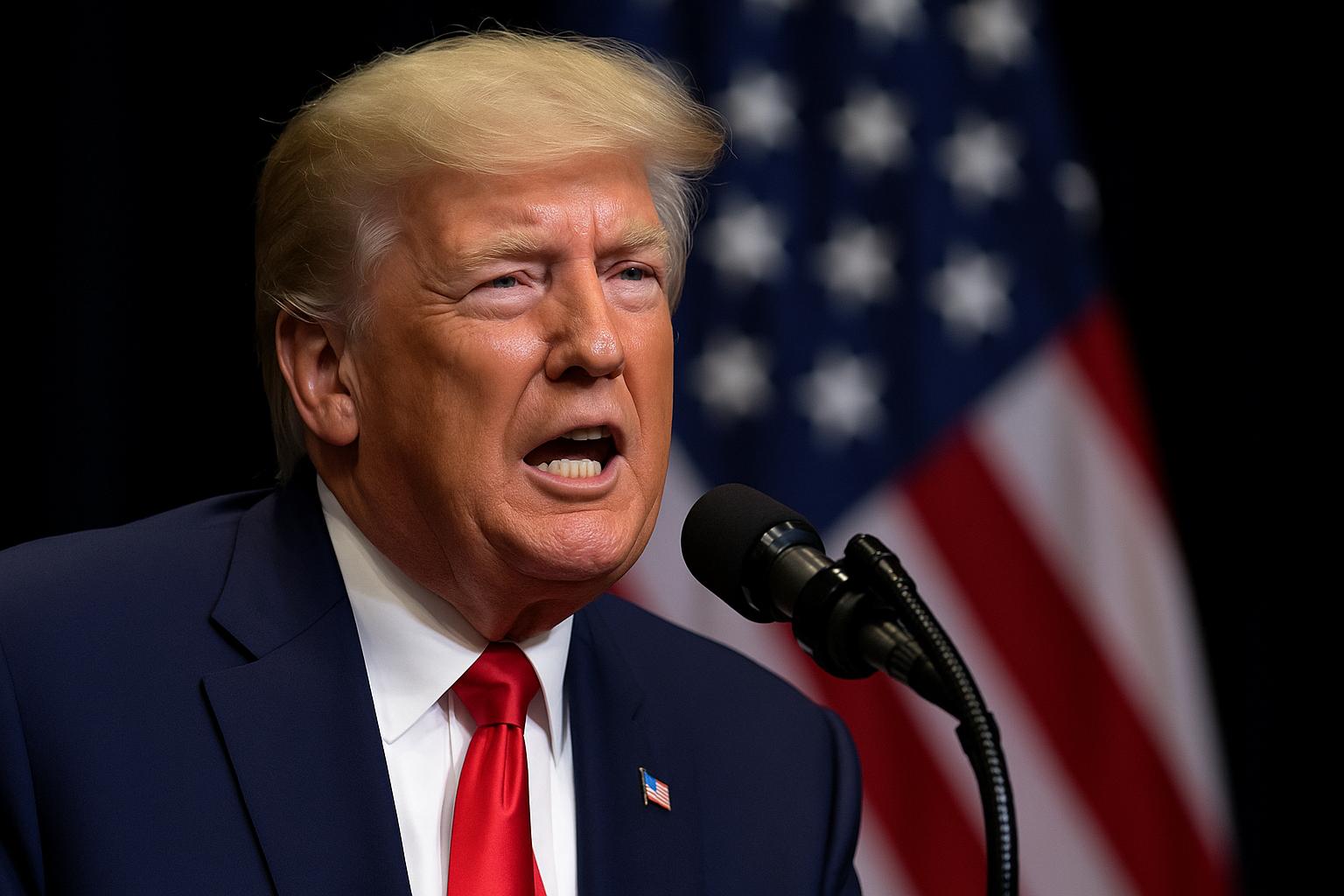
Donald Trump defends tariff policy, claims U.S. economy is thriving
United States President Donald Trump has once again defended his administration’s tariff policies, claiming that the strategy has played a major role in strengthening the U.S. economy and boosting the stock market. Since returning to office for his second term, Trump has emphasized a renewed focus on economic nationalism, arguing that countries trading with the United States must pay tariffs determined by the government to protect American interests. In his latest remarks, Trump a
Donald Trump defends tariff policy, claims U.S. economy is thriving
United States President Donald Trump has once again defended his administration’s tariff policies, claiming that the strategy has played a major role in strengthening the U.S. economy and boosting the stock market. Since returning to office for his second term, Trump has emphasized a renewed focus on economic nationalism, arguing that countries trading with the United States must pay tariffs determined by the government to protect American interests. In his latest remarks, Trump a
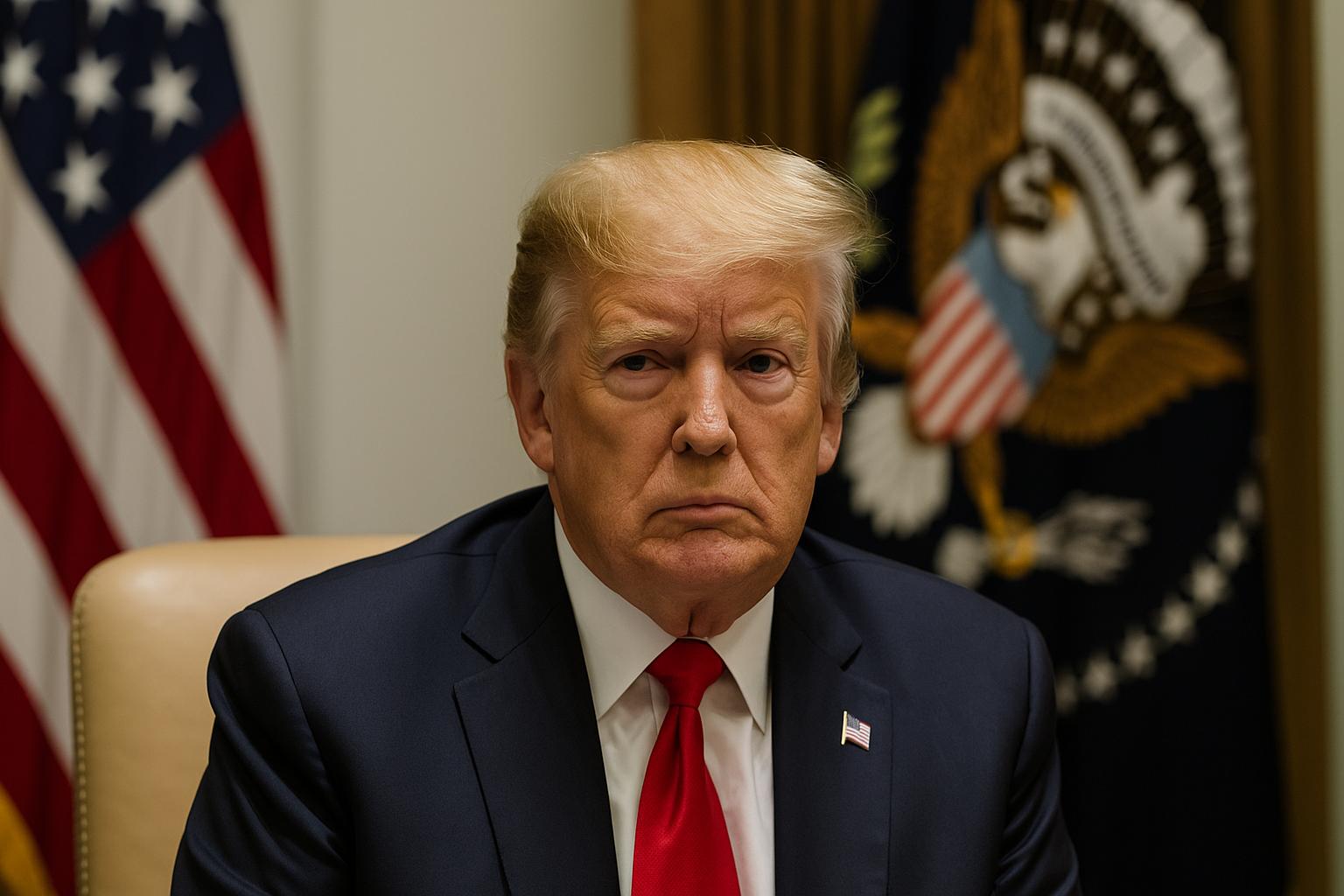
Trump calls BRICS an attack on the dollar, warns of tariffs on member nations
US President Donald Trump has reignited debate over the influence of the BRICS bloc, claiming that the group represents “an attack on the dollar” and warning that countries joining it could face tariffs from the United States. Trump made the remarks during a bilateral lunch with Argentine President Javier Milei at the White House, reiterating his stance on protecting the dominance of the US dollar in global trade. Speaking to reporters, Trump asserted that the United States woul
Trump calls BRICS an attack on the dollar, warns of tariffs on member nations
US President Donald Trump has reignited debate over the influence of the BRICS bloc, claiming that the group represents “an attack on the dollar” and warning that countries joining it could face tariffs from the United States. Trump made the remarks during a bilateral lunch with Argentine President Javier Milei at the White House, reiterating his stance on protecting the dominance of the US dollar in global trade. Speaking to reporters, Trump asserted that the United States woul










