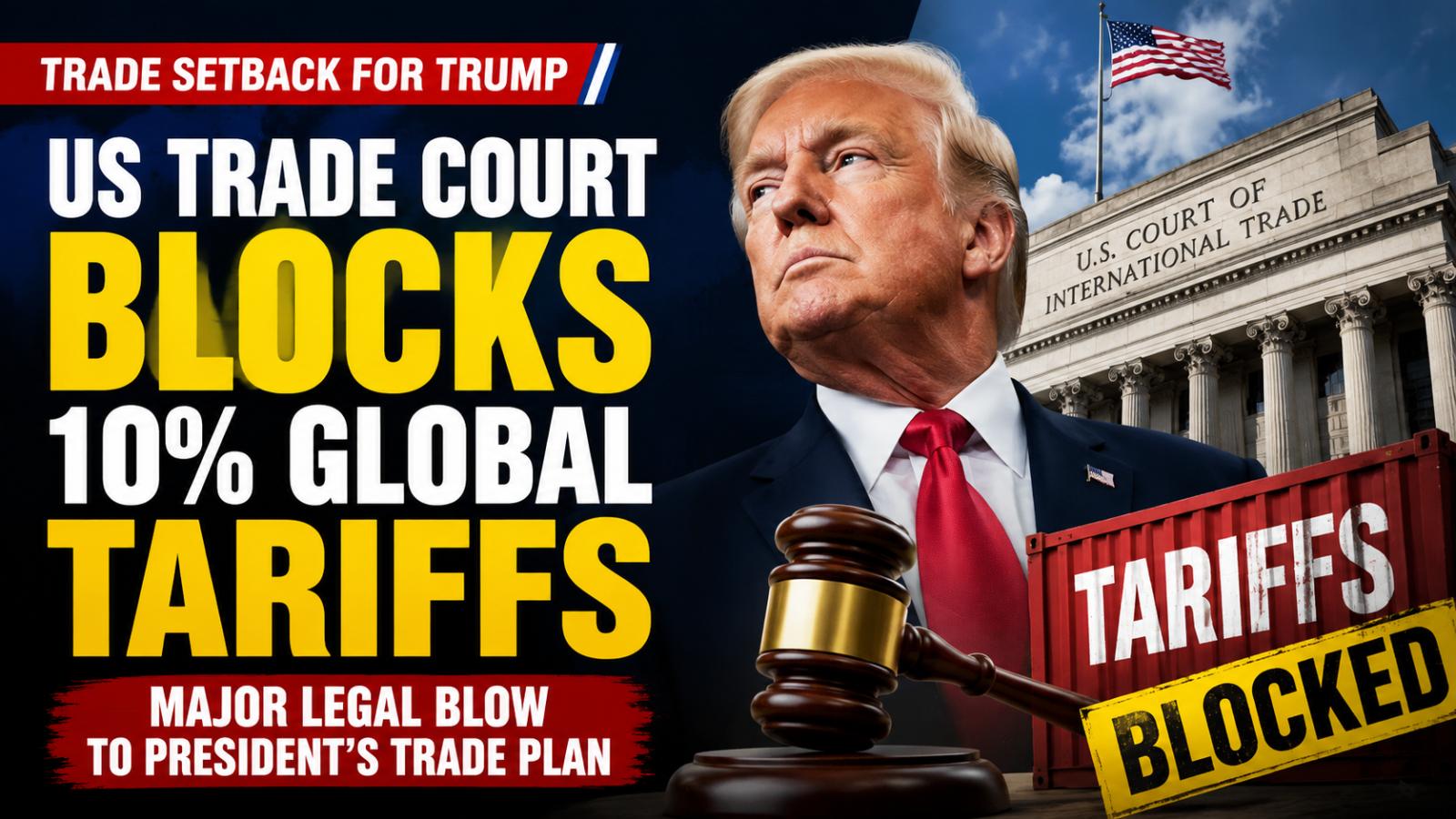
The Trump administration had introduced the 10% tariff in February, following a Supreme Court decision that struck down many of his earlier tariffs. The administration argued that the new measure was necessary to address balance-of-payments deficits, citing Section 122 of the Trade Act of 1974. However, the court found that this legal justification was not applicable to the current situation.
The U.S. trade court's ruling has implications for the administration's broader tariff strategy. The tariffs are set to remain in effect until late July unless Congress approves an extension. Meanwhile, the administration has been exploring new ways to implement Trump's trade policy, including launching investigations into various trading partners over concerns related to forced labor and industrial overcapacity. These investigations could eventually lead to more tariffs or other trade measures.
The court directed the affected companies and states to comply with the ruling within five days and ordered that importers involved in the lawsuit receive refunds. The Trump administration is expected to appeal the decision, which could have significant implications for future trade negotiations and policy.
Jeffrey Schwab, senior counsel for the Liberty Justice Center, noted that Section 122 of the Trade Act was passed in response to a specific economic crisis that depleted the U.S. currency and gold reserves. Schwab emphasized that the U.S. is facing a trade deficit, not a balance-of-payments crisis.
Despite this setback, Trump's sector-specific tariffs, including those on steel, aluminum, and automobiles, remain unaffected by the ruling. This legal development adds another hurdle to Trump's broader tariff strategy, following the earlier Supreme Court decision that led many businesses to seek refunds. U.S. Customs and Border Protection estimated that over 330,000 importers could be eligible for refunds based on previous decisions, which had resulted in the collection of around $166 billion in duties and deposits.