US-Iran war talks in Pakistan signal crucial diplomatic moment
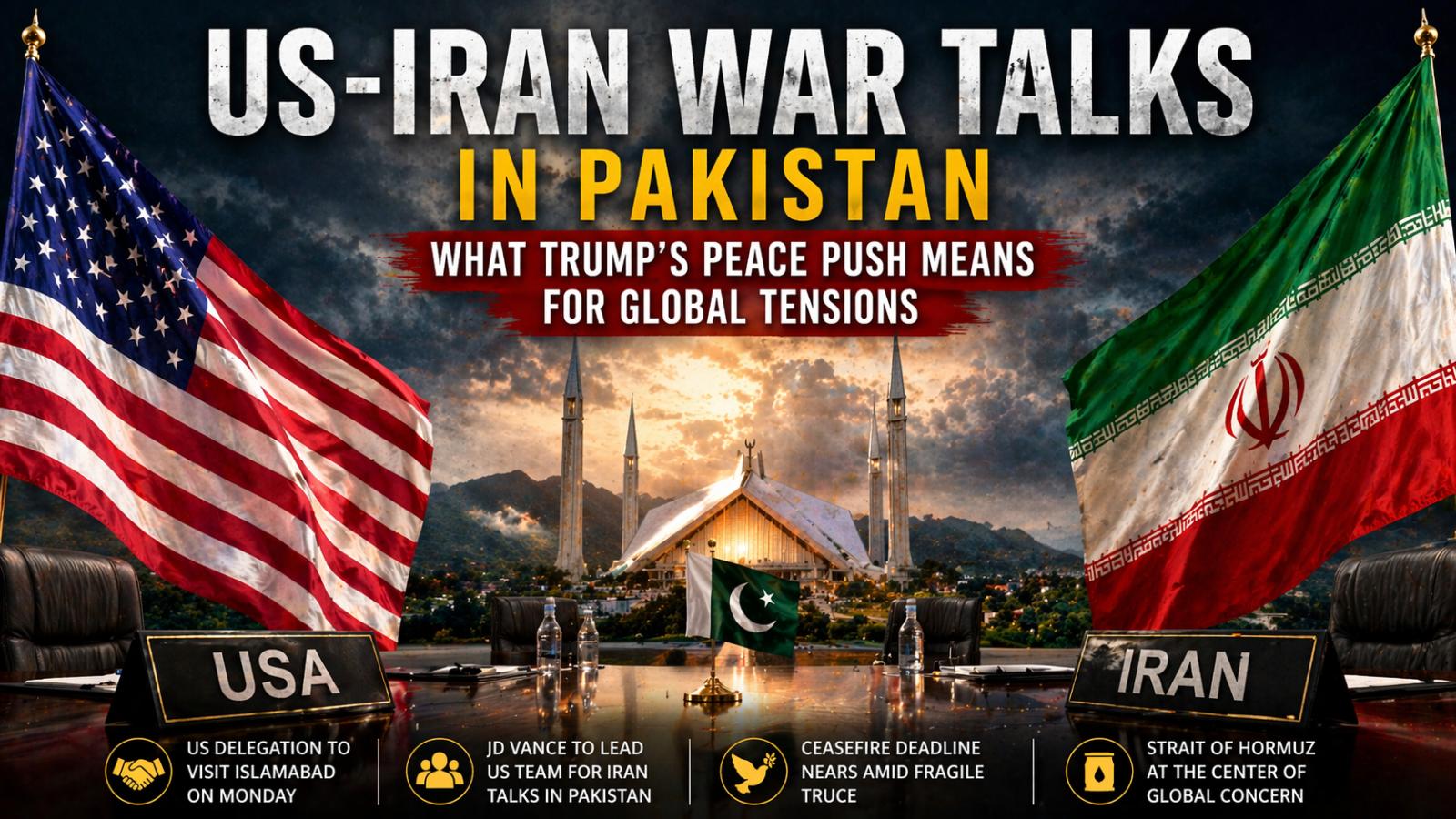
The US-Iran war talks in Pakistan are emerging as a critical step toward easing tensions as the fragile ceasefire deadline approaches. With the conflict entering its eighth week, both sides are showing cautious optimism, even as major differences remain unresolved. The latest US-Iran peace talks come at a time when global markets are closely watching developments in the Middle East.
US President Donald Trump confirmed that a high-level American delegation will travel to Islamabad on Monday for discussions with Iranian officials. The talks are expected to focus on Iran nuclear issues, maritime security, and the ongoing Strait of Hormuz crisis, which continues to impact global oil supply.
JD Vance to lead US delegation for Iran talks
US Vice President JD Vance will lead the American team, accompanied by special envoy Steve Witkoff and senior advisor Jared Kushner. The delegation’s visit highlights Washington’s intent to keep diplomatic channels open despite ongoing tensions in the US-Iran conflict.
Interestingly, Trump had earlier suggested that Vance might not attend, but officials later confirmed his leadership role in the talks. The move signals the importance the administration is placing on achieving a breakthrough in the US Iran negotiations and preventing further escalation in the region.
Why these talks matter for global stability
The outcome of the US-Iran peace talks could have far-reaching consequences for global stability. The ongoing conflict has already disrupted oil supply chains, as the Strait of Hormuz—through which nearly 20 percent of the world’s oil flows—has faced repeated closures. Rising oil prices have affected economies worldwide, increasing fuel costs and adding pressure on global markets. A successful negotiation could help stabilize the region, reduce volatility in global oil prices, and ease economic uncertainty caused by the Middle East tensions.
Nuclear tensions and Hormuz control
Iran’s top negotiator has indicated that while recent discussions have made progress, significant gaps remain. The primary sticking points include Iran’s nuclear program and control over the Strait of Hormuz shipping route. The waterway remains a major point of tension, with both sides accusing each other of using it as leverage. The United States has warned against any attempts to restrict shipping access, while Iran insists on its strategic rights in the region. These disagreements continue to shape the broader US Iran war developments.
What happens next as ceasefire deadline nears
With the US-Iran ceasefire set to expire in just a few days, the upcoming talks in Pakistan are likely to be decisive. Analysts believe that failure to reach an agreement could lead to renewed escalation, further impacting global energy markets and trade routes. However, both sides have signaled willingness to continue dialogue, suggesting that a diplomatic solution, while difficult, is still possible. The talks could determine whether tensions ease or intensify in the coming weeks.
A turning point in US-Iran relations
The US-Iran war talks in Pakistan represent a crucial opportunity to de-escalate one of the most significant geopolitical conflicts currently affecting the world. While challenges remain, the willingness to negotiate offers a potential path forward. As global markets and governments watch closely, the success or failure of these talks could shape the future of Middle East stability, international energy security, and the direction of US-Iran relations.