U.S. President Donald Trump removed an AI-generated image from his account on Truth Social on Monday, April 13, 2026, after it remained online for nearly 13 hours and sparked significant backlash from segments of his political base, particularly religious conservatives.
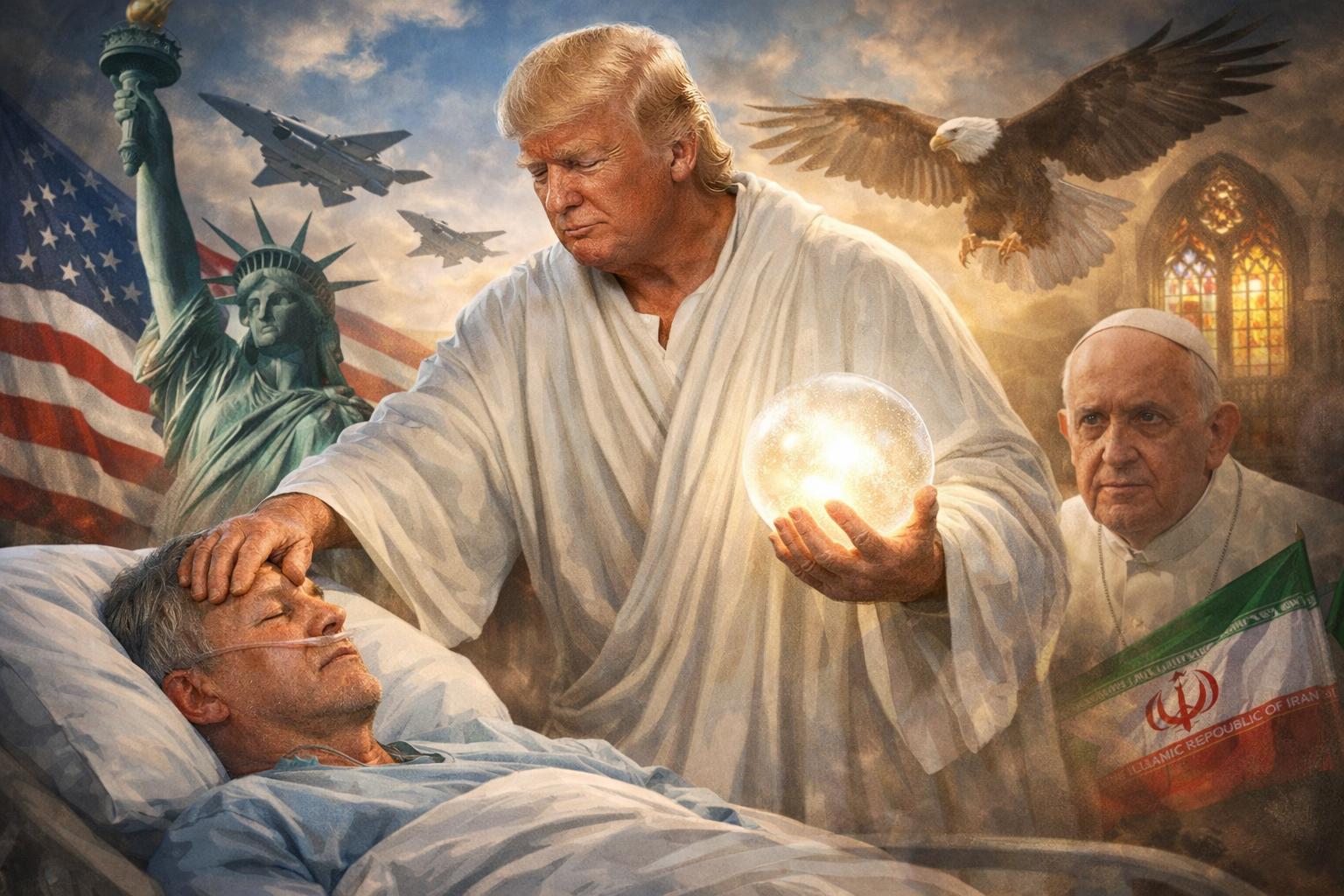
The image depicted Trump in flowing white robes, holding a glowing orb while placing his hand on the forehead of a patient lying in a hospital bed. The composition closely resembled traditional artistic portrayals of Jesus Christ performing healing miracles. The background included symbolic imagery such as the Statue of Liberty, an eagle, and fighter jets, blending religious and patriotic elements.
The post quickly drew criticism from conservative Christian figures who described the imagery as inappropriate and offensive. Many argued that the depiction crossed religious boundaries and reflected poor judgment, particularly given the sensitivity surrounding religious symbolism among Trump’s core supporters.
Responding to the controversy, Trump denied any intent to portray himself as a religious figure. He stated that he believed the image showed him as a doctor helping people recover, emphasizing that the concept was meant to symbolize healing rather than religion. Despite this clarification, criticism continued to spread across social media and political circles.
The incident unfolded amid broader tensions involving remarks by Pope Francis, who had recently warned against what he described as a “delusion of omnipotence” while calling for peace in the ongoing Iran conflict. Trump publicly criticized the pontiff in response, accusing him of being weak on crime and undermining U.S. interests.
International reactions followed, including comments from Giorgia Meloni, whose office ultimately described attacks on the Pope as unacceptable after initial restraint. In a rare alignment, Iranian officials also condemned the image, calling it disrespectful toward a figure revered in Islam.
This episode adds to a pattern of religious-themed content shared by Trump in recent years, underscoring the complex intersection of religion, politics, and digital media in the current global landscape.
The image depicted Trump in flowing white robes, holding a glowing orb while placing his hand on the forehead of a patient lying in a hospital bed. The composition closely resembled traditional artistic portrayals of Jesus Christ performing healing miracles. The background included symbolic imagery such as the Statue of Liberty, an eagle, and fighter jets, blending religious and patriotic elements.
The post quickly drew criticism from conservative Christian figures who described the imagery as inappropriate and offensive. Many argued that the depiction crossed religious boundaries and reflected poor judgment, particularly given the sensitivity surrounding religious symbolism among Trump’s core supporters.
Responding to the controversy, Trump denied any intent to portray himself as a religious figure. He stated that he believed the image showed him as a doctor helping people recover, emphasizing that the concept was meant to symbolize healing rather than religion. Despite this clarification, criticism continued to spread across social media and political circles.
The incident unfolded amid broader tensions involving remarks by Pope Francis, who had recently warned against what he described as a “delusion of omnipotence” while calling for peace in the ongoing Iran conflict. Trump publicly criticized the pontiff in response, accusing him of being weak on crime and undermining U.S. interests.
International reactions followed, including comments from Giorgia Meloni, whose office ultimately described attacks on the Pope as unacceptable after initial restraint. In a rare alignment, Iranian officials also condemned the image, calling it disrespectful toward a figure revered in Islam.
This episode adds to a pattern of religious-themed content shared by Trump in recent years, underscoring the complex intersection of religion, politics, and digital media in the current global landscape.