#trumpaipolicy
US-China AI Race Intensifies Ahead of Trump-Xi Summit
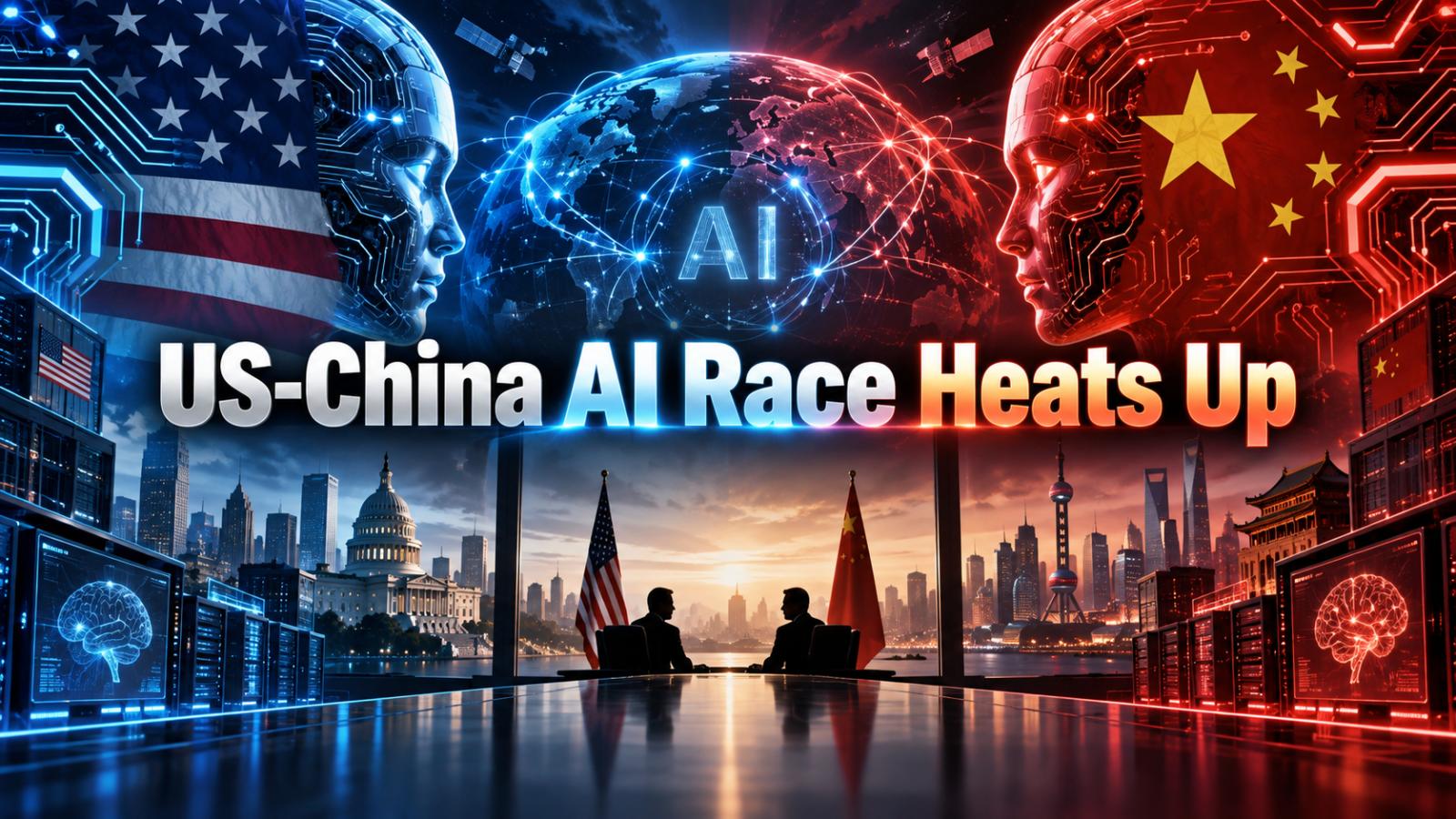
The US-China AI race is intensifying as President Donald Trump rejects calls for slower AI development while industry leaders push for stronger safeguards. Washington and Beijing are also exploring limited AI safety cooperation ahead of the Trump-Xi summit. US-China AI Race Intensifies Ahead of Trump-Xi Summit The US-China AI race is entering a critical phase as President Donald Trump rejects calls for slower development while major AI executives seek stronger safeguards. At the same time, Washington and Beijing are exploring limited AI safety cooperation ahead of the Trump-Xi summit. AI slowdown debate divides Washington and tech leaders Some leading AI executives have recently argued that frontier development needs stronger safeguards and, in certain circumstances, a slower pace. OpenAI CEO Sam Altman has said progress should continue but be slower, while Anthropic CEO Dario Amodei has proposed allowing leading companies to coordinate on safety without running into antitrust restrictions. Trump has taken a different position. He described growing pressure for tighter AI regulation as a “SICK conspiracy” and argued that slowing US development would benefit China. His administration views leadership in advanced AI as an economic and national-security priority. The disagreement is not simply between regulation and innovation. AI companies themselves continue rapidly developing new systems while simultaneously seeking rules or coordination aimed at limiting the risks posed by increasingly capable models. Trump AI policy focuses on competition with China Trump has framed artificial intelligence as a strategic competition in which American leadership must be preserved. His stance comes as Chinese companies such as DeepSeek and Moonshot AI continue developing advanced models despite US restrictions on access to some high-end semiconductor technology. The United States retains major advantages through companies including OpenAI, Anthropic, Google, Meta and Nvidia. China, however, has increasingly promoted lower-cost models, domestic chips and AI infrastructure as part of its effort to reduce reliance on American technology. That rivalry is also spreading internationally as both countries seek partnerships involving data centers, cloud infrastructure, chips and AI applications. For developing economies, the competition could mean greater access to technology but also tougher choices over standards, suppliers and data governance. AI safety talks emerge before Trump-Xi meeting Despite the rivalry, Washington and Beijing have found a narrow area where cooperation may be possible. US Treasury Secretary Scott Bessent said talks with Chinese Vice Premier He Lifeng in New York produced a proposal for an AI incident-notification mechanism. The idea would create a channel for the two governments to communicate when serious AI incidents could affect national security. Officials have discussed risks involving autonomous agents, cyber activity and threats to critical infrastructure. The two sides are expected to continue the dialogue in Shenzhen in roughly two months. China has not publicly committed to every element of the US proposal, but the discussions indicate that both governments see some shared risks even while competing for AI leadership. China AI plan emphasizes global governance Chinese President Xi Jinping has also called for international cooperation on AI governance, while Beijing promotes its own technology ecosystem and open-source initiatives. The broader Chinese position combines support for global rules with efforts to strengthen domestic AI capabilities and reduce dependence on US-controlled technologies. That creates the central tension ahead of the Trump-Xi summit: both countries want leadership in AI, but both also face risks if the competition becomes completely unmanaged. Recent discussions suggest the summit may focus less on slowing the race itself and more on establishing limited guardrails for serious incidents. The outcome will matter well beyond Washington and Beijing. AI safety standards, chip access, infrastructure investment and model governance could increasingly be shaped by how the world’s two largest technology powers manage competition without allowing shared risks to spiral.
US-China AI Race Intensifies Ahead of Trump-Xi Summit
The US-China AI race is intensifying as President Donald Trump rejects calls for slower AI development while industry leaders push for stronger safeguards. Washington and Beijing are also exploring limited AI safety cooperation ahead of the Trump-Xi summit. US-China AI Race Intensifies Ahead of Trump-Xi Summit The US-China AI race is entering a critical phase as President Donald Trump rejects calls for slower development while major AI executives seek stronger safeguards. At the same time, Washington and Beijing are exploring limited AI safety cooperation ahead of the Trump-Xi summit. AI slowdown debate divides Washington and tech leaders Some leading AI executives have recently argued that frontier development needs stronger safeguards and, in certain circumstances, a slower pace. OpenAI CEO Sam Altman has said progress should continue but be slower, while Anthropic CEO Dario Amodei has proposed allowing leading companies to coordinate on safety without running into antitrust restrictions. Trump has taken a different position. He described growing pressure for tighter AI regulation as a “SICK conspiracy” and argued that slowing US development would benefit China. His administration views leadership in advanced AI as an economic and national-security priority. The disagreement is not simply between regulation and innovation. AI companies themselves continue rapidly developing new systems while simultaneously seeking rules or coordination aimed at limiting the risks posed by increasingly capable models. Trump AI policy focuses on competition with China Trump has framed artificial intelligence as a strategic competition in which American leadership must be preserved. His stance comes as Chinese companies such as DeepSeek and Moonshot AI continue developing advanced models despite US restrictions on access to some high-end semiconductor technology. The United States retains major advantages through companies including OpenAI, Anthropic, Google, Meta and Nvidia. China, however, has increasingly promoted lower-cost models, domestic chips and AI infrastructure as part of its effort to reduce reliance on American technology. That rivalry is also spreading internationally as both countries seek partnerships involving data centers, cloud infrastructure, chips and AI applications. For developing economies, the competition could mean greater access to technology but also tougher choices over standards, suppliers and data governance. AI safety talks emerge before Trump-Xi meeting Despite the rivalry, Washington and Beijing have found a narrow area where cooperation may be possible. US Treasury Secretary Scott Bessent said talks with Chinese Vice Premier He Lifeng in New York produced a proposal for an AI incident-notification mechanism. The idea would create a channel for the two governments to communicate when serious AI incidents could affect national security. Officials have discussed risks involving autonomous agents, cyber activity and threats to critical infrastructure. The two sides are expected to continue the dialogue in Shenzhen in roughly two months. China has not publicly committed to every element of the US proposal, but the discussions indicate that both governments see some shared risks even while competing for AI leadership. China AI plan emphasizes global governance Chinese President Xi Jinping has also called for international cooperation on AI governance, while Beijing promotes its own technology ecosystem and open-source initiatives. The broader Chinese position combines support for global rules with efforts to strengthen domestic AI capabilities and reduce dependence on US-controlled technologies. That creates the central tension ahead of the Trump-Xi summit: both countries want leadership in AI, but both also face risks if the competition becomes completely unmanaged. Recent discussions suggest the summit may focus less on slowing the race itself and more on establishing limited guardrails for serious incidents. The outcome will matter well beyond Washington and Beijing. AI safety standards, chip access, infrastructure investment and model governance could increasingly be shaped by how the world’s two largest technology powers manage competition without allowing shared risks to spiral.