




















#visa-bulletin
October 2026 Visa Bulletin: India EB-1, EB-2 and EB-5 changes
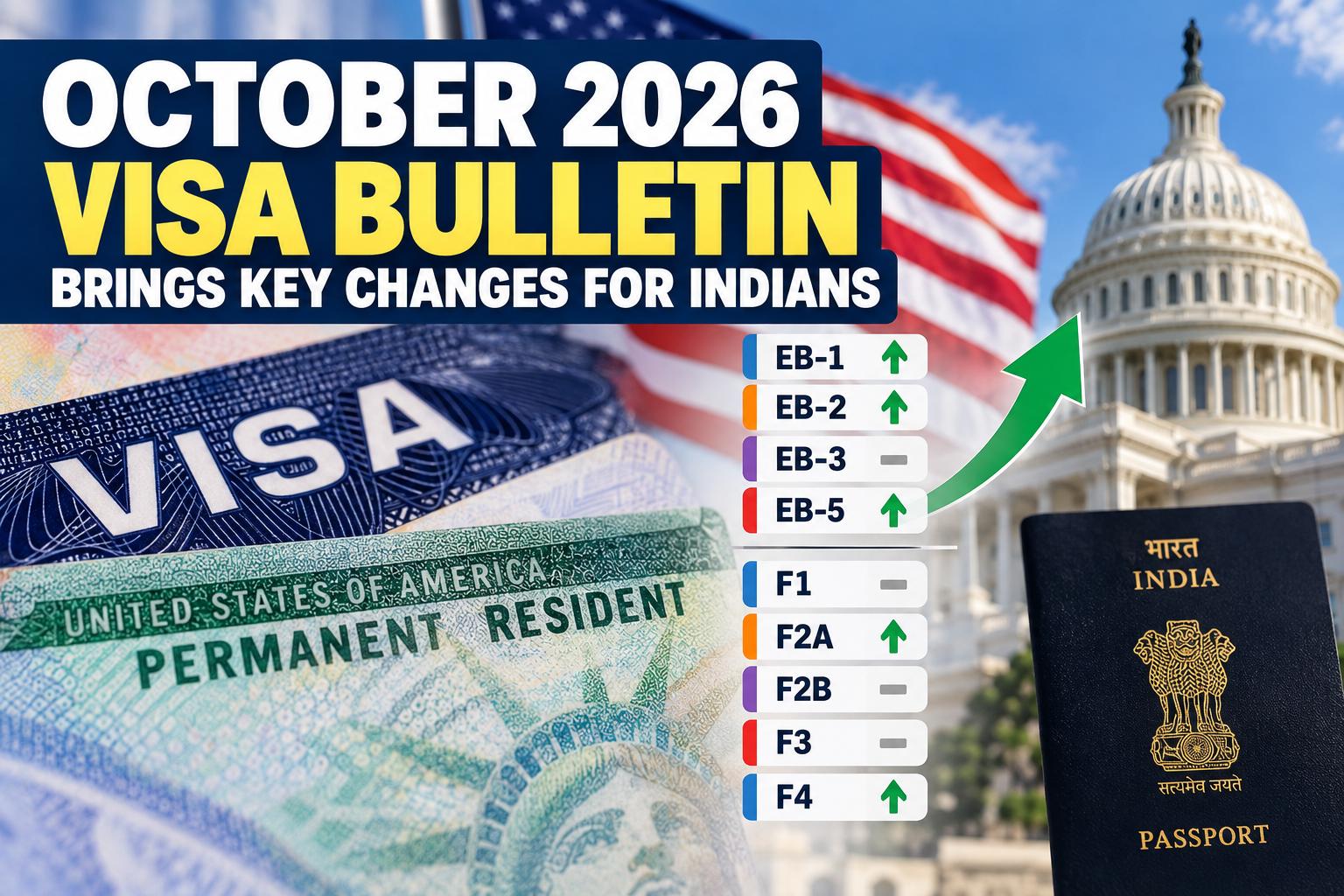
The October 2026 Visa Bulletin brings major changes for India as FY 2027 begins, advancing EB-1 and restoring Final Action Dates for EB-2 and EB-5 unreserved while keeping EB-3 unchanged and moving some family-sponsored dates forward. The U.S. Department of State’s October 2026 Visa Bulletin opens fiscal year 2027 with renewed visa availability and several important changes for applicants chargeable to India. EB-1 advances, while EB-2 and EB-5 unr
October 2026 Visa Bulletin: India EB-1, EB-2 and EB-5 changes
The October 2026 Visa Bulletin brings major changes for India as FY 2027 begins, advancing EB-1 and restoring Final Action Dates for EB-2 and EB-5 unreserved while keeping EB-3 unchanged and moving some family-sponsored dates forward. The U.S. Department of State’s October 2026 Visa Bulletin opens fiscal year 2027 with renewed visa availability and several important changes for applicants chargeable to India. EB-1 advances, while EB-2 and EB-5 unr
US Visa Bulletin January 2025: Key Updates for Indian Green Card Applicants
The US Department of State’s Bureau of Consular Affairs has released the Visa Bulletin for January 2025, providing crucial updates for green card applicants, with a notable focus on Indian applicants. This bulletin offers insights into the availability of immigrant visa numbers, which are vital for individuals waiting in the green card queue. The limits for employment-based preference immigrants have been set at 140,000, while family-sponsored category immigrants have a cap of
US Visa Bulletin January 2025: Key Updates for Indian Green Card Applicants
The US Department of State’s Bureau of Consular Affairs has released the Visa Bulletin for January 2025, providing crucial updates for green card applicants, with a notable focus on Indian applicants. This bulletin offers insights into the availability of immigrant visa numbers, which are vital for individuals waiting in the green card queue. The limits for employment-based preference immigrants have been set at 140,000, while family-sponsored category immigrants have a cap of


