US official calls India indispensable in global tech race
India positioned as key global technology partner A senior United States official has described India as an indispensable partner in the global technology landscape, highlighting its unique ability to match China’s scale of engineering talent. The remarks were made at the IX US-India Strategic Partnership Forum Leadership Summit 2026 and reflect Washington’s growing reliance on New Delhi in critical emerging technologies.
US official calls India indispensable in global tech race
India positioned as key global technology partner A senior United States official has described India as an indispensable partner in the global technology landscape, highlighting its unique ability to match China’s scale of engineering talent. The remarks were made at the IX US-India Strategic Partnership Forum Leadership Summit 2026 and reflect Washington’s growing reliance on New Delhi in critical emerging technologies.
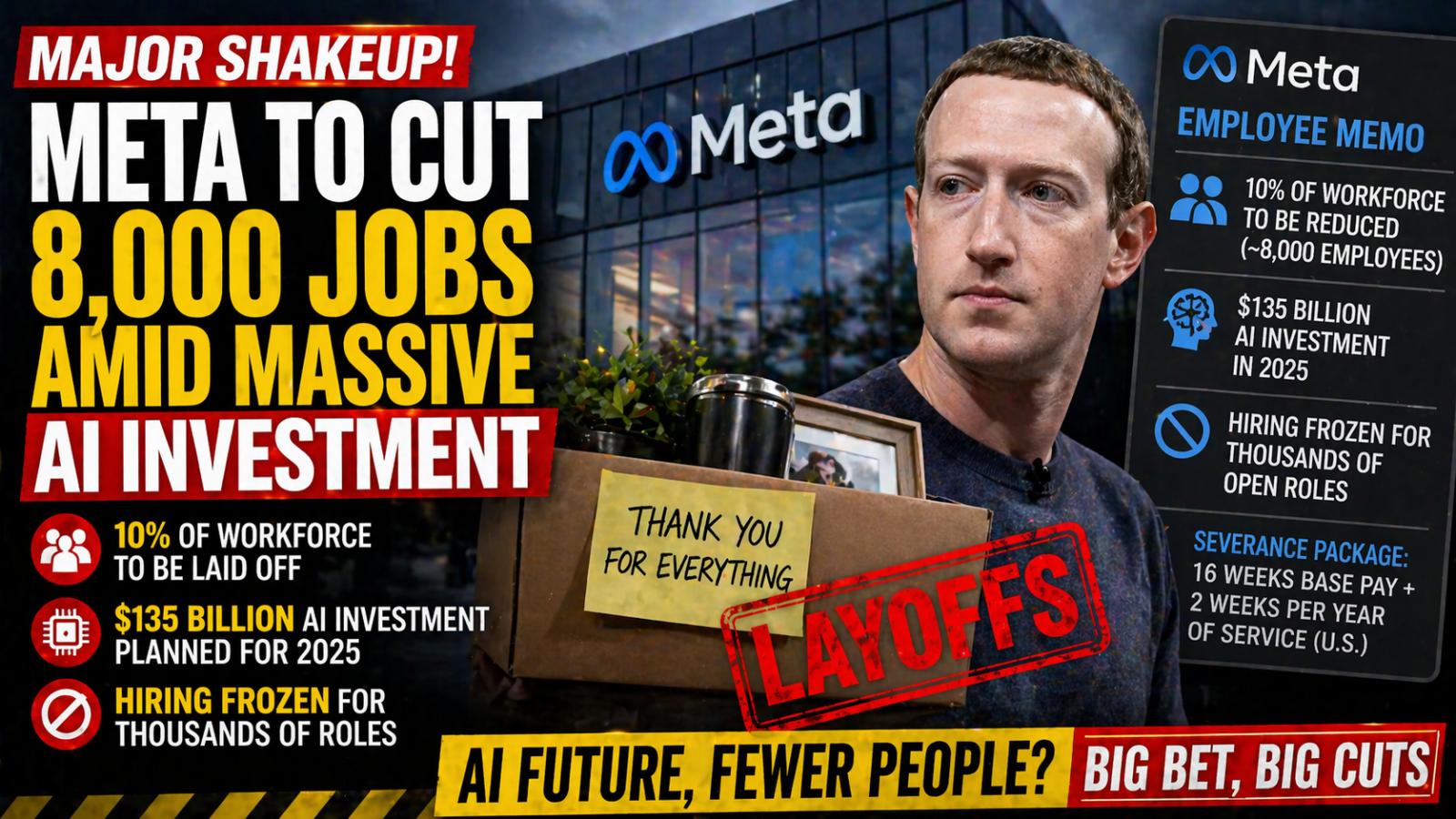
Meta to Lay Off Thousands as AI Spending Reaches New Highs
Meta is preparing to reduce its global workforce as part of a broader strategy to increase investment in artificial intelligence. In an internal communication to employees, the company outlined plans to cut approximately 10 percent of its workforce, affecting around 8,000 employees, while also pausing hiring for numerous open positions. The move reflects a shift in priorities as Meta accel
Meta to Lay Off Thousands as AI Spending Reaches New Highs
Meta is preparing to reduce its global workforce as part of a broader strategy to increase investment in artificial intelligence. In an internal communication to employees, the company outlined plans to cut approximately 10 percent of its workforce, affecting around 8,000 employees, while also pausing hiring for numerous open positions. The move reflects a shift in priorities as Meta accel
Why is Microsoft offering buyouts to U.S. employees? It aims to adapt to AI-driven industry changes
Voluntary buyouts introduced for U.S. workforce amid AI shift Microsoft is offering voluntary buyouts to a portion of its U.S. workforce, marking the first such initiative in the company’s 51-year history. The move comes as the broader technology sector adjusts to rapid changes driven by the rise of artificial intelligence. According to a person familiar with the plan,
Why is Microsoft offering buyouts to U.S. employees? It aims to adapt to AI-driven industry changes
Voluntary buyouts introduced for U.S. workforce amid AI shift Microsoft is offering voluntary buyouts to a portion of its U.S. workforce, marking the first such initiative in the company’s 51-year history. The move comes as the broader technology sector adjusts to rapid changes driven by the rise of artificial intelligence. According to a person familiar with the plan,
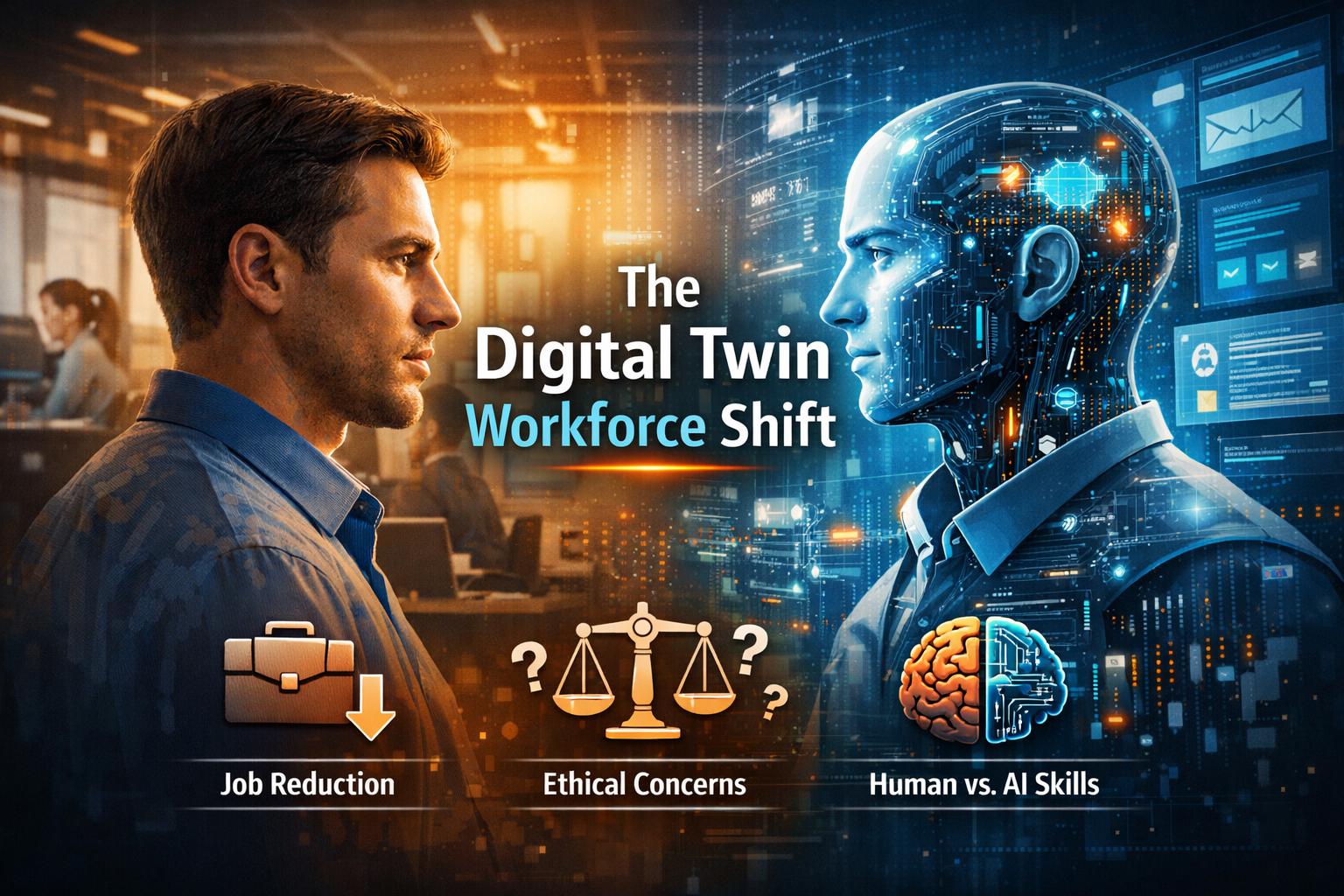
Digital Twin Job Loss Crisis: How AI “Superworkers” Are Reshaping the Future of Work
The rise of AI-powered digital twins is no longer just a tech trend—it’s quickly turning into a digital twin job loss crisis that could reshape how millions of people work. Companies are building AI versions of employees that can think, respond, and make decisions like humans. While this promises efficiency, it also raises a serious concern: are workers unknowingly training their own replacements? How Digital Twins Are Replacing Human Roles
Digital Twin Job Loss Crisis: How AI “Superworkers” Are Reshaping the Future of Work
The rise of AI-powered digital twins is no longer just a tech trend—it’s quickly turning into a digital twin job loss crisis that could reshape how millions of people work. Companies are building AI versions of employees that can think, respond, and make decisions like humans. While this promises efficiency, it also raises a serious concern: are workers unknowingly training their own replacements? How Digital Twins Are Replacing Human Roles
Lawmaker pushes to block wage cuts for H-2A farmworkers
A California lawmaker is seeking federal action to reverse recent labor policy changes that could significantly reduce wages for seasonal agricultural workers across the United States. On Wednesday, March 26, 2026, Representative Zoe Lofgren introduced a resolution aimed at blocking new wage rules implemented by the
Lawmaker pushes to block wage cuts for H-2A farmworkers
A California lawmaker is seeking federal action to reverse recent labor policy changes that could significantly reduce wages for seasonal agricultural workers across the United States. On Wednesday, March 26, 2026, Representative Zoe Lofgren introduced a resolution aimed at blocking new wage rules implemented by the
Oracle India Announces Workforce Reduction: 12,000 Jobs Affected in 2026 Restructuring
Oracle India has confirmed that it will cut approximately 12,000 jobs as part of a major restructuring plan aimed at streamlining operations. This massive reduction in its workforce comes amidst growing challenges in the tech sector, including cost-cutting measures, automation, and shifts in business strategy. Oracle’s move is expected to send shockwaves throughout the Indian job market, which has been dealing with an increasing number of job losses in the technology sector. The l
Oracle India Announces Workforce Reduction: 12,000 Jobs Affected in 2026 Restructuring
Oracle India has confirmed that it will cut approximately 12,000 jobs as part of a major restructuring plan aimed at streamlining operations. This massive reduction in its workforce comes amidst growing challenges in the tech sector, including cost-cutting measures, automation, and shifts in business strategy. Oracle’s move is expected to send shockwaves throughout the Indian job market, which has been dealing with an increasing number of job losses in the technology sector. The l
Reports of Oracle layoffs emerge amid shift toward AI investments
Reports circulating across online platforms indicate that Oracle Corporation may have initiated a fresh round of layoffs affecting employees in multiple regions, including India and Mexico, though the company has not issued an official confirmation regarding the scale or timing of these actions. Employees posting on professional forums such as Blind and Reddit described receiving early morning emails informing them that their positions had been eliminated with immediate effect. Several individuals reported that these notifications arrived as early as 5:00 AM or 6:00 AM local time, though the exact date of these communications has not been independently verified. Many said the messages were sent directly from company leadership without prior notice, formal HR discussions, or communication from direct managers. Accounts shared online suggest that access to internal systems was revoked shortly after the emails were delivered, leaving affected employees without a transition period. Some posts indicate that roles within cloud computing and engineering teams may have been impacted, although the full scope of departments involved remains unclear. Unverified claims circulating on social media suggest that between 20,000 and 30,000 employees could be affected, representing a significant portion of Oracle’s global workforce of approximately 162,000. However, these figures remain speculative and have not been confirmed by the company. The reported layoffs come at a time when Oracle continues to expand its investments in artificial intelligence infrastructure and data centers. Industry observers note that many technology companies are restructuring operations to prioritize AI-driven initiatives and cloud services, which may involve reallocating resources and reducing roles in other areas. Similar workforce reductions have been observed across the broader tech industry in recent months, as companies reassess hiring strategies following periods of rapid expansion. While some analysts link these layoffs to increased spending on AI, others suggest they reflect efforts to correct overhiring during earlier growth cycles. In the absence of an official statement, the full extent and impact of the reported layoffs at Oracle remain uncertain, with affected employees continuing to share their experiences across online platforms.
Reports of Oracle layoffs emerge amid shift toward AI investments
Reports circulating across online platforms indicate that Oracle Corporation may have initiated a fresh round of layoffs affecting employees in multiple regions, including India and Mexico, though the company has not issued an official confirmation regarding the scale or timing of these actions. Employees posting on professional forums such as Blind and Reddit described receiving early morning emails informing them that their positions had been eliminated with immediate effect. Several individuals reported that these notifications arrived as early as 5:00 AM or 6:00 AM local time, though the exact date of these communications has not been independently verified. Many said the messages were sent directly from company leadership without prior notice, formal HR discussions, or communication from direct managers. Accounts shared online suggest that access to internal systems was revoked shortly after the emails were delivered, leaving affected employees without a transition period. Some posts indicate that roles within cloud computing and engineering teams may have been impacted, although the full scope of departments involved remains unclear. Unverified claims circulating on social media suggest that between 20,000 and 30,000 employees could be affected, representing a significant portion of Oracle’s global workforce of approximately 162,000. However, these figures remain speculative and have not been confirmed by the company. The reported layoffs come at a time when Oracle continues to expand its investments in artificial intelligence infrastructure and data centers. Industry observers note that many technology companies are restructuring operations to prioritize AI-driven initiatives and cloud services, which may involve reallocating resources and reducing roles in other areas. Similar workforce reductions have been observed across the broader tech industry in recent months, as companies reassess hiring strategies following periods of rapid expansion. While some analysts link these layoffs to increased spending on AI, others suggest they reflect efforts to correct overhiring during earlier growth cycles. In the absence of an official statement, the full extent and impact of the reported layoffs at Oracle remain uncertain, with affected employees continuing to share their experiences across online platforms.
Canada expands education and workforce partnerships with India through college mission
Canadian colleges and polytechnics are intensifying efforts to strengthen skills training and education partnerships with India as both countries seek to deepen collaboration in workforce development and higher education. A delegation of college and polytechnic presidents, organized by Colleges and Institutes Canada (CICan), began a five-day visit to India on March 16, 2026, with scheduled engagements in New Delhi, Bengaluru, and Mumbai. CICan represents 127 public colleges and institutes ac
Canada expands education and workforce partnerships with India through college mission
Canadian colleges and polytechnics are intensifying efforts to strengthen skills training and education partnerships with India as both countries seek to deepen collaboration in workforce development and higher education. A delegation of college and polytechnic presidents, organized by Colleges and Institutes Canada (CICan), began a five-day visit to India on March 16, 2026, with scheduled engagements in New Delhi, Bengaluru, and Mumbai. CICan represents 127 public colleges and institutes ac
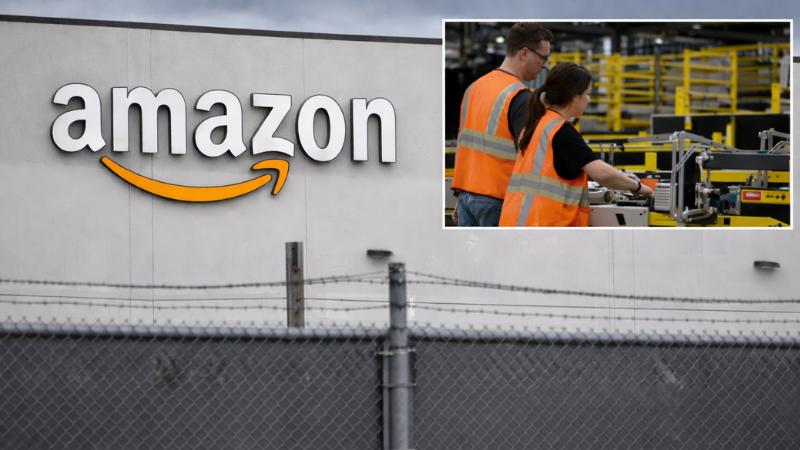
Amazon Initiates New Round of Layoffs, Affecting 100 Employees in Robotics Division
Amazon has initiated another round of layoffs, this time impacting its robotics division. At least 100 white-collar jobs have been affected, focusing on the team responsible for designing and managing the company's warehouse robots and automation systems. These layoffs come just two months after Amazon’s massive job cuts in January, which saw around 16,000 global positions eliminated. The layoffs are part of Amazon's broader restructuring efforts aimed at improving efficiency and
Amazon Initiates New Round of Layoffs, Affecting 100 Employees in Robotics Division
Amazon has initiated another round of layoffs, this time impacting its robotics division. At least 100 white-collar jobs have been affected, focusing on the team responsible for designing and managing the company's warehouse robots and automation systems. These layoffs come just two months after Amazon’s massive job cuts in January, which saw around 16,000 global positions eliminated. The layoffs are part of Amazon's broader restructuring efforts aimed at improving efficiency and
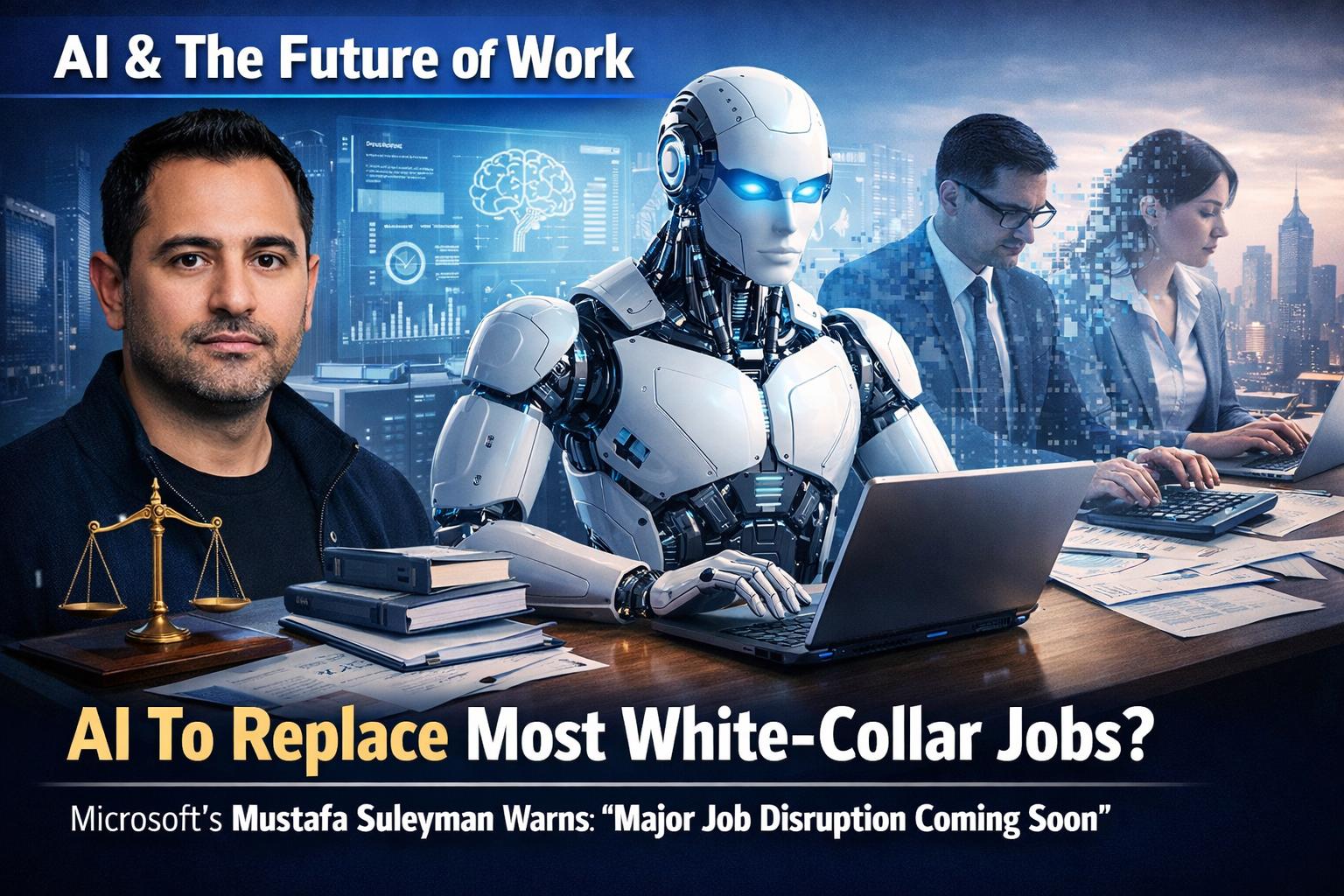
AI may automate most white-collar jobs within 18 months, says Microsoft AI chief
Microsoft’s head of artificial intelligence, Mustafa Suleyman, has triggered intense debate after warning that artificial intelligence could replace most white-collar jobs in the near future. Speaking about the accelerating pace of technological change, Suleyman said automation will not be limited to coders or IT professionals, but could extend to lawyers, accountants, project managers, marketers and other knowledge workers who spend most of their time working on computers. According to him, t
AI may automate most white-collar jobs within 18 months, says Microsoft AI chief
Microsoft’s head of artificial intelligence, Mustafa Suleyman, has triggered intense debate after warning that artificial intelligence could replace most white-collar jobs in the near future. Speaking about the accelerating pace of technological change, Suleyman said automation will not be limited to coders or IT professionals, but could extend to lawyers, accountants, project managers, marketers and other knowledge workers who spend most of their time working on computers. According to him, t
Six Flags Great Adventure to hire 3,000 seasonal workers for 2026 season
Six Flags Great Adventure has announced plans to hire more than 3,000 part-time and seasonal employees as it prepares for the launch of its 2026 operating season, offering thousands of job opportunities for students, first-time workers, and those seeking additional summer income. The New Jersey theme park confirmed that its season will officially begin on March 28, with hiring efforts starting well in advance to ensure adequate staffing across attractions, guest services, entertainment, and o
Six Flags Great Adventure to hire 3,000 seasonal workers for 2026 season
Six Flags Great Adventure has announced plans to hire more than 3,000 part-time and seasonal employees as it prepares for the launch of its 2026 operating season, offering thousands of job opportunities for students, first-time workers, and those seeking additional summer income. The New Jersey theme park confirmed that its season will officially begin on March 28, with hiring efforts starting well in advance to ensure adequate staffing across attractions, guest services, entertainment, and o
UPS plans 30,000 job cuts in 2026 as Amazon partnership winds down
United Parcel Service announced Tuesday that it plans to eliminate approximately 30,000 positions during the current year as the company continues to wind down its longstanding business relationship with Amazon and executes a broader, multi-year turnaround strategy. The workforce reduction is expected to be driven primarily by lower shipping volumes connected to the gradual exit from Amazon-related operations. Speaking during a conference call with analysts following the release of
UPS plans 30,000 job cuts in 2026 as Amazon partnership winds down
United Parcel Service announced Tuesday that it plans to eliminate approximately 30,000 positions during the current year as the company continues to wind down its longstanding business relationship with Amazon and executes a broader, multi-year turnaround strategy. The workforce reduction is expected to be driven primarily by lower shipping volumes connected to the gradual exit from Amazon-related operations. Speaking during a conference call with analysts following the release of
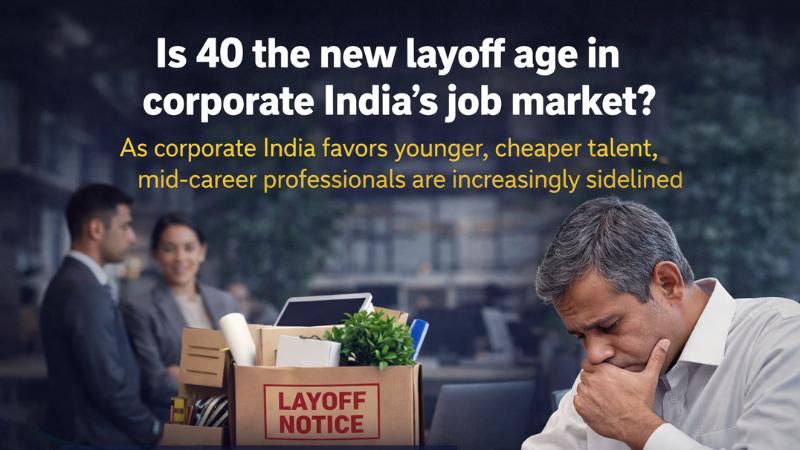
Is 40 The New Layoff Age In Corporate India’s Changing Job Market?
In India’s corporate imagination, the age of 40 was once seen as the peak of professional maturity. It symbolised authority, stability, and leadership readiness. Today, however, that same milestone is quietly turning into a career fault line. Across industries, professionals report fewer interview calls, slower promotions, and an increasing sense of invisibility. Experience, once celebrated, is now being reframed as expensive, rigid, or culturally misaligned. The shift is subtle, rarely spo
Is 40 The New Layoff Age In Corporate India’s Changing Job Market?
In India’s corporate imagination, the age of 40 was once seen as the peak of professional maturity. It symbolised authority, stability, and leadership readiness. Today, however, that same milestone is quietly turning into a career fault line. Across industries, professionals report fewer interview calls, slower promotions, and an increasing sense of invisibility. Experience, once celebrated, is now being reframed as expensive, rigid, or culturally misaligned. The shift is subtle, rarely spo
Microsoft Breaks Silence On Viral 22,000 Job Cut Claims For 2026
Speculation about fresh job cuts at Microsoft sparked widespread debate online after reports claimed the technology giant was preparing for another major round of layoffs in January 2026. According to the report, as many as 22,000 roles could be at risk, triggering concern across social media platforms and technology forums. The rumours gained momentum quickly, particularly because Microsoft has carried out significant restructuring in the recent past. However, the company has now firmly deni
Microsoft Breaks Silence On Viral 22,000 Job Cut Claims For 2026
Speculation about fresh job cuts at Microsoft sparked widespread debate online after reports claimed the technology giant was preparing for another major round of layoffs in January 2026. According to the report, as many as 22,000 roles could be at risk, triggering concern across social media platforms and technology forums. The rumours gained momentum quickly, particularly because Microsoft has carried out significant restructuring in the recent past. However, the company has now firmly deni
Nearly 1,000 Illinois workers face layoffs across health care, insurance, and manufacturing
Nearly 1,000 workers across Illinois are expected to lose their jobs during the first half of the year, according to recent data released through the Illinois Worker Adjustment and Retraining Act. A spreadsheet published by the Illinois Department of Commerce and Economic Opportunity shows that employers across several industries issued layoff notices affecting a total of 985 employees during November alone. State officials reported that most of the layoffs are scheduled to begin in
Nearly 1,000 Illinois workers face layoffs across health care, insurance, and manufacturing
Nearly 1,000 workers across Illinois are expected to lose their jobs during the first half of the year, according to recent data released through the Illinois Worker Adjustment and Retraining Act. A spreadsheet published by the Illinois Department of Commerce and Economic Opportunity shows that employers across several industries issued layoff notices affecting a total of 985 employees during November alone. State officials reported that most of the layoffs are scheduled to begin in
Iconic eagle removed as Anheuser-Busch sells historic Newark brewery
An iconic feature of Newark’s industrial skyline is being dismantled as ownership of the city’s longtime Anheuser-Busch brewery changes hands. Crews arrived at the sprawling factory complex early Friday morning, signaling the start of work to remove the illuminated eagle that has stood above the brewery for decades. The towering sign, visible from surrounding neighborhoods and major roadways, has long been associated with the facility and has become a familiar sight for generations of res
Iconic eagle removed as Anheuser-Busch sells historic Newark brewery
An iconic feature of Newark’s industrial skyline is being dismantled as ownership of the city’s longtime Anheuser-Busch brewery changes hands. Crews arrived at the sprawling factory complex early Friday morning, signaling the start of work to remove the illuminated eagle that has stood above the brewery for decades. The towering sign, visible from surrounding neighborhoods and major roadways, has long been associated with the facility and has become a familiar sight for generations of res
Japan’s birth crisis deepens as 2025 births hit historic low
Japan is on course to record its lowest number of births since national data collection began in 1899, with estimates for 2025 indicating the total will fall below 670,000. The figure is not only historically low but also worse than the most pessimistic government forecasts, underscoring the speed and scale of the country’s demographic decline. As the population continues to shrink, the question facing policymakers and businesses alike is whether Japan can sustain its economic and social systems with a rapidly diminishing younger generation. The population trend has been moving in this direction for more than a decade. Japan’s total population began declining in 2011 and has continued to contract each year since. In 2024, deaths exceeded births by nearly one million people, marking the largest annual natural decrease on record. That year also saw births drop below 700,000 for the first time, a decline of 5.7 percent from the previous year. Once home to about 128 million people, Japan’s population now stands at roughly 123 million and continues to fall. At the center of the crisis is an extremely low fertility rate. Japan’s current fertility level is estimated at around 1.14 children per woman, far below the replacement rate of approximately 2.1 required to maintain population stability. This gap reflects deep-rooted economic and social pressures that have reshaped family formation. Economic insecurity remains a major factor, with stagnant wages, rising living costs, and high childcare expenses discouraging many young adults from marrying or having children. Marriage rates have declined sharply over recent decades, and because childbirth outside marriage remains relatively uncommon, fewer marriages translate directly into fewer births. Work culture and social expectations have also played a significant role. Japan’s long working hours and limited work-life balance make parenting particularly challenging, especially for women. Despite gradual improvements, gender inequality continues to place most childcare responsibilities on mothers. At the same time, more women are pursuing higher education, careers, and financial independence, leading many to delay or reject traditional family models altogether. These choices reflect changing aspirations as much as structural constraints. The demographic shift is already affecting the economy. With fewer young people entering the workforce each year, labor shortages are emerging across key sectors including manufacturing, construction, agriculture, caregiving, and services. Businesses are facing reduced production capacity, strained supply chains, and rising operational costs. Small and medium-sized enterprises, in particular, are struggling to recruit and retain workers, adding pressure to regional economies. While fears of an outright economic collapse are overstated, the risk of prolonged stagnation is real. Japan remains a global leader in technology, automation, and robotics, and these strengths are helping to offset some labor shortages. Automated systems can increase productivity and reduce reliance on human labor in certain industries. However, technology has limits. Fields such as healthcare, education, and many service roles depend heavily on human interaction, empathy, and judgment, qualities machines cannot fully replicate. Japan’s population challenge is no longer a distant projection but an immediate reality shaping daily life and long-term planning. How effectively the country combines technological innovation with social reform, workforce participation changes, and potential adjustments to immigration policy will determine whether this demographic turning point leads to managed adaptation or deepening economic and social strain.
Japan’s birth crisis deepens as 2025 births hit historic low
Japan is on course to record its lowest number of births since national data collection began in 1899, with estimates for 2025 indicating the total will fall below 670,000. The figure is not only historically low but also worse than the most pessimistic government forecasts, underscoring the speed and scale of the country’s demographic decline. As the population continues to shrink, the question facing policymakers and businesses alike is whether Japan can sustain its economic and social systems with a rapidly diminishing younger generation. The population trend has been moving in this direction for more than a decade. Japan’s total population began declining in 2011 and has continued to contract each year since. In 2024, deaths exceeded births by nearly one million people, marking the largest annual natural decrease on record. That year also saw births drop below 700,000 for the first time, a decline of 5.7 percent from the previous year. Once home to about 128 million people, Japan’s population now stands at roughly 123 million and continues to fall. At the center of the crisis is an extremely low fertility rate. Japan’s current fertility level is estimated at around 1.14 children per woman, far below the replacement rate of approximately 2.1 required to maintain population stability. This gap reflects deep-rooted economic and social pressures that have reshaped family formation. Economic insecurity remains a major factor, with stagnant wages, rising living costs, and high childcare expenses discouraging many young adults from marrying or having children. Marriage rates have declined sharply over recent decades, and because childbirth outside marriage remains relatively uncommon, fewer marriages translate directly into fewer births. Work culture and social expectations have also played a significant role. Japan’s long working hours and limited work-life balance make parenting particularly challenging, especially for women. Despite gradual improvements, gender inequality continues to place most childcare responsibilities on mothers. At the same time, more women are pursuing higher education, careers, and financial independence, leading many to delay or reject traditional family models altogether. These choices reflect changing aspirations as much as structural constraints. The demographic shift is already affecting the economy. With fewer young people entering the workforce each year, labor shortages are emerging across key sectors including manufacturing, construction, agriculture, caregiving, and services. Businesses are facing reduced production capacity, strained supply chains, and rising operational costs. Small and medium-sized enterprises, in particular, are struggling to recruit and retain workers, adding pressure to regional economies. While fears of an outright economic collapse are overstated, the risk of prolonged stagnation is real. Japan remains a global leader in technology, automation, and robotics, and these strengths are helping to offset some labor shortages. Automated systems can increase productivity and reduce reliance on human labor in certain industries. However, technology has limits. Fields such as healthcare, education, and many service roles depend heavily on human interaction, empathy, and judgment, qualities machines cannot fully replicate. Japan’s population challenge is no longer a distant projection but an immediate reality shaping daily life and long-term planning. How effectively the country combines technological innovation with social reform, workforce participation changes, and potential adjustments to immigration policy will determine whether this demographic turning point leads to managed adaptation or deepening economic and social strain.
Top 15 highest-paying jobs without a college degree, ranked by salary
Earning a bachelor’s degree is no longer the only route to securing a high-paying and stable career. A recent analysis based on U.S. Bureau of Labor Statistics data identifies several occupations that offer strong earning potential without requiring a traditional four-year college degree. The findings reflect a changing labor market in which skilled trades, technical roles, and experience-based careers continue to grow in demand. Career experts note that while these jobs do not re

Top 15 highest-paying jobs without a college degree, ranked by salary
Earning a bachelor’s degree is no longer the only route to securing a high-paying and stable career. A recent analysis based on U.S. Bureau of Labor Statistics data identifies several occupations that offer strong earning potential without requiring a traditional four-year college degree. The findings reflect a changing labor market in which skilled trades, technical roles, and experience-based careers continue to grow in demand. Career experts note that while these jobs do not re
Elon Musk predicts a future where jobs become voluntary amid rising automation
Elon Musk has suggested that traditional employment may become largely optional within the next decade or two, predicting a dramatic shift in how societies function as artificial intelligence and robotics expand across industries. Speaking at an investment forum in Washington, DC, he said the future of work could resemble a hobby rather than an economic necessity, comparing it to the decision to grow vegetables for personal satisfaction even when they can be purchased easily at a store. Musk
Elon Musk predicts a future where jobs become voluntary amid rising automation
Elon Musk has suggested that traditional employment may become largely optional within the next decade or two, predicting a dramatic shift in how societies function as artificial intelligence and robotics expand across industries. Speaking at an investment forum in Washington, DC, he said the future of work could resemble a hobby rather than an economic necessity, comparing it to the decision to grow vegetables for personal satisfaction even when they can be purchased easily at a store. Musk
Trump’s H-1B overhaul aims to boost US skills through temporary foreign expertise
Treasury Secretary Scott Bessent has outlined the administration’s new approach to the H-1B visa programme, describing it as a targeted effort to bring in temporary foreign specialists who will train American workers rather than replace them. His remarks came during a televised interview in which he emphasised that the policy is intended to support the rebuilding of domestic manufacturing, shipbuilding capability, and semiconductor production after years of industrial decline. Bessent said the redesigned system is centred on the idea of “knowledge transfer,” where overseas experts are invited to the United States for a limited period to help restore technical capacity in critical sectors. According to him, the administration views this model as essential to equipping American workers with advanced skills that have diminished as supply chains and production moved abroad. He explained that the visa structure is meant to ensure that expertise flows into the country long enough for domestic workers to learn the required competencies before the foreign specialists return home. Addressing recurring concerns that increased reliance on foreign talent could displace American employees, Bessent maintained that the policy does not threaten domestic job opportunities. Instead, he argued that the United States currently lacks specialized talent in areas that have not been active on American soil for many years. He noted that industries such as shipbuilding and semiconductor fabrication require highly technical knowledge, which is more readily available in countries that have continued to develop those sectors. In his view, bringing in experts to train Americans is necessary for rebuilding industrial strength, not a means of outsourcing jobs. The comments followed President Donald Trump’s recent statements explaining that the country needs temporary foreign experts to accelerate the transfer of technical skills. The president said the United States does not currently have enough workers with the precision training required for advanced manufacturing, adding that it would be unrealistic to expect individuals without experience to instantly take on tasks such as missile production or microchip engineering. Both Trump and Bessent described the policy as a practical step toward reducing long-term dependence on imports by cultivating a stronger domestic workforce. Bessent also discussed broader elements of the administration’s economic agenda, including ongoing talks about a potential USD 2,000 tariff rebate for families earning less than USD 100,000 annually. He said the proposal is part of an effort to ensure that households directly benefit from trade policies designed to strengthen national competitiveness. The rebate, he added, is one component of the administration’s push to align the interests of Wall Street and Main Street, a vision he referred to as “Parallel Prosperity.” Looking ahead, the Treasury secretary predicted that 2026 could become a milestone year for the United States economy if the administration’s policy framework succeeds in restoring industrial capacity and stabilizing financial markets. He emphasized the importance of maintaining a deep and liquid Treasury market, suggesting that economic growth will depend on strong foundations that support both investment and employment. Throughout the interview, Bessent portrayed the H-1B reform as a crucial part of that broader plan, arguing that rebuilding the nation’s industrial base requires a temporary infusion of global expertise to ensure Americans can take full ownership of high-skilled jobs in the future.
Trump’s H-1B overhaul aims to boost US skills through temporary foreign expertise
Treasury Secretary Scott Bessent has outlined the administration’s new approach to the H-1B visa programme, describing it as a targeted effort to bring in temporary foreign specialists who will train American workers rather than replace them. His remarks came during a televised interview in which he emphasised that the policy is intended to support the rebuilding of domestic manufacturing, shipbuilding capability, and semiconductor production after years of industrial decline. Bessent said the redesigned system is centred on the idea of “knowledge transfer,” where overseas experts are invited to the United States for a limited period to help restore technical capacity in critical sectors. According to him, the administration views this model as essential to equipping American workers with advanced skills that have diminished as supply chains and production moved abroad. He explained that the visa structure is meant to ensure that expertise flows into the country long enough for domestic workers to learn the required competencies before the foreign specialists return home. Addressing recurring concerns that increased reliance on foreign talent could displace American employees, Bessent maintained that the policy does not threaten domestic job opportunities. Instead, he argued that the United States currently lacks specialized talent in areas that have not been active on American soil for many years. He noted that industries such as shipbuilding and semiconductor fabrication require highly technical knowledge, which is more readily available in countries that have continued to develop those sectors. In his view, bringing in experts to train Americans is necessary for rebuilding industrial strength, not a means of outsourcing jobs. The comments followed President Donald Trump’s recent statements explaining that the country needs temporary foreign experts to accelerate the transfer of technical skills. The president said the United States does not currently have enough workers with the precision training required for advanced manufacturing, adding that it would be unrealistic to expect individuals without experience to instantly take on tasks such as missile production or microchip engineering. Both Trump and Bessent described the policy as a practical step toward reducing long-term dependence on imports by cultivating a stronger domestic workforce. Bessent also discussed broader elements of the administration’s economic agenda, including ongoing talks about a potential USD 2,000 tariff rebate for families earning less than USD 100,000 annually. He said the proposal is part of an effort to ensure that households directly benefit from trade policies designed to strengthen national competitiveness. The rebate, he added, is one component of the administration’s push to align the interests of Wall Street and Main Street, a vision he referred to as “Parallel Prosperity.” Looking ahead, the Treasury secretary predicted that 2026 could become a milestone year for the United States economy if the administration’s policy framework succeeds in restoring industrial capacity and stabilizing financial markets. He emphasized the importance of maintaining a deep and liquid Treasury market, suggesting that economic growth will depend on strong foundations that support both investment and employment. Throughout the interview, Bessent portrayed the H-1B reform as a crucial part of that broader plan, arguing that rebuilding the nation’s industrial base requires a temporary infusion of global expertise to ensure Americans can take full ownership of high-skilled jobs in the future.