



















India Risks Missing Driverless Car Revolution Without Policy Support
Driverless cars are moving from concept to reality in many parts of the world. Autonomous cab services are already operating in select cities, and companies across the globe are investing heavily in self-driving technology. India, however, risks missing out on this fast-growing revolution if it continues to take a rigid stand against driverless vehicles. The concern is understandable. India has millions of people whose livelihoods depend on driving. A sudden entry of fully
India Risks Missing Driverless Car Revolution Without Policy Support
Driverless cars are moving from concept to reality in many parts of the world. Autonomous cab services are already operating in select cities, and companies across the globe are investing heavily in self-driving technology. India, however, risks missing out on this fast-growing revolution if it continues to take a rigid stand against driverless vehicles. The concern is understandable. India has millions of people whose livelihoods depend on driving. A sudden entry of fully
AGI by 2030: Demis Hassabis Warns the World Must Prepare for AI’s Next Big Shift
Artificial general intelligence, or AGI, is no longer just a futuristic idea discussed by scientists and technology experts. Google DeepMind CEO Demis Hassabis has warned that AGI could arrive around 2030, which means the world may have only a few years to prepare for one of the biggest technological changes in modern history. AGI refers to an advanced form of artificial intelligence that can understand, learn and solve many different types of problems at a human level or beyond. Un
AGI by 2030: Demis Hassabis Warns the World Must Prepare for AI’s Next Big Shift
Artificial general intelligence, or AGI, is no longer just a futuristic idea discussed by scientists and technology experts. Google DeepMind CEO Demis Hassabis has warned that AGI could arrive around 2030, which means the world may have only a few years to prepare for one of the biggest technological changes in modern history. AGI refers to an advanced form of artificial intelligence that can understand, learn and solve many different types of problems at a human level or beyond. Un
KTR Calls Congress Telangana’s First Enemy, Criticizes Revanth Reddy
Bharat Rashtra Samithi working president KT Rama Rao addressed the Press Club Hyderabad on Wednesday, launching a comprehensive critique of Telangana’s ruling Congress government led by Chief Minister Revanth Reddy. KTR described Congress as the “first enemy of Telangana,” alleging that the state has regressed under its administration after a decade of development under former Chief Minister K Chandrashekar Rao. He highlighted that Telangana had achieved notable progress in agriculture,
KTR Calls Congress Telangana’s First Enemy, Criticizes Revanth Reddy
Bharat Rashtra Samithi working president KT Rama Rao addressed the Press Club Hyderabad on Wednesday, launching a comprehensive critique of Telangana’s ruling Congress government led by Chief Minister Revanth Reddy. KTR described Congress as the “first enemy of Telangana,” alleging that the state has regressed under its administration after a decade of development under former Chief Minister K Chandrashekar Rao. He highlighted that Telangana had achieved notable progress in agriculture,
Indian Woman Shares German Office Habits That Shock Indians
Indian Woman’s Viral Post On German Work Culture An Indian woman working as a Product Manager in Germany has gone viral after sharing a list of workplace habits that she says are completely normal in German offices but surprising for many Indian professionals. The post has caught attention because it compares two very different office cultures: one where time, documentation and direct communication are strongly valued, and another where hierarchy, long hours an
Indian Woman Shares German Office Habits That Shock Indians
Indian Woman’s Viral Post On German Work Culture An Indian woman working as a Product Manager in Germany has gone viral after sharing a list of workplace habits that she says are completely normal in German offices but surprising for many Indian professionals. The post has caught attention because it compares two very different office cultures: one where time, documentation and direct communication are strongly valued, and another where hierarchy, long hours an
World NO Tobacco day 2026: protect health, quit today
World No Tobacco Day, observed annually on May 31, raises awareness about the dangers of tobacco and nicotine use. Launched by the World Health Organization in 1987, it aims to educate the public about the health, social, and environmental impacts of tobacco. Globally, over 8 million people die each year from tobacco-related illnesses, making prevention and quitting crucial. Health Risks of Tobacco Use
World NO Tobacco day 2026: protect health, quit today
World No Tobacco Day, observed annually on May 31, raises awareness about the dangers of tobacco and nicotine use. Launched by the World Health Organization in 1987, it aims to educate the public about the health, social, and environmental impacts of tobacco. Globally, over 8 million people die each year from tobacco-related illnesses, making prevention and quitting crucial. Health Risks of Tobacco Use
Merlin Labs Tests AI Flight System to Assist Pilots and Reduce Cockpit Workload
Artificial intelligence is slowly moving from phones, offices and cars into one of the most sensitive areas of modern transport: aviation. Merlin Labs, a US-based aviation technology company, has tested an AI flight system known as Merlin Pilot during an experimental aircraft demonstration. The system is not designed to remove pilots from aircraft. Instead, it is being developed to assist trained pilots by handling selected flight-related tasks after proper approval. This makes the test important because aviation is already dealing with growing pilot workload, pressure on air traffic control systems and a rising need for smarter safety tools. What happened during the Merlin Pilot test During the demonstration, a trained test pilot remained inside the aircraft and continued to supervise the flight. The AI system handled certain approved tasks, including responding to instructions and helping adjust the aircraft’s course. The aircraft used for the test was marked as experimental. This means it was used for research and testing, not for regular passenger service. That point matters because AI-assisted aviation is still in a careful development stage. Commercial passenger flights without pilots are not expected anytime soon. The test showed how AI could become a useful cockpit assistant, especially in situations where pilots need to process several instructions quickly and accurately. How Merlin Pilot helps pilots Merlin Pilot uses natural language flight control. In simple terms, it can listen to spoken instructions, understand the meaning and help the aircraft respond based on approved commands. This kind of system could reduce repetitive workload for pilots. For example, during busy flight operations, pilots must listen to air traffic control, confirm instructions, monitor instruments, adjust the aircraft and stay alert for unexpected situations. An AI pilot assistant could help manage routine actions while the human pilot focuses on judgment, safety and decision-making. This is where AI has real value. The strongest use case is not replacing humans, but reducing pressure on them. Why this matters for aviation The aviation industry is facing serious challenges. Pilot shortages, increasing air traffic and pressure on air traffic controllers are creating demand for better support systems. AI flight automation could help improve efficiency if it is introduced carefully and safely. A system like Merlin Pilot may help pilots handle communication, navigation-related tasks and routine cockpit actions. It may also help reduce errors caused by fatigue or workload overload. But aviation cannot afford blind trust in technology. Any AI system used in aircraft must be tested deeply, monitored closely and approved by regulators before it becomes part of normal flight operations. Can AI replace pilots? No, not in the near future. Passenger aviation still depends on trained pilots for safety, responsibility and emergency decision-making. AI can process information quickly, but it does not replace human experience, accountability and real-world judgment. Aviation safety depends on people who can respond to unexpected problems. Weather changes, technical failures, passenger emergencies and unusual flight conditions still require human decision-making. That is why AI systems like Merlin Pilot are currently better understood as pilot support tools, not pilot replacements. The most practical future is a cockpit where humans and AI work together. AI and air traffic control AI is also being discussed in air traffic control modernization. Busy airports and crowded airspace require faster communication and better coordination. Artificial intelligence could help organize information, detect possible conflicts and support controllers in managing traffic more efficiently. However, just like in the cockpit, AI should assist human controllers rather than replace them. Air traffic control involves real-time decisions, safety responsibility and human coordination. AI can help with speed and accuracy, but final responsibility must remain with trained professionals. What this means for passengers For passengers, AI-assisted aviation could eventually mean smoother flights, better route management and improved safety support. If AI can reduce pilot workload and help avoid communication errors, it may become a valuable part of future aircraft systems. But passengers should not assume pilotless commercial planes are coming soon. The safer and more realistic direction is AI-supported flying, where pilots remain in command and technology works in the background to assist them. The future of AI-assisted aviation The Merlin Pilot test shows where aviation technology may be heading. AI could become part of the cockpit, helping pilots manage routine tasks, understand commands and respond faster during busy operations. Still, the future of AI in aviation will depend on trust, testing, regulation and safety performance. Aircraft systems must prove they can work reliably in real-world conditions before they are used widely. For now, Merlin Pilot represents an important step toward AI-assisted aviation. It shows that artificial intelligence may help reduce pilot workload and support safer flight operations, but the human pilot remains the most important decision-maker in the cockpit.
Merlin Labs Tests AI Flight System to Assist Pilots and Reduce Cockpit Workload
Artificial intelligence is slowly moving from phones, offices and cars into one of the most sensitive areas of modern transport: aviation. Merlin Labs, a US-based aviation technology company, has tested an AI flight system known as Merlin Pilot during an experimental aircraft demonstration. The system is not designed to remove pilots from aircraft. Instead, it is being developed to assist trained pilots by handling selected flight-related tasks after proper approval. This makes the test important because aviation is already dealing with growing pilot workload, pressure on air traffic control systems and a rising need for smarter safety tools. What happened during the Merlin Pilot test During the demonstration, a trained test pilot remained inside the aircraft and continued to supervise the flight. The AI system handled certain approved tasks, including responding to instructions and helping adjust the aircraft’s course. The aircraft used for the test was marked as experimental. This means it was used for research and testing, not for regular passenger service. That point matters because AI-assisted aviation is still in a careful development stage. Commercial passenger flights without pilots are not expected anytime soon. The test showed how AI could become a useful cockpit assistant, especially in situations where pilots need to process several instructions quickly and accurately. How Merlin Pilot helps pilots Merlin Pilot uses natural language flight control. In simple terms, it can listen to spoken instructions, understand the meaning and help the aircraft respond based on approved commands. This kind of system could reduce repetitive workload for pilots. For example, during busy flight operations, pilots must listen to air traffic control, confirm instructions, monitor instruments, adjust the aircraft and stay alert for unexpected situations. An AI pilot assistant could help manage routine actions while the human pilot focuses on judgment, safety and decision-making. This is where AI has real value. The strongest use case is not replacing humans, but reducing pressure on them. Why this matters for aviation The aviation industry is facing serious challenges. Pilot shortages, increasing air traffic and pressure on air traffic controllers are creating demand for better support systems. AI flight automation could help improve efficiency if it is introduced carefully and safely. A system like Merlin Pilot may help pilots handle communication, navigation-related tasks and routine cockpit actions. It may also help reduce errors caused by fatigue or workload overload. But aviation cannot afford blind trust in technology. Any AI system used in aircraft must be tested deeply, monitored closely and approved by regulators before it becomes part of normal flight operations. Can AI replace pilots? No, not in the near future. Passenger aviation still depends on trained pilots for safety, responsibility and emergency decision-making. AI can process information quickly, but it does not replace human experience, accountability and real-world judgment. Aviation safety depends on people who can respond to unexpected problems. Weather changes, technical failures, passenger emergencies and unusual flight conditions still require human decision-making. That is why AI systems like Merlin Pilot are currently better understood as pilot support tools, not pilot replacements. The most practical future is a cockpit where humans and AI work together. AI and air traffic control AI is also being discussed in air traffic control modernization. Busy airports and crowded airspace require faster communication and better coordination. Artificial intelligence could help organize information, detect possible conflicts and support controllers in managing traffic more efficiently. However, just like in the cockpit, AI should assist human controllers rather than replace them. Air traffic control involves real-time decisions, safety responsibility and human coordination. AI can help with speed and accuracy, but final responsibility must remain with trained professionals. What this means for passengers For passengers, AI-assisted aviation could eventually mean smoother flights, better route management and improved safety support. If AI can reduce pilot workload and help avoid communication errors, it may become a valuable part of future aircraft systems. But passengers should not assume pilotless commercial planes are coming soon. The safer and more realistic direction is AI-supported flying, where pilots remain in command and technology works in the background to assist them. The future of AI-assisted aviation The Merlin Pilot test shows where aviation technology may be heading. AI could become part of the cockpit, helping pilots manage routine tasks, understand commands and respond faster during busy operations. Still, the future of AI in aviation will depend on trust, testing, regulation and safety performance. Aircraft systems must prove they can work reliably in real-world conditions before they are used widely. For now, Merlin Pilot represents an important step toward AI-assisted aviation. It shows that artificial intelligence may help reduce pilot workload and support safer flight operations, but the human pilot remains the most important decision-maker in the cockpit.
Coinbase Layoffs Hit 700 Jobs as AI Reshapes Crypto Giant
Coinbase Layoffs Signal Major AI Shift Coinbase layoffs will affect about 14% of its workforce, cutting roughly 700 jobs as the crypto exchange moves toward an AI-driven operating model. The decision comes before Coinbase’s earnings update, putting fresh attention on how artificial intelligence and crypto market volatility are reshaping one of the world’s biggest digital asset platforms. Why Coinbase Is Cutting Jobs CEO B
Coinbase Layoffs Hit 700 Jobs as AI Reshapes Crypto Giant
Coinbase Layoffs Signal Major AI Shift Coinbase layoffs will affect about 14% of its workforce, cutting roughly 700 jobs as the crypto exchange moves toward an AI-driven operating model. The decision comes before Coinbase’s earnings update, putting fresh attention on how artificial intelligence and crypto market volatility are reshaping one of the world’s biggest digital asset platforms. Why Coinbase Is Cutting Jobs CEO B
May Day 2026 Theme, History and Significance of International Labour Day Explained
May Day 2026, also known as International Labour Day, is observed globally on May 1 to recognize the contribution of workers in building economies and societies. It is not just a symbolic celebration but a reminder of the struggles, sacrifices, and ongoing demands of the working class. In India, the day is marked by rallies, union meetings, and public discussions focusing on fair wages, safe working conditions, and social justice. While many treat it as a holiday, the deeper purpose lies in evaluating whether workers today are truly benefiting from the progress they helped create. Historical Background and Global Relevance The roots of May Day go back to the Haymarket Affair in Chicago, where workers protested for an eight-hour workday. That movement reshaped labor laws worldwide and laid the foundation for modern worker rights. Over time, May Day evolved into a global platform for workers to demand dignity, equality, and legal protection. Despite these historical gains, many of the original issues—long hours, unsafe conditions, and unfair pay—still persist in different forms across countries, especially in developing economies. May Day 2026 Theme and Its Meaning The International Labour Organization has declared the 2026 theme as “Ensuring a Healthy Psychosocial Working Environment.” This reflects a major shift in focus from physical safety alone to mental well-being in workplaces. Emphasis on reducing stress, burnout, and workplace anxiety Need for policies addressing harassment and discrimination Encouragement of work-life balance and flexible work structures Recognition that productivity should not come at the cost of mental health This theme exposes a critical gap—while companies talk about employee wellness, many still operate in ways that increase pressure and reduce job satisfaction. Importance of May Day in India In India, May Day carries unique significance due to the size of its informal workforce. Millions of workers in sectors like construction, agriculture, and domestic work lack job security and legal protection. Informal workers often do not receive minimum wages or benefits Migrant workers face unstable employment and poor living conditions Social security systems are limited or inaccessible for many Awareness exists, but enforcement of labour laws remains weak This highlights a hard truth: progress in labour rights is uneven, and large sections of the workforce are still left behind. How May Day is Celebrated May Day celebrations in India and across the world are a mix of awareness and activism. Trade unions organize marches and protests Public speeches highlight labour issues and policy gaps Campaigns are run to support worker welfare and rights Governments announce reforms or initiatives, though impact varies These activities create visibility, but without consistent follow-through, they risk becoming routine rather than impactful. Key Challenges Workers Still Face Despite decades of labour reforms, several critical issues remain unresolved: Wage inequality across sectors and regions Lack of mental health support in workplaces Job insecurity due to contract and gig-based employment Poor enforcement of safety regulations Exploitation in unorganized sectors These challenges suggest that while the nature of work has evolved, worker struggles have simply taken new forms. Why May Day Still Matters Today May Day is no longer just about celebrating workers—it is about questioning systems. It forces governments, businesses, and society to examine whether economic growth is inclusive or exploitative. The 2026 theme makes it clear that worker well-being is not limited to physical safety but includes emotional and psychological health. The uncomfortable reality is this: awareness alone does not change conditions. Unless policies are enforced and accountability is maintained, May Day risks becoming symbolic rather than transformative. The real value of this day lies in pushing for measurable change, not just repeating familiar slogans.
May Day 2026 Theme, History and Significance of International Labour Day Explained
May Day 2026, also known as International Labour Day, is observed globally on May 1 to recognize the contribution of workers in building economies and societies. It is not just a symbolic celebration but a reminder of the struggles, sacrifices, and ongoing demands of the working class. In India, the day is marked by rallies, union meetings, and public discussions focusing on fair wages, safe working conditions, and social justice. While many treat it as a holiday, the deeper purpose lies in evaluating whether workers today are truly benefiting from the progress they helped create. Historical Background and Global Relevance The roots of May Day go back to the Haymarket Affair in Chicago, where workers protested for an eight-hour workday. That movement reshaped labor laws worldwide and laid the foundation for modern worker rights. Over time, May Day evolved into a global platform for workers to demand dignity, equality, and legal protection. Despite these historical gains, many of the original issues—long hours, unsafe conditions, and unfair pay—still persist in different forms across countries, especially in developing economies. May Day 2026 Theme and Its Meaning The International Labour Organization has declared the 2026 theme as “Ensuring a Healthy Psychosocial Working Environment.” This reflects a major shift in focus from physical safety alone to mental well-being in workplaces. Emphasis on reducing stress, burnout, and workplace anxiety Need for policies addressing harassment and discrimination Encouragement of work-life balance and flexible work structures Recognition that productivity should not come at the cost of mental health This theme exposes a critical gap—while companies talk about employee wellness, many still operate in ways that increase pressure and reduce job satisfaction. Importance of May Day in India In India, May Day carries unique significance due to the size of its informal workforce. Millions of workers in sectors like construction, agriculture, and domestic work lack job security and legal protection. Informal workers often do not receive minimum wages or benefits Migrant workers face unstable employment and poor living conditions Social security systems are limited or inaccessible for many Awareness exists, but enforcement of labour laws remains weak This highlights a hard truth: progress in labour rights is uneven, and large sections of the workforce are still left behind. How May Day is Celebrated May Day celebrations in India and across the world are a mix of awareness and activism. Trade unions organize marches and protests Public speeches highlight labour issues and policy gaps Campaigns are run to support worker welfare and rights Governments announce reforms or initiatives, though impact varies These activities create visibility, but without consistent follow-through, they risk becoming routine rather than impactful. Key Challenges Workers Still Face Despite decades of labour reforms, several critical issues remain unresolved: Wage inequality across sectors and regions Lack of mental health support in workplaces Job insecurity due to contract and gig-based employment Poor enforcement of safety regulations Exploitation in unorganized sectors These challenges suggest that while the nature of work has evolved, worker struggles have simply taken new forms. Why May Day Still Matters Today May Day is no longer just about celebrating workers—it is about questioning systems. It forces governments, businesses, and society to examine whether economic growth is inclusive or exploitative. The 2026 theme makes it clear that worker well-being is not limited to physical safety but includes emotional and psychological health. The uncomfortable reality is this: awareness alone does not change conditions. Unless policies are enforced and accountability is maintained, May Day risks becoming symbolic rather than transformative. The real value of this day lies in pushing for measurable change, not just repeating familiar slogans.
What did Elon Musk tell Tesla managers? Follow three steps or resign, email says
Resurfaced email sparks fresh debate on leadership style An internal email sent by Elon Musk to employees at Tesla in October 2021 has resurfaced on X, reigniting debate about his dire
What did Elon Musk tell Tesla managers? Follow three steps or resign, email says
Resurfaced email sparks fresh debate on leadership style An internal email sent by Elon Musk to employees at Tesla in October 2021 has resurfaced on X, reigniting debate about his dire
TCS enters broader discussion on workplace conduct and women’s treatment in India
India’s reverence for goddesses contrasts with rising concerns over women’s safety, workplace conduct, and equality, as discussions around TCS highlight broader systemic and cultural gaps A growing public conversation in India is highlighting a stark contrast between longstanding cultural values and contemporary realities surrounding the treatment of women. In a country where the Earth is often revered as a mother figure and rivers such as the Ganges are consid
TCS enters broader discussion on workplace conduct and women’s treatment in India
India’s reverence for goddesses contrasts with rising concerns over women’s safety, workplace conduct, and equality, as discussions around TCS highlight broader systemic and cultural gaps A growing public conversation in India is highlighting a stark contrast between longstanding cultural values and contemporary realities surrounding the treatment of women. In a country where the Earth is often revered as a mother figure and rivers such as the Ganges are consid
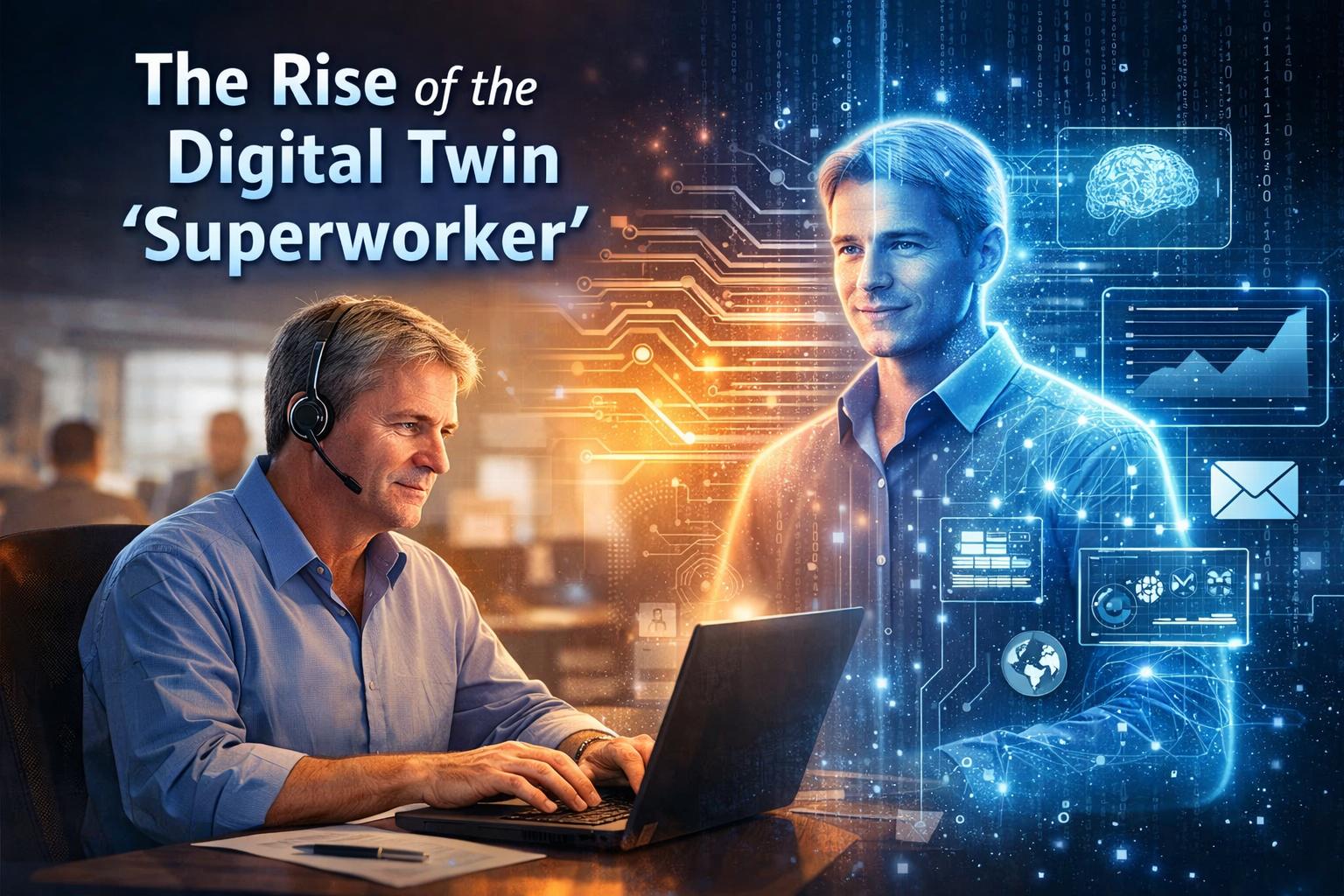
Digital Twin Job Loss Crisis: How AI “Superworkers” Are Reshaping the Future of Work
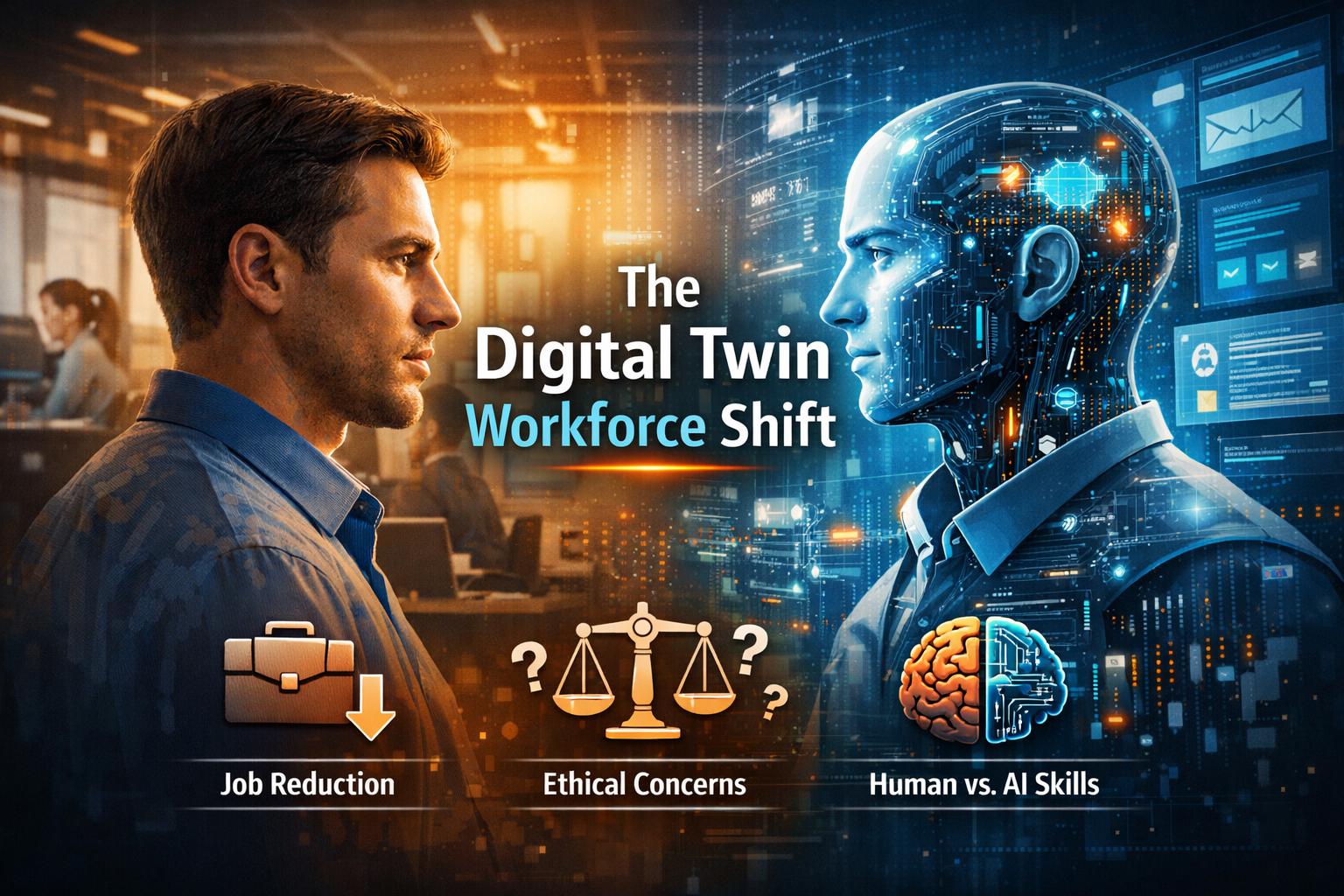
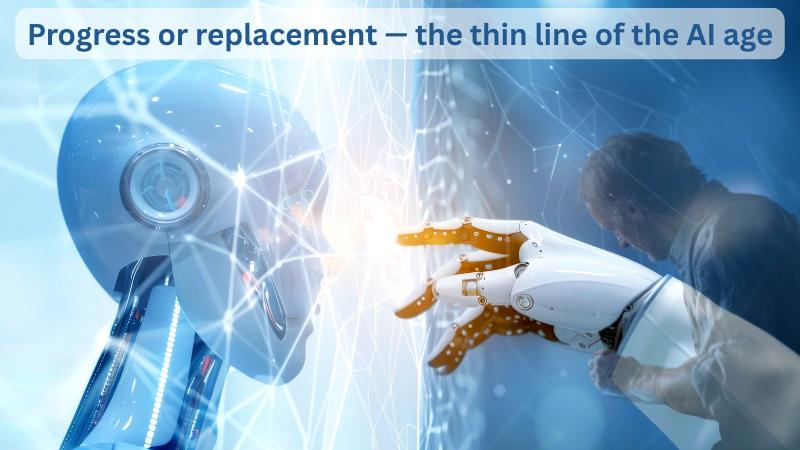
The rise of AI-powered digital twins is no longer just a tech trend—it’s quickly turning into a digital twin job loss crisis that could reshape how millions of people work. Companies are building AI versions of employees that can think, respond, and make decisions like humans. While this promises efficiency, it also raises a serious concern: are workers unknowingly training their own replacements? How Digital Twins Are Replacing Human Roles
Digital Twin Job Loss Crisis: How AI “Superworkers” Are Reshaping the Future of Work
The rise of AI-powered digital twins is no longer just a tech trend—it’s quickly turning into a digital twin job loss crisis that could reshape how millions of people work. Companies are building AI versions of employees that can think, respond, and make decisions like humans. While this promises efficiency, it also raises a serious concern: are workers unknowingly training their own replacements? How Digital Twins Are Replacing Human Roles
Why are FIRs filed in the TCS Nashik case? Reports cite multiple complaints and arrests
Reports emerging from Nashik, India, have drawn attention to a case involving Tata Consultancy Services (TCS), where multiple complaints have been filed alleging workplace misconduct. The allegations include claims of harassment and coercion within a corporate office environment, prompting legal scrutiny and administrative response. Allegations of workplace harassment and coercion raise corporate concerns According to available information, the complaints center around alleged incidents of workplace harassment and coercion. These claims have raised concerns about employee safety and internal workplace culture, particularly within structured corporate environments where reporting mechanisms are expected to function effectively. Multiple FIRs registered as case moves beyond internal processes Authorities have registered multiple First Information Reports (FIRs) in connection with the case. Reports indicate that several individuals have been taken into custody as part of the ongoing investigation. The filing of FIRs suggests that the matter has progressed beyond internal handling into formal legal proceedings under Indian law. Investigation remains active under Indian legal framework Officials have confirmed that the case is under active investigation, with procedures being carried out in accordance with established legal frameworks. Authorities continue to examine evidence and statements, and no final determination has been made at this stage. Workplace safety and corporate ethics under increased scrutiny The case has drawn broader attention to corporate ethics, employee rights, and workplace safety standards. Experts emphasize the importance of transparent grievance systems, employee awareness, and accountability mechanisms to address such issues effectively. It is important to note that all claims referenced in this report are based on allegations, and the investigation remains ongoing. Further developments are expected as authorities continue their review.
Why are FIRs filed in the TCS Nashik case? Reports cite multiple complaints and arrests
Reports emerging from Nashik, India, have drawn attention to a case involving Tata Consultancy Services (TCS), where multiple complaints have been filed alleging workplace misconduct. The allegations include claims of harassment and coercion within a corporate office environment, prompting legal scrutiny and administrative response. Allegations of workplace harassment and coercion raise corporate concerns According to available information, the complaints center around alleged incidents of workplace harassment and coercion. These claims have raised concerns about employee safety and internal workplace culture, particularly within structured corporate environments where reporting mechanisms are expected to function effectively. Multiple FIRs registered as case moves beyond internal processes Authorities have registered multiple First Information Reports (FIRs) in connection with the case. Reports indicate that several individuals have been taken into custody as part of the ongoing investigation. The filing of FIRs suggests that the matter has progressed beyond internal handling into formal legal proceedings under Indian law. Investigation remains active under Indian legal framework Officials have confirmed that the case is under active investigation, with procedures being carried out in accordance with established legal frameworks. Authorities continue to examine evidence and statements, and no final determination has been made at this stage. Workplace safety and corporate ethics under increased scrutiny The case has drawn broader attention to corporate ethics, employee rights, and workplace safety standards. Experts emphasize the importance of transparent grievance systems, employee awareness, and accountability mechanisms to address such issues effectively. It is important to note that all claims referenced in this report are based on allegations, and the investigation remains ongoing. Further developments are expected as authorities continue their review.
What is a digital twin in the workplace?
What is a digital twin? A digital twin is an AI-powered system that replicates a person’s knowledge, behavior, and decision-making using their data. It can assist with tasks, answer questions, and act as a virtual version of an employee. Digital twin in workplace: the rise of AI ‘superwo
What is a digital twin in the workplace?
What is a digital twin? A digital twin is an AI-powered system that replicates a person’s knowledge, behavior, and decision-making using their data. It can assist with tasks, answer questions, and act as a virtual version of an employee. Digital twin in workplace: the rise of AI ‘superwo
IIT Delhi Graduate Walks Away from Rs 17 LPA Job, Cites Unhealthy Work-Life Balance
Chirag Madaan, a 24-year-old graduate from the prestigious Indian Institute of Technology (IIT) Delhi, has ignited a broader conversation about toxic corporate environments after deciding to quit his high-paying banking job. Despite earning nearly Rs 17 lakh per annum, Madaan chose to walk away from a career in the corporate banking sector due to the mounting stress, poor work-life balance, and lack of basic workplace rights. In a now-viral clip, Madaan explained that his decision w
IIT Delhi Graduate Walks Away from Rs 17 LPA Job, Cites Unhealthy Work-Life Balance
Chirag Madaan, a 24-year-old graduate from the prestigious Indian Institute of Technology (IIT) Delhi, has ignited a broader conversation about toxic corporate environments after deciding to quit his high-paying banking job. Despite earning nearly Rs 17 lakh per annum, Madaan chose to walk away from a career in the corporate banking sector due to the mounting stress, poor work-life balance, and lack of basic workplace rights. In a now-viral clip, Madaan explained that his decision w
Corporate jihad allegations surface at TCS office in Nashik
Allegations involving workplace harassment and religious conversion attempts have emerged from a major multinational company facility in Nashik, Maharashtra, India, raising concerns about employee safety and corporate conduct. The claims center around employees at Tata Consultancy Services (TCS), where complaints suggest that certain individuals allegedly targeted female colleagues, particularly Hindu women, by establishing personal relationships and later attempting to influence their religi
Corporate jihad allegations surface at TCS office in Nashik
Allegations involving workplace harassment and religious conversion attempts have emerged from a major multinational company facility in Nashik, Maharashtra, India, raising concerns about employee safety and corporate conduct. The claims center around employees at Tata Consultancy Services (TCS), where complaints suggest that certain individuals allegedly targeted female colleagues, particularly Hindu women, by establishing personal relationships and later attempting to influence their religi
Disney Announces 1,000 Layoffs Under New CEO Josh D'Amaro
Disney is set to lay off approximately 1,000 employees, marking the first major job cuts under new CEO Josh D’Amaro. The layoffs will primarily impact the company’s marketing division, with many of the positions being eliminated as part of Disney's ongoing restructuring process. While the layoffs are significant, they affect less than 1% of Disney’s global workforce, which stood at about 231,000 employees at the end of its 2025 fiscal year. This move comes after Disney made substantial
Disney Announces 1,000 Layoffs Under New CEO Josh D'Amaro
Disney is set to lay off approximately 1,000 employees, marking the first major job cuts under new CEO Josh D’Amaro. The layoffs will primarily impact the company’s marketing division, with many of the positions being eliminated as part of Disney's ongoing restructuring process. While the layoffs are significant, they affect less than 1% of Disney’s global workforce, which stood at about 231,000 employees at the end of its 2025 fiscal year. This move comes after Disney made substantial
U.S. adds 178,000 jobs in March, but labor market signals remain mixed
The U.S. labor market showed signs of recovery on Friday, April 4, 2026, as new data revealed stronger-than-expected job creation in March, even as broader indicators pointed to continued fragility in hiring conditions. According to the Bureau of Labor Statistics, nonfarm payrolls increased by 178,000 in March, surpassing expectations of 59,000 and rebounding from a revised decline of 133,000 in Feb
U.S. adds 178,000 jobs in March, but labor market signals remain mixed
The U.S. labor market showed signs of recovery on Friday, April 4, 2026, as new data revealed stronger-than-expected job creation in March, even as broader indicators pointed to continued fragility in hiring conditions. According to the Bureau of Labor Statistics, nonfarm payrolls increased by 178,000 in March, surpassing expectations of 59,000 and rebounding from a revised decline of 133,000 in Feb
CBSE Expands Curriculum With Early AI Education From Class 3
The Central Board of Secondary Education (CBSE) has taken a significant step towards modernizing India’s education system by introducing artificial intelligence learning for students starting from Class 3. This move reflects the growing importance of digital literacy and emerging technologies in shaping the future workforce. By incorporating AI concepts at an early stage, CBSE aims to ensure that students are not just consumers of technology but also understand its fundamentals and applications. The initiative is part of a broader effort to align school education with global technological trends and prepare students for a rapidly evolving digital world. Under this new curriculum, young learners will be introduced to basic concepts of artificial intelligence through interactive and activity-based learning methods. Instead of complex coding, the focus will be on developing logical thinking, problem-solving skills, and an understanding of how AI impacts everyday life. Students will engage in simple exercises, games, and real-life examples to grasp how machines can learn and make decisions. This foundational approach ensures that children build curiosity and confidence in technology without feeling overwhelmed. Curriculum Focus and Implementation The AI curriculum for primary classes is designed to be age-appropriate and engaging. CBSE has collaborated with education experts and technology partners to create content that is both informative and easy to understand. Teachers will also receive specialized training to effectively deliver AI-related lessons in classrooms. The board plans to integrate AI topics with existing subjects, making learning more interdisciplinary and practical. This approach will help students connect theoretical knowledge with real-world applications, enhancing their overall learning experience. Impact on Students and Future Education Introducing AI learning at an early stage is expected to have a long-term impact on students’ academic and career paths. As industries increasingly rely on automation and data-driven technologies, early exposure to AI will give students a competitive edge. It will also encourage innovation and creativity among young minds, enabling them to think beyond traditional career options. Parents and educators have largely welcomed this move, seeing it as a progressive step toward building a tech-savvy generation. With this initiative, CBSE reinforces its commitment to evolving education standards and preparing students for the challenges of the future. The inclusion of artificial intelligence in the curriculum marks a shift from rote learning to skill-based education, ensuring that students are better equipped to navigate and contribute to a technology-driven world.
CBSE Expands Curriculum With Early AI Education From Class 3
The Central Board of Secondary Education (CBSE) has taken a significant step towards modernizing India’s education system by introducing artificial intelligence learning for students starting from Class 3. This move reflects the growing importance of digital literacy and emerging technologies in shaping the future workforce. By incorporating AI concepts at an early stage, CBSE aims to ensure that students are not just consumers of technology but also understand its fundamentals and applications. The initiative is part of a broader effort to align school education with global technological trends and prepare students for a rapidly evolving digital world. Under this new curriculum, young learners will be introduced to basic concepts of artificial intelligence through interactive and activity-based learning methods. Instead of complex coding, the focus will be on developing logical thinking, problem-solving skills, and an understanding of how AI impacts everyday life. Students will engage in simple exercises, games, and real-life examples to grasp how machines can learn and make decisions. This foundational approach ensures that children build curiosity and confidence in technology without feeling overwhelmed. Curriculum Focus and Implementation The AI curriculum for primary classes is designed to be age-appropriate and engaging. CBSE has collaborated with education experts and technology partners to create content that is both informative and easy to understand. Teachers will also receive specialized training to effectively deliver AI-related lessons in classrooms. The board plans to integrate AI topics with existing subjects, making learning more interdisciplinary and practical. This approach will help students connect theoretical knowledge with real-world applications, enhancing their overall learning experience. Impact on Students and Future Education Introducing AI learning at an early stage is expected to have a long-term impact on students’ academic and career paths. As industries increasingly rely on automation and data-driven technologies, early exposure to AI will give students a competitive edge. It will also encourage innovation and creativity among young minds, enabling them to think beyond traditional career options. Parents and educators have largely welcomed this move, seeing it as a progressive step toward building a tech-savvy generation. With this initiative, CBSE reinforces its commitment to evolving education standards and preparing students for the challenges of the future. The inclusion of artificial intelligence in the curriculum marks a shift from rote learning to skill-based education, ensuring that students are better equipped to navigate and contribute to a technology-driven world.
Mass robotaxi failure disrupts traffic in China’s Wuhan city
A large-scale robotaxi outage in Wuhan, China, disrupted traffic after multiple self-driving cars stopped mid-road due to a suspected system failure on Tuesday (March 31, 2026). Local police said the issue is under investigation and confirmed no injuries were reported. Videos circulating online showed halted vehicles causing congestion, with passengers exiting safely. One such video capturing the incident can be viewed here: https://x.com/ZeyiYang/status/2039153730533405102. The incident has raised concerns about the reliability of autonomous vehicles and the risks associated with system-wide failures. Similar disruptions occurred in San Francisco and Chongqing in 2025, highlighting ongoing challenges in driverless technology.
Mass robotaxi failure disrupts traffic in China’s Wuhan city
A large-scale robotaxi outage in Wuhan, China, disrupted traffic after multiple self-driving cars stopped mid-road due to a suspected system failure on Tuesday (March 31, 2026). Local police said the issue is under investigation and confirmed no injuries were reported. Videos circulating online showed halted vehicles causing congestion, with passengers exiting safely. One such video capturing the incident can be viewed here: https://x.com/ZeyiYang/status/2039153730533405102. The incident has raised concerns about the reliability of autonomous vehicles and the risks associated with system-wide failures. Similar disruptions occurred in San Francisco and Chongqing in 2025, highlighting ongoing challenges in driverless technology.
Are domes and spheres the future of immersive entertainment
Entertainment in the United States is rapidly evolving as audiences seek more immersive and engaging experiences beyond traditional movie theaters. A growing trend in this shift is the rise of domes and spherical venues, designed to surround viewers with 360-degree visuals and advanced sound systems. These spaces transform passive viewing into an interactive environment where audiences feel part of the content. One of the most recognized examples is the Sphere in Las Vegas, a large-
Are domes and spheres the future of immersive entertainment
Entertainment in the United States is rapidly evolving as audiences seek more immersive and engaging experiences beyond traditional movie theaters. A growing trend in this shift is the rise of domes and spherical venues, designed to surround viewers with 360-degree visuals and advanced sound systems. These spaces transform passive viewing into an interactive environment where audiences feel part of the content. One of the most recognized examples is the Sphere in Las Vegas, a large-


