What is a digital twin?
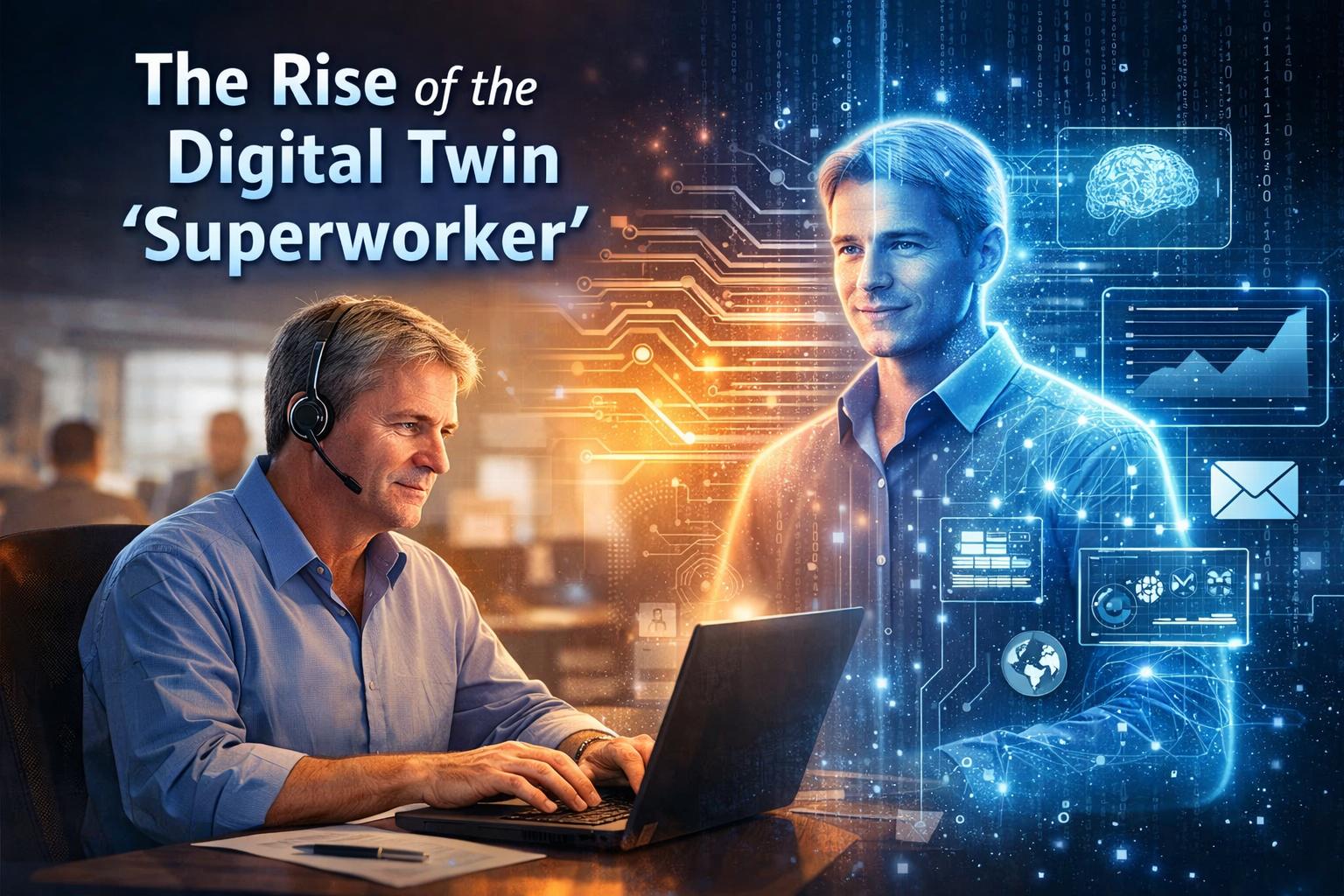
A digital twin is an AI-powered system that replicates a person’s knowledge, behavior, and decision-making using their data. It can assist with tasks, answer questions, and act as a virtual version of an employee.
Digital twin in workplace: the rise of AI ‘superworkers’
The concept of a digital twin in the workplace is rapidly moving from theory to reality. Companies are now developing AI-powered replicas of employees, often called “superworkers,” who can handle more tasks efficiently. While this innovation promises major productivity gains, it also raises important concerns about privacy, ownership, and the future of jobs.
How companies are using AI digital twins
A growing number of organizations are adopting digital twin technology to improve operations. One example is “Digital Richard,” an AI twin created by analyst Richard Skellett. This system is trained on years of meetings, documents, and decision-making patterns. It can assist with business strategies, answer complex queries, and even support personal task management. At his company, digital twins are now being used across teams in multiple countries.These AI replicas are already proving useful. Employees on leave can have their digital twins continue contributing, while retiring staff can transition their responsibilities gradually through AI support.
Benefits of digital twins for productivity
The rise of workplace AI is introducing the idea of the “superworker”—someone whose productivity is amplified by technology.For businesses, this means higher efficiency without increasing headcount, faster decision-making, and reduced reliance on meetings. For employees, it can lead to better work-life balance, higher earning potential based on output, and the ability to scale their expertise beyond time limitations.
Risks and challenges of digital twin technology
Despite the advantages, digital twins raise serious concerns. One key issue is ownership—whether the employee or employer controls the digital twin created from workplace data.There are also challenges related to data privacy, access control, and accountability if the AI makes mistakes. Legal experts warn that current employment laws are not fully equipped to handle these situations, and future disputes may need to be resolved through courts.
Future of AI digital twins in the workplace
Experts believe digital twins will become a standard tool in many industries. As AI continues to evolve, more companies are likely to adopt this technology to stay competitive.Future developments may include new laws defining ownership rights, updated employment contracts, and a shift toward performance-based compensation models. However, concerns about job displacement and misuse of personal data remain significant.
opportunity or risk for the future of work?
Digital twins have the potential to redefine productivity by turning employees into highly efficient “superworkers.” However, this transformation also introduces complex ethical and legal challenges.The long-term impact will depend on how organizations balance innovation with responsibility. One thing is clear: digital twins are set to play a major role in shaping the future of work.