#xi-jinping
China Hosts Putin in Beijing: Strengthening Strategic Ties
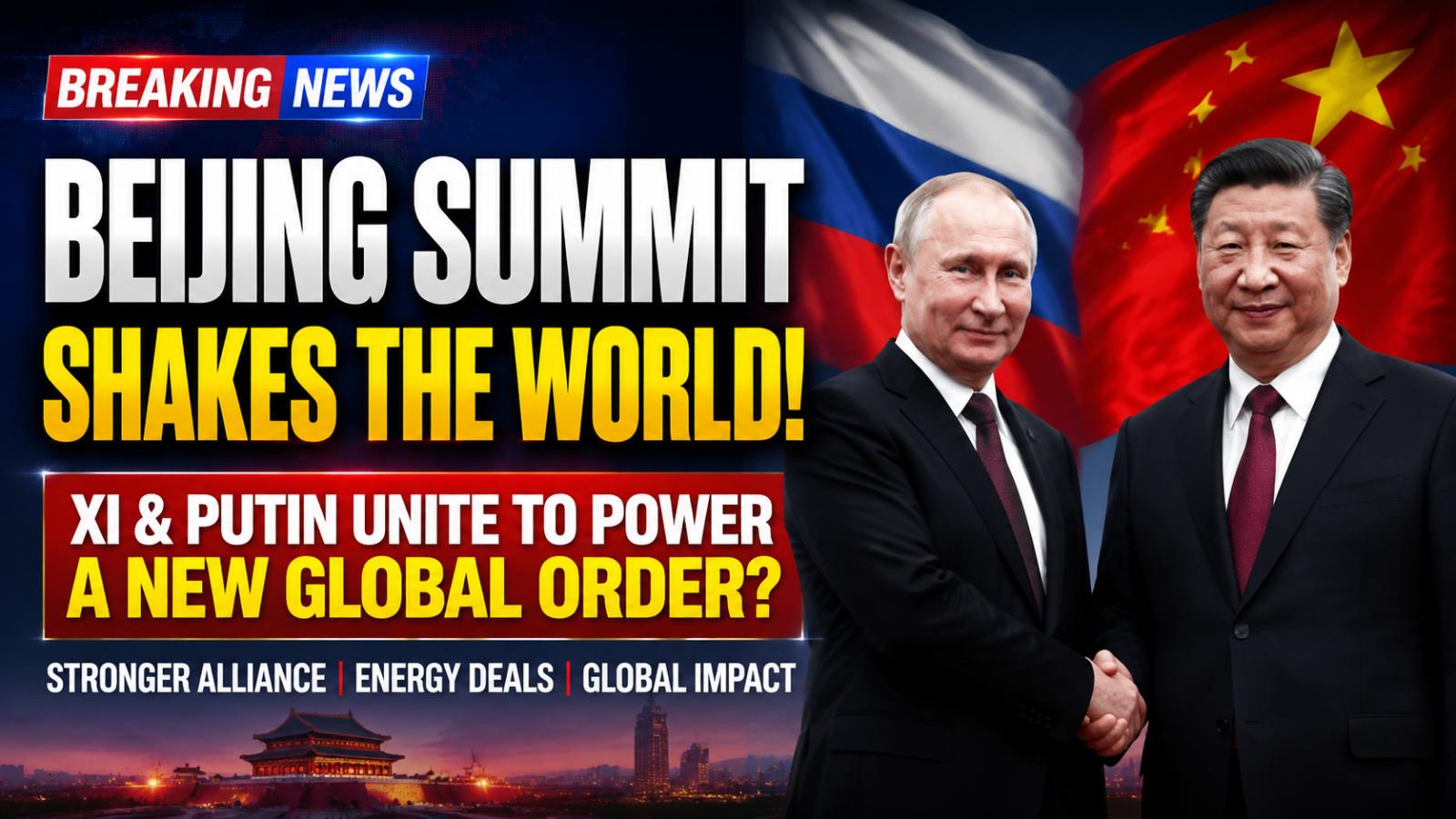
Chinese President Xi Jinping welcomed Russian President Vladimir Putin to Beijing this week, shortly after a visit from US President Donald Trump. The summit emphasizes China’s role as a central global power, balancing relations with both Washington and Moscow while advancing its strategic interests. Amid energy crises, trade disputes, and geopolitical conflicts, China aims to project stability and strengthen its influence on the global stage. Strengthening China-Russia S
China Hosts Putin in Beijing: Strengthening Strategic Ties
Chinese President Xi Jinping welcomed Russian President Vladimir Putin to Beijing this week, shortly after a visit from US President Donald Trump. The summit emphasizes China’s role as a central global power, balancing relations with both Washington and Moscow while advancing its strategic interests. Amid energy crises, trade disputes, and geopolitical conflicts, China aims to project stability and strengthen its influence on the global stage. Strengthening China-Russia S
Trump Taiwan Arms Sale Explained After China Trip
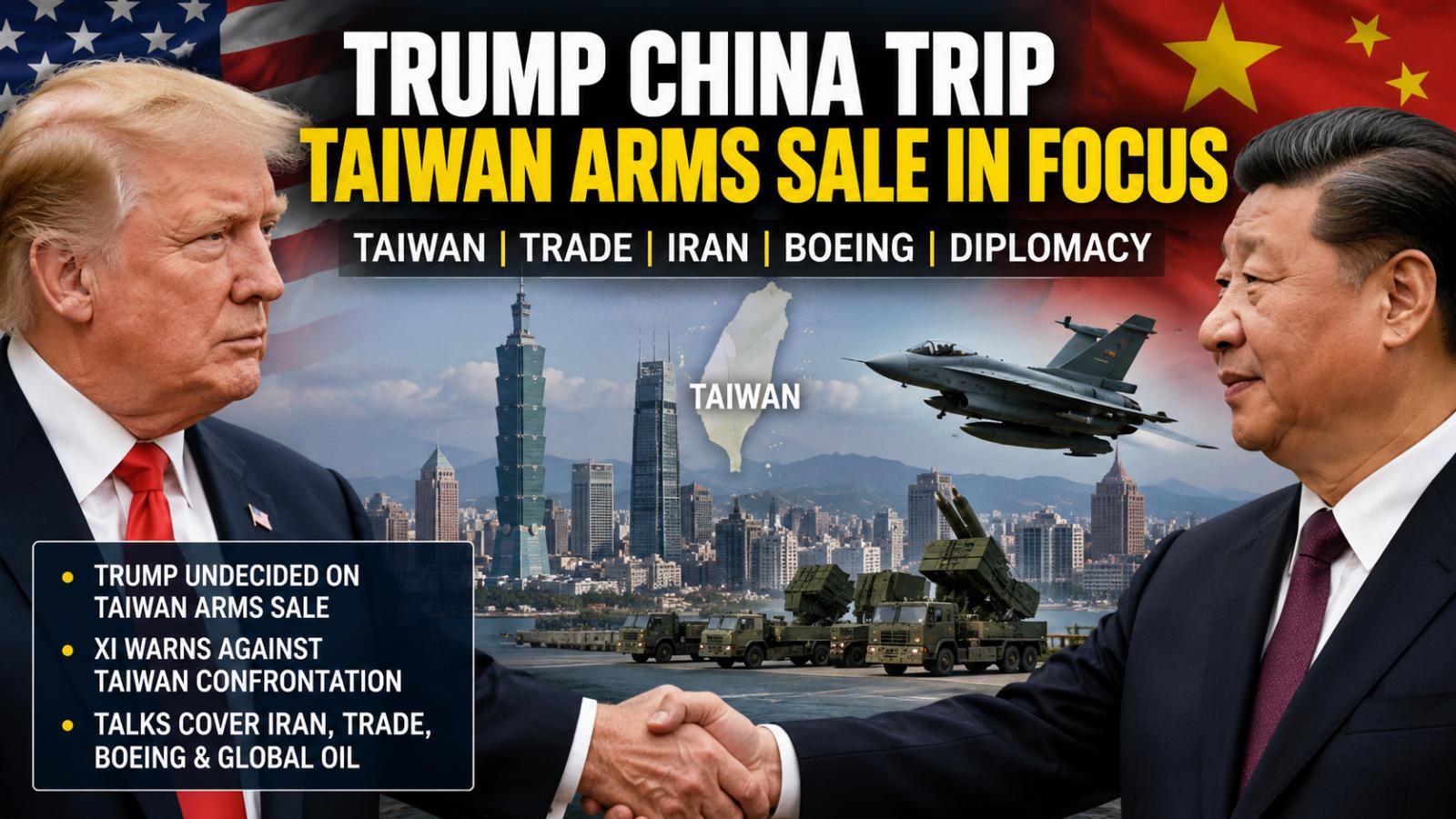
President Donald Trump left Beijing on Friday, May 15, 2026, without a final decision on a major U.S. arms sale to Taiwan, keeping one of the most sensitive issues in U.S.-China relations unresolved. The Trump Taiwan arms sale decision became a central focus after his three-day China visit, where talks with Chinese President Xi Jinping covered Taiwan, Iran, trade, Boeing aircraft and wider efforts to stabilize relations between Washington and Beijing. Trump-Xi Tai
Trump Taiwan Arms Sale Explained After China Trip
President Donald Trump left Beijing on Friday, May 15, 2026, without a final decision on a major U.S. arms sale to Taiwan, keeping one of the most sensitive issues in U.S.-China relations unresolved. The Trump Taiwan arms sale decision became a central focus after his three-day China visit, where talks with Chinese President Xi Jinping covered Taiwan, Iran, trade, Boeing aircraft and wider efforts to stabilize relations between Washington and Beijing. Trump-Xi Tai
Trump Invites Xi Jinping to the White House
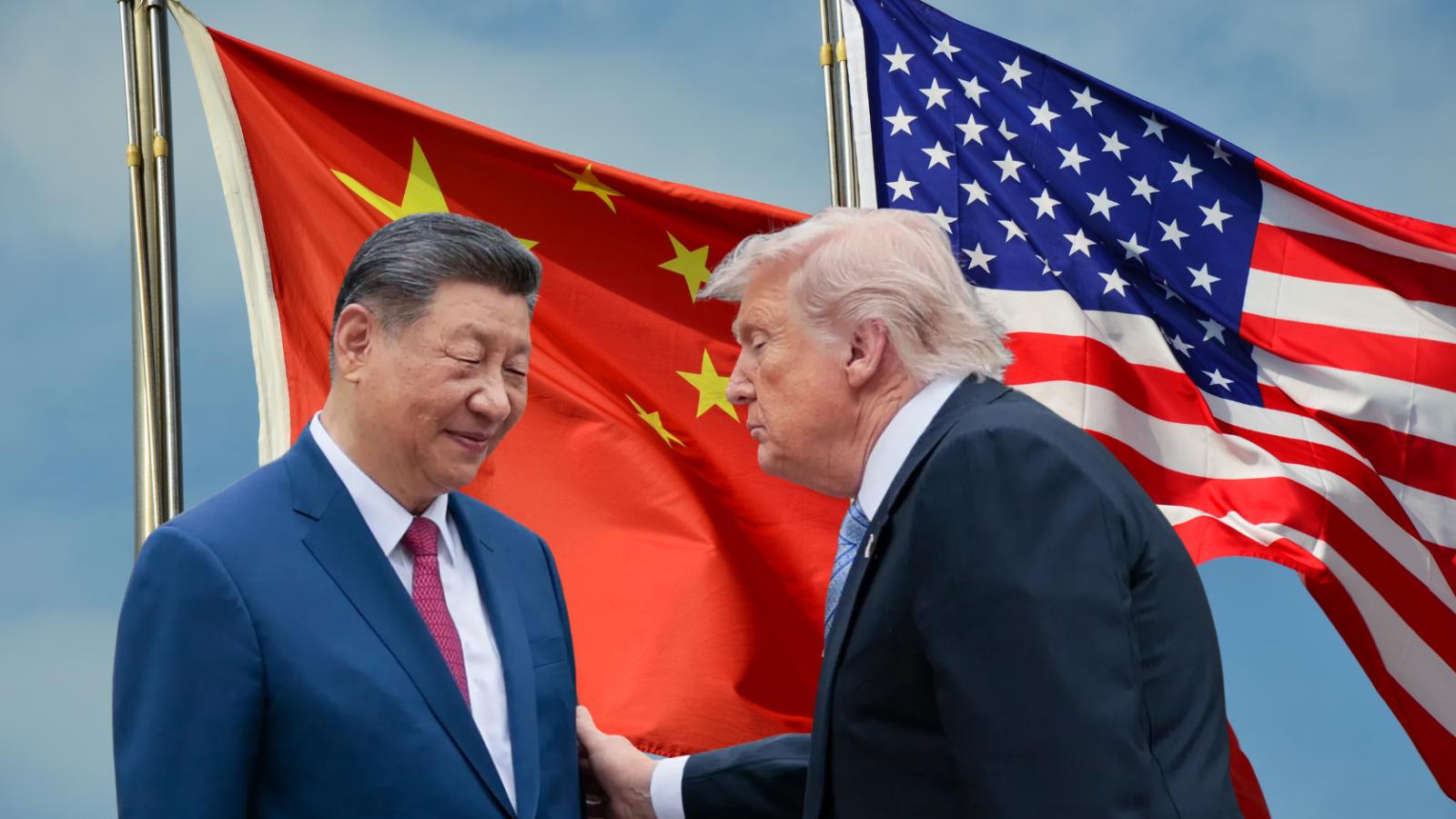
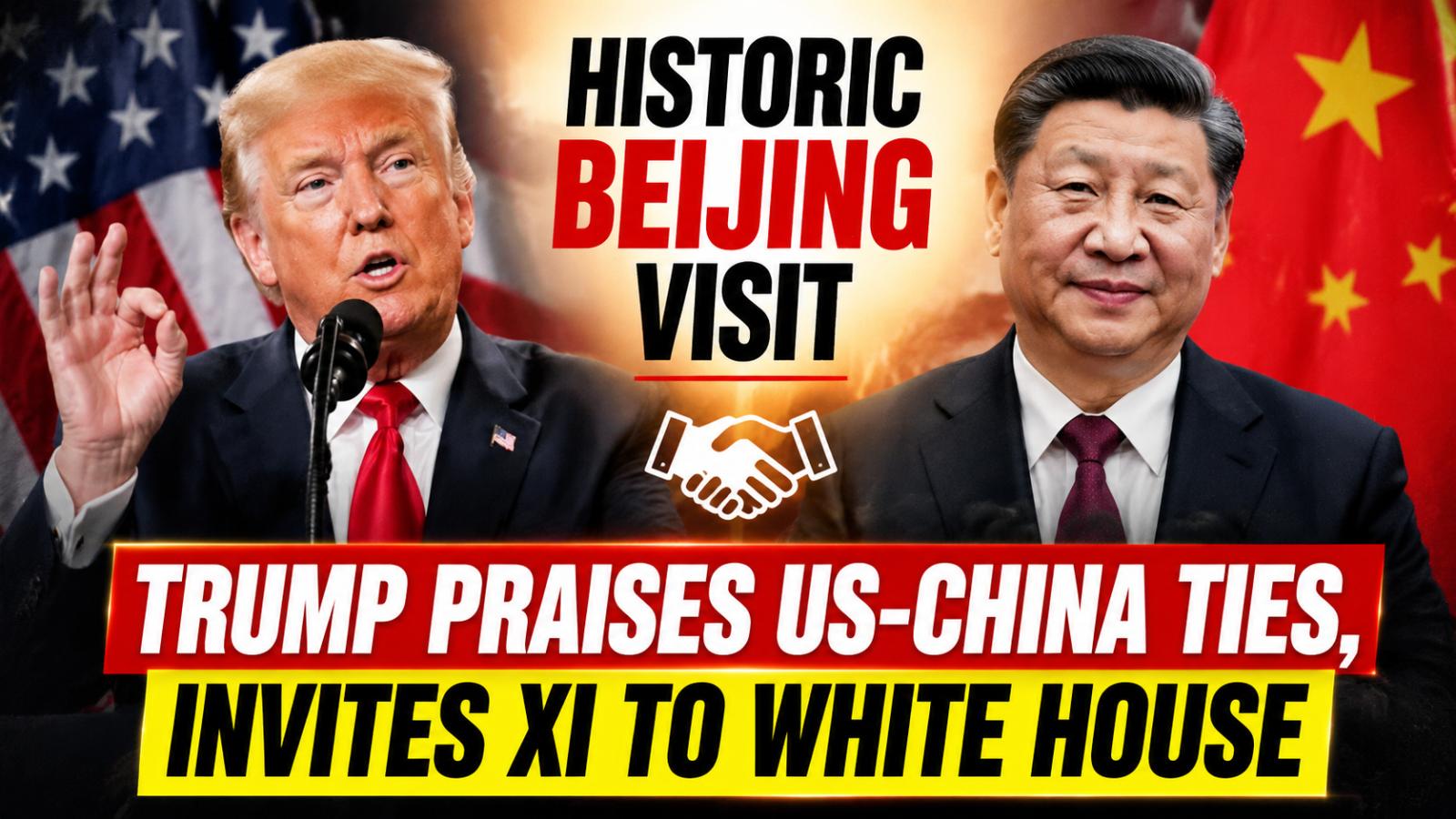
Trump's Historic Visit to Beijing During his address from Beijing, US President Donald Trump praised the enduring strength of the relationship between the United States and China, emphasizing the mutual respect that exists between the citizens of both nations. Trump expressed his gratitude for the "magnificent welcome" he received upon his arrival, acknowledging the warmth and hospitality extended to him during his historic visit. Trump and Xi Jinping As part
Trump Invites Xi Jinping to the White House
Trump's Historic Visit to Beijing During his address from Beijing, US President Donald Trump praised the enduring strength of the relationship between the United States and China, emphasizing the mutual respect that exists between the citizens of both nations. Trump expressed his gratitude for the "magnificent welcome" he received upon his arrival, acknowledging the warmth and hospitality extended to him during his historic visit. Trump and Xi Jinping As part
Trump’s Visit to China: A Grand Reception
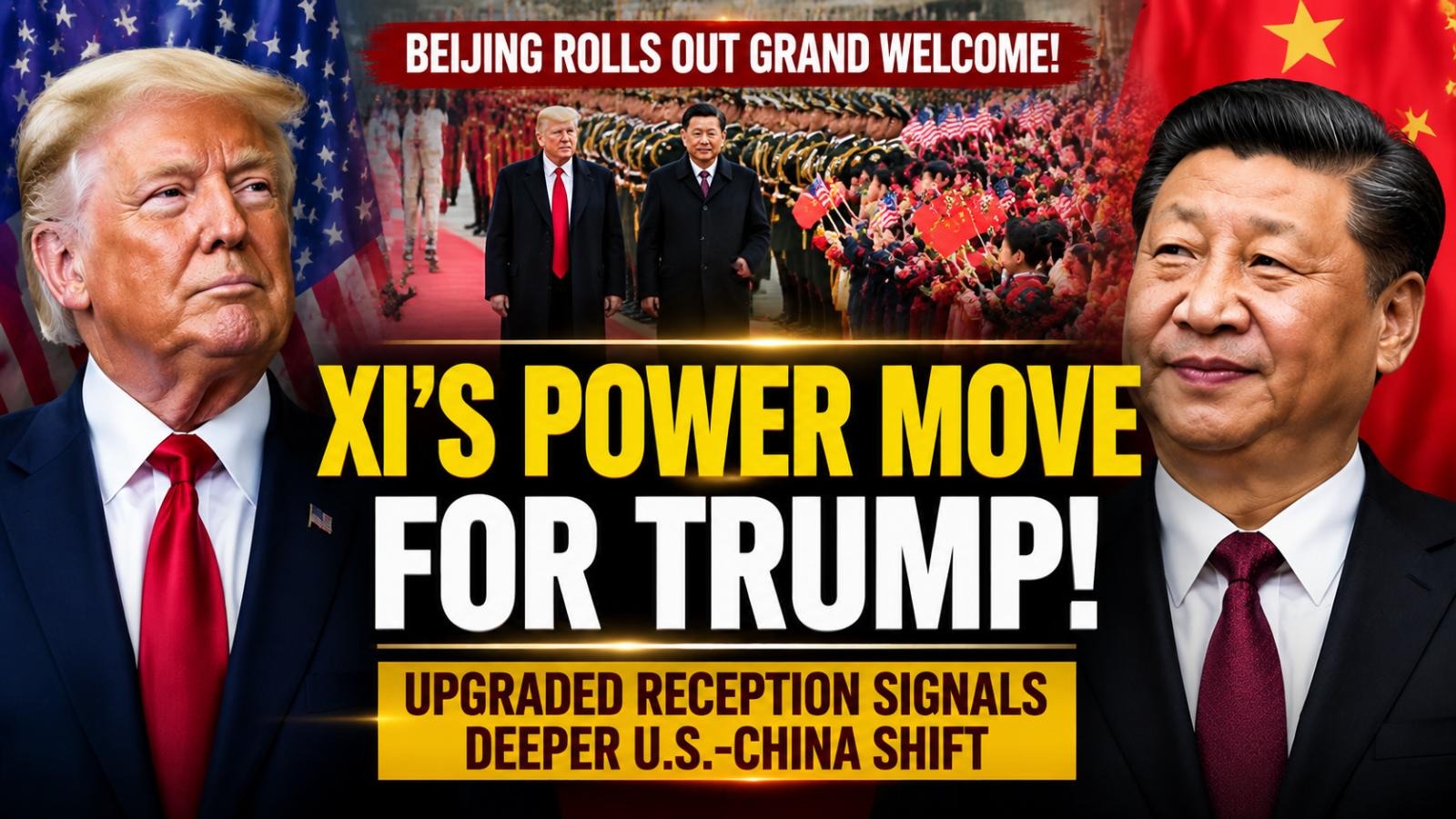
A Warmer Welcome for Trump Chinese President Xi Jinping’s diplomatic approach to Donald Trump’s recent visit to Beijing marked a clear shift in China-US relations. Unlike in 2017, when Trump was greeted by a lower-ranking official, this time China sent Vice President Han Zheng, along with both ambassadors and senior foreign affairs officials, signaling a significant elevation in the diplomatic reception. Isabelle Vladoiu, founder of the US Institute of Diplomacy and Human Righ
Trump’s Visit to China: A Grand Reception
A Warmer Welcome for Trump Chinese President Xi Jinping’s diplomatic approach to Donald Trump’s recent visit to Beijing marked a clear shift in China-US relations. Unlike in 2017, when Trump was greeted by a lower-ranking official, this time China sent Vice President Han Zheng, along with both ambassadors and senior foreign affairs officials, signaling a significant elevation in the diplomatic reception. Isabelle Vladoiu, founder of the US Institute of Diplomacy and Human Righ
US-China relations: Trump and Xi hold critical talks on trade, rare minerals, and Taiwan
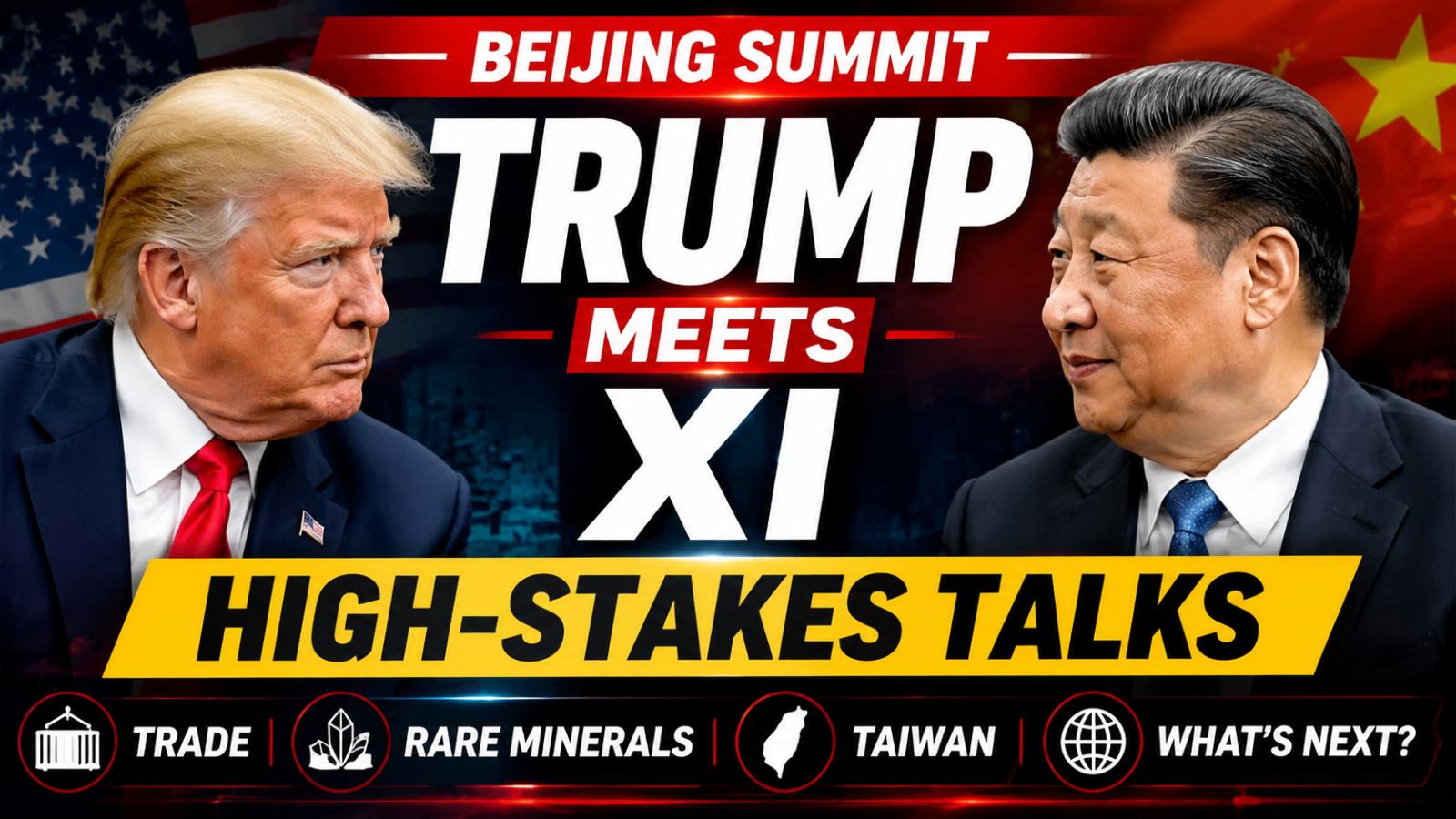
On May 14, 2026, a historic meeting unfolded in Beijing between U.S. President Donald Trump and Chinese President Xi Jinping. Hosted at the Great Hall of the People, the summit aimed to strengthen the ties between the two largest economies in the world. The opening moments were marked by a brief but firm handshake that lasted a solid 40 seconds, setting a serious but cordial tone for the discussions ahead. High-Level
US-China relations: Trump and Xi hold critical talks on trade, rare minerals, and Taiwan
On May 14, 2026, a historic meeting unfolded in Beijing between U.S. President Donald Trump and Chinese President Xi Jinping. Hosted at the Great Hall of the People, the summit aimed to strengthen the ties between the two largest economies in the world. The opening moments were marked by a brief but firm handshake that lasted a solid 40 seconds, setting a serious but cordial tone for the discussions ahead. High-Level
Xi and Trump Summit at Beijing
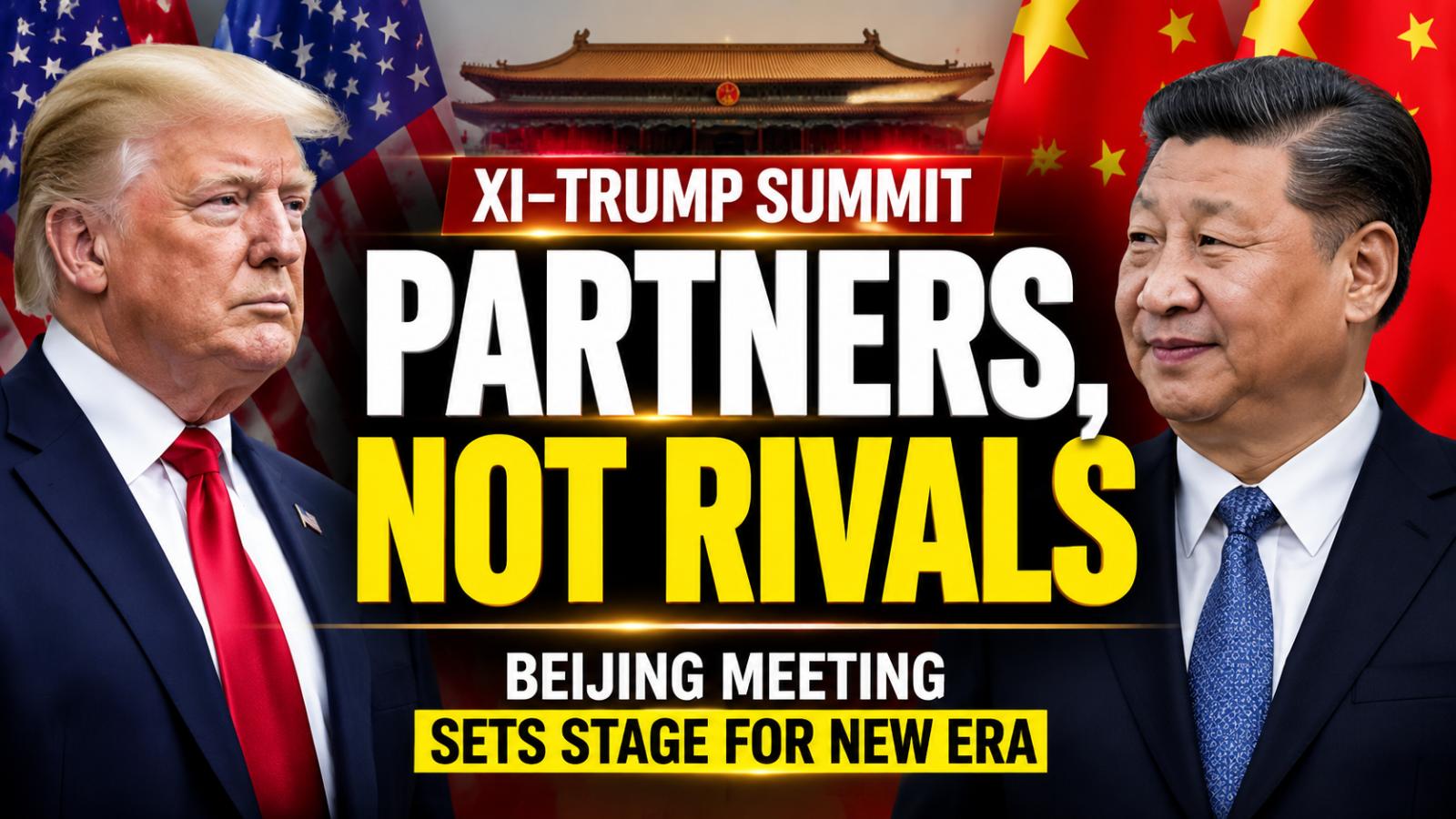
Historic Summit Marks a New Phase for US-China Relations On Thursday, May 14, 2026, Chinese President Xi Jinping welcomed US President Donald Trump to Beijing for a high-stakes summit, marking a critical moment in the evolving relationship between the two global powers. Xi set the tone for the summit by stressing the importance of cooperation over confrontation, calling for a stable US-China relationship as a foundation for global stability. “A stable China-US relationship is a
Xi and Trump Summit at Beijing
Historic Summit Marks a New Phase for US-China Relations On Thursday, May 14, 2026, Chinese President Xi Jinping welcomed US President Donald Trump to Beijing for a high-stakes summit, marking a critical moment in the evolving relationship between the two global powers. Xi set the tone for the summit by stressing the importance of cooperation over confrontation, calling for a stable US-China relationship as a foundation for global stability. “A stable China-US relationship is a
US Investigates Possible Chinese Arms Sales to Iran Amid Middle East Tensions
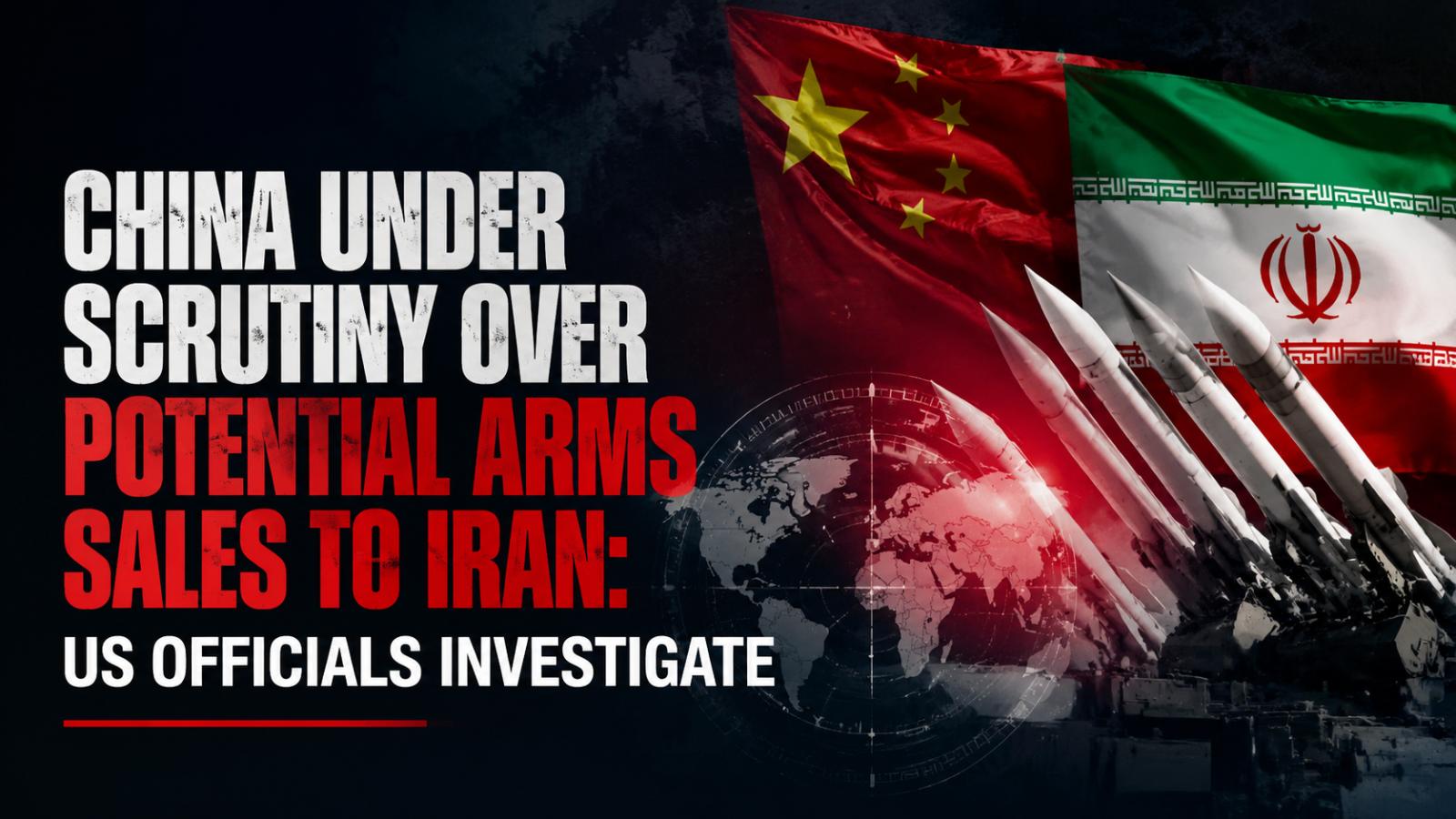
Amid rising tensions in the Middle East, US intelligence agencies are investigating whether China has been supplying military support to Iran. Sources familiar with the ongoing probe suggest that Chinese companies may have been negotiating arms transfers with Iranian officials. These weapons, believed to be funneled through third-party nations, are reportedly being used to mask their origin. However, it remains uncertain if any shipments have been completed or whether China’s government has given its official approval. This investigation unfolds as President Donald Trump is scheduled to meet with Chinese President Xi Jinping in Beijing, where the topic of military cooperation is expected to be high on the agenda. US officials are pushing for a strong stance, as reports suggest that China might have provided Iran with sophisticated military equipment, including shoulder-fired anti-aircraft missile systems known as MANPADS. These missiles could target low-flying aircraft, which would be a major security threat in the region. How is the US responding? The United States has called on China to end any military support to Iran, stressing that such actions are unacceptable, especially with ongoing diplomatic efforts to stabilize relations. Despite attempts to smooth over tensions with China, the US administration has been vocal about its concerns, citing intelligence reports that point to a potential arms shipment route passing through an African nation. So far, there is no clear evidence that any weapons have been successfully transferred. Has China already provided military aid to Iran? While the situation remains ambiguous, reports indicate that China has been providing Iran with other forms of assistance, such as intelligence support and satellite surveillance technology. These resources have significantly boosted Iran’s ability to monitor US military positions in the region. Furthermore, China is believed to have supplied dual-use technology, including semiconductors and sensors, which have both civilian and military applications. These components are often harder to trace, raising concerns that China may be covertly aiding Iran’s military capabilities. What does China gain from supporting Iran? China has strategic interests in maintaining a strong partnership with Iran. As one of Iran's top economic allies, China imports a significant portion of Iran's oil, with estimates suggesting that 80% of Iranian oil exports are bound for China. Beijing’s involvement in the region is also driven by its need to safeguard energy shipments that pass through the Strait of Hormuz, a critical maritime trade route. With the ongoing conflict affecting global shipping, China’s role in ensuring the stability of this region has become more crucial. However, the uncertainty surrounding the Middle East conflict is putting pressure on China, as well as on the broader global market. As the investigation into possible Chinese arms sales to Iran continues, the US is maintaining its vigilance, closely monitoring China’s actions in the Middle East. The growing influence of these geopolitical dynamics on the region’s stability suggests that the US will keep up its scrutiny of China’s role in Iran’s military affairs, especially as tensions continue to rise in this strategic part of the world.
US Investigates Possible Chinese Arms Sales to Iran Amid Middle East Tensions
Amid rising tensions in the Middle East, US intelligence agencies are investigating whether China has been supplying military support to Iran. Sources familiar with the ongoing probe suggest that Chinese companies may have been negotiating arms transfers with Iranian officials. These weapons, believed to be funneled through third-party nations, are reportedly being used to mask their origin. However, it remains uncertain if any shipments have been completed or whether China’s government has given its official approval. This investigation unfolds as President Donald Trump is scheduled to meet with Chinese President Xi Jinping in Beijing, where the topic of military cooperation is expected to be high on the agenda. US officials are pushing for a strong stance, as reports suggest that China might have provided Iran with sophisticated military equipment, including shoulder-fired anti-aircraft missile systems known as MANPADS. These missiles could target low-flying aircraft, which would be a major security threat in the region. How is the US responding? The United States has called on China to end any military support to Iran, stressing that such actions are unacceptable, especially with ongoing diplomatic efforts to stabilize relations. Despite attempts to smooth over tensions with China, the US administration has been vocal about its concerns, citing intelligence reports that point to a potential arms shipment route passing through an African nation. So far, there is no clear evidence that any weapons have been successfully transferred. Has China already provided military aid to Iran? While the situation remains ambiguous, reports indicate that China has been providing Iran with other forms of assistance, such as intelligence support and satellite surveillance technology. These resources have significantly boosted Iran’s ability to monitor US military positions in the region. Furthermore, China is believed to have supplied dual-use technology, including semiconductors and sensors, which have both civilian and military applications. These components are often harder to trace, raising concerns that China may be covertly aiding Iran’s military capabilities. What does China gain from supporting Iran? China has strategic interests in maintaining a strong partnership with Iran. As one of Iran's top economic allies, China imports a significant portion of Iran's oil, with estimates suggesting that 80% of Iranian oil exports are bound for China. Beijing’s involvement in the region is also driven by its need to safeguard energy shipments that pass through the Strait of Hormuz, a critical maritime trade route. With the ongoing conflict affecting global shipping, China’s role in ensuring the stability of this region has become more crucial. However, the uncertainty surrounding the Middle East conflict is putting pressure on China, as well as on the broader global market. As the investigation into possible Chinese arms sales to Iran continues, the US is maintaining its vigilance, closely monitoring China’s actions in the Middle East. The growing influence of these geopolitical dynamics on the region’s stability suggests that the US will keep up its scrutiny of China’s role in Iran’s military affairs, especially as tensions continue to rise in this strategic part of the world.
Trump-Xi summit: Key issues, trade talks, and Iran conflict to be addressed
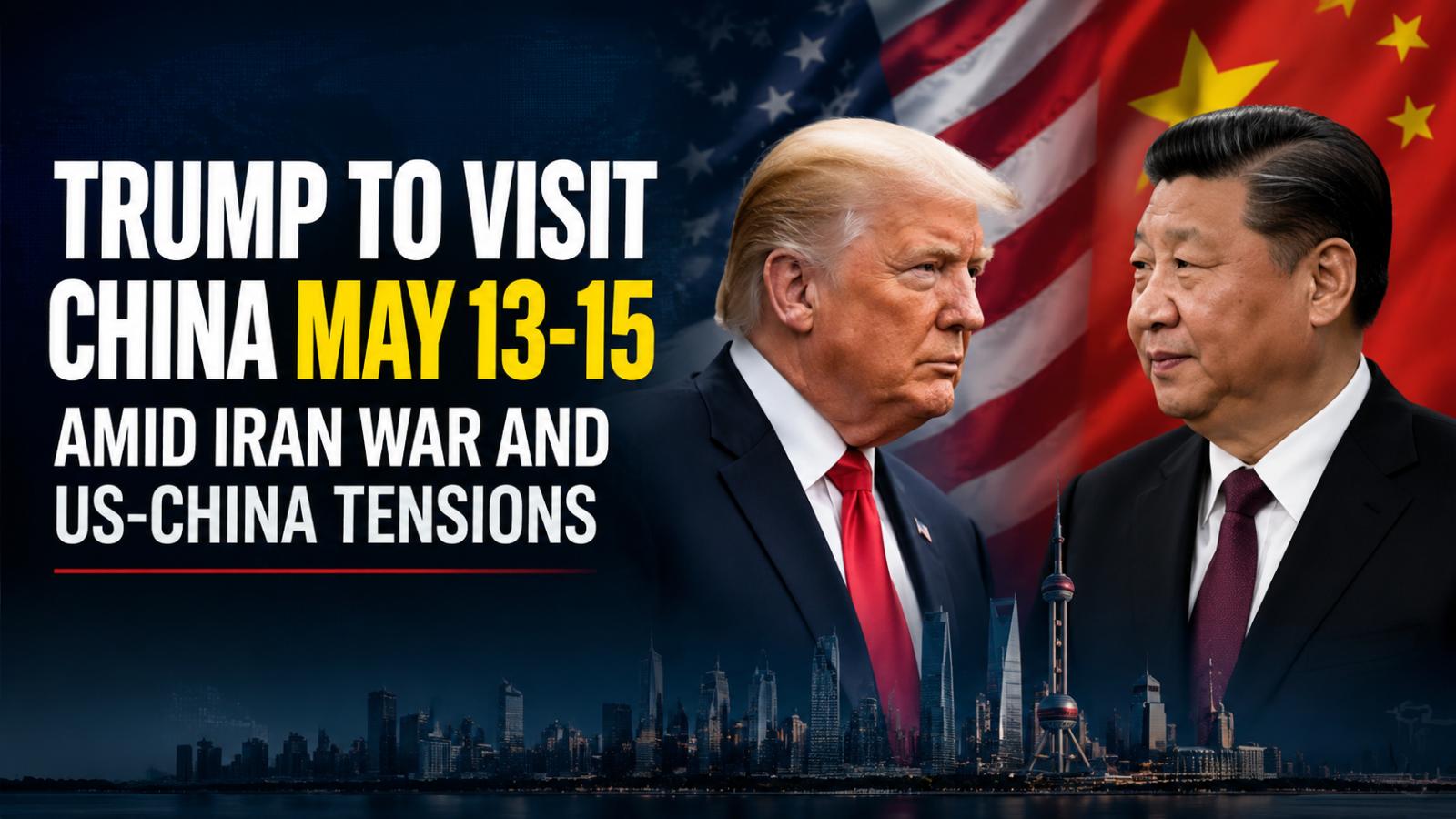
US President Donald Trump is set to visit China from May 13 to 15, marking the first visit to the country by an American president in nearly nine years. The invitation comes from Chinese President Xi Jinping amid growing tensions between the two nations over issues such as trade, technology, and defense. This visit comes at a critical time for global politics, with the ongoing Iran conflict impacting both economic stability and energy prices. The timing of Trump’s visit coincides with a volatile situation in the Strait of Hormuz, where a dual blockade has significantly disrupted global oil trade, driving up energy prices. These disruptions have the potential to harm global economic growth, as the Strait is a vital shipping route for the world’s oil supply. Trump’s administration has placed significant pressure on Iran over its nuclear program, and in recent remarks, he stated that the US would “finish the job” if Iran did not agree to the terms aimed at halting the conflict. While tensions remain high, the US continues to press for a diplomatic resolution to the situation, with President Trump asserting that Iran must meet specific demands regarding its nuclear ambitions. Despite these pressures, Trump maintains that the US does not need China’s assistance to resolve the issue, suggesting that the conflict could be settled with or without China’s involvement. Iran, for its part, has signaled its intention to pursue peace, with chief negotiator Mohammad Bagher Ghalibaf issuing an ultimatum to the US. According to Ghalibaf, Washington must accept Iran’s recent peace proposal or face further failure in negotiations. He emphasized that there was no alternative but to acknowledge the rights of the Iranian people as outlined in Tehran’s 14-point proposal. Beyond the Iran conflict, the upcoming Trump-Xi summit is expected to address several key issues affecting US-China relations. Trade discussions will likely focus on extending a temporary truce in the ongoing trade dispute, particularly concerning rare earth minerals. Both leaders are expected to explore agreements related to Boeing aircraft purchases, as well as expanding trade and investment ties. Additionally, China is anticipated to announce purchases in the US agricultural and energy sectors. Another significant topic of discussion will be Taiwan, with Xi expressing frustration over the US’s continued support for the island nation, which China claims as part of its territory. Trump’s administration has reiterated its commitment to Taiwan, despite escalating military activities in the region by China. The summit will also cover the rapid development of artificial intelligence (AI) in both countries, with US officials highlighting concerns about the potential military and economic implications of AI advancements. With both nations at the forefront of technological innovation, there is a growing need for open communication to avoid misunderstandings or potential conflicts arising from the use of AI. This high-stakes summit between the US and China is poised to shape the future of global trade, energy security, and technological development, with both sides seeking to manage their differences while addressing urgent geopolitical challenges. As the world watches, the outcome of these talks could have far-reaching implications for international relations.
Trump-Xi summit: Key issues, trade talks, and Iran conflict to be addressed
US President Donald Trump is set to visit China from May 13 to 15, marking the first visit to the country by an American president in nearly nine years. The invitation comes from Chinese President Xi Jinping amid growing tensions between the two nations over issues such as trade, technology, and defense. This visit comes at a critical time for global politics, with the ongoing Iran conflict impacting both economic stability and energy prices. The timing of Trump’s visit coincides with a volatile situation in the Strait of Hormuz, where a dual blockade has significantly disrupted global oil trade, driving up energy prices. These disruptions have the potential to harm global economic growth, as the Strait is a vital shipping route for the world’s oil supply. Trump’s administration has placed significant pressure on Iran over its nuclear program, and in recent remarks, he stated that the US would “finish the job” if Iran did not agree to the terms aimed at halting the conflict. While tensions remain high, the US continues to press for a diplomatic resolution to the situation, with President Trump asserting that Iran must meet specific demands regarding its nuclear ambitions. Despite these pressures, Trump maintains that the US does not need China’s assistance to resolve the issue, suggesting that the conflict could be settled with or without China’s involvement. Iran, for its part, has signaled its intention to pursue peace, with chief negotiator Mohammad Bagher Ghalibaf issuing an ultimatum to the US. According to Ghalibaf, Washington must accept Iran’s recent peace proposal or face further failure in negotiations. He emphasized that there was no alternative but to acknowledge the rights of the Iranian people as outlined in Tehran’s 14-point proposal. Beyond the Iran conflict, the upcoming Trump-Xi summit is expected to address several key issues affecting US-China relations. Trade discussions will likely focus on extending a temporary truce in the ongoing trade dispute, particularly concerning rare earth minerals. Both leaders are expected to explore agreements related to Boeing aircraft purchases, as well as expanding trade and investment ties. Additionally, China is anticipated to announce purchases in the US agricultural and energy sectors. Another significant topic of discussion will be Taiwan, with Xi expressing frustration over the US’s continued support for the island nation, which China claims as part of its territory. Trump’s administration has reiterated its commitment to Taiwan, despite escalating military activities in the region by China. The summit will also cover the rapid development of artificial intelligence (AI) in both countries, with US officials highlighting concerns about the potential military and economic implications of AI advancements. With both nations at the forefront of technological innovation, there is a growing need for open communication to avoid misunderstandings or potential conflicts arising from the use of AI. This high-stakes summit between the US and China is poised to shape the future of global trade, energy security, and technological development, with both sides seeking to manage their differences while addressing urgent geopolitical challenges. As the world watches, the outcome of these talks could have far-reaching implications for international relations.
Trump’s Bold Iran Strategy: "We’ll Win Peacefully or Otherwise"
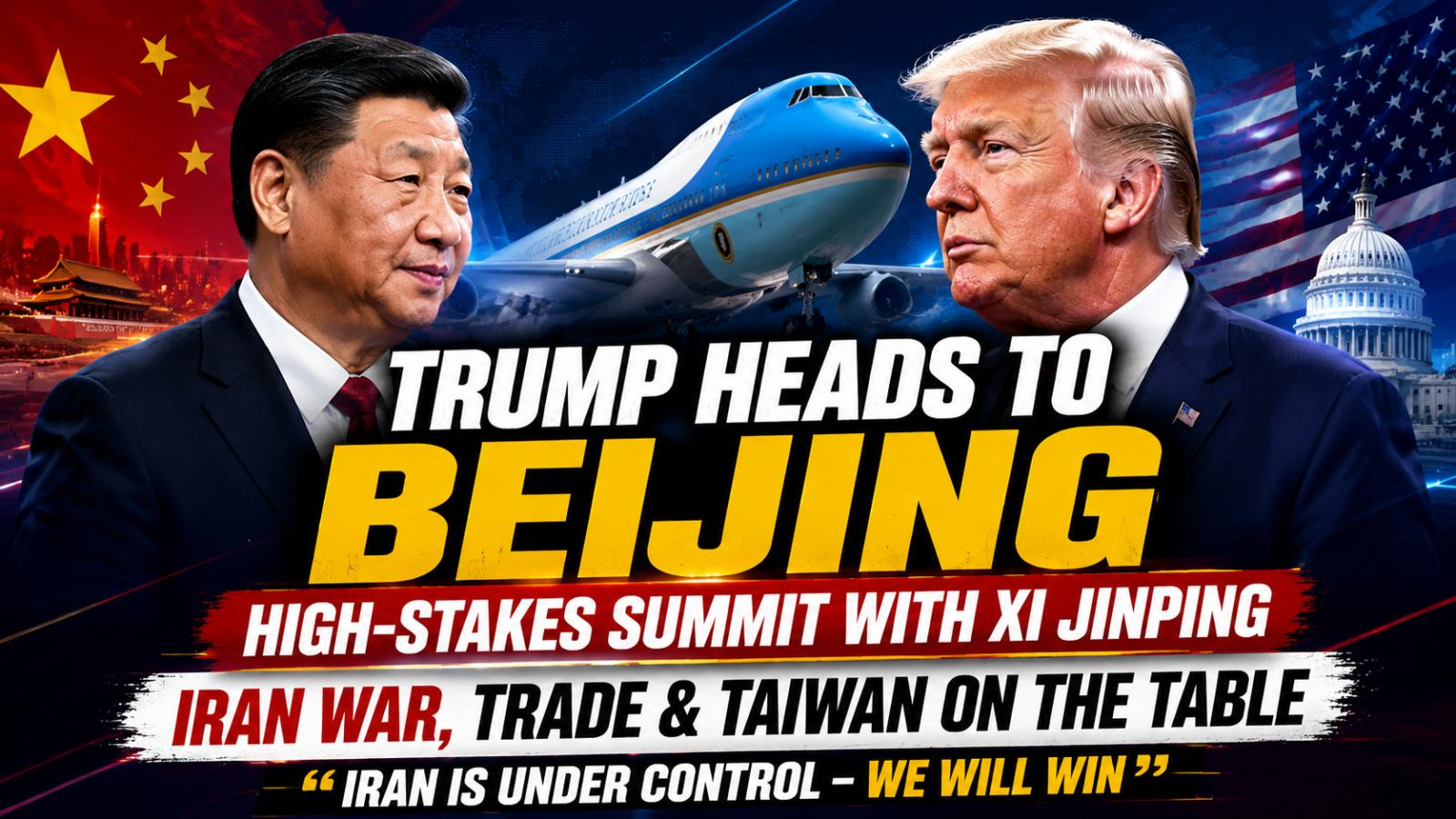
Trump’s Departure for Beijing President Donald Trump left Washington on May 12th for a high-stakes summit with Chinese President Xi Jinping in Beijing. As he boarded Air Force One for the trip, Trump addressed reporters, emphasizing that Iran is "under control" and that the United States either intends to make a deal or "decimate" Iran’s military capabilities. This rhetoric comes amid the ongoing conflict with Iran, with Trump reiterating his u

Trump’s Bold Iran Strategy: "We’ll Win Peacefully or Otherwise"
Trump’s Departure for Beijing President Donald Trump left Washington on May 12th for a high-stakes summit with Chinese President Xi Jinping in Beijing. As he boarded Air Force One for the trip, Trump addressed reporters, emphasizing that Iran is "under control" and that the United States either intends to make a deal or "decimate" Iran’s military capabilities. This rhetoric comes amid the ongoing conflict with Iran, with Trump reiterating his u
China Sentences Ex-Defence Ministers Wei Fenghe, Li Shangfu to Suspended Death in PLA Corruption Purge
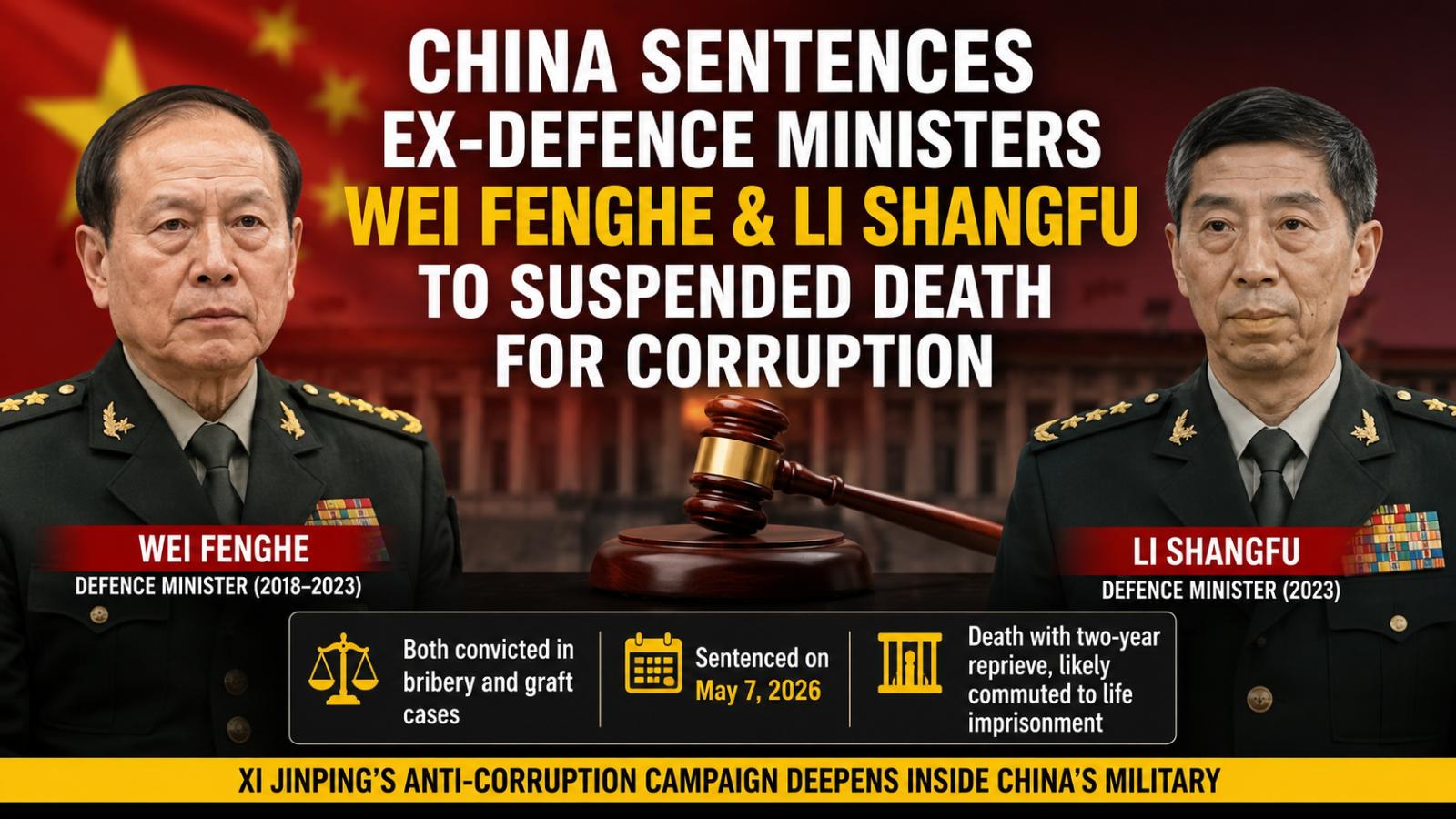
China Hands Suspended Death Sentences to Former Defence Ministers China has sentenced former defence ministers Wei Fenghe and Li Shangfu to death with a two-year reprieve in a major PLA corruption case, state media reported Thursday. The ruling marks one of the harshest punishments against senior Chinese military figures in years and signals that President Xi Jinping’s anti-graft campaign
China Sentences Ex-Defence Ministers Wei Fenghe, Li Shangfu to Suspended Death in PLA Corruption Purge
China Hands Suspended Death Sentences to Former Defence Ministers China has sentenced former defence ministers Wei Fenghe and Li Shangfu to death with a two-year reprieve in a major PLA corruption case, state media reported Thursday. The ruling marks one of the harshest punishments against senior Chinese military figures in years and signals that President Xi Jinping’s anti-graft campaign
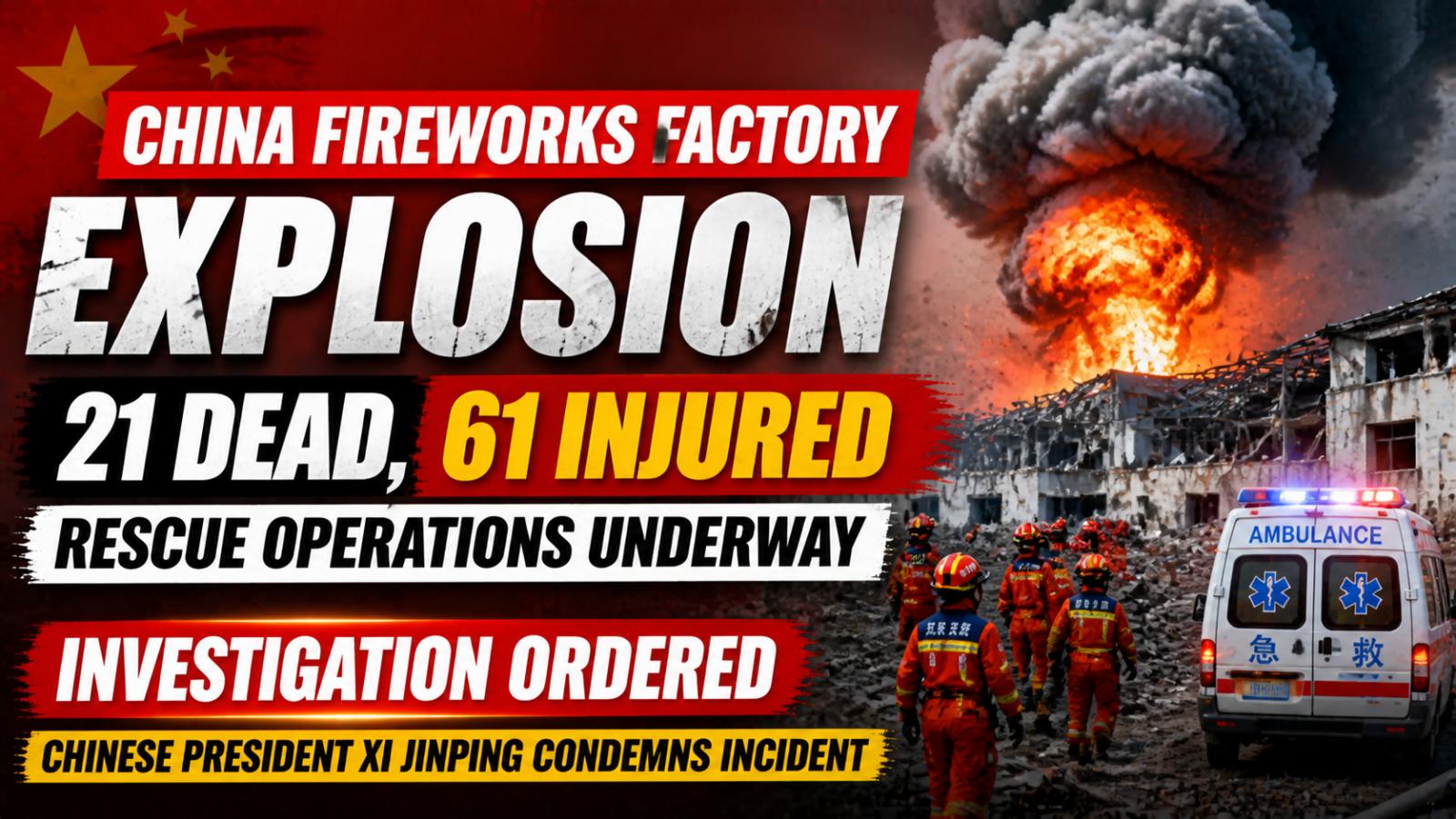
China Fireworks Plant Explosion Claims 21 Lives, Hundreds Injured
A powerful explosion at a fireworks factory in China’s Hunan province on Monday (May 4) has tragically killed at least 21 people and injured 61 others, according to state media reports. The explosion occurred at the Changsha Liuyang Huasheng Fireworks plant in the city of Liuyang, a major hub for the country’s fireworks industry. Videos circulating online showed thick grey smoke rising high into the sky, with the intensity of the blast visibly shaking nearby structures. Chinese
China Fireworks Plant Explosion Claims 21 Lives, Hundreds Injured
A powerful explosion at a fireworks factory in China’s Hunan province on Monday (May 4) has tragically killed at least 21 people and injured 61 others, according to state media reports. The explosion occurred at the Changsha Liuyang Huasheng Fireworks plant in the city of Liuyang, a major hub for the country’s fireworks industry. Videos circulating online showed thick grey smoke rising high into the sky, with the intensity of the blast visibly shaking nearby structures. Chinese
U.S.-China Trade War Intensifies as Beijing Hikes Tariffs on American Goods
In a major escalation of the ongoing trade conflict between the United States and China, Beijing has announced a significant hike in tariffs on American goods, raising import duties from 84% to 125%. The move, confirmed by the Chinese finance ministry on Friday, is a direct response to recent tariff increases imposed by the U.S. administration. It marks one of the most severe retaliatory actions taken by China in the prolonged dispute that has gripped global markets and resha
U.S.-China Trade War Intensifies as Beijing Hikes Tariffs on American Goods
In a major escalation of the ongoing trade conflict between the United States and China, Beijing has announced a significant hike in tariffs on American goods, raising import duties from 84% to 125%. The move, confirmed by the Chinese finance ministry on Friday, is a direct response to recent tariff increases imposed by the U.S. administration. It marks one of the most severe retaliatory actions taken by China in the prolonged dispute that has gripped global markets and resha
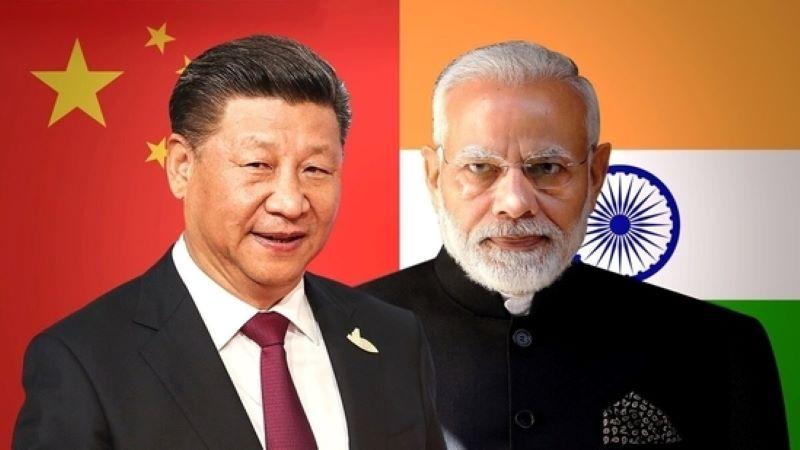
China Praises PM Modi's Remarks on India-China Dialogue and Cooperation
China has welcomed Prime Minister Narendra Modi’s recent remarks advocating dialogue over discord in India-China relations, calling them "positive" and a step toward strengthening diplomatic ties. Beijing emphasized that cooperation between the two Asian giants — likened to the 'Dragon-Elephant Dance' — is the most effective path to shared success. In a statement on Monday, Chinese Foreign Ministry spokesperson Mao Ning highlighted that both sides have acti
China Praises PM Modi's Remarks on India-China Dialogue and Cooperation
China has welcomed Prime Minister Narendra Modi’s recent remarks advocating dialogue over discord in India-China relations, calling them "positive" and a step toward strengthening diplomatic ties. Beijing emphasized that cooperation between the two Asian giants — likened to the 'Dragon-Elephant Dance' — is the most effective path to shared success. In a statement on Monday, Chinese Foreign Ministry spokesperson Mao Ning highlighted that both sides have acti
Xi Jinping's Threat Over Taiwan: "No One Can Stop Reunification"
In his New Year's Eve address, Chinese President Xi Jinping reiterated his stance on Taiwan, declaring that "no one can stop the reunification" of Taiwan with mainland China. This declaration comes amidst heightened tensions, as Beijing has intensified military pressure on the island through numerous air force and naval drills in recent years. Taiwan, a democratic nation, stands in contrast to China’s communist government, with Beijing viewing Taiwan as an integral part of
Xi Jinping's Threat Over Taiwan: "No One Can Stop Reunification"
In his New Year's Eve address, Chinese President Xi Jinping reiterated his stance on Taiwan, declaring that "no one can stop the reunification" of Taiwan with mainland China. This declaration comes amidst heightened tensions, as Beijing has intensified military pressure on the island through numerous air force and naval drills in recent years. Taiwan, a democratic nation, stands in contrast to China’s communist government, with Beijing viewing Taiwan as an integral part of