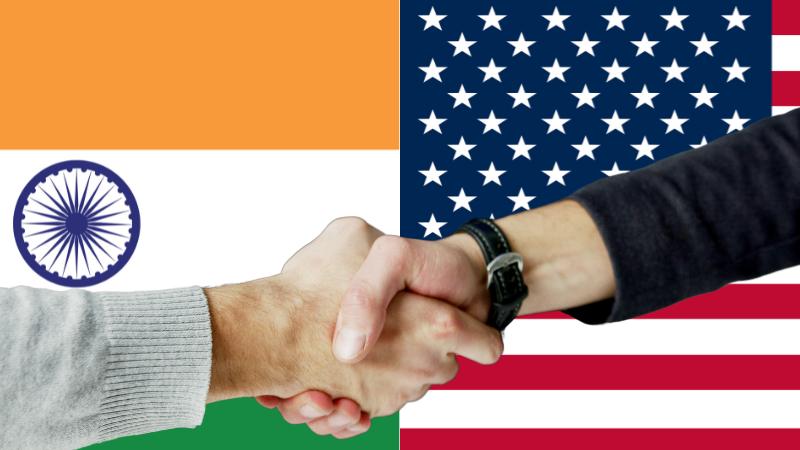
India and the United States are preparing to open formal discussions this week on a comprehensive bilateral trade agreement, taking advantage of a 90-day pause in escalating tariffs. The two nations, long-standing economic and strategic partners, are moving to resolve trade tensions and explore deeper commercial engagement at a time when global trade is under pressure from protectionist trends and economic uncertainty. The initial discussions will be conducted virtually, with officials from both sides working on a framework that could eventually lead to a significant and long-term economic partnership. In-person meetings are expected to follow in May, with negotiators aiming to finalize the first phase of a trade deal by fall 2025. Both governments have expressed optimism about reaching meaningful agreements on key issues such as tariff structures, market access, and investment regulations.
This shift toward dialogue comes after a period of heightened trade friction. The United States had implemented a 26% reciprocal tariff on Indian exports, raising concerns among Indian industries and exporters. However, the recent decision to temporarily suspend those tariff hikes for 90 days has opened the door to diplomacy and economic cooperation. One of the goals of the ongoing discussions is to significantly increase bilateral trade volumes, with the two countries aiming to double trade to $500 billion by 2030. In pursuit of this goal, India is reportedly considering one of its biggest tariff reductions in recent history. More than half of the goods imported from the United States, worth over $23 billion, could see a reduction in tariffs. This would mark a significant shift in India’s trade policy and send a strong signal of its commitment to open markets.
To manage any potential risks from increased imports, India has established a monitoring mechanism to oversee trade flows and safeguard sensitive sectors. This import monitoring cell will help detect any abnormal surges that could threaten domestic industries while maintaining the broader goal of liberalizing trade. The approach aims to balance openness with strategic protection of key economic sectors. Economic experts believe that the new agreement could act as a catalyst for growth in both countries. Lower tariffs, fewer trade restrictions, and stronger investment protections are expected to attract businesses and boost exports, particularly in sectors like pharmaceuticals, technology, agriculture, and energy.
The trade talks also carry geopolitical importance, strengthening India’s ties with the United States in a shifting global landscape. As supply chains diversify and countries seek stable and reliable trade partnerships, a robust India-US trade deal could position both economies for long-term resilience and growth. In conclusion, the launch of bilateral trade agreement talks between India and the United States marks a major step in deepening economic ties. The 90-day truce on tariffs provides a crucial opportunity for both countries to negotiate a forward-looking deal that reflects their shared economic interests and strategic alignment. If successful, the trade agreement could be one of the most impactful economic partnerships of the decade, reshaping trade dynamics across the Indo-Pacific and beyond.
This shift toward dialogue comes after a period of heightened trade friction. The United States had implemented a 26% reciprocal tariff on Indian exports, raising concerns among Indian industries and exporters. However, the recent decision to temporarily suspend those tariff hikes for 90 days has opened the door to diplomacy and economic cooperation. One of the goals of the ongoing discussions is to significantly increase bilateral trade volumes, with the two countries aiming to double trade to $500 billion by 2030. In pursuit of this goal, India is reportedly considering one of its biggest tariff reductions in recent history. More than half of the goods imported from the United States, worth over $23 billion, could see a reduction in tariffs. This would mark a significant shift in India’s trade policy and send a strong signal of its commitment to open markets.
To manage any potential risks from increased imports, India has established a monitoring mechanism to oversee trade flows and safeguard sensitive sectors. This import monitoring cell will help detect any abnormal surges that could threaten domestic industries while maintaining the broader goal of liberalizing trade. The approach aims to balance openness with strategic protection of key economic sectors. Economic experts believe that the new agreement could act as a catalyst for growth in both countries. Lower tariffs, fewer trade restrictions, and stronger investment protections are expected to attract businesses and boost exports, particularly in sectors like pharmaceuticals, technology, agriculture, and energy.
The trade talks also carry geopolitical importance, strengthening India’s ties with the United States in a shifting global landscape. As supply chains diversify and countries seek stable and reliable trade partnerships, a robust India-US trade deal could position both economies for long-term resilience and growth. In conclusion, the launch of bilateral trade agreement talks between India and the United States marks a major step in deepening economic ties. The 90-day truce on tariffs provides a crucial opportunity for both countries to negotiate a forward-looking deal that reflects their shared economic interests and strategic alignment. If successful, the trade agreement could be one of the most impactful economic partnerships of the decade, reshaping trade dynamics across the Indo-Pacific and beyond.