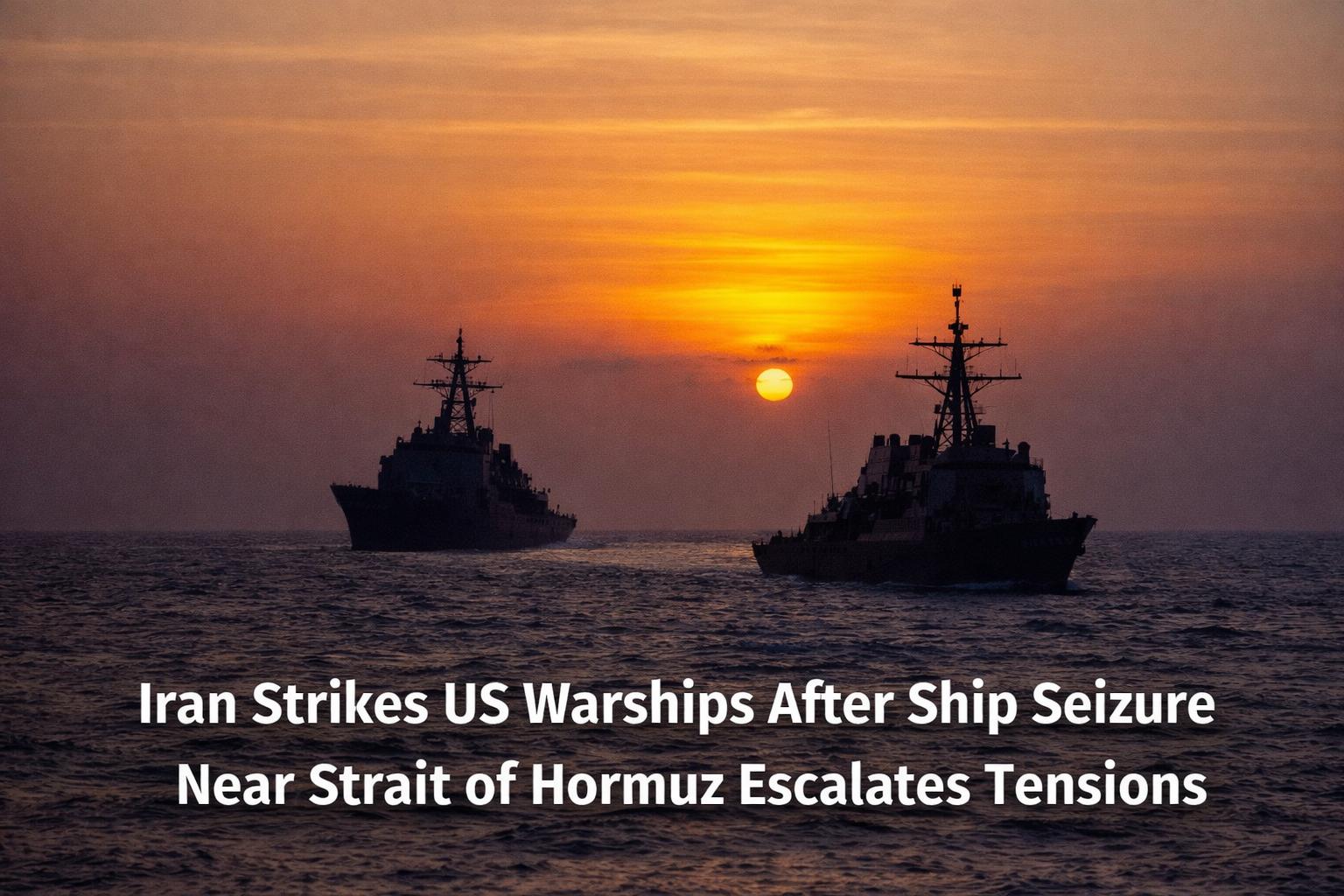
Tensions between Iran and the United States have escalated sharply after Tehran claimed it launched drone strikes targeting American military vessels in the Sea of Oman. The reported strikes came in response to a US operation in which forces intercepted and seized an Iranian cargo ship near the Strait of Hormuz, a vital global shipping route.
According to Iranian media reports, the drone strikes were a direct retaliation for what Tehran described as an aggressive move by US forces. While details about the number of drones or the extent of damage remain unclear, the incident marks a serious escalation in an already fragile regional situation. The two nations had been observing a temporary ceasefire, which now appears to be under significant strain.
The US military confirmed that it fired upon and seized an Iranian-flagged cargo vessel as it approached Bandar Abbas port. Officials stated that the ship, identified as Touska, was under sanctions and allegedly attempted to breach a naval blockade imposed in the region. US forces reportedly boarded the vessel after it ignored repeated warnings, taking full control of the ship and its contents.
US President Donald Trump stated that the operation was necessary due to suspected illegal activities linked to the vessel. The United States Central Command also released visuals of the interception, reinforcing its claim of a lawful enforcement action under existing sanctions.
Iran strongly condemned the seizure, calling it a violation of international law and labeling the move as “armed piracy”. The Iranian military command warned of swift retaliation and accused Washington of undermining the ceasefire agreement. Officials claimed that US forces disabled the vessel before boarding it and disrupted its navigation systems.
Iran denied the seizure, suggesting its naval forces had forced US troops to retreat. However, subsequent statements indicated acknowledgment of the incident following confirmation from US authorities. Iran also stated that the vessel was traveling from China and insisted it was a commercial operation.
The latest developments have cast serious doubt on the continuation of diplomatic efforts between the two countries. Iran has indicated it may withdraw from upcoming talks, citing the blockade and shifting demands from Washington. Meanwhile, mediation efforts by Pakistan face uncertainty as both sides exchange warnings of further escalation.
The situation has also raised concerns about the security of global energy supplies, as the Strait of Hormuz remains one of the most critical oil transit chokepoints in the world. Any prolonged disruption in this region could have far-reaching economic consequences, impacting global markets and energy prices. As tensions rise, the international community is closely monitoring the situation, urging restraint from both sides to prevent a wider conflict in an already volatile region.