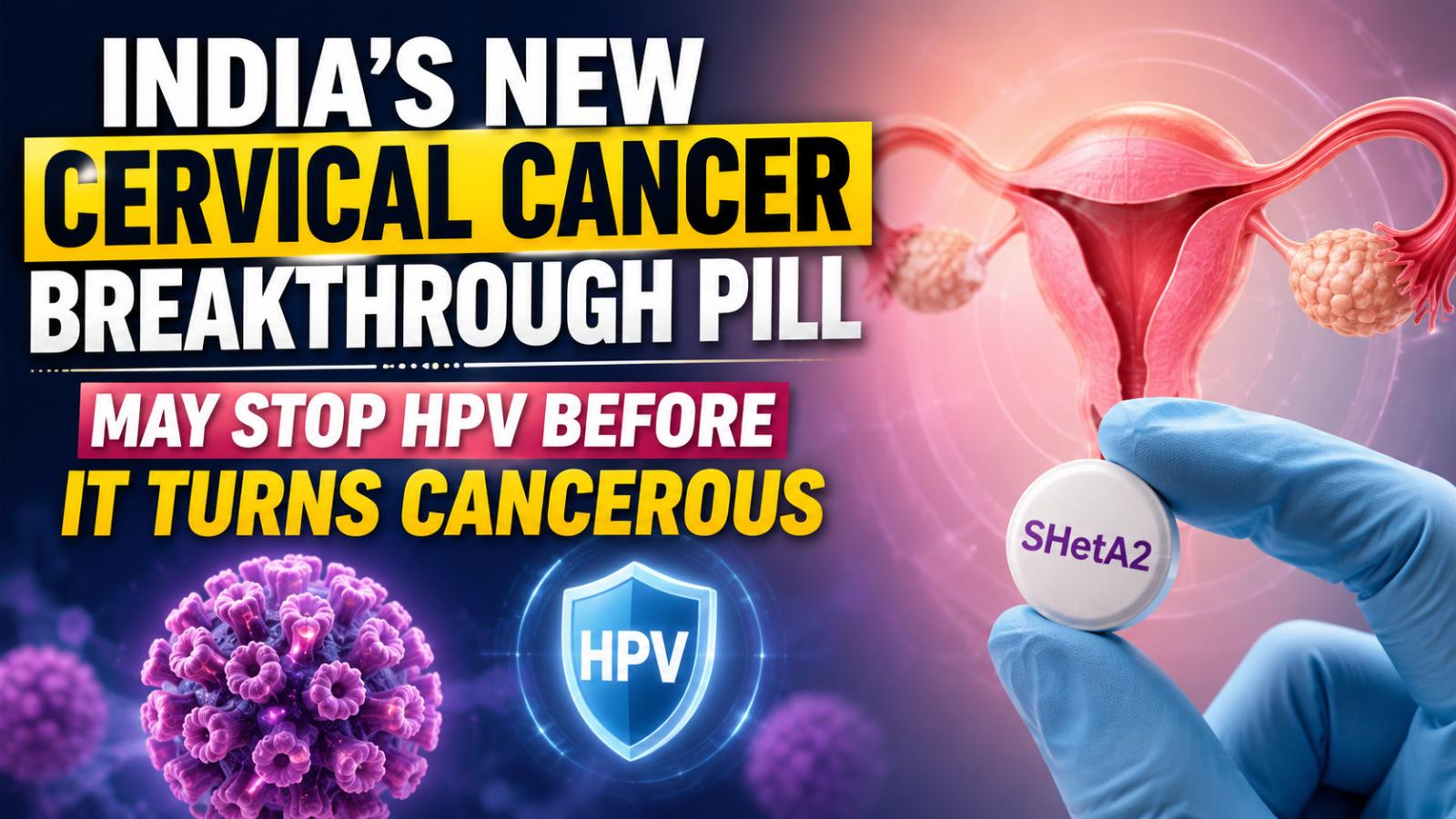
What Is SHetA2?
SHetA2 is an investigational anti-HPV drug candidate being developed as a possible treatment for cervical intraepithelial neoplasia, commonly known as CIN. CIN refers to abnormal changes in the cells covering the cervix. These changes are not cancer, but high-grade abnormalities can develop into cervical cancer when they remain untreated.
The drug candidate was developed through research involving the Indian Council of Medical Research’s National Institute of Cancer Prevention and Research and the University of Oklahoma Stephenson Cancer Center. ICMR has licensed the technology to Emcure Pharmaceuticals for further clinical development, manufacturing and possible commercialisation.
SHetA2 is not currently an approved medicine and is not available for routine treatment. More clinical trials are required to establish its safety, effectiveness, correct dosage and long-term benefits.
How Could SHetA2 Work Against HPV?
Persistent infection with high-risk human papillomavirus strains is responsible for nearly all cervical cancer cases. HPV can produce proteins known as E6 and E7, which interfere with the body’s normal systems for controlling cell growth and removing damaged cells.
SHetA2 is being studied for its ability to target biological pathways involved in HPV-driven abnormal cell growth. Laboratory and preclinical findings suggest that it may help trigger the death of abnormal cells while causing less damage to healthy cervical tissue.
Researchers are studying whether the treatment could:
- Suppress the activity of HPV-related E6 and E7 proteins
- Target abnormal cells caused by persistent HPV infection
- Trigger programmed death in precancerous cells
- Preserve more healthy cervical tissue
- Reduce the risk of precancer progressing to invasive cancer
- Offer a possible non-surgical treatment option
- Support the development of oral or local vaginal formulations
These potential benefits remain under investigation and have not yet been confirmed through large clinical trials involving women with cervical precancer.
Why Is The SHetA2 Licence Important?
The licensing agreement allows Emcure Pharmaceuticals to continue developing the candidate and prepare it for additional clinical studies. This represents an important step in transforming laboratory research into a medicine that could eventually be evaluated for wider patient use.
The development is also significant because most current treatments for moderate-to-severe cervical precancer involve removing or destroying abnormal tissue.
Common treatment procedures include:
- Loop electrosurgical excision procedure, or LEEP
- Cold-knife conisation
- Laser treatment
- Cryotherapy
- Thermal ablation
- Surgical removal of abnormal cervical tissue
These procedures are effective and remain the standard of care. However, some treatments may affect the cervix and slightly increase the risk of complications in future pregnancies, including premature birth.
A medicine that selectively targets abnormal cells while preserving healthy tissue could therefore provide an additional treatment option, particularly for women concerned about fertility and future pregnancy. This benefit must still be demonstrated in clinical trials.
What Stage Has The Drug Reached?
SHetA2 remains an experimental therapy. It has also been studied under the name OK-1 in an early-stage clinical trial involving patients with advanced or recurrent solid tumours.
Early Phase I trials mainly examine:
- Whether the drug is safe for human use
- What side effects may occur
- How the body processes the medicine
- What dose can be administered safely
- Whether there are early signs of biological activity
A Phase I study does not prove that the drug can successfully treat cervical precancer. Dedicated trials involving women with CIN will be required before researchers can determine whether it works better than, or as effectively as, existing procedures.
Future development will need to establish:
- The most effective dose
- The best method of administration
- Short-term and long-term safety
- Effectiveness against different grades of CIN
- The risk of abnormal cells returning
- Comparison with established treatments
- Regulatory approval requirements
- Manufacturing and affordability
SHetA2 Is Not A Cervical Cancer Prevention Pill Yet
Although the development has been described as a major breakthrough, SHetA2 should not be presented as an approved pill that can currently stop HPV from becoming cancerous.
It is more accurate to describe it as a promising investigational therapy intended to treat HPV-related precancerous changes. Its ability to prevent cervical cancer will only be established if future trials show that it safely removes abnormal cells and reduces their progression or recurrence.
Patients should not attempt to purchase, request or use unapproved versions of the drug. Anyone diagnosed with HPV or an abnormal cervical screening result should follow the advice of a gynaecologist or cancer specialist.
Why Cervical Cancer Prevention Still Matters
Cervical cancer is largely preventable when HPV infection and precancerous changes are detected and managed early. Vaccination and screening remain essential even as new drug candidates are developed.
Proven preventive measures include:
- Receiving the HPV vaccine at the recommended age
- Completing all recommended vaccine doses
- Attending regular cervical screening
- Undergoing HPV testing where available
- Following up after an abnormal Pap smear
- Treating high-grade cervical lesions promptly
- Avoiding tobacco use
- Practising safer sexual behaviour
- Seeking medical advice for unusual symptoms
Symptoms requiring medical evaluation may include:
- Bleeding between menstrual periods
- Bleeding after sexual intercourse
- Bleeding after menopause
- Persistent pelvic pain
- Pain during intercourse
- Unusual or foul-smelling vaginal discharge
- Unexplained fatigue or weight loss in advanced cases
What Women Should Know Right Now
SHetA2 represents an encouraging development in India’s cancer research and pharmaceutical innovation. However, it remains under clinical development and cannot replace existing preventive measures or approved treatments.
Women should continue to:
- Take the HPV vaccine when eligible
- Attend recommended cervical screening
- Discuss abnormal test results with a doctor
- Complete follow-up examinations
- Receive standard treatment when advised
- Avoid delaying care while waiting for future medicines
- Never change treatment based only on online reports
The licensing of SHetA2 to Emcure Pharmaceuticals is an important scientific milestone. Should future studies confirm that the candidate is safe and effective, it could become a targeted, tissue-preserving and potentially non-surgical treatment for HPV-related cervical precancer. Until then, HPV vaccination, screening and early treatment remain the most effective tools for preventing cervical cancer.