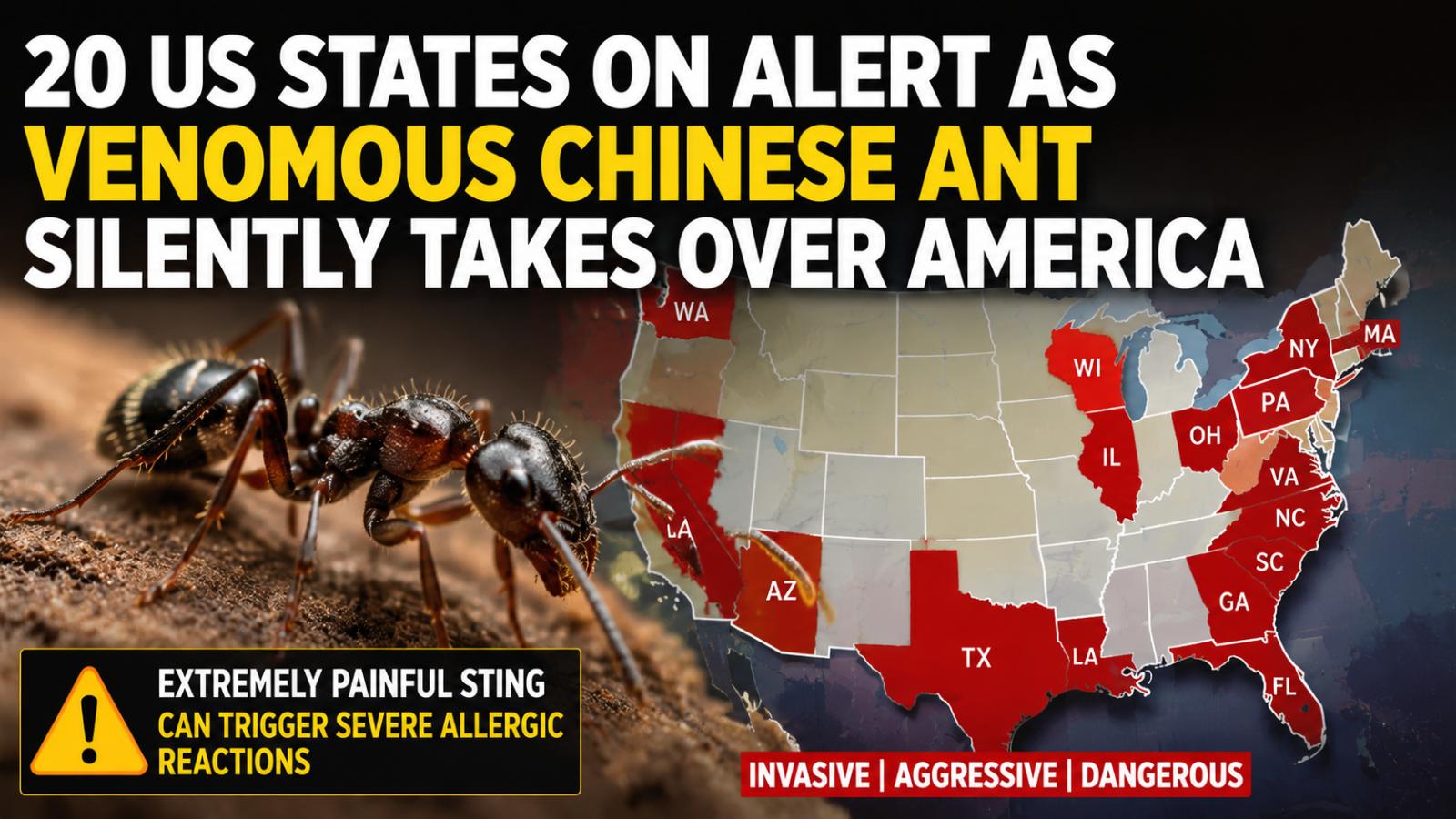
A venomous ant species, the Asian needle ant, originally hailing from China, is causing concern across 20 states in the United States due to its rapid spread and painful sting. Health experts are urging the public to be cautious after the insect, which is black to dark brown and smaller than most common ants, was detected in several states, including Florida, Georgia, Texas, New York, and Massachusetts. Although the species was first identified in the U.S. over 90 years ago, it has only recently seen a surge in its population.
The Asian needle ant doesn't form visible anthills like most ants. Instead, it nests in rotting logs, leaf litter, and wooded areas, making it more likely for people to accidentally come into contact with it. Its sting is reported to cause intense, localized pain that can last for hours and, in some cases, spread to other areas. For those allergic to insect stings, the ant’s venom can trigger anaphylaxis, a life-threatening reaction that requires immediate medical attention. The pain from its sting is so acute that experts have likened it to the feeling of a needle being inserted into the skin.
Despite its painful sting, the Asian needle ant is not naturally aggressive. It typically only stings when it feels threatened, unlike fire ants, which are more aggressive and pose a broader public health risk. However, health officials recommend that people who work outdoors, particularly in areas with dense vegetation, wear protective gloves and move away carefully if they encounter these ants.
According to experts, the Asian needle ant appears to have become a permanent fixture in the U.S., and its presence is unlikely to diminish. The U.S. Department of Agriculture (USDA) has confirmed the insect's ongoing spread and its establishment across a wide range of states. Although it doesn’t pose an immediate threat to most people, continued vigilance is recommended to prevent accidental stings, especially as these ants continue to expand their territory.