Hyderabad Police Warn of ‘Rent a Boyfriend’ Online Scam
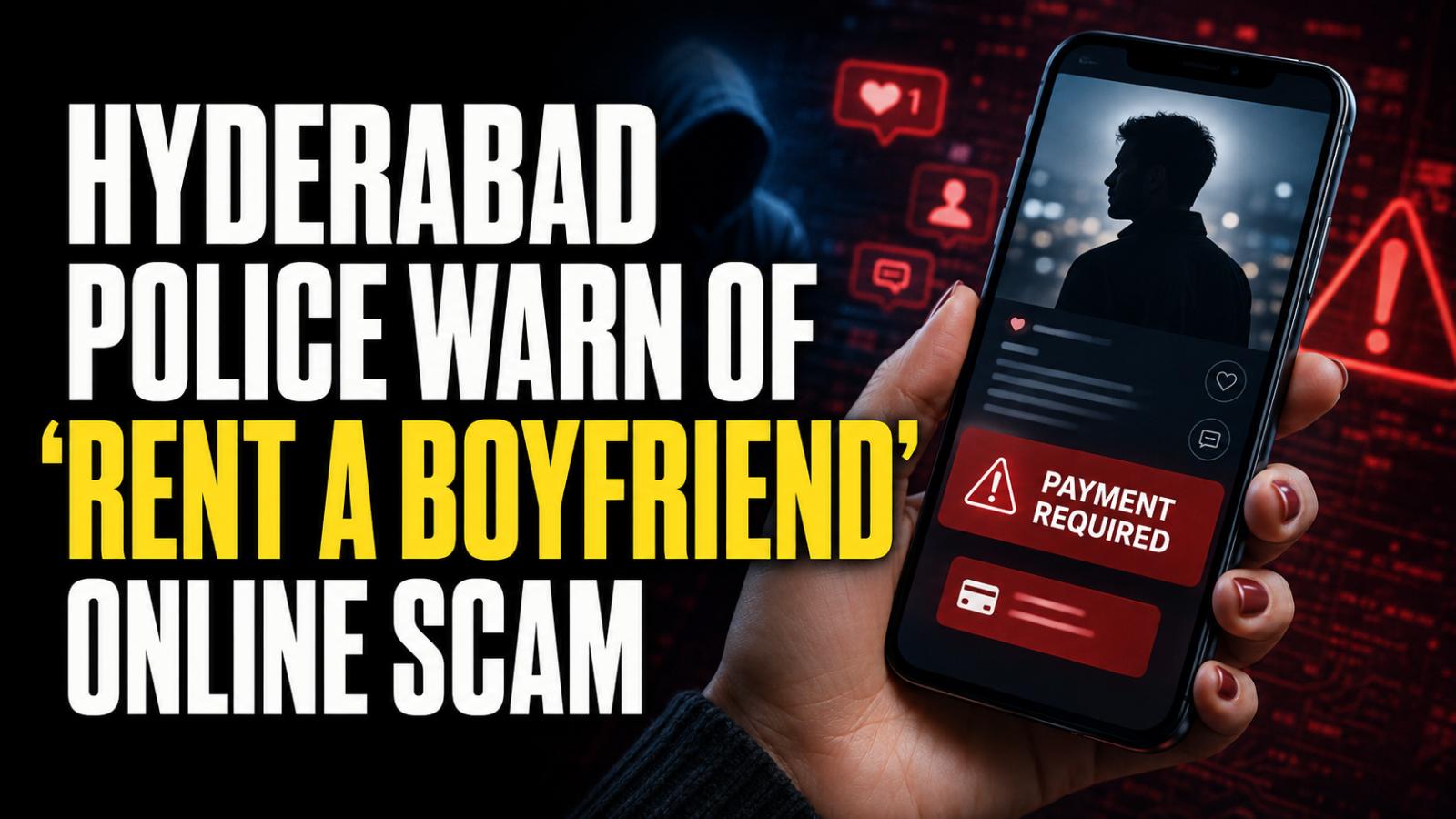
Hyderabad, August 11, 2026: Hyderabad Police have warned women and young girls about a “rent a boyfriend” online scam spreading through social media. Fraudsters are allegedly using attractive advertisements, fabricated companion packages and fake discounts to collect advance payments and personal information.
Hyderabad City Police Commissioner VC Sajjanar issued the warning on X, stating that advertisements promising personal companions may be part of organised cyber fraud. The posts commonly appear on Instagram, Facebook and Telegram under titles such as “Rent Boyfriend – Your Personal Companion.”
How the Hyderabad rent scam works
The advertisements feature photographs of attractive men and offer services such as coffee dates, movie outings, shopping trips and personal companionship. Police said some of the images may have been generated using artificial intelligence, while others may have been stolen from genuine social media profiles.
When someone contacts the advertised account, the operator starts a friendly conversation and explains the available packages. The scammer then asks for money as a registration charge, security deposit or advance booking fee.
Victims are directed to pay through a QR code or digital payment application. After receiving the money, the scammers reportedly block the victim and end all communication.
The financial loss may not be the only danger. Sharing a phone number, photograph, address or identification document with an unknown account can expose a person to blackmail, harassment, identity theft and repeated fraud attempts. Meeting someone contacted through an anonymous profile could also create serious physical safety risks.
How users can stay safe and report fraud
Police advised people to avoid engaging with unknown or unverified social media accounts. Users should not transfer advance payments for companion services or authorise QR-code transactions without confirming the recipient’s identity, payment amount and purpose.
Parents have also been encouraged to remain aware of the content their children access, the people they communicate with and any online contacts they plan to meet. Privacy settings should be reviewed regularly, and personal photographs or documents should not be shared with strangers.
Anyone who encounters a suspicious advertisement should save screenshots, usernames, phone numbers, payment requests and profile links. These records may help investigators identify the people operating the account.
A person who has transferred money should immediately contact their bank or payment provider and call the national cybercrime helpline at 1930. A formal complaint can also be submitted through the National Cyber Crime Reporting Portal, which is managed by the Ministry of Home Affairs. The official portal advises victims of financial cyber fraud to report incidents immediately. Prompt action may improve the possibility of tracing or freezing the transferred funds.