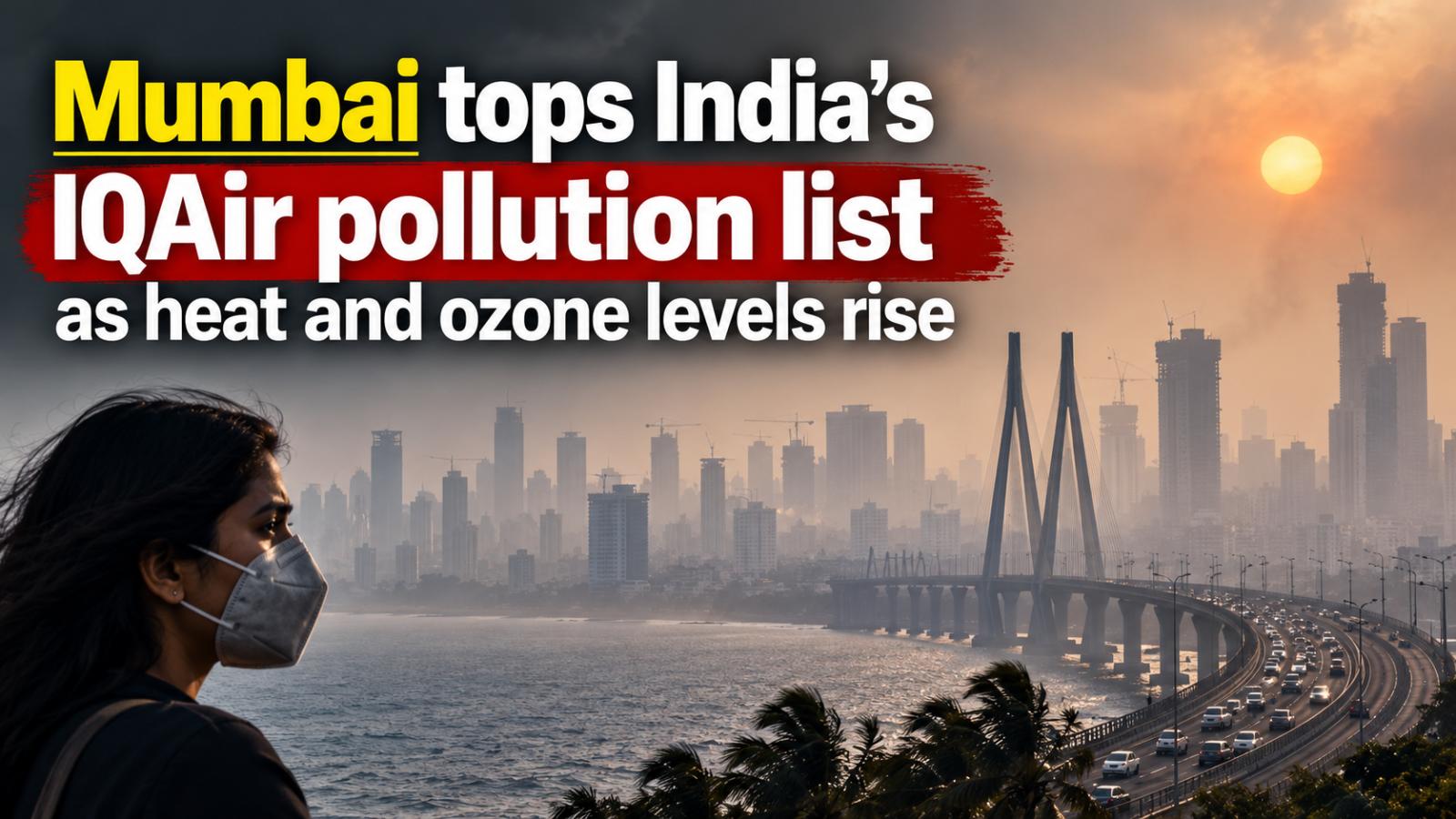
Mumbai tops India's IQAir pollution list after an AQI of 152, driven by heat and ground-level ozone pollution. While CPCB reported AQI 98, BMC is identifying pollution hotspots as weak winds worsen air circulation.
Mumbai tops India's IQAir pollution list as the city battles worsening air quality amid rising temperatures and weak winds. On Thursday, October 15, 2026, the city recorded an Air Quality Index (AQI) of 152, placing it in the unhealthy category and ranking it fifth among the world's most polluted cities in IQAir's assessment.
Ground-level ozone was identified as the primary pollutant, with unusually hot and humid weather contributing to deteriorating conditions.
The assessment covered 122 cities worldwide. Delhi ranked sixth with an AQI of 151, while Kolkata stood tenth at 124. These rankings represent air quality at the time of measurement rather than annual pollution levels.
Mumbai AQI 152: Rising heat and ground-level ozone worsen air quality
Mumbai has experienced unusually high temperatures this October, with maximum temperatures climbing 4–5 degrees Celsius above normal on several days.
The city has also recorded some of its hottest October days in at least a decade, raising concerns about the connection between changing weather patterns and air pollution.
Atmospheric scientist Gufran Beig, chair professor at the National Institute of Advanced Studies, attributed the worsening conditions to an El Niño-related weather pattern.
According to Beig, reduced wind speeds and persistent heat have weakened air circulation, allowing pollutants to accumulate closer to the ground.
Ground-level ozone forms when pollutants from vehicles, industries and other sources react in sunlight. Unlike the protective ozone layer in the upper atmosphere, this pollutant can irritate the lungs and worsen respiratory conditions.
Hot weather and stagnant air can increase ozone concentrations, making outdoor activities uncomfortable or potentially harmful for sensitive groups.
CPCB AQI 98: BMC identifies pollution hotspots across Mumbai
While IQAir classified Mumbai's air as unhealthy, the Central Pollution Control Board (CPCB) reported a considerably lower citywide AQI of 98, categorised as satisfactory under India's air quality standards.
Of Mumbai's 23 operational monitoring stations, 12 recorded satisfactory air quality.
However, pollution levels remained elevated in several areas. Deonar recorded an AQI of 156, followed by Bandra Kurla Complex at 145 and Khindipada in Bhandup at 129.
The CPCB identified PM2.5 and PM10 as the main pollutants at these locations.
The difference between IQAir and CPCB readings highlights the importance of considering monitoring methods, reporting times and the AQI standards used by different agencies.
Meanwhile, Maharashtra Pollution Control Board officials raised concerns about garbage and plastic waste burning in Deonar.
They explained that pollutants released in one area can travel to neighbouring locations, potentially affecting air quality in places such as Chembur and Kurla.
In response, the Brihanmumbai Municipal Corporation (BMC) has directed officials across all 26 municipal wards to identify pollution hotspots and introduce local control measures.
Authorities are focusing on pollution sources that could further affect air quality, particularly in areas already recording elevated particulate matter concentrations.
With temperatures remaining above normal, Mumbai's air quality concerns underline the need for consistent monitoring and effective pollution control.
Residents, especially children, older adults and people with respiratory conditions, are advised to follow local AQI updates and avoid strenuous outdoor activities when pollution levels are high.
Although monitoring agencies have reported different readings, the elevated pollution levels in several neighbourhoods demonstrate the importance of addressing local emissions and improving air quality across the city.