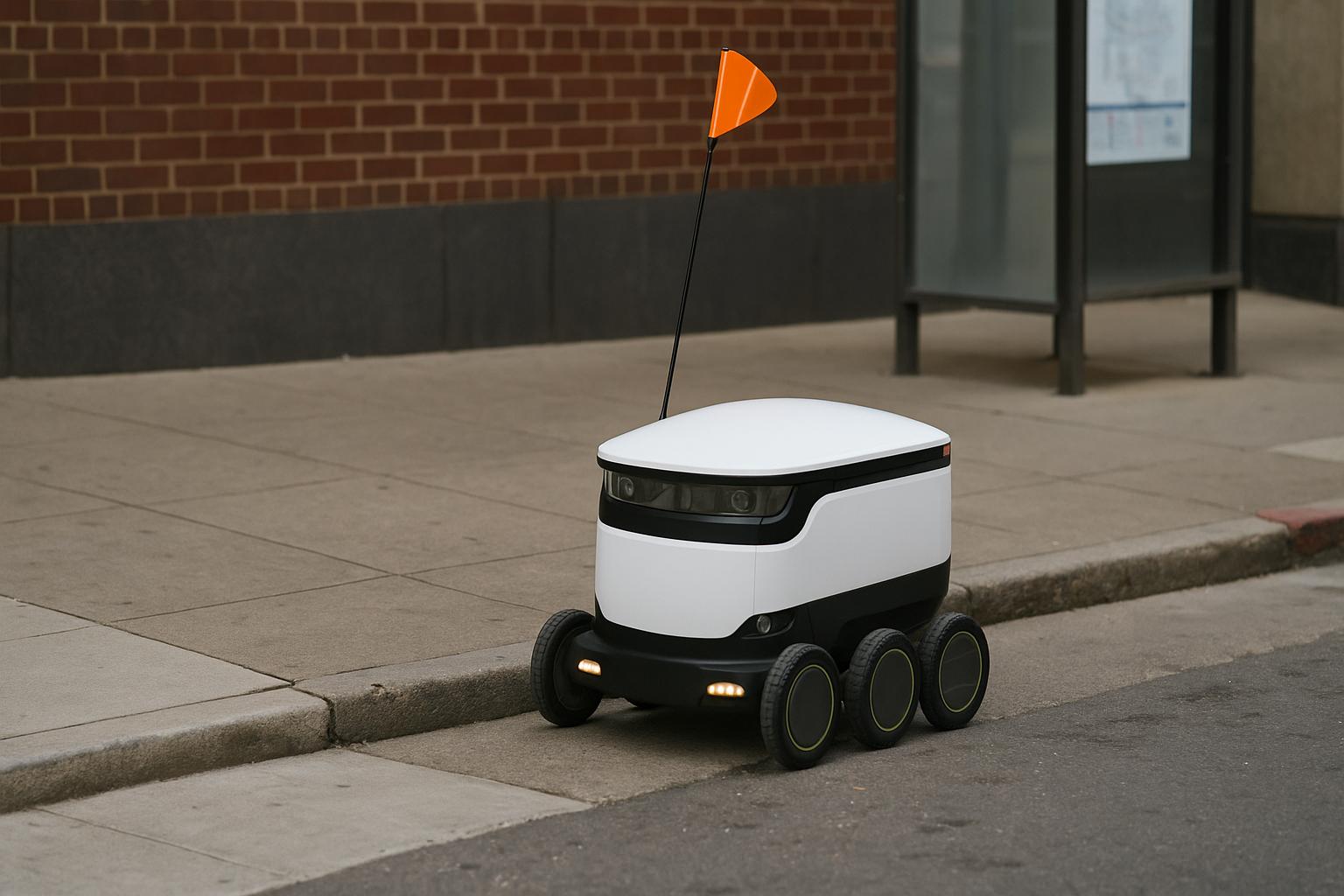
Washington, D.C. — City transportation officials are urging caution as pressure mounts to approve autonomous food delivery robots on District sidewalks. Despite growing interest from technology firms eager to deploy their devices across Washington, the D.C. Department of Transportation (DDOT) says it will not rush to authorize the new technology without first addressing safety, accessibility, and regulatory concerns.
At a Wednesday hearing before the D.C. Council’s Committee on Transportation and the Environment, representatives from multiple robotics companies called on city leaders to fast-track regulations allowing small, zero-emission delivery robots to operate on sidewalks. The autonomous units, designed to transport food and small packages, use cameras and sensors to navigate streets and pedestrian pathways. Proponents argue that these devices could reduce emissions, ease congestion from delivery vehicles, and make short-distance deliveries more efficient.
However, DDOT Director Sharon Kershbaum said the department needs additional time to develop comprehensive regulations before permitting such operations. “We’re not dragging our feet. We know people want us to move more quickly,” Kershbaum said. “But there are no rules that govern the sidewalk right now. This is really new territory.”
Kershbaum acknowledged the potential benefits of autonomous delivery systems but underscored the need to prioritize pedestrian safety and accessibility, especially for individuals with disabilities. “We do see the benefit of these devices,” she said. “We want to make sure that our sidewalks are safe, especially for those with mobility challenges or who are visually impaired.”
Committee Chair Charles Allen pressed the agency to accelerate its timeline, warning that excessive caution could stifle innovation. “I think we are moving way too slow on this,” Allen said during the hearing. “I want it to be piloted, I want it to be tested, I really want to kick the tires on an idea like this. If we’re just dragging our feet on getting regulations put forward, on doing the piloting and testing, what we’re really doing is limiting our ability to learn.”
The tension highlights a growing challenge for cities nationwide: balancing the rapid advancement of urban technology with public safety and equitable access. While private companies are eager to demonstrate the reliability of their systems, local governments must adapt legal frameworks to address questions about liability, insurance, maintenance, and accessibility for pedestrians who share sidewalks with the robots.
Representatives from Coco Robotics, one of the firms seeking to operate in the city, said they are open to compromise. “We’d love to start super small, if you’d be open to something, just to see what it’s like,” a company representative told the committee. The firm and others are proposing limited pilot programs to collect data and assess public response before expanding citywide.
So far, DDOT has not committed to a specific timeline for adopting regulations or launching a pilot. Kershbaum emphasized that her department’s goal is to create a regulatory structure that is flexible yet comprehensive enough to address future developments in automated mobility.
Councilmember Allen countered that the city risks falling behind other major metropolitan areas already experimenting with similar technology. He noted that DDOT’s current testing of smaller automated delivery units near Howard and Georgetown universities represents an early stage of innovation, but that newer, more advanced models are already operating in other regions. “Those early devices are outdated,” Allen said. “If we don’t test and learn with what’s coming next, we risk being left behind.”
The debate comes at a time when Washington is positioning itself as a leader in sustainability and smart city initiatives. Advocates for the technology argue that zero-emission delivery robots could help reduce carbon emissions and traffic congestion, supporting the District’s long-term climate goals. But accessibility advocates remain cautious, warning that adding robotic devices to already crowded sidewalks could increase risks for pedestrians, particularly those with disabilities or limited mobility.
As of now, DDOT’s focus remains on creating safety standards, evaluating pilot models, and consulting with community stakeholders before giving full approval. Officials say the department intends to provide an update on progress later this year but reiterated that public safety will remain the top priority.
The hearing made clear that while enthusiasm for innovation runs high, Washington’s leaders remain divided over how fast the city should move toward integrating autonomous delivery systems into daily urban life. For now, the future of robot-powered food delivery in the nation’s capital remains on hold, awaiting a regulatory framework that satisfies both technology advocates and public safety watchdogs.