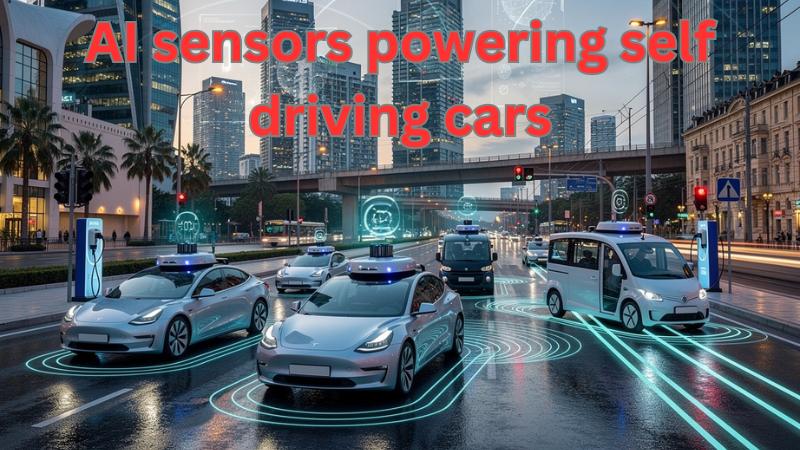
For nearly a century, humanity has imagined a future where cars drive themselves. From early cinematic visions to ambitious lab experiments, the idea of autonomous vehicles has fascinated engineers, filmmakers, and everyday commuters alike. In 2025, that long-standing dream has finally reached public roads at scale. Driverless robotaxis are no longer experimental concepts hidden behind research labs. They are active, revenue-generating services operating in major global cities, marking a major turning point in transportation history.
The fascination with self-driving cars dates back to 1927, when the film Metropolis portrayed a futuristic city filled with automated vehicles gliding across elevated roads. Nearly a hundred years later, those visuals feel less like fantasy and more like a preview of everyday life. Today, autonomous taxis operate in cities such as San Francisco, Phoenix, Beijing, and Abu Dhabi, transporting real passengers without human drivers behind the wheel.
This shift from imagination to implementation was highlighted earlier this year when Sundar Pichai shared a personal story about his elderly parents experiencing a driverless ride for the first time. The moment symbolized how self-driving technology has moved beyond tech enthusiasts and into mainstream acceptance. For many urban residents, seeing a steering wheel turn on its own is no longer shocking. It is simply another way to commute.
According to the RoboTaxi Global Market Report 2025, the robotaxi industry has grown from $1.19 billion in 2024 to more than $2 billion in 2025. With increasing demand for sustainable mobility, reduced emissions, and efficient urban transport, the market is projected to grow exponentially over the next decade.
In the United States, Waymo has emerged as a frontrunner. In 2025 alone, it crossed 20 million autonomous miles and delivered over 14 million paid rides after expanding services across Phoenix, Los Angeles, and San Francisco. Amazon-backed Zoox is also pushing boundaries with its bidirectional, steering-wheel-free robotaxi pods designed specifically for autonomous travel.
China is scaling even faster. Baidu’s Apollo Go service now operates at massive volume in cities like Beijing and Wuhan, logging hundreds of thousands of fully driverless rides each week. Government-backed smart infrastructure, including sensor-enabled roads, is accelerating adoption while minimizing safety risks. Europe is also catching up, with London preparing for robotaxi launches and Germany testing advanced Level 4 autonomy under one of the world’s strongest regulatory frameworks.
Behind the scenes, companies are divided on technology strategy. Waymo and Baidu rely on a modular system combining LiDAR, radar, and high-definition maps for extreme precision. While highly accurate, this approach is expensive and sensitive to infrastructure changes. On the other end of the spectrum, Tesla follows a vision-only model using cameras and AI without LiDAR, aiming for lower costs and scalability but raising concerns about reliability in poor weather or low visibility.
Despite impressive growth projections, the road to a fully autonomous future remains uneven. Recent incidents have shown how robotaxis can become immobilized during power outages when traffic signals fail or map data no longer matches real-world conditions. Simple pranks, such as placing traffic cones on vehicle hoods, have also exposed vulnerabilities. Beyond technical issues, social concerns are growing, especially among millions of professional drivers who fear job displacement as autonomous fleets expand.
There are also complex edge cases that machines still struggle to interpret. Construction workers using hand signals, unpredictable pedestrians, and unusual costumes can confuse even advanced AI systems. Validating safety across all possible scenarios requires testing far beyond what human drivers undergo today.
Yet, the appeal of robotaxis remains strong. Studies suggest autonomous vehicles could save commuters up to 50 minutes a day, transforming how people use travel time. For elderly individuals and the visually impaired, driverless cars promise independence and mobility that traditional transport cannot always offer. Autonomous systems do not get distracted, fatigued, or emotionally reactive, reducing many common causes of road accidents.
As 2025 comes to a close, the debate has shifted from whether self-driving cars are possible to where and how they will fit into society. The biggest challenges ahead are no longer technological but legal and cultural. Questions around liability, regulation, taxation, and public trust remain unresolved. Still, the driverless future is no longer hypothetical. It is active, expanding, and available for download in app stores worldwide, signaling that autonomous mobility has officially arrived.