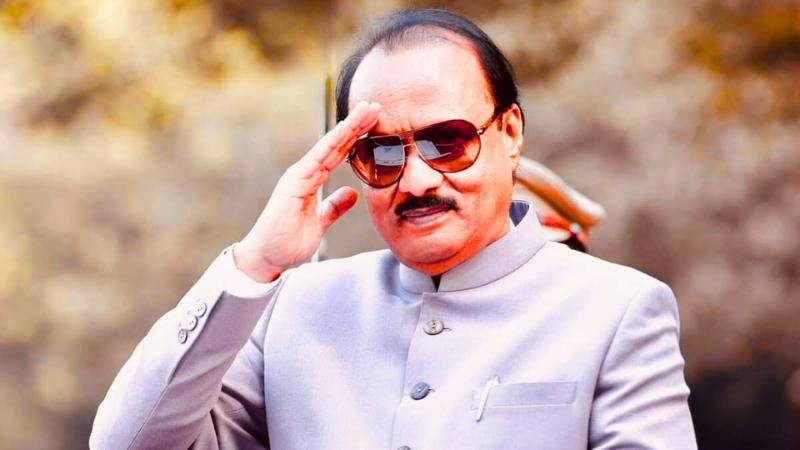
The Pawar family occupies a unique and dominant position in Maharashtra’s political history. For over five decades, the family has shaped regional politics through electoral victories, control over cooperative institutions, and sustained influence in policy-making. Ajit Pawar, a senior leader of the Nationalist Congress Party and a multiple-term Deputy Chief Minister, was a central pillar of this legacy. His untimely death in a tragic plane crash on January 28, 2026, has brought renewed public attention to the Pawar family tree, its roots in Baramati, and the political branches that extend across generations.
At the core of the Pawar family’s political rise is Baramati, a region that became synonymous with power, development politics, and cooperative movements. Sharad Pawar, Ajit Pawar’s uncle, emerged from this background as one of India’s most experienced and influential political leaders. His leadership laid the foundation for a dynasty that would later see nephews, children, and extended relatives enter public life. Ajit Pawar grew up within this political ecosystem and gradually established himself as a decisive administrator and strategist, often seen as Sharad Pawar’s political heir before ideological differences created a split.
Ajit Pawar’s immediate family reflects the transition of the Pawar legacy into its next phase. His wife, Sunetra Pawar, maintained a relatively low political profile for decades while being actively involved in education, environmental initiatives, and social work. Her recent entry into electoral politics and her position as a Rajya Sabha MP have placed her in the national political arena. Ajit Pawar’s elder son, Parth Pawar, has tested electoral politics and remains active in political circles, while his younger son, Jay Pawar, has largely stayed involved in business and family affairs. Together, they represent the continuation of the Pawar name into the next generation.
Sharad Pawar’s nuclear family has also played a crucial role in sustaining the dynasty’s influence. His wife, Pratibha Pawar, has supported social and public initiatives, while his daughter, Supriya Sule, has emerged as one of Maharashtra’s most prominent national leaders. As a multiple-term Lok Sabha MP from Baramati and a senior leader of the Sharad Pawar-led NCP faction, Supriya Sule represents political continuity rooted in the same constituency that shaped the Pawar family’s rise. Her children and younger relatives form part of a growing third generation connected to public life.
The Pawar family’s internal political dynamics have been complex and, at times, contentious. Ajit Pawar’s decision to align with the BJP–Shiv Sena alliance in 2023 marked a significant rupture with Sharad Pawar’s leadership and led to the formal split of the NCP. Despite these political divisions, family relationships have often remained visible during social events, reflecting the blurred line between personal bonds and political rivalry. This duality has been a defining feature of the Pawar family’s public image.
Beyond electoral politics, the Pawar legacy extends into cooperative banks, sugar factories, educational institutions, and regional development bodies. This multi-sector influence has allowed the family to maintain relevance even during periods of political turbulence. Ajit Pawar’s death now raises questions about leadership succession, factional stability within the NCP, and the future role of younger Pawar family members in Maharashtra politics.