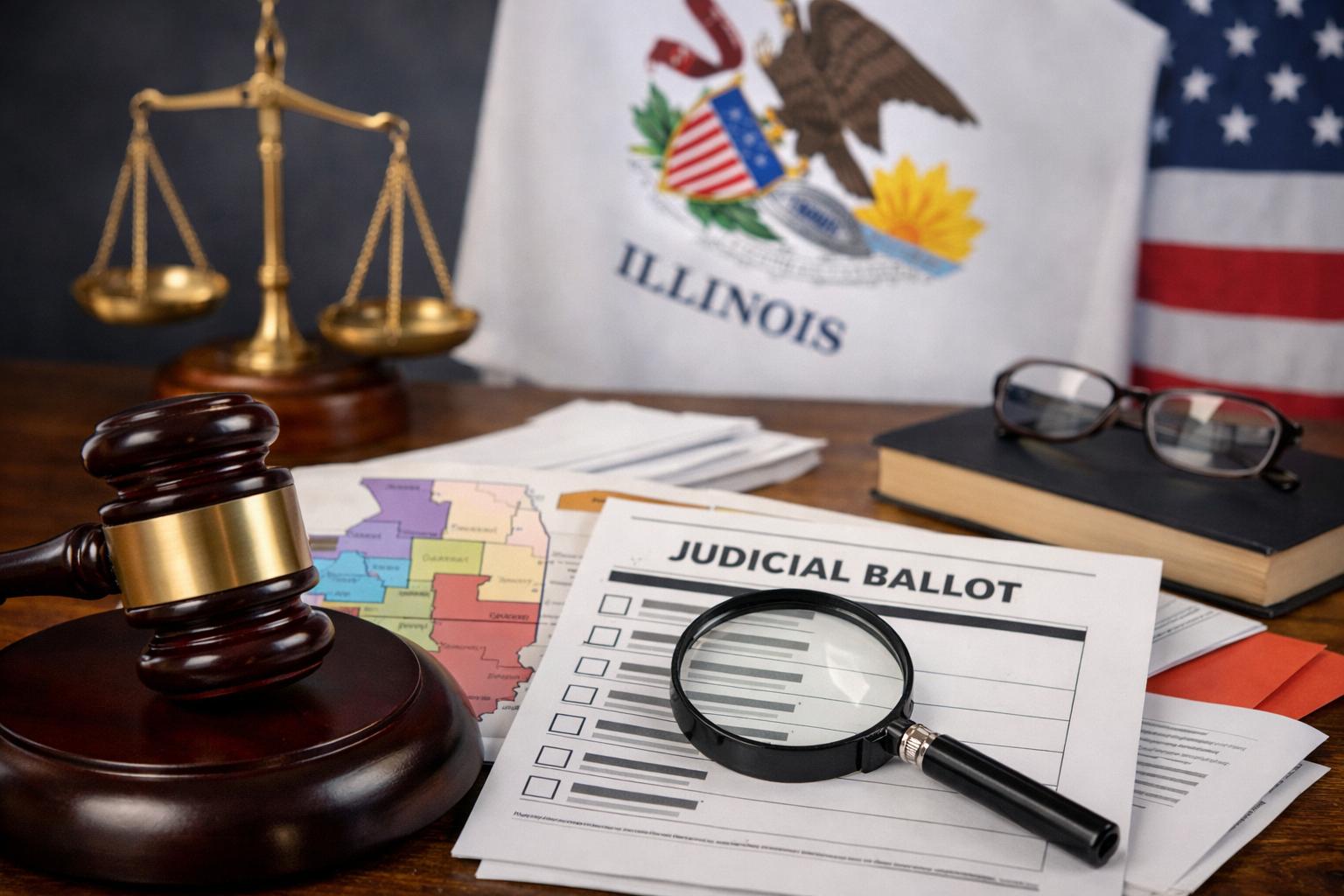
Dozens of judges serving on Illinois circuit and appellate courts will appear on ballots during the 2026 primary election, placing renewed attention on how the state’s judiciary functions and how voters can evaluate candidates before casting their vote. Judicial races often receive less attention than statewide contests, yet the officials elected in these positions will make decisions that directly affect legal matters ranging from criminal prosecutions to civil disputes and family cases.
Circuit court judges serve six-year terms and operate as the primary trial court judges in Illinois. They hear a broad range of cases that include divorce and child custody disputes, personal injury claims, traffic violations, major civil litigation, and serious criminal charges. Because circuit courts handle the initial stage of most legal proceedings, their rulings frequently set the foundation for further appeals within the judicial system.
Appellate court judges hold longer terms of 10 years and review cases that have already been decided by circuit courts. Their role is to determine whether legal errors occurred during the trial process and whether rulings should be upheld, modified, or overturned. Decisions issued by the appellate courts can later be reviewed by the Illinois Supreme Court, the state’s highest judicial authority, although the court has discretion over which appeals it accepts.
Illinois appellate courts are organized into five geographic districts, each covering different counties across the state. The First District is entirely located within Cook County and includes multiple subcircuits that determine which candidates appear on local ballots. Other districts cover counties across northern, central, and southern Illinois, with courts hearing appeals from dozens of trial courts within their respective regions.
Judges who are elected initially must later run in retention elections, which allow voters to decide whether they should continue serving another term without facing direct challengers. In Cook County alone, dozens of candidates are competing for several open judicial seats in the upcoming primary.
Voters seeking more information about judicial candidates can review evaluations published by professional legal organizations and bar associations. These assessments often analyze candidates’ experience, professional conduct, and qualifications. Some groups provide ratings or summaries that help voters better understand the background of individuals seeking judicial office.
Interactive voter guides and public databases also allow residents to search candidates by district or home address, offering details about qualifications, past professional history, and any available evaluations. By reviewing these resources before election day, voters can make more informed choices about the judges who will oversee cases that shape daily life across Illinois.