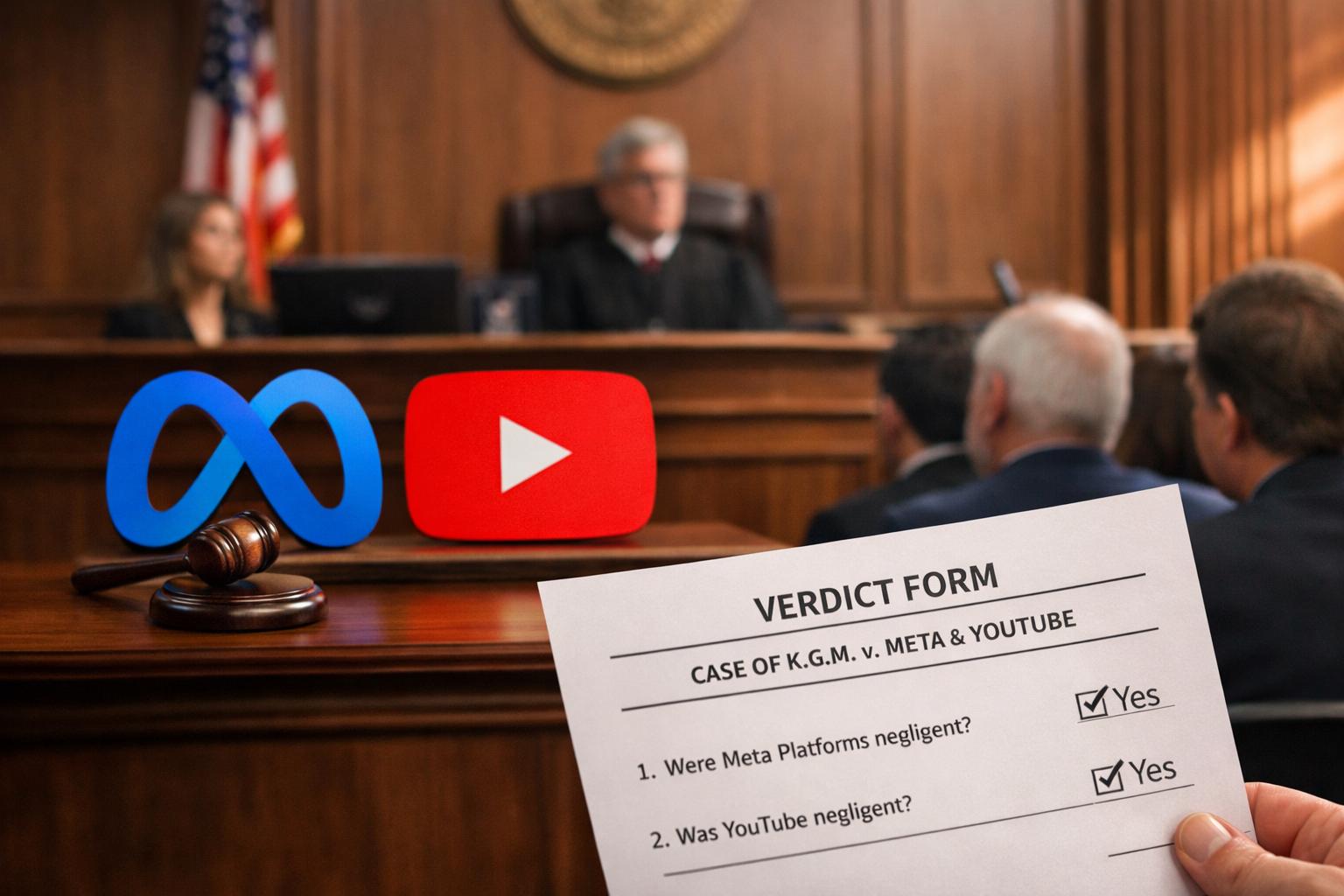
A Los Angeles jury has found Alphabet’s Google and Meta Platforms liable for $3 million in damages in a social media addiction lawsuit, a ruling that could set a precedent for thousands of similar cases. The lawsuit focused on the platforms' addictive design, which the plaintiff argued contributed to her addiction to YouTube and Instagram from a young age. This case, which highlights the growing concerns over social media’s impact on mental health, could influence future legal actions brought by parents, school districts, and attorneys general against tech giants.
The plaintiff, a 20-year-old woman, claimed that the attention-grabbing features of the apps led her to develop an addiction, marking a significant legal focus on the platforms' design rather than the content itself. The lawsuit was filed amid mounting criticism of social media companies for their role in the safety of children and teens. At least half of American teenagers use platforms like YouTube and Instagram daily, amplifying concerns over the prolonged exposure to these platforms.
Snapchat and TikTok were also named in the case but settled with the plaintiff before the trial commenced. Despite the ruling, Meta and Google have expressed their disagreement with the verdict, with Meta already evaluating further legal options. The ruling has minimal impact on the companies’ stock prices, as shares of Meta rose slightly, while Alphabet’s stock remained largely unchanged.
The case adds to the growing body of lawsuits focused on social media addiction, with other similar cases expected to go to trial in federal and state courts. Critics have long called for more stringent regulations on social media use, but Congress has yet to pass comprehensive legislation on the matter. Meanwhile, numerous states have enacted laws governing social media use among children, with some requiring age verification for account creation, a measure that tech trade associations are challenging in court.
As the debate intensifies, the impact of this verdict on future legislation and lawsuits against tech companies remains to be seen. The ruling could be a crucial step in holding companies accountable for the design of platforms that contribute to addiction and harm, particularly among vulnerable youth populations.