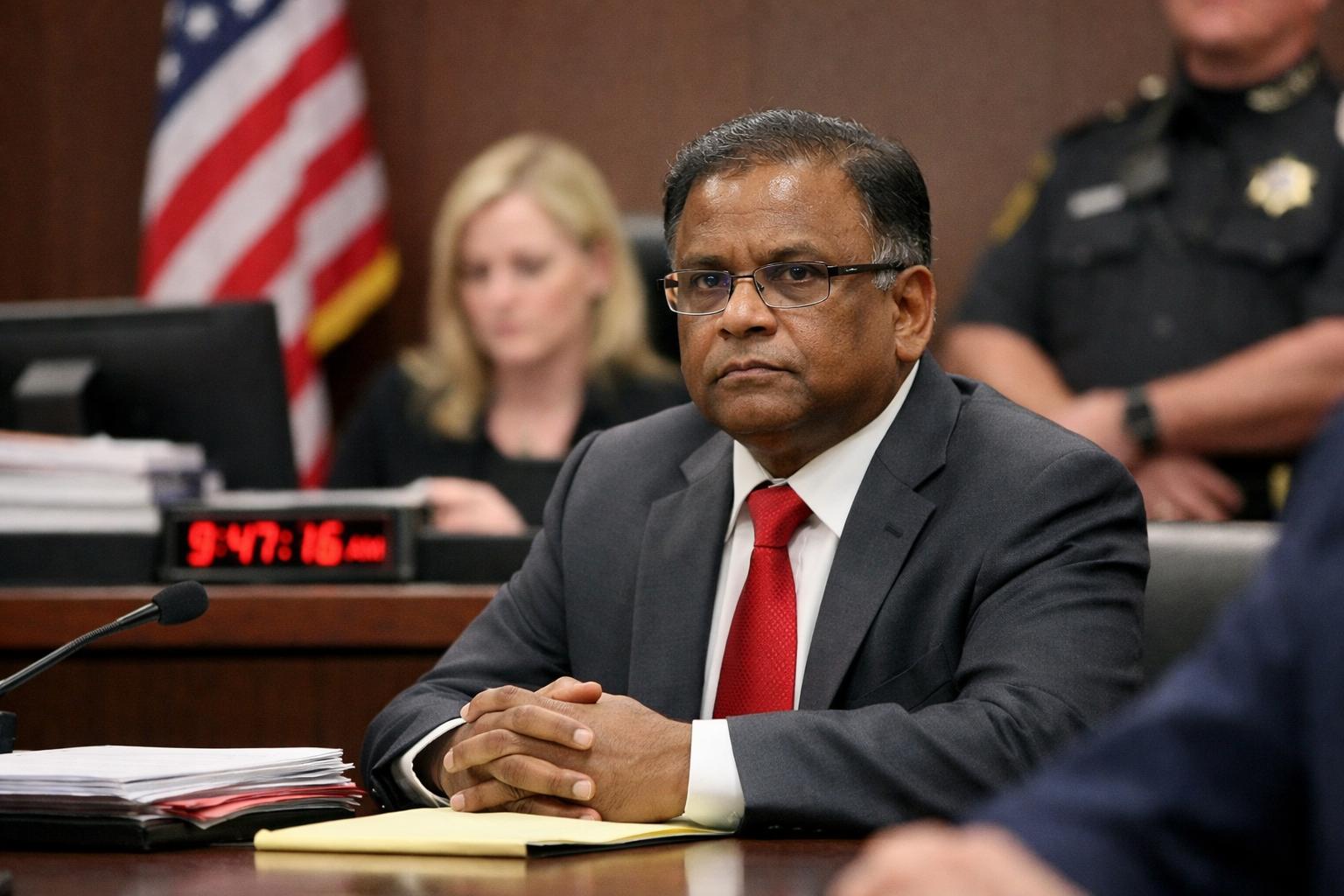
A county judge in Texas has been found guilty on two counts of money laundering, marking a major development in a high-profile campaign finance case. KP George, the first Indian-origin judge in Fort Bend County, was convicted of third-degree felony charges and now faces up to 10 years in prison. He is expected to be removed from office following his sentencing.
The case traces back to financial activities between 2019 and 2022, when George was actively raising and managing campaign funds across multiple election cycles. According to investigators, several transactions during this period later raised concerns regarding the movement of campaign money into personal accounts. By 2022, authorities identified transfers exceeding $46,000 that were allegedly moved from campaign funds for personal use, forming the basis of the charges.
Scrutiny intensified in 2023 after discrepancies were flagged in campaign finance reports, prompting a closer review of financial disclosures. A formal investigation was launched in 2024, leading to the filing of money laundering charges. The case proceeded to trial in 2025, where prosecutors presented financial records and transaction data, while the defense argued that the funds were legitimate reimbursements for personal loans made to the campaign.
Prosecutors told the court that George repeatedly provided inaccurate campaign finance information and used the funds for personal benefit, including car payments and other expenses. They also highlighted financial dealings that extended beyond Texas, involving accounts linked to Delaware and communications tied to Massachusetts. According to the prosecution, evidence showed that George withdrew more funds than legally permitted under campaign finance rules.
The defense maintained that the case was based on incomplete financial records and selective interpretation of data. They argued that candidates are legally allowed to loan money to their campaigns and later reimburse themselves, and insisted there was no proof of fraudulent intent. The defense further described the prosecution as an instance of government overreach, claiming that investigators failed to consider financial records from earlier campaign cycles that could have provided broader context.
Following the verdict, George was briefly taken into custody before being released on a $20,000 bond. As part of the conditions of his release, he surrendered his passport. He has chosen to have District Judge Maggie Jaramillo determine his sentence rather than a jury. The sentencing hearing is scheduled for June 16, 2026, when the court will decide the final penalty in a case that has drawn significant attention to campaign finance practices and accountability in public office.