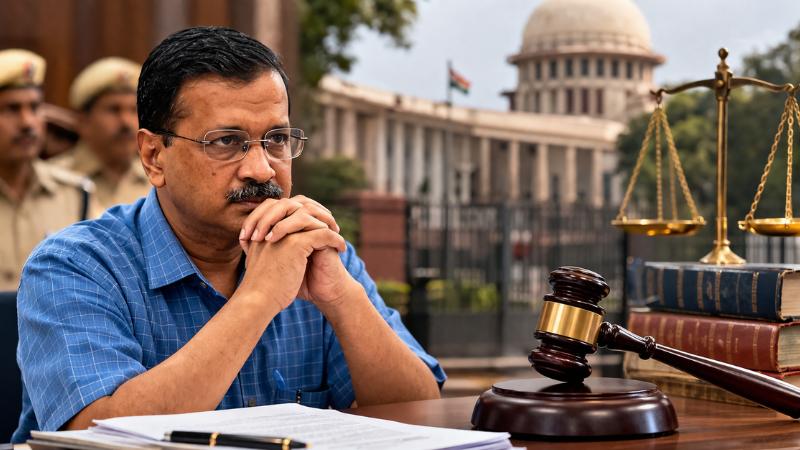
Arvind Kejriwal, the Aam Aadmi Party (AAP) chief and former Delhi Chief Minister, has moved a recusal application before the Delhi High Court, requesting that Justice Swarn Kanta Sharma recuse herself from hearing the excise policy case. This legal maneuver follows the court’s previous decision on March 16, granting Kejriwal and 22 others more time to respond to the Central Bureau of Investigation's (CBI) plea challenging their discharge in the case. Kejriwal has stated his intent to personally argue the case before the court, signaling a direct engagement with the legal process.
The recusal plea has sparked political controversy, with the Bharatiya Janata Party (BJP) accusing Kejriwal of showing a lack of respect for the judiciary. BJP spokesperson Praveen Shankar Kapoor criticized Kejriwal’s decision, claiming that it exposed his desperation after his failed petition to transfer the case to another bench. The BJP's stance underscores the ongoing political tensions surrounding the case and the broader implications of the excise policy investigation.
The case revolves around the CBI's appeal against a trial court's decision to discharge Kejriwal, Manish Sisodia, and 21 others involved in the excise policy case. The trial court had concluded that the CBI's evidence did not establish a prima facie case, thereby discharging the accused. However, the CBI has sought to challenge this verdict, arguing that the trial court's findings were fundamentally flawed and ignored critical evidence.The legal battle intensifies as Kejriwal and other AAP leaders face mounting pressure from the CBI's appeal. The case, which has significant political ramifications, continues to evolve as both sides present their arguments in the Delhi High Court.