Movement Moves Toward Formal Political Entry
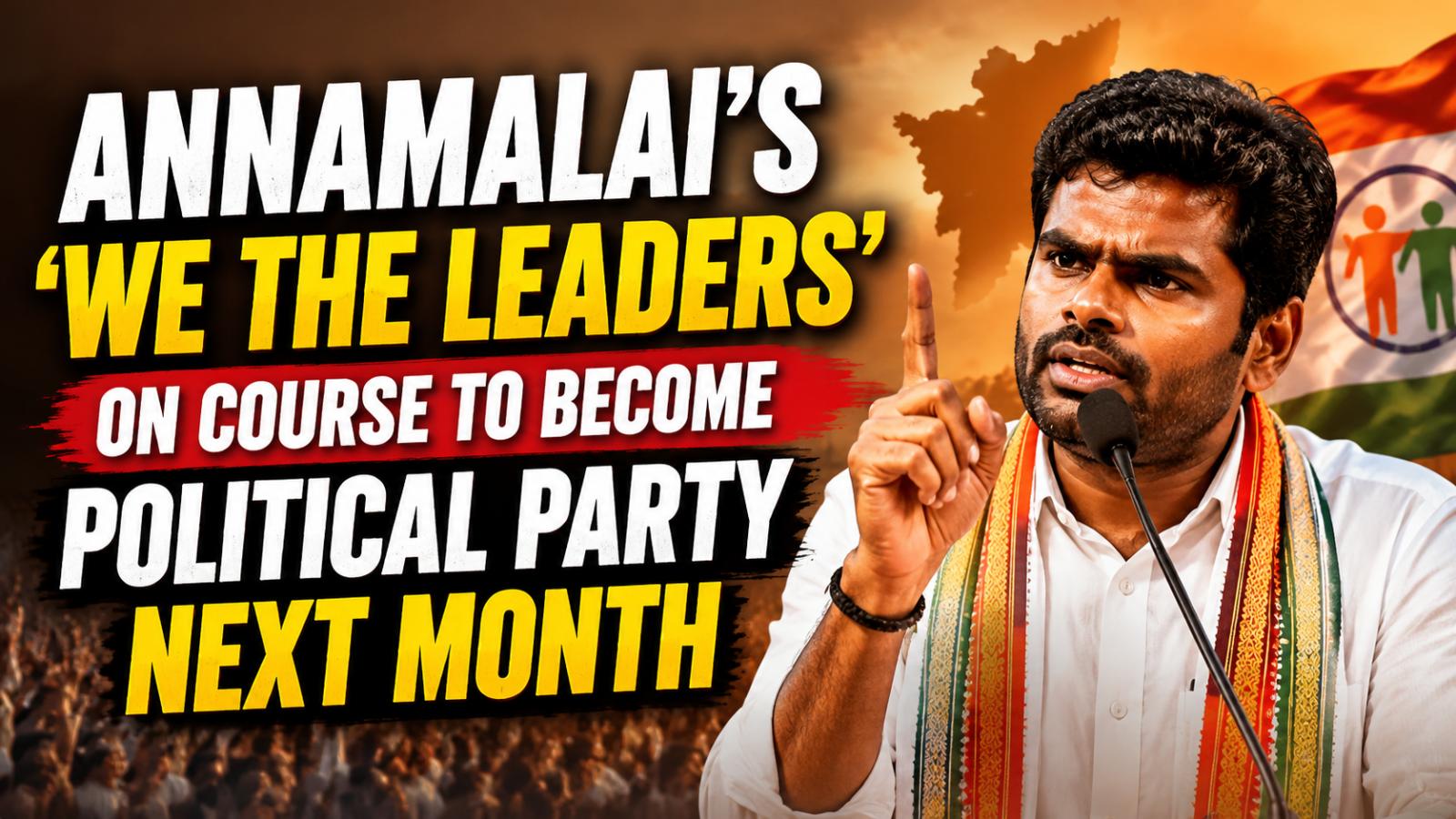
Former Tamil Nadu BJP president K Annamalai has confirmed that his “We the Leaders” initiative is on track to transform into a political party by July. The announcement signals a structured attempt to move beyond a membership-driven platform into a formal electoral organisation in a state where established parties already dominate the political landscape.
The timing of the transition is critical. Tamil Nadu politics is heavily entrenched, and new entrants often struggle to convert early momentum into real voter base expansion. While the movement’s ambition is clear, the real test lies in organisational depth and sustained ground presence rather than initial sign-ups.
Membership Drive And Expansion Strategy
Annamalai has claimed that the movement has already crossed 18 lakh members and is targeting 50 lakh in the coming months. According to him, participation is coming through both online registration and direct outreach, indicating an attempt to build hybrid mobilisation across digital and grassroots channels.
However, large membership numbers in early-stage movements do not always reflect long-term political strength. Without structured local leadership and booth-level organisation, such figures risk remaining symbolic rather than electoral. The scale of expansion being proposed will require significant funding, coordination, and sustained public engagement, all of which remain untested.
Focus On Professionals And Youth Entry Into Politics
A key pillar of the initiative is to bring professionals and technocrats into active politics, particularly individuals aged between 40 and 50 who are currently working in India and abroad. The argument is that many capable individuals hesitate to enter politics due to unclear pathways and lack of structured entry points.
The movement also aims to position itself around youth issues, especially drug abuse and social challenges affecting young people in Tamil Nadu. While these concerns resonate socially, converting issue-based narratives into political capital requires long-term credibility, not just campaign messaging.
Political Reform Narrative And Term Limit Proposal
One of the most distinct positions outlined by Annamalai is the introduction of term limits for politicians. He has argued that leadership should continuously rotate to prevent stagnation and encourage new entrants into governance systems. This reform-oriented messaging is designed to appeal to younger voters and professionals dissatisfied with traditional political structures.
At the same time, such structural reforms face practical resistance within party ecosystems, where senior leadership continuity remains a dominant feature. Whether this idea can survive beyond rhetoric will depend on how the movement evolves after its transition into a formal political party. While the announcement marks a significant shift in Annamalai’s political journey, the real challenge lies ahead—transforming a fast-growing movement into a durable, election-ready organisation capable of competing in Tamil Nadu’s highly competitive political environment.