Uyghur groups step up global advocacy
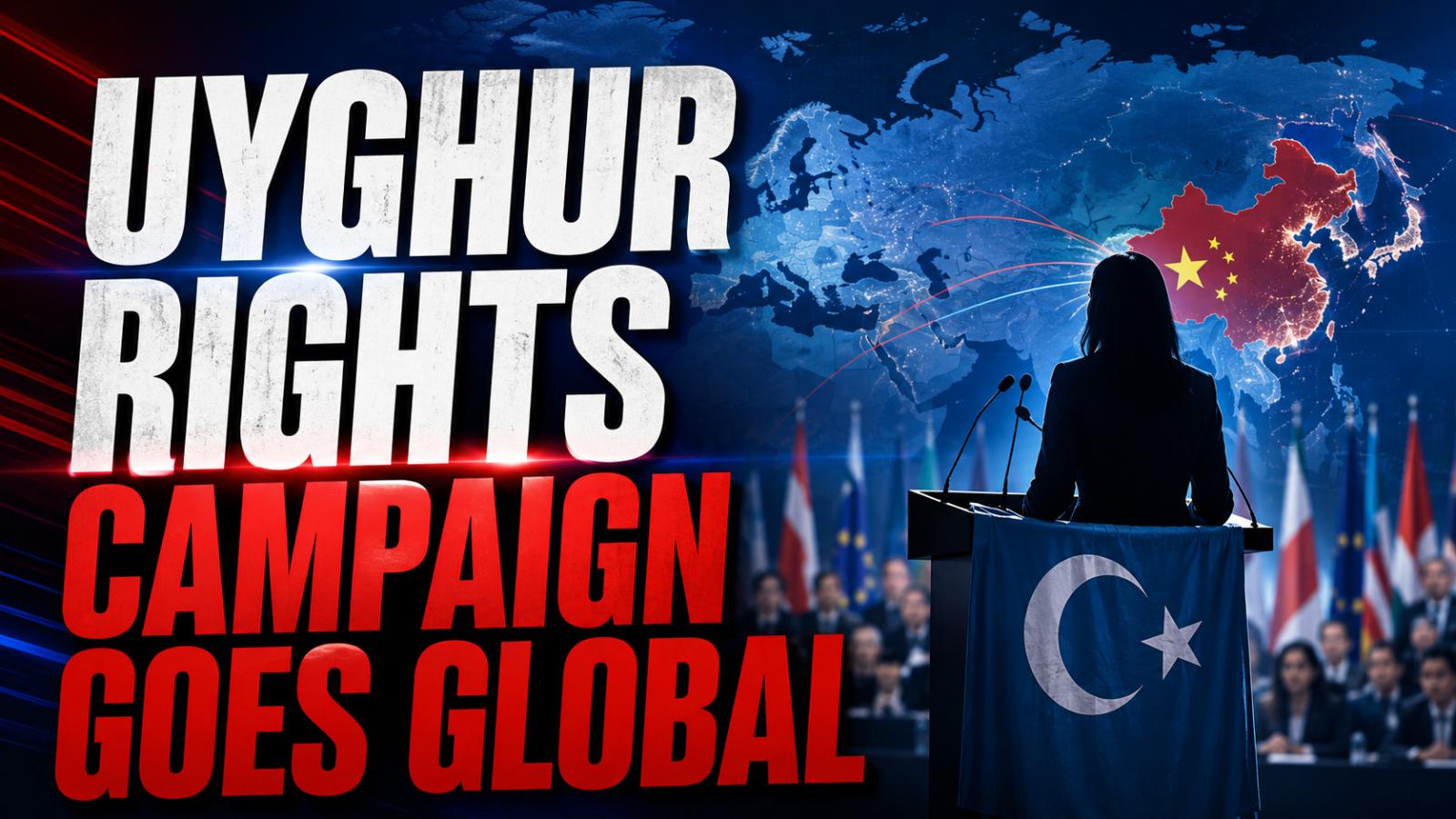
The World Uyghur Congress has highlighted a series of international advocacy efforts in Japan and Europe, saying its representatives are working to draw wider attention to alleged human rights violations affecting Uyghurs from East Turkistan. The group has raised concerns over alleged genocide, forced labour, enforced disappearances and transnational repression, while urging governments and international institutions to strengthen their response.
A delegation from the World Uyghur Congress and the Uyghur Centre for Democracy and Human Rights held meetings with diplomats, United Nations officials, UN Special Rapporteur on the Human Rights of Migrants Gehad Madi and civil society representatives. The delegation included WUC President Turgunjan Alawdun, WUC Vice President Zumretay Arkin and UZDM President Dolkun Isa. Their discussions focused on the situation of Uyghur refugees, cross-border pressure, alleged disappearances and broader human rights concerns.
The delegation also joined a side event organised by Tibetan groups, where participants discussed developments related to Tibet and Taiwan. Speakers raised concerns about what they described as growing pressure on the international rules-based order and the need for democratic governments to coordinate more closely on rights issues.
Forced labour and family separation concerns
Addressing the Human Rights Council, WUC Vice President Zumretay Arkin said Chinese policies have had a severe impact on Uyghur women and families. She said arbitrary detention, forced family separation and cross-border intimidation have left many mothers separated from their children. The WUC also alleged that representatives linked to China monitored, photographed and filmed its delegates during the session, describing the incident as another example of transnational repression targeting Uyghur activists.
Separately, the Uyghur Human Rights Project released a report warning that Australia and Japan may remain exposed to imports linked to Uyghur forced labour because of gaps in supply chain enforcement. The report said tighter restrictions in the United States and European Union could push such goods toward markets with weaker oversight.
In Montreal, Rushan Abbas, chair of the WUC Executive Committee, received the Women’s eNews Champion for Human Rights 2026 Award for her advocacy on behalf of Uyghur women. In her remarks, she pointed to the case of her sister, Gulshan Abbas, who she said has been forcibly disappeared since 2018.